The Physics of Open Audio: Decoding 14.2mm Drivers and DSP Acoustics in the TOZO A3


TOZO A3 Wireless Earbuds
In the taxonomy of personal audio, the "Half-In-Ear" form factor occupies a unique engineering niche. Unlike silicone-tipped earbuds that rely on an airtight seal to physically couple the driver to the eardrum, half-in-ear devices sit loosely in the concha. This design philosophy prioritizes comfort and spatial awareness but introduces a massive acoustic challenge: Leakage.
Without a seal, bass frequencies—which require pressurized air to be perceived—naturally escape into the environment before reaching the inner ear. The TOZO A3 addresses this physics problem not with magic, but with brute force displacement and algorithmic compensation. To understand this device, we must analyze the relationship between Driver Diameter and Acoustic Impedance.

The Displacement Solution: Why 14.2mm Matters
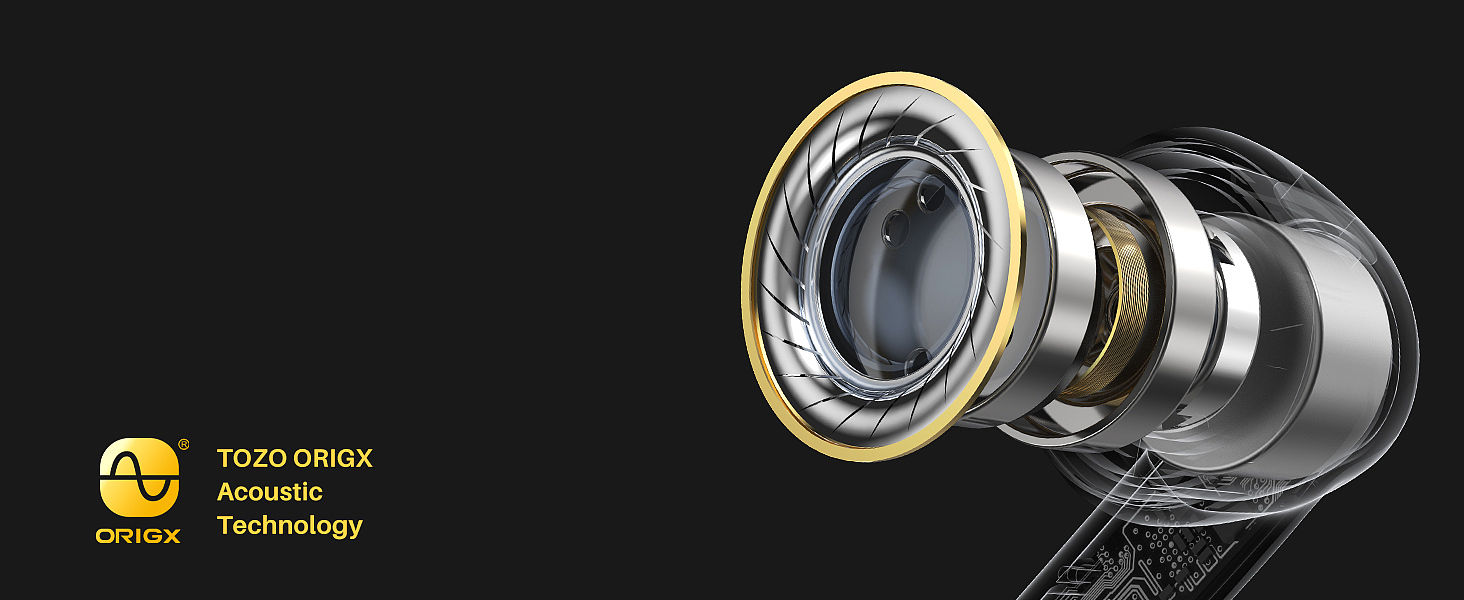
In the world of dynamic drivers, size dictates potential. Most sealed in-ear monitors utilize drivers between 6mm and 10mm. The TOZO A3, however, employs a massive 14.2mm Dynamic Driver. This is not an arbitrary choice; it is a compensatory engineering requirement.
- Physics of Bass Loss: In an unsealed system, low-frequency sound waves (bass) have long wavelengths that easily diffract around the earbud and cancel out. This is known as low-frequency roll-off.
- Air Movement: To counteract this, the driver must move a significantly larger volume of air to maintain sound pressure levels (SPL) at the ear canal entrance. A 14.2mm diaphragm has nearly double the surface area of a standard 10mm driver. This allows it to generate the necessary wavefront to overcome leakage, delivering the "enhanced bass profile as lowest as 20Hz" mentioned in the specs, even without a silicone seal.

Signal Processing: DSP vs. ANC
A critical distinction in audio engineering is the difference between Active Noise Cancellation (ANC) and Digital Call Noise Reduction. The TOZO A3 features the latter, powered by Digital Signal Processing (DSP).
- ANC (What it isn't): ANC uses microphones to create anti-noise to silence the world for the user. The A3, being an open design, cannot effectively support ANC because it lacks the passive isolation required for anti-noise to work effectively.
- DSP Noise Reduction (What it is): This technology focuses on the outgoing signal (the microphone feed). The DSP algorithm analyzes the input from the microphones, identifies steady-state noise patterns (like wind or traffic), and mathematically subtracts them from the voice signal. It ensures clear communication for the person on the other end of the call, rather than silencing the environment for the wearer.

The Logic of Connectivity: Bluetooth 5.3 and Hall Sensors
The user experience of wireless audio is defined by the handshake protocol. The A3 utilizes Bluetooth 5.3, but the "One-Step Pairing" is facilitated by a specific hardware component: the Hall Effect Sensor.
- Instant Wake: Inside the charging case lid is a magnet. The case body contains a Hall sensor. When the lid opens, the magnetic field changes, triggering the sensor to wake the earbuds and initiate the Bluetooth handshake before you even touch them.
- Reset Circuitry: Unusually for this price point, the case includes a dedicated Reset Button. Most budget earbuds require complex tap sequences on the buds themselves to reset (which often fail). A physical button on the case shorts specific pins on the microcontroller, forcing a hard reset of the pairing memory. This is a robust engineering solution to the common "left bud not pairing with right bud" desynchronization issue.
Ergonomics: The Science of Non-Occlusion
The "Half-In-Ear" design is an ergonomic choice that prioritizes Ventilation over Isolation. * Ear Canal Health: By resting on the Concha Cavum rather than plugging the External Auditory Meatus, the design allows for natural airflow. This prevents the buildup of humidity and pressure (the "occlusion effect") common with silicone tips, making it ideal for long-duration wear where situational awareness is key. * Weight Distribution: At 3.3g per earbud, the mechanical load is negligible. The center of gravity is engineered to sit within the ear's natural cup, requiring minimal friction to stay in place.

Conclusion: Engineered for Openness
The TOZO A3 is a study in acoustic compensation. It acknowledges the physical limitations of the open-ear form factor (bass loss) and counters them with sheer driver size (14.2mm). It recognizes the frustrations of wireless pairing and solves them with a dedicated hardware reset circuit. It is a device that understands its purpose: not to isolate you from the world, but to layer a soundtrack over it with maximum comfort and minimal friction.
TOZO A3 Wireless Earbuds
Related Essays

Silencing the Copper Wire: The Invisible Architecture of Modern Audio

Balanced Armature vs Dynamic Driver: 2026 IEM Engineering Truths

Computational Audio Soundbar: How Five Drivers Replace a Room Full of Speakers

Coaxial Audio and the Point Source Paradox: Why Perfect...

How Tiny Drivers Produce Big Sound: The Physics Behind Wireless Earbuds
How Tiny Drivers Produce Big Sound: The Physics Behind Wireless Earbuds
How Tiny Drivers Produce Big Sound: The Physics Behind Wireless Earbuds
How Tiny Drivers Produce Big Sound: The Physics Behind Wireless Earbuds

Why 42mm Drivers Hit the Physics Sweet Spot for Headphone...

