The Bio-Physics of Bone Conduction: Bypassing the Eardrum


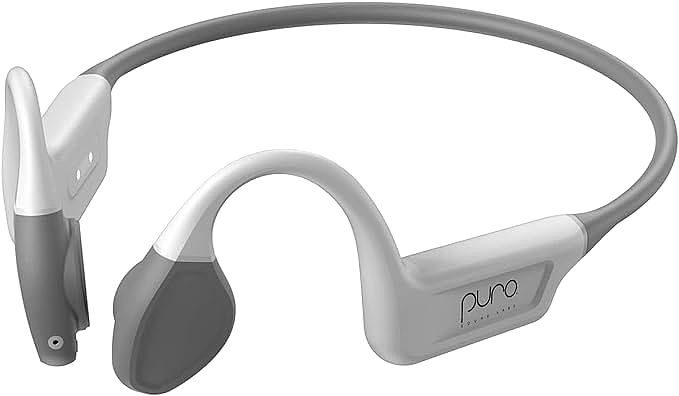
Puro Sound Labs PuroFree Open-Ear Bone Conduction Headphones
The human auditory system is a marvel of biological engineering, capable of processing sound through multiple pathways. While the most common route involves air pressure waves striking the tympanic membrane (eardrum), it is not the only way we perceive sound. Bone conduction, or osteo-acoustic transmission, is a secondary pathway that bypasses the outer and middle ear entirely. Devices like the Puro Sound Labs PuroFree leverage this biological phenomenon, transforming the skull itself into a conductive medium for high-fidelity audio.
The Mechanics of Osteo-Acoustic Transmission
In a traditional "air conduction" scenario, sound waves travel through the ear canal, vibrate the eardrum, and are mechanically amplified by the ossicles (malleus, incus, stapes) before reaching the fluid-filled cochlea. Bone conduction short-circuits this process.
The core component of the PuroFree is the electromechanical transducer. Unlike a standard speaker driver that pushes a lightweight diaphragm to move air, a bone conduction transducer moves a mass against a spring mechanism to generate significant mechanical force. When placed against the zygomatic arch (cheekbone), these vibrations are coupled directly to the skull. The density of bone makes it an excellent conductor for low-frequency and mid-frequency vibrations. These mechanical waves travel through the cranial bone structure directly to the temporal bone, which houses the cochlea. The fluid inside the cochlea is agitated by the vibrating bone casing, stimulating the stereocilia (hair cells) and generating electrical nerve impulses just as air-conducted sound would.
Impedance Matching and Efficiency
One of the engineering challenges in bone conduction is acoustic impedance matching. The skin and subcutaneous tissue between the transducer and the bone act as a damper, absorbing vibrational energy. To overcome this, the transducer must generate enough force to penetrate this soft tissue layer without causing discomfort.
The PuroFree utilizes a specialized suspension system within the transducer housing. This system is tuned to resonate at frequencies optimized for human speech and music intelligibility. By maintaining a constant, gentle pressure against the skin (clamping force), the device ensures efficient energy transfer. The lack of an air gap minimizes the loss of vibrational energy, allowing the user to hear clear audio even in noisy environments, although the physics of bone conduction inherently struggles with ultra-high frequencies compared to air conduction.
The Open-Ear Acoustic Architecture
The primary advantage of this transmission method is the Open-Ear architecture. Since the ear canal is not occluded by a speaker or tip, it remains open to ambient air-conducted sounds. This creates a dual-layer auditory experience: the user hears the digital audio via bone conduction and the environmental audio via air conduction simultaneously.
From a physics perspective, this prevents the "occlusion effect"—the booming, hollow sound of one's own voice often experienced when plugging the ears. It also maintains the natural resonance of the ear canal, preserving the user's ability to localize external sounds (spatial awareness), which is critical for safety during activities like running or cycling.
Future Outlook: Hybrid Conduction
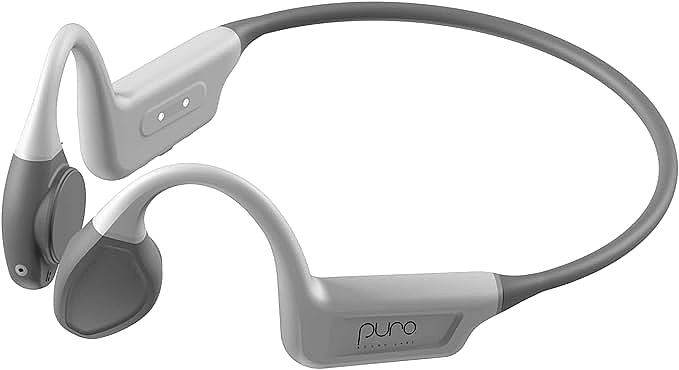
The future of this technology lies in Hybrid Conduction. While bone conduction excels at mids and awareness, it lacks the deep bass that air conduction provides (due to the high energy required to vibrate the skull at low frequencies). Future devices may combine bone conduction transducers with small, directional air conduction speakers to fill in the frequency spectrum, offering the best of both worlds: visceral bass and open-ear safety.
Puro Sound Labs PuroFree Open-Ear Bone Conduction Headphones
Related Essays

The Tactile Symphony: How Bone Conduction Works and Why It "Tickles"

The Biomechanics of Safety: Why Open-Ear Audio is Essential for the Urban Athlete

Beyond the Eardrum: The Evolutionary Science of Bone Conduction and Aquatic Audio

The Aquatic Concert Hall: Physics, Physiology, and the Bone Conduction Experience

The Osteo-Acoustic Path: Deconstructing the Physics and Physiology of Bone Conduction

The Open-Ear Paradigm: Physics, Safety, and the Future of Awareness

The Post-Isolation Era: Why the World is Moving Toward Open-Ear Audio

The Physics of Skull Audio: Why Your Ear Canal Needs a Break

The Skull as a Soundboard: Dissecting the Physics of Panadia DG08B

