The Post-Isolation Era: Why the World is Moving Toward Open-Ear Audio


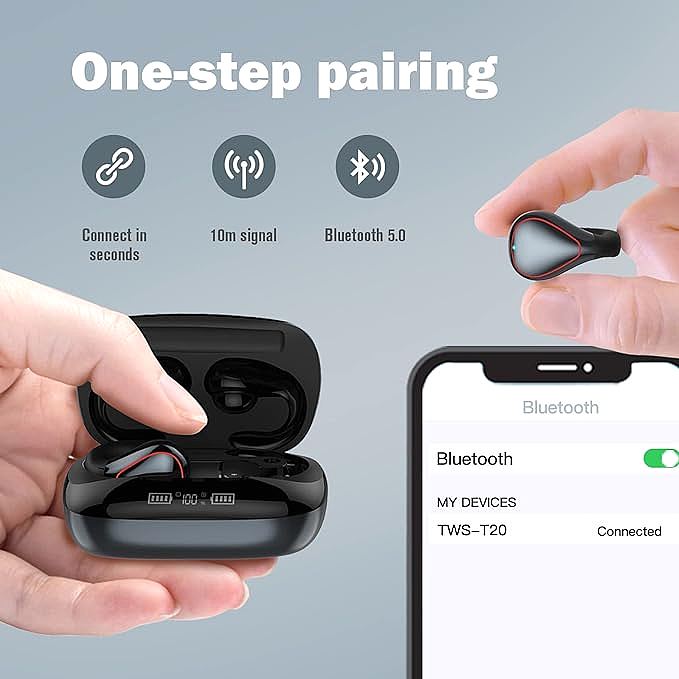
Xmenha Clip on Open Ear Wireless Headphones
In the early decades of personal audio, the industry’s north star was isolation. Manufacturers raced to create increasingly tighter seals, using passive silicone and active noise-canceling algorithms to carve out a silent sanctuary for the user. However, as our lives become more integrated with digital soundscapes, a counter-movement is emerging. This "Post-Isolation Era" marks a fundamental shift toward open-ear audio, prioritizing environmental transparency and hearing health over absolute silence. The rise of devices that project sound without obstructing the ear canal signifies a deeper realization: our safety and social connection depend on being attuned to the world around us.
The Sensory Imbalance of Total Occlusion
Human hearing is a survival mechanism designed to scan 360 degrees of the environment for spatial cues. When we seal the ear canal with traditional earbuds, we create a sensory disconnect. This occlusion results in "situational deafness," where the brain is stripped of critical information—the distant hum of a hybrid car, the tonal shifts of an approaching siren, or the subtle sound of a colleague's greeting. Beyond safety, total occlusion also causes the "occlusion effect," where the user’s own voice and body movements resonate unnaturally within the skull, leading to a sense of internal claustrophobia.
Open-ear technology seeks to restore this balance. By leaving the canal unobstructed, it allows ambient sound waves to enter the ear naturally alongside digital audio. This duality creates a hybrid reality where music or podcasts act as a layer over the environment rather than a replacement for it. For urban commuters and outdoor enthusiasts, this is not just a preference; it is a critical safety infrastructure that prevents accidents by maintaining a constant link to reality.

Directional Air Conduction vs. Bone Conduction
A significant technological divergence exists within the open-ear market: Bone Conduction versus Directional Air Conduction. Early open-ear designs relied on bone conduction, which vibrates the skull to send sound directly to the inner ear. While effective for those with certain types of hearing impairment, it often compromises on audio fidelity and can cause a "tickling" sensation at higher volumes. The industry is now leaning toward sophisticated air-conduction speakers—micro-drivers positioned at precise angles to project sound into the canal with minimal leakage.
This directional audio approach preserves the natural processing of the middle and outer ear (the pinna and auricle), resulting in a more spacious, "organic" soundstage. Devices like the Xmenha Clip on Open Ear Wireless Headphones utilize this air-conduction principle, allowing for a lightweight clip-on design that delivers HiFi stereo sound without the mechanical vibration of bone conduction plates. This allows users to enjoy deep bass and crisp treble while their ears remain fully open to the whispers of their surroundings.
The Cultural Shift Toward Hearing Longevity
As the first generation to spend significant portions of their lives with earbuds reaches middle age, hearing longevity is becoming a global health concern. Traditional in-ear buds place the sound source mere millimeters from the eardrum, creating high sound pressure levels within a confined space. Open-ear designs naturally dissipate some of this pressure, potentially reducing the risk of long-term auditory fatigue.
Furthermore, the "non-in-ear" architecture eliminates the hygiene issues associated with earwax buildup and moisture entrapment, which often lead to ear infections. By shifting the mechanical load to the outer ear structures, open-ear audio represents a "bio-harmonious" approach to technology—one that respects human anatomy rather than forcing it to adapt to rigid hardware.

Future Trajectory: Context-Aware Transparency
In the next three to five years, we anticipate the integration of "Context-Aware" audio, where sensors will detect specific environmental triggers—like a bicycle bell or a smoke alarm—and automatically adjust the audio layer. Until then, the foundational shift toward open designs continues to gain momentum. The Xmenha Clip-on headphones illustrate how this technology is becoming accessible, offering one-step pairing and IPX5 waterproofing to bridge the gap between high-performance sports gear and daily lifestyle accessories.
The goal of modern audio is no longer just to hear the music, but to hear your world through the music. By prioritizing openness, the industry is not just making headphones; it is designing tools for a safer, more connected, and more sustainable sensory experience.
Xmenha Clip on Open Ear Wireless Headphones
Related Essays

Premium ANC Headphone Technology: A Technical Analysis

The Impossible Sound: How MIT Research Bent the Rules of...
The Physics of Acoustic Sealing: Why Fit Is the Foundation...

The Science Behind Wireless Audio: From Bluetooth Origins...

Sony WH-1000XM5 Wireless Noise Canceling Headphones: The Science of Sound, Silence, and Clarity

Semi-In-Ear Earbuds Sound Thin: Acoustic Physics and Practical Fixes

How RIZIZI Built 40-Hour Wireless Earbuds for Under 20 Dollars

Why That Tiny Hole on Your Earbuds Is Acoustic Engineering, Not a Defect

The Cultural Evolution of In-Ear Monitors: From Stage to Street

