Beyond Silence: How ANC and Microphone Science Shape Modern Work Headsets

Jabra Evolve2 85 UC Wireless Headphones
Picture a typical Tuesday morning in a shared workspace. Somewhere to your left, a colleague is on a client call. To your right, the HVAC system hums its ceaseless drone. Down the hall, a delivery person rings the doorbell. And you are about to join a video conference where every participant needs to hear your voice as clearly as if you were sitting across a quiet boardroom table. This scenario plays out millions of times each day, and it exposes a fundamental gap in how we think about audio technology: consumer headphones are built for listening, but professional communication headsets must master the far more complex challenge of managing sound in two directions simultaneously.
The distinction matters more than most people realize. A headset optimized for music reproduction prioritizes frequency range, soundstage, and tonal accuracy. A professional communication headset, by contrast, must solve an engineering puzzle that borders on paradoxical: it needs to silence the world around you while simultaneously making your voice cut through that same world with crystalline precision. The technologies that accomplish this -- active noise cancellation architectures, microphone arrays with spatial intelligence, and comfort engineering that enables eight-hour wear sessions -- represent some of the most sophisticated consumer acoustics work being done today.
The Three Architectures of Active Noise Cancellation
Active Noise Cancellation is not a single technology but a family of approaches, each with distinct trade-offs. Understanding these architectures is essential for anyone evaluating a professional communication headset, because the type of ANC a headset employs directly determines which environments it handles well and where it falls short.
Feedforward ANC places microphones on the exterior of the earcup, capturing ambient noise before it reaches the listener's ear. The DSP generates an anti-phase signal and plays it through the speaker, cancelling the incoming sound wave through destructive interference. This architecture responds quickly to changing noise patterns and handles mid-to-high frequencies effectively -- think keyboard clatter and nearby conversation. However, feedforward systems are vulnerable to wind noise and can produce self-oscillation if the anti-noise signal does not precisely match the incoming waveform. They perform best in environments with steady, predictable noise profiles like open offices.
Feedback ANC positions microphones inside the earcup, monitoring what the listener actually hears after passive isolation has done its work. Because the correction loop is based on the residual noise at the ear, feedback systems are inherently self-correcting and more tolerant of fit variations. They excel at suppressing low-frequency rumble -- HVAC systems, airplane engines, server room drone. Their weakness is latency: by the time the system detects noise at the ear, some delay has already occurred, limiting effectiveness against sudden, transient sounds.
Hybrid ANC combines both approaches. External feedforward microphones catch noise early, while internal feedback microphones clean up whatever leaks past the first line of defense. This dual-microphone architecture delivers the broadest noise reduction spectrum, addressing both the low-frequency hum that feedback ANC handles and the mid-high chatter that feedforward targets. The cost is real: hybrid systems require more microphones, more sophisticated DSP processing, and significantly more power. They also demand tighter manufacturing tolerances, because the two systems must work in concert without introducing phase artifacts.
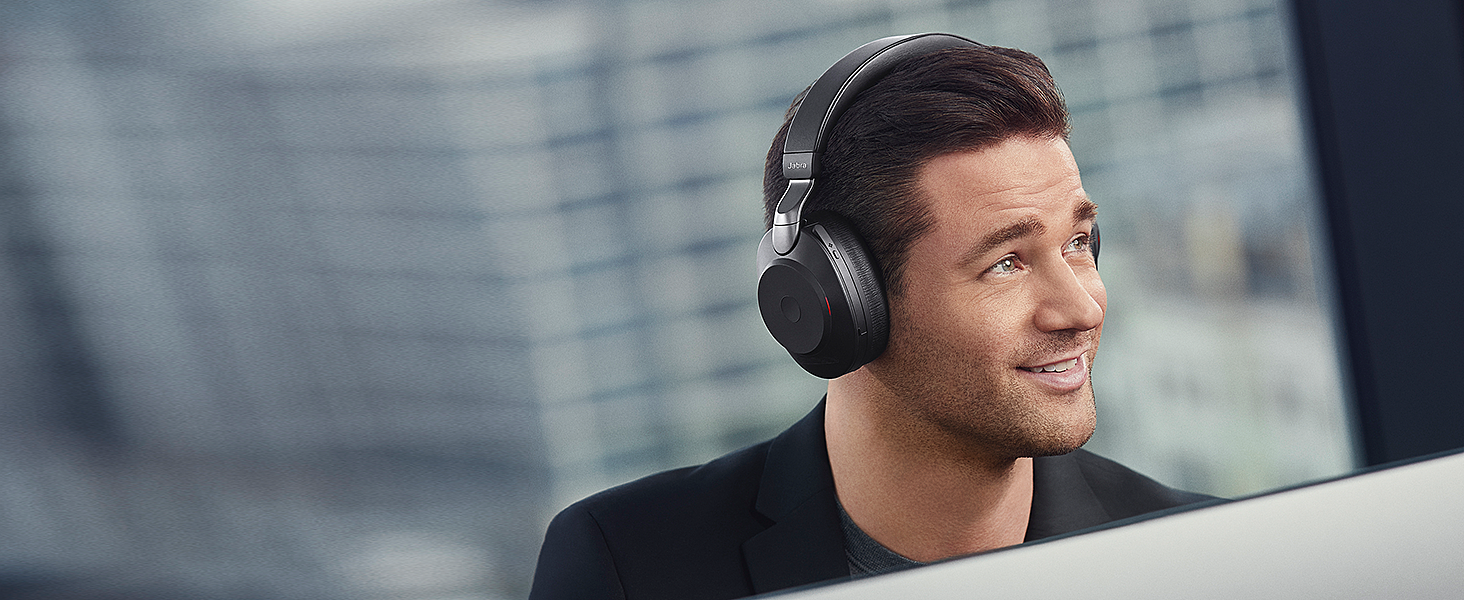
For professional communication, hybrid ANC has become the prevailing standard in premium headsets. The Jabra Evolve2 85, for instance, employs a 10-microphone array distributed between external and internal positions to achieve this dual-mode cancellation. More modestly priced options like the Sennheiser HD 450SE use feedback-only ANC, which delivers solid low-frequency reduction but leaves more mid-range office noise audible. The choice between these architectures is not simply about budget -- it is about matching the technology to the dominant noise profile of your workspace.
| ANC Type | Microphone Position | Strengths | Weaknesses | Best For |
|---|---|---|---|---|
| Feedforward | Exterior earcup | Fast response, mid-high frequency | Wind sensitivity, self-oscillation risk | Open offices, steady chatter |
| Feedback | Interior earcup | Self-correcting, low-frequency | Latency, poor transient response | HVAC hum, airplane cabins |
| Hybrid | Both positions | Broadest spectrum, highest reduction | Cost, power consumption, complexity | Variable environments, professional use |

Microphone Engineering: From Sound Waves to Clear Voice
If ANC creates the silence you need to think, microphone technology creates the clarity your colleagues need to understand you. Professional headsets employ a layered stack of microphone technologies, each addressing a different aspect of the voice transmission problem.
Beamforming is the foundational technique. Rather than relying on a single omnidirectional microphone that captures sound equally from all directions, beamforming uses an array of microphones to create a directional listening cone aimed at the speaker's mouth. The DSP calculates the microscopic time differences between the voice signal arriving at each microphone in the array. Sounds arriving from the direction of the mouth hit all microphones in near-synchrony and are amplified. Sounds arriving from other angles -- the television across the room, the dog barking outside -- arrive at each microphone at different times and are suppressed. The result is a spatial filter that isolates the speaker's voice from the surrounding environment.
The physical design of the microphone arm plays an underappreciated role here. A boom arm positions at least one microphone element close to the mouth, dramatically improving the signal-to-noise ratio before any digital processing begins. Acoustic physics dictates that sound intensity falls off with the square of the distance -- a microphone two inches from the mouth receives roughly sixteen times more voice energy than one twelve inches away. This is why headsets with boom arms consistently outperform designs that rely solely on earcup-mounted microphones for call clarity, regardless of how sophisticated the beamforming algorithm may be.
Beyond beamforming, professional headsets layer several digital signal processing technologies:
Digital Signal Processor noise cancellation operates on the microphone signal in real time, analyzing the spectral characteristics of incoming audio and filtering out patterns that do not match the expected profile of human speech. This is particularly effective against steady-state noise like air conditioning or engine rumble, which maintain consistent spectral signatures that the DSP can learn and subtract.
Voice Activity Detection (VAD) is a gatekeeper function that determines whether a given audio frame contains speech or silence. When no speech is detected, the microphone channel can be muted or attenuated, preventing the transmission of background noise during pauses in conversation. This technology is especially valuable in open office environments, where ambient noise levels fluctuate and traditional noise gates can produce audible chopping artifacts.
Acoustic Echo Cancellation (AEC) addresses a specific but critical problem: the sound from the headset's own speakers leaking into the microphone and being retransmitted to other participants. Without AEC, callers hear their own voice echoed back with a slight delay, creating a distracting and unprofessional experience. AEC algorithms model the acoustic path between the speaker and microphone and subtract the predicted echo from the microphone signal in real time.
The Poly Voyager Focus 2 integrates several of these technologies under what Poly calls its digital hybrid ANC platform, combining noise reduction with dynamic mute alerts and voice command support. The Jabra Biz 2400 II, designed for the very different demands of call center environments, takes a more focused approach: a single boom microphone with ENC processing optimized for voice clarity in high-density seating arrangements where dozens of agents speak simultaneously within arm's reach of each other.
The Ergonomics of Endurance: Comfort Engineering for All-Day Wear
Technical specifications like noise reduction depth and microphone frequency response are easily quantified, but comfort is the metric that determines whether a headset actually gets worn for the duration of a full workday. Professional headsets are not fashion accessories -- they are tools that must remain tolerable for eight, ten, or even twelve hours of continuous use. The engineering challenges this presents are more complex than they appear.
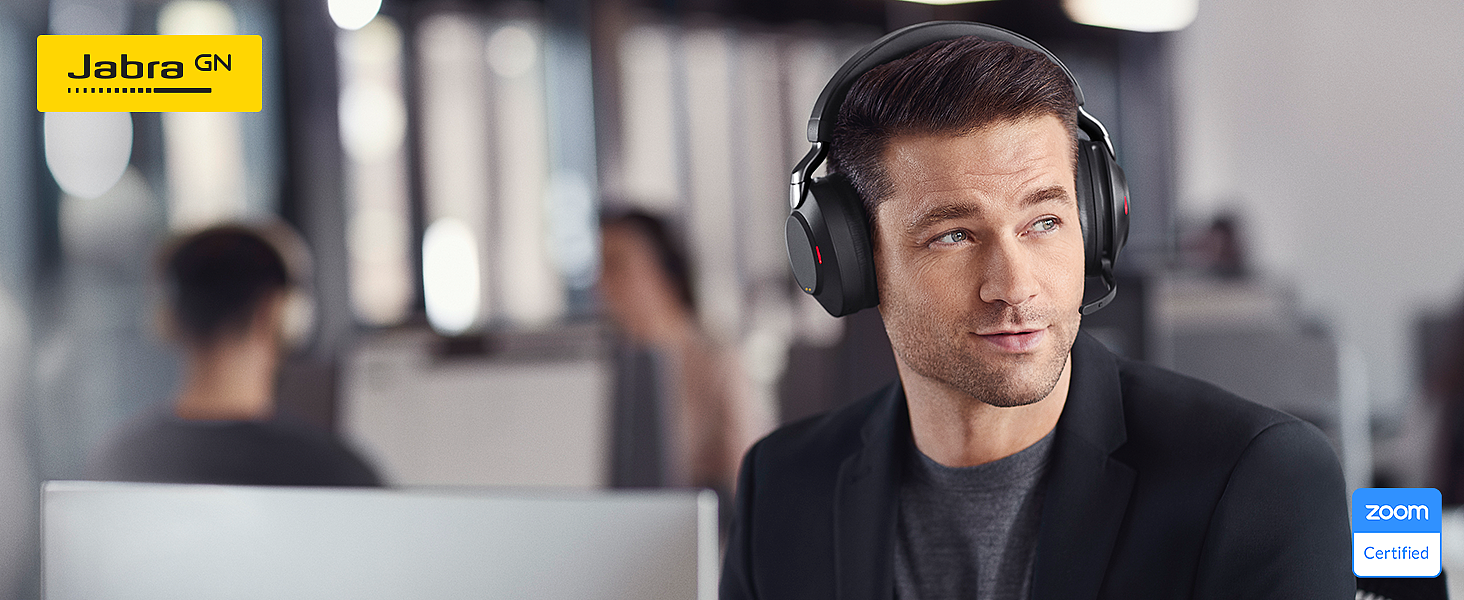
Weight and distribution form the foundation. The physics is straightforward: less mass means less downward force on the head, which means less compression of the scalp and reduced neck strain over time. Professional headsets targeting all-day use typically weigh under 300 grams. The Jabra Biz 2400 II takes this to an extreme at just 68 grams for the earpiece, achievable because its wired design eliminates the need for batteries. Wireless models face a harder trade-off: the Jabra Evolve2 85 weighs 286 grams, while the Poly Voyager Focus 2 achieves a notably lighter 175 grams through smaller earcups and a more compact battery, though it sacrifices some of the passive noise isolation that larger earcups provide.
But total weight tells only part of the story. Pressure distribution across the head determines where fatigue accumulates. Traditional straight headbands concentrate force on a narrow strip along the top of the skull. T-shaped and split-band designs spread this force across a wider area, reducing hotspots. Adjustable headbands with indexed detents allow users to find and return to their preferred fit without re-adjusting each time they put the headset on.
Ear pad design is where comfort meets acoustics. The materials and geometry of ear pads simultaneously determine how the headset feels against the skin and how effectively it blocks external sound passively. Memory foam wrapped in protein leather -- a synthetic material that mimics the softness and breathability of real leather without its maintenance requirements -- has become the industry standard for premium headsets. The foam conforms to the unique shape of each wearer's head, creating both a comfortable seal and an effective barrier against sound leakage.
The geometry matters as much as the material. Ear pads with a diameter of 40 millimeters or more accommodate larger ears without pressing against the cartilage. A pad depth of 20 millimeters or more prevents the speaker grille from touching the ear surface. And a slight tilt of approximately 15 degrees from the horizontal plane aligns the pad more naturally with the angle of the ear, reducing pressure on the jaw-side contact point.
For environments where heat buildup is a concern -- humid climates, poorly ventilated offices, or users who naturally run warm -- breathable mesh fabric ear pads offer an alternative. They sacrifice some passive isolation compared to protein leather but allow air circulation that prevents the sauna effect common with fully sealed designs.
The interaction between passive isolation and active noise cancellation creates an additional design consideration. A headset with excellent passive sealing requires less work from its ANC system, preserving battery life and reducing the likelihood of ANC artifacts like pressure sensation or low-frequency rumble. Conversely, a headset with weaker passive isolation must rely more heavily on its electronic cancellation, which consumes more power and may introduce audible processing artifacts during quiet passages.
Matching Technology to Your Work Environment
Understanding the technology is only useful if you can translate it into a decision that fits your specific situation. Professional headsets serve dramatically different environments, and the optimal choice for a home office differs substantially from what a call center agent needs.
The home office presents a particular challenge: the noise environment is highly variable. A quiet morning can shift to chaos when a delivery arrives, a neighbor starts yard work, or family members return home. This variability makes hybrid ANC the most effective architecture, because it maintains performance across the broadest frequency spectrum. Comfort is equally important, since home workers often wear headsets for longer uninterrupted stretches than office workers who move between meeting rooms. A headset like the Jabra Evolve2 85, with its hybrid ANC, 37-hour battery life, and memory foam padding, is engineered for exactly this use case. MultiPoint Bluetooth connectivity allows simultaneous connection to a computer and a phone, accommodating the reality that home workers frequently switch between devices.
The open office demands different priorities. Here, the dominant challenge is not variable noise but persistent, moderately loud background chatter from nearby colleagues. Feedforward ANC performs well in this environment because office chatter occupies the mid-frequency range where feedforward excels. However, the more critical feature is microphone quality -- specifically, how effectively the headset prevents your conversation from being overheard by the person sitting next to you and how clearly your voice comes through despite the ambient noise. Beamforming with a boom arm is essential. The Poly Voyager Focus 2 addresses this scenario with its digital hybrid ANC, dynamic mute alerts that prevent accidental broadcasting, and voice control that allows call management without touching the headset or computer.
The call center represents the most demanding environment for headset design. Agents wear headsets for their entire shift, often eight to ten hours with minimal breaks. They sit in dense rows, sometimes separated by only a low partition, with dozens of simultaneous conversations occurring within earshot. Weight becomes the paramount concern -- the Jabra Biz 2400 II at 68 grams is built for this reality, with a Kevlar-reinforced cable designed to withstand the constant movement and occasional tangles of a busy shift. Durability trumps luxury features: a call center headset needs to survive being dropped, yanked, and handled by different users across multiple shifts. Noise cancellation in this context is less about protecting the wearer's focus and more about ensuring the microphone transmits clean voice despite the wall of sound coming from neighboring agents.
Budget considerations inevitably play a role, and the relationship between price and capability follows a clear pattern. Entry-level headsets under $150 typically offer USB connectivity with basic ENC processing and minimal passive isolation -- adequate for occasional calls but insufficient for sustained professional use. The mid-range from $150 to $350 adds Bluetooth with multipoint support, improved beamforming, and either feedback or basic hybrid ANC. The premium tier above $350 delivers full hybrid ANC with professional UC certification, dedicated USB adapters for reliable PC connectivity, and the most sophisticated microphone arrays available.
The key insight is that the most expensive headset is not automatically the The most suitable option for your specific environment. A call center agent who opts for a $400 hybrid ANC wireless headset is paying for features they do not need -- Bluetooth multipoint, premium music codecs, long battery life -- while sacrificing the light weight and durability that matter most. Conversely, a remote worker who settles for a $100 wired headset to save money will struggle with background noise on calls and experience fatigue that undermines their productivity. The right headset is the one whose technology profile matches the acoustic and ergonomic demands of the specific work environment it will serve.
Understanding the science behind these devices transforms the selection process from a comparison of marketing claims into a rational evaluation of engineering trade-offs. Hybrid ANC delivers the broadest noise reduction but at the highest cost and complexity. Boom arm microphones provide superior voice capture regardless of the digital processing layered on top. Comfort is not a luxury feature but a functional requirement that determines whether the headset's technical capabilities are actually available to the user across a full workday. These principles hold regardless of brand, model year, or price point -- they are the immutable physics and ergonomics that define what a professional communication headset can and cannot do.
Jabra Evolve2 85 UC Wireless Headphones
Related Essays

KENKUO K68 Wireless Gaming Earbuds: Immerse Yourself with ANC & Low Latency
OnePlus Nord Buds 2 - Affordable ANC Earbuds
Google Announces Pixel Buds Pro: A Premium In-Ear Truly Wireless Earbuds with Active Noise Cancellation
Bluetooth Headset Faults Explained: Mic Dropouts, Choppy Audio, and Wind Noise

Why Your Conference Calls Sound Terrible: The Physics...

Why Your Conference Calls Sound Terrible: The Physics...

The Physics of Silence: How Active Noise Cancellation Works

The Physics of Silence: Decoding 30dB Reduction and...

Jabra Elite 7 Active: The Science of Secure Fit and Immersive Sound for Your Active Life
