The Purity of the Wire: Deconstructing the Science of Wired vs. Wireless Audio Fidelity


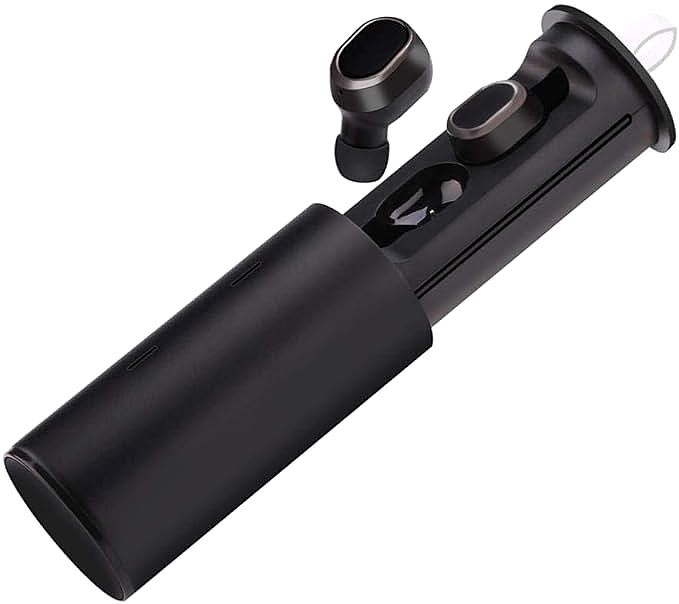
ZHYH In Ear Earphones
In our relentless pursuit of wireless convenience, we have systematically severed the tethers to our technology. From charging pads that free us from plugs to earbuds that promise a world without tangled cords, the future, we are told, is untethered. Yet, in the realm of high-fidelity audio, a quiet counter-movement persists, championing a technology that seems almost archaic by modern standards: the wire.
This raises a fascinating engineering question: in an age of sophisticated Bluetooth codecs and ever-shrinking batteries, is there still a scientific case to be made for the humble wired earphone? To explore this, we must look beyond feature lists and delve into the first principles of signal integrity and the ergonomics of wearability. By examining the extreme design choices embodied in a curious product like the ZHYH In-Ear Earphones—a device that paradoxically pairs a "wired" connection with an astonishingly light one-gram weight—we can deconstruct the trade-offs and rediscover the enduring value of a direct connection.
The Unbroken Signal: The Physics of Wired Fidelity
The primary argument for a wired connection is rooted in the physics of signal transmission. When you listen to a digital audio file, the journey from your device to your eardrum is a multi-step process of conversion and transmission. For a wireless earbud, that journey involves a crucial, and potentially compromising, step: compression.
To travel efficiently over the air via Bluetooth, the large digital audio file must be compressed by a codec (an enCOder-DECoder algorithm). This process intelligently discards parts of the audio data deemed "less audible" to the human ear to reduce the file size. While modern codecs like AAC and aptX are remarkably good, the process is, by definition, "lossy." Subtle details, the "air" in a recording, or the full dynamic range can be fractionally diminished.
A wired connection, by contrast, offers a direct, physical pathway for the electrical signal. After the initial digital-to-analog conversion (DAC) inside your phone or audio player, the analog electrical waveform travels uninterrupted through the copper wire to the drivers in the earphones. There is no compression and no re-decompression. It is, in essence, a purer, more direct transmission of the audio signal as it was intended to be heard. For those who prioritize audio fidelity, this absence of a lossy compression stage is the single most compelling reason to stick with the wire.
The Engineering of Imperceptibility: Chasing the One-Gram Ideal
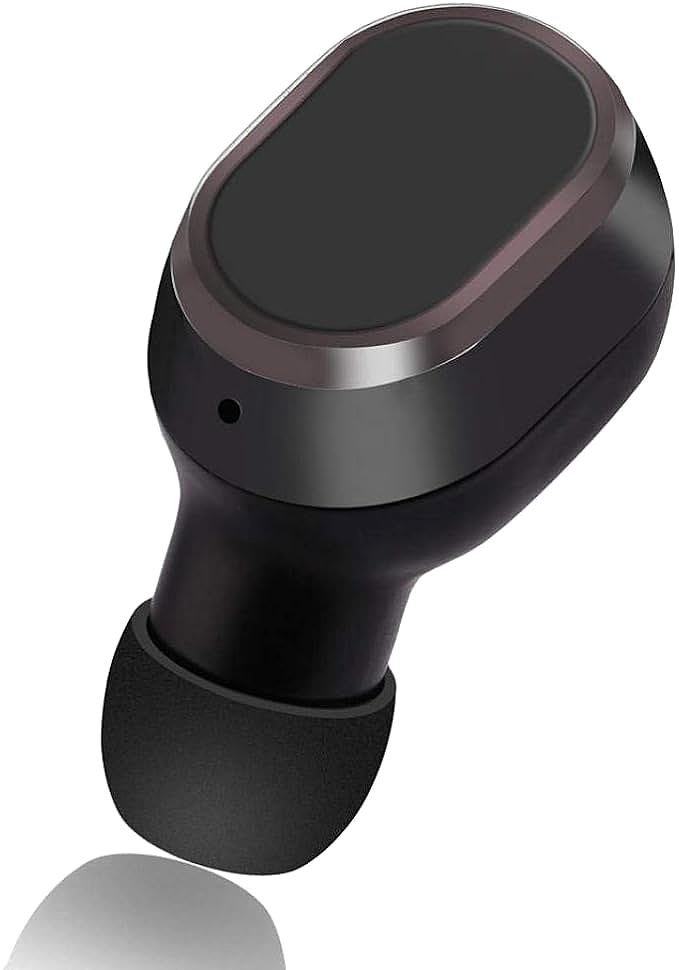
Beyond audio purity, the other frontier of personal audio is long-term comfort. The ZHYH earphone's claim of a one-gram weight per earpiece is an extreme example of this pursuit. While seemingly a minor detail, weight is a critical factor in the science of ergonomics and biomechanics.
Every gram exerts a constant gravitational force and possesses inertia. Over hours of wear, even a few extra grams can create pressure points on the delicate cartilage of the ear, leading to fatigue and soreness. A one-gram earphone, however, approaches a state of physical transparency. Its mass is so negligible that it exerts minimal pressure and has very little inertia, making it less likely to be dislodged by the motion of walking or turning your head.
Achieving such a low weight is a triumph of material science. The use of "synthetic-fiber" in the ZHYH's construction points towards the use of advanced polymers or carbon-fiber composites. These materials are engineered at a molecular level to provide a very high stiffness-to-weight ratio. This allows the earphone's housing to be both structurally robust and almost weightless. This relentless focus on minimizing mass is the key to creating an earphone that you can truly wear all day and forget it's even there—a state of "unlimited freedom and comfort."
The Paradox of Simplicity: Wired Reliability and Design Trade-offs
The choice of a wired connection also brings inherent benefits in reliability and simplicity, which directly complement the philosophy of a lightweight, minimalist design. A wired earphone has no internal batteries that need charging, no Bluetooth pairing to troubleshoot, and no susceptibility to wireless interference. It is a fundamentally more robust and dependable system.
This brings us to the perplexing specifications of the ZHYH earphones. The listing clearly states "Connectivity Technology: Wired," yet the product description and box contents mention a "Portable Charging Case" and "charger dock." This contradiction serves as a powerful lesson for the modern consumer: one must learn to critically analyze product information. While this discrepancy could be an error in the listing, it also forces us to consider the core, verifiable claims. In this case, the verifiable engineering pursuits are the wired connection and the one-gram weight.
A feature like a retractable cable, also mentioned, is a mechanical solution to the primary drawback of wired listening: cable management. A spring-loaded spool mechanism allows the cable to be neatly stored, preventing tangles and reducing wear and tear. It’s a practical piece of engineering that enhances the user experience of a wired device.
Conclusion: Re-evaluating Value in a Wireless World
In an industry obsessed with adding more features—more sensors, more wireless protocols, more complex software—it's refreshing to analyze a design, even a confusingly presented one, that appears to be focused on subtraction. The ZHYH earphones, through their core specifications, champion two fundamental, often-overlooked pillars of the personal audio experience: the absolute purity of a wired signal and the sublime comfort of a nearly weightless physical form.
While this specific product remains an enigma due to its conflicting information and lack of market feedback, it serves as an excellent thought experiment. It forces us to ask what we truly value. Is it the convenience of wireless freedom, with its inherent compromises in fidelity and battery dependency? Or is it the uncompromising signal integrity and effortless comfort that a simpler, meticulously engineered wired device can provide?
For the discerning listener, the engineer, or anyone who has ever felt frustrated by a dead battery or a skipping Bluetooth connection, the case for the wire remains as strong as ever. It is a testament to the idea that sometimes, the most advanced solution is the one that focuses on perfecting the fundamentals.
ZHYH In Ear Earphones
Related Essays

YINYOO Easy KZ ZST Colorful Hybrid Balance Armature In-Ear Headphones: A Budget-Friendly Hybrid Driver Earphone

How Hybrid Drivers Work: The Science of Hi-Fi Sound on a Budget

N/A Wired Glowing Zipper Sport Music Wired Earphones – Stylish and Dynamic

Erjigo KZ Zax in-Ear Monitors – Recommended for HiFi Stereo Sound

DETHONRAY BQEYZ Summer - Ultimate Audiophile Experience

Linsoul Tipsy Dunmer Pro – Audiophile Sound and Stylish Design

KZ ZSN Pro X - A Powerful Upgrade for HiFi Audio Experience

: KZ ZS10 Pro, Linsoul 4BA+1DD 5 Driver in-Ear HiFi Metal Earphones - An Audiophile's Dream

: Linsoul KZ x HBB PR2 13.2mm Planar Driver in Ear Monitor - For Audiophiles and Gamers

