The 93dB Paradox: Why the Final E5000 Demands Power to Deliver Perfection


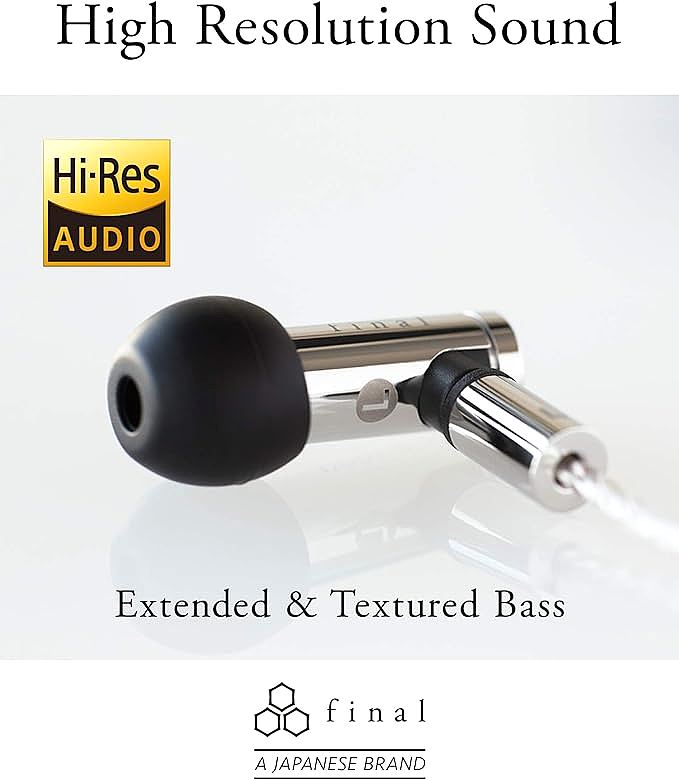
Final E5000 High Resolution Sound Isolating In-Ear Headphones
In the realm of In-Ear Monitors (IEMs), there is a prevailing trend towards efficiency. Manufacturers race to create earbuds that can be driven to deafening volumes by the weak amplifiers found in smartphones. The Final E5000 High Resolution Sound Isolating In-Ear Headphones stands as a defiant rejection of this philosophy.
With a sensitivity of just 93dB/mW, it is notoriously "hard to drive." To the uninitiated, this appears to be a flaw. However, from an engineering perspective, this low sensitivity is a deliberate design choice, a gatekeeper that ensures the listener pairs the device with a source capable of delivering genuine High-Resolution Audio. The E5000 is not just a headphone; it is a component of a system, engineered based on psychoacoustics rather than mass-market appeal.
The Physics of Subtlety: Deconstructing Sensitivity
Why would its maker design a headphone that requires more power? The answer lies in Control and Noise Floor. The pairing of 93dB/mW sensitivity with a 14-ohm impedance completes the picture: the earphone draws current freely but converts it to sound reluctantly, so the source must supply genuine voltage swing, not merely survive a low-impedance load.
High-sensitivity IEMs (e.g., 110dB+) are prone to picking up "hiss" (electronic background noise) from amplifiers. They also reach peak volume too quickly, leaving little room for the amplifier to operate in its optimal linear range. * The 93dB Advantage: By lowering the sensitivity, the design forces the amplifier to work harder. This pushes the noise floor down into inaudibility. More importantly, it requires the user to turn the volume knob up, engaging the amplifier's full dynamic potential. * The Result: A sound that is dense, textured, and devoid of the harsh, "shouty" peaks often found in highly efficient gear. It allows for what the maker calls "immersive sound," where the detail comes from micro-dynamics rather than artificial treble boosts.
Acoustic Architecture: The L-Shaped Chamber
While many manufacturers rely on Balanced Armature (BA) drivers for detail, this monitor utilizes a single 6.4mm Dynamic Driver, a diameter where miniaturization and acoustic engineering fight for every millimeter. To extract high-resolution performance from this small diameter, the maker employs a unique Acoustic Chamber.
Inside the rear housing of the driver unit, there is an acoustic resistor and an L-shaped pipe. This is not merely for venting; it is a precision-tuned Helmholtz resonator, a cousin of the tiny vent holes that quietly shape earbud sound. * Low-Frequency Tuning: This chamber controls the back-pressure of the driver. It tightens the bass response without cutting the sub-bass frequencies, creating a sense of warmth that doesn't bleed into the mids. * Psychoacoustic Impact: By physically manipulating air pressure rather than using digital EQ, the earphone achieves a tonal balance that aligns with how the human ear perceives distance and space. This creates the illusion of a "vast sound stage" that many reviewers note, which is rare for a sealed in-ear design.
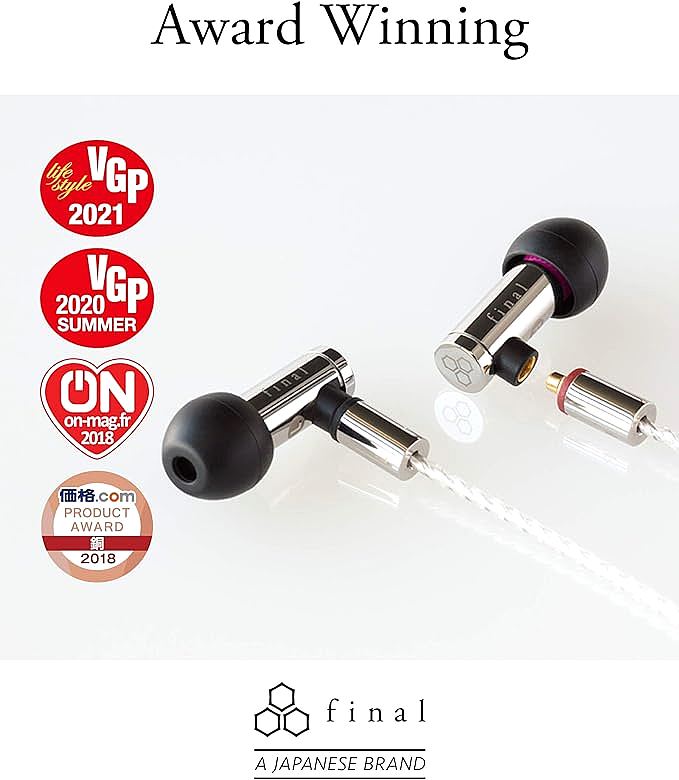
Material Science: Stainless Steel and Junkosha Cable Engineering
The chassis is machined from Stainless Steel with a mirror finish. Beyond aesthetics, steel has a high specific modulus (stiffness-to-weight ratio). * Resonance Control: A rigid housing prevents the driver's vibrations from resonating the shell itself. Unwanted shell resonance causes "smearing" of the audio image. Steel's density ensures that the only thing vibrating is the driver diaphragm, resulting in cleaner transients.
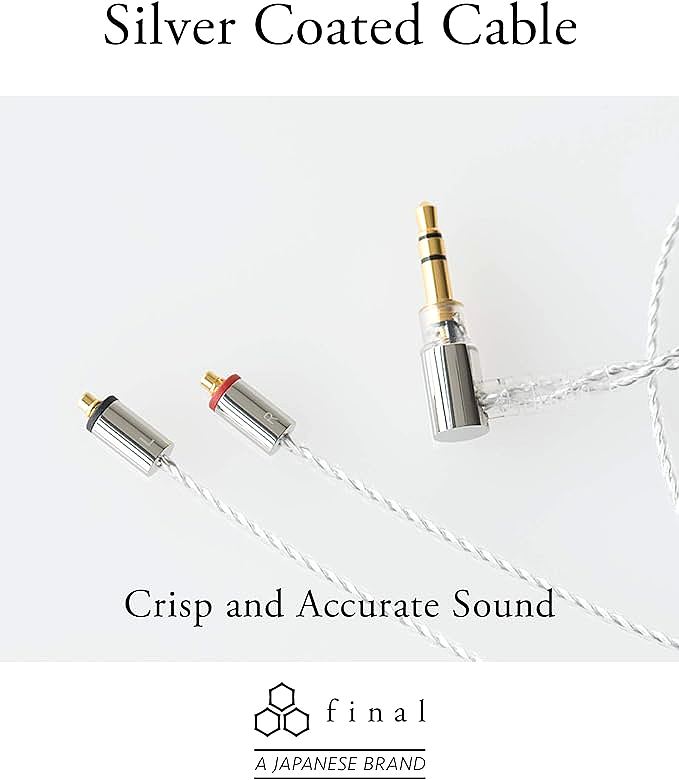
Connecting this housing to the source is a cable engineered by Junkosha, a company famous for developing cables for the "Kei" supercomputer. * The Silver Coating: The cable uses high-purity OFC (Oxygen-Free Copper) coated in silver. While the audible difference of cables is often debated, the physics of conductivity is clear: silver has the highest electrical conductivity of any metal. * Dielectric Properties: The insulation is made of PFA, a material with extremely low permittivity. This minimizes signal loss and capacitive interference, ensuring that the amplifier's power reaches the driver with minimal degradation, which is crucial for a low-sensitivity device. The detachable MMCX connector at the housing is built for the long haul as well: the manufacturer reports that its connection design withstands more than 50,000 bends, an order of magnitude beyond the 5,000-bend QA pass criterion it applies as its regular standard.

The Human Interface: The Swing-Fit Mechanism
Acoustic engineering is useless if the seal is poor. The maker addresses the anatomical variance of the human ear canal with its Swing-Fit Earpiece Mechanism.
Unlike rigid nozzles that force the ear tip into a specific angle, the nozzle here allows the tip to tilt and rotate. * Canal Alignment: This allows the tip to align perfectly with the unique curvature of the user's auditory canal. * Direct Transmission: A straight path from the driver to the eardrum prevents high-frequency attenuation caused by sound waves bouncing off the ear canal walls. This mechanism ensures that the sound delivered is the sound intended by the engineers.
The included ear tips support that goal in five sizes, with color-coded bushes whose shades alternate between neighboring sizes, so left, right, and fit can be confirmed even in subdued lighting.
The Philosophy of Aging
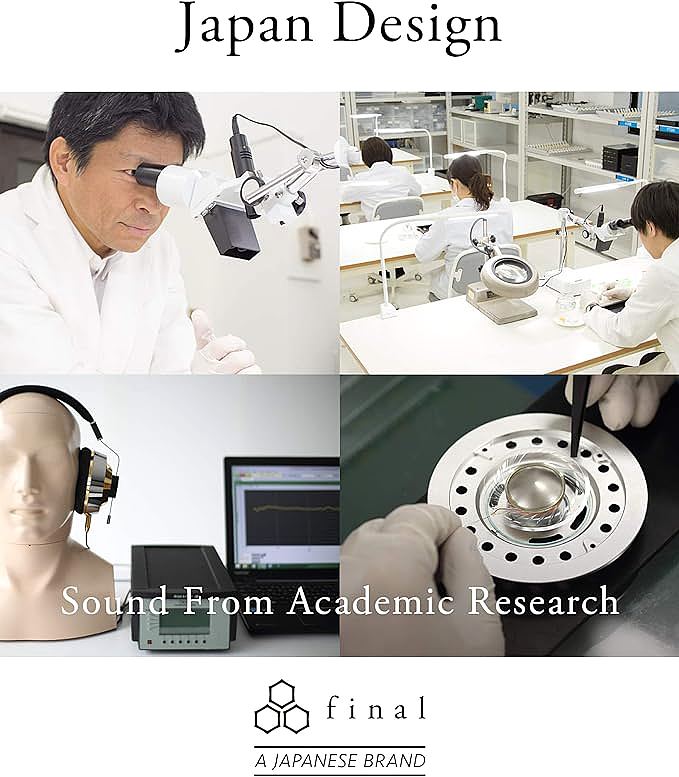
Final Audio openly discusses "Aging" (or burn-in) in its own product documentation, stating that the earphone generally requires 150-200 hours of regular use to reach the sound its designers intended. While controversial in some circles, for a high-tension dynamic driver, this has a physical basis. The surround and spider of the driver mechanism may loosen slightly over time, reducing mechanical resistance and potentially improving bass response and detail retrieval. It suggests a product designed for the long haul, not instant gratification.
Why Maturity Is the Design Goal
This is not an earphone for the casual listener looking for a quick bass fix from a smartphone dongle. It is a precision instrument that demands a dedicated source. It rewards the user who understands that true high-fidelity requires a synergy between the amplifier, the cable, and the driver. In a market obsessed with specs on paper, the design focuses on the physics of perception.
Final E5000 High Resolution Sound Isolating In-Ear Headphones
Related Essays

Beyond the Hype: Understanding Hi-Res Audio, 72H Playtime & Studio DNA

OnePlus Buds Pro 3: Immerse Yourself in Sound and Silence

Xiaomi OpenWear Stereo Hi-Res LHDC Earbuds: Hear the World, Feel the Music

Unleash the Symphony Within: Audio-Technica ATH-TWX7BK Wireless Earbuds

How Hybrid Noise Cancellation Works in True Wireless Earbuds: The Redmi Buds 4 Pro in Context

Ceramic Diaphragm In-ear Monitors: The Stiffness and Damping Story

Tone Therapy Sound Relief: How Three Minutes Calms the Mind

Denon RCD-N12: How to Use Pre-Outs to Build Your Ultimate Hi-Fi System

Water Sounds for Sleep: The Science Behind Nature Sounds and Neural Relaxation

