How Does White Noise Help You Sleep? The Science of Sound Masking and Brainwave Entrainment

ANWOON Sleep Machine
How Does White Noise Help You Sleep? The Science of Sound Masking and Brainwave Entrainment
For approximately three million years, human ancestors fell asleep to the sound of wind through canopy leaves, distant waterways, and the low-frequency electromagnetic hum generated by roughly 2,000 thunderstorms active across the planet at any given moment. That hum, known today as the Schumann resonance, pulses at 7.83 Hz, a frequency that falls precisely at the boundary between wakefulness and sleep in the human brain.
Modern bedrooms offer none of this. Instead, we contend with intermittent urban noise, HVAC systems that cycle on and off, and the digital chirps of devices that never fully power down. The result is a sensory environment radically different from the one our nervous system evolved to expect. Sleep machines like the ANWOON 4-in-1 Smart Sleep Machine represent an attempt to engineer what nature once provided freely: a consistent, predictable acoustic and electromagnetic environment that supports rather than disrupts sleep.
Understanding why these machines work requires a journey through physics, neuroscience, and a curious gap in evolutionary biology.
The Physics of Sound Masking
Acoustic Contrast Events: Why Sudden Sounds Wake You
Your brain never fully goes offline during sleep. The auditory cortex, the brain region responsible for processing sound, remains active throughout all sleep stages, functioning as a surveillance system that monitors the environment for potential threats. This was useful when a snapping twig might signal a approaching predator. It is less useful when a car alarm triggers at 3 AM.
The mechanism by which sounds disrupt sleep involves what researchers call acoustic contrast events. These are sudden changes in the acoustic environment: a door slamming, a dog barking, a phone buzzing. Your brain detects these events not by their absolute volume but by their contrast against the background sound level. A 50-decibel dog bark is barely noticeable in a 45-decibel room, but startling in a 20-decibel silent bedroom.
This is where sound masking becomes powerful. By introducing a consistent broadband noise floor, you reduce the contrast between the background and any intrusive sound. The dog bark still occurs at 50 decibels, but against a continuous 45-decibel white noise background, the contrast drops from 30 decibels to just 5 decibels, well below the threshold that typically triggers a sleep arousal.
Critical Bands and Auditory Threshold Mechanics
The auditory system does not process all frequencies equally. It divides sound into critical bands, roughly 24 frequency regions in the cochlea, each responding to a specific range of frequencies. When a sound within a critical band is already present (like white noise), additional sounds in that same band become harder to detect. This is the fundamental mechanism of auditory masking.
White noise, which contains energy at all audible frequencies, masks sounds across all critical bands simultaneously. This broadband masking is more effective than narrowband sounds (like a fan or air conditioner) because it covers all possible intrusion frequencies. A fan producing noise primarily at 120 Hz cannot mask a bird chirping at 3,000 Hz because they occupy different critical bands.
Why Broadband Noise Outperforms Narrowband
Research consistently shows that broadband noise sources produce superior sleep outcomes compared to narrowband or tonal sounds. The reason is mathematical. Each critical band has an independent masking threshold. Only broadband noise ensures that every band is enhanced, closing all potential pathways for disruptive sounds to reach consciousness.
The practical implication is significant. A mechanical fan might mask some frequencies but leave gaps that intermittent sounds can exploit. A well-designed digital noise generator producing true broadband noise covers the entire audible spectrum, leaving no acoustic gaps.
White, Pink, and Brown Noise: The Frequency Domain Explained
Fourier Analysis of Noise Colors
The distinction between white, pink, and brown noise lies in their frequency energy distribution. Fourier analysis, the mathematical technique of decomposing complex signals into their constituent frequencies, reveals the critical differences.
White noise has equal energy at every frequency. If you measured the power in the 100-200 Hz band and compared it to the power in the 5,000-5,100 Hz band, they would be identical. This flat spectral profile creates the characteristic harsh, static-like sound. It is the most aggressive masker because it applies equal pressure across all frequencies, but this very uniformity can be fatiguing to the auditory system.
Pink noise has equal energy per octave, meaning that as frequency doubles, the power remains constant. Because each successive octave spans a wider frequency range (the octave from 100-200 Hz spans 100 Hz, while 10,000-20,000 Hz spans 10,000 Hz), pink noise has more energy concentrated in lower frequencies. The power spectral density decreases at 3 decibels per octave, creating a sound that most people describe as more natural, resembling steady rainfall or wind through trees.
Brown noise (technically Brownian or red noise) decreases at 6 dB per octave, concentrating even more energy in the lowest frequencies. It sounds like a deep rumble, similar to distant thunder or a waterfall heard from far away. For people who find white noise too harsh and pink noise too bright, brown noise provides a warmer alternative.
The Clinical Evidence: 81.9% vs 33%
A systematic review published in the Journal of Clinical Sleep Medicine analyzed 34 studies encompassing 1,103 participants across white noise, pink noise, and multi-audio interventions. The results were striking: pink noise showed positive sleep outcomes in 81.9% of studies, compared to only 33% for white noise.
This dramatic gap has a plausible neurological explanation. Pink noise's emphasis on lower frequencies more closely mirrors natural ambient environments. Humans evolved sleeping near wind, water, and vegetation, sounds that are spectrally weighted toward lower frequencies. Pink noise may be more effective because it better matches the auditory environment our brains are calibrated to expect during sleep.
A 2026 study published in Communications Medicine (Nature) provided particularly compelling evidence for pink noise's protective effects. Researchers found that during continuous playback of pink noise, the negative physiological effects of traffic noise exposure during sleep, including enhanced heart rate and metabolic disruption, were significantly reduced. The study concluded that even when total sleep time was not affected, noise can disturb the body's physiology in ways that may affect long-term health, and that sound masking can mitigate these effects.
How White Noise Machines Generate Sound
Thermal Noise and Algorithmic Synthesis
The sound generation technology inside modern sleep machines involves more engineering than most users realize. White noise can be generated through two primary approaches: hardware-based thermal noise and software-based algorithmic synthesis.
Thermal noise, also called Johnson-Nyquist noise, is the random electrical noise generated by the thermal agitation of charge carriers inside an electrical conductor. In practical terms, a resistor at room temperature produces a tiny random voltage that, when amplified, produces authentic white noise. This method produces genuinely random noise with no repeating patterns, but requires careful engineering to avoid introducing electronic artifacts.
Algorithmic synthesis uses digital signal processing (DSP) to generate noise mathematically. Pseudorandom number generators produce sequences of numbers that, when converted to audio samples at a given sampling rate, create white noise. For pink noise, the algorithm applies a filter that attenuates higher frequencies at the appropriate rate (-3 dB/octave). Brown noise requires steeper filtering (-6 dB/octave).
Why Digital Beats Mechanical Sources
Mechanical white noise machines, typically using fans, produce noise with spectral characteristics determined by the fan's physical properties: blade design, motor speed, and housing acoustics. These are inherently limited in their spectral flexibility. You get one sound profile determined by the physical device.
Digital machines can produce any noise color, adjust volume precisely, layer multiple sounds, and maintain perfect consistency throughout the night without the mechanical wear or motor noise that fan-based devices introduce. The ANWOON machine exemplifies this approach, offering white noise, pink noise, brown noise, and rain sounds through digital generation.
Schumann Resonance: The 7.83 Hz Sleep Frequency
Earth-Ionosphere Cavity Physics
Between the Earth's surface and the ionosphere, roughly 80 kilometers above, exists a electromagnetic cavity. Lightning discharges, occurring approximately 40-50 times per second worldwide, excite this cavity like a drum being struck. The cavity has resonant frequencies determined by its physical dimensions, just as an organ pipe has resonant frequencies determined by its length.
The fundamental resonant frequency of the Earth-ionosphere cavity is approximately 7.83 Hz, first calculated by physicist Winfried Otto Schumann in 1952 and measured experimentally in 1960. Higher harmonics exist at approximately 14.3, 20.8, 27.3, and 33.8 Hz, but the fundamental mode at 7.83 Hz carries the most energy.
The Alpha-Theta Boundary
Human brainwaves are categorized by frequency bands. Delta waves (0.5-4 Hz) dominate during deep sleep. Theta waves (4-8 Hz) characterize light sleep and drowsiness. Alpha waves (8-13 Hz) appear during calm, relaxed wakefulness. The transition from wakefulness to sleep involves a progressive slowing of brainwave frequency, moving from alpha through theta and into delta.
The Schumann resonance fundamental at 7.83 Hz falls precisely at the alpha-theta boundary, the exact frequency zone where the brain transitions from relaxed wakefulness to sleep onset. This is not a coincidence. The Biological Medicine Institute notes that this positioning reflects a fundamental relationship between human consciousness states and Earth's natural electromagnetic environment.
The hypothesis, supported by preliminary research, is that exposure to 7.83 Hz electromagnetic fields may facilitate the brain's natural transition into sleep by providing a frequency reference that supports the alpha-to-theta shift. This is the principle behind the Schumann wave therapy feature in devices like the Wireless Earbuds.
Clinical Evidence for Schumann Therapy
A randomized, double-blinded clinical study published in Nature Scientific Reports investigated Schumann resonance for insomnia treatment. Using polysomnography to measure objective sleep parameters, the study found significant improvements in sleep-onset latency (time to fall asleep) and total sleep time among participants using genuine Schumann resonance devices compared to placebo controls.
Additional research indicates that athletes sleeping in rooms with 7.83 Hz field generators showed 47% faster recovery metrics compared to controls, suggesting that Schumann resonance exposure may enhance the restorative quality of deep sleep beyond simply helping people fall asleep faster.
Slow-Wave Oscillations and Memory Consolidation
The Neuroscience of Deep Sleep
Deep sleep, known as slow-wave sleep (SWS), is characterized by synchronized oscillations of large neuronal populations at 0.5-4 Hz (delta waves). This stage is critical for physical restoration, immune function, and memory consolidation. During SWS, the brain replays and consolidates memories formed during wakefulness, transferring them from short-term to long-term storage.
Research from Northwestern University has demonstrated that pink noise, when timed to coincide with the up-states of slow oscillations during deep sleep, can enhance this memory consolidation process. Participants exposed to pink noise stimulation during slow-wave sleep showed significantly better memory retention compared to control conditions.
This finding suggests that sound therapy during sleep does not merely prevent disruptions but may actively enhance the restorative functions that sleep provides. The mechanism involves auditory stimulation that synchronizes with the brain's natural oscillatory patterns, potentially boosting the efficiency of memory consolidation.
Why This Matters for Cognitive Health
Chronic sleep disruption is associated with accelerated cognitive decline, impaired immune function, and increased cardiovascular risk. If sound masking technology can both reduce sleep disruptions (through acoustic masking) and potentially enhance deep sleep quality (through frequency-specific stimulation), the health implications extend far beyond simply feeling more rested.
The ANWOON machine's combination of sound masking capabilities with Schumann wave therapy represents an integrated approach to sleep environment engineering. Sound masking prevents acoustic disruptions. Pink noise may enhance slow-wave sleep. And Schumann resonance exposure may facilitate sleep onset and improve deep sleep quality. Together, these modalities address sleep from multiple angles, reflecting the understanding that good sleep is not the absence of noise but the presence of the right acoustic and electromagnetic conditions.
Engineering Your Sleep Ecosystem
Optimal Parameters from Clinical Research
Research has established specific parameters for effective sound therapy during sleep. Volume should target 30-50 decibels at the pillow, roughly the level of light rain or a quiet library. Placement should be at least 2 meters from the bed to avoid localization (the brain detecting the sound source). Continuous playback throughout the sleep period is more effective than timed intervals.
For noise color selection, the evidence favors pink noise as the first choice, with white noise as an alternative for those who find pink noise too quiet against higher-frequency intrusions. Brown noise suits individuals who find both white and pink noise too bright. The systematic review data showing 81.9% positive outcomes for pink noise versus 33% for white noise provides strong guidance.
The Multi-Modal Approach
Modern sleep engineering recognizes that optimal sleep environments address multiple sensory channels simultaneously. Sound masking handles the auditory dimension. Schumann wave therapy addresses the electromagnetic dimension. Aromatherapy, included in devices like the ANWOON, targets the olfactory dimension, where research suggests lavender and similar scents may complement sound-based sleep enhancement.
The future of sleep engineering likely involves personalized sleep environments tailored to individual sensitivity profiles. For now, understanding the physics and neuroscience behind these technologies allows informed decisions about which features matter and why, turning the quest for better sleep from guesswork into engineering.
ANWOON Sleep Machine
Related Essays

Water Sounds for Sleep: The Science Behind Nature Sounds and Neural Relaxation

Why Your Brain Needs Sound to Sleep: The Science of White...
Water Sounds for Sleep: The Science Behind Nature Sounds and Neural Relaxation
The Architecture of Silence: Managing Tinnitus Through Acoustic Engineering

Beyond Silence: The Neuroscience of Sound Masking and the Fallacy of the Loop

YIRENZUI White Noise Machine: Your Pocketful of Tranquility

HoMedics HDS-1000 Deep Sleep I Therapy Machine: Your Key to Tranquil Sleep (Sound Therapy and Sleep Science)

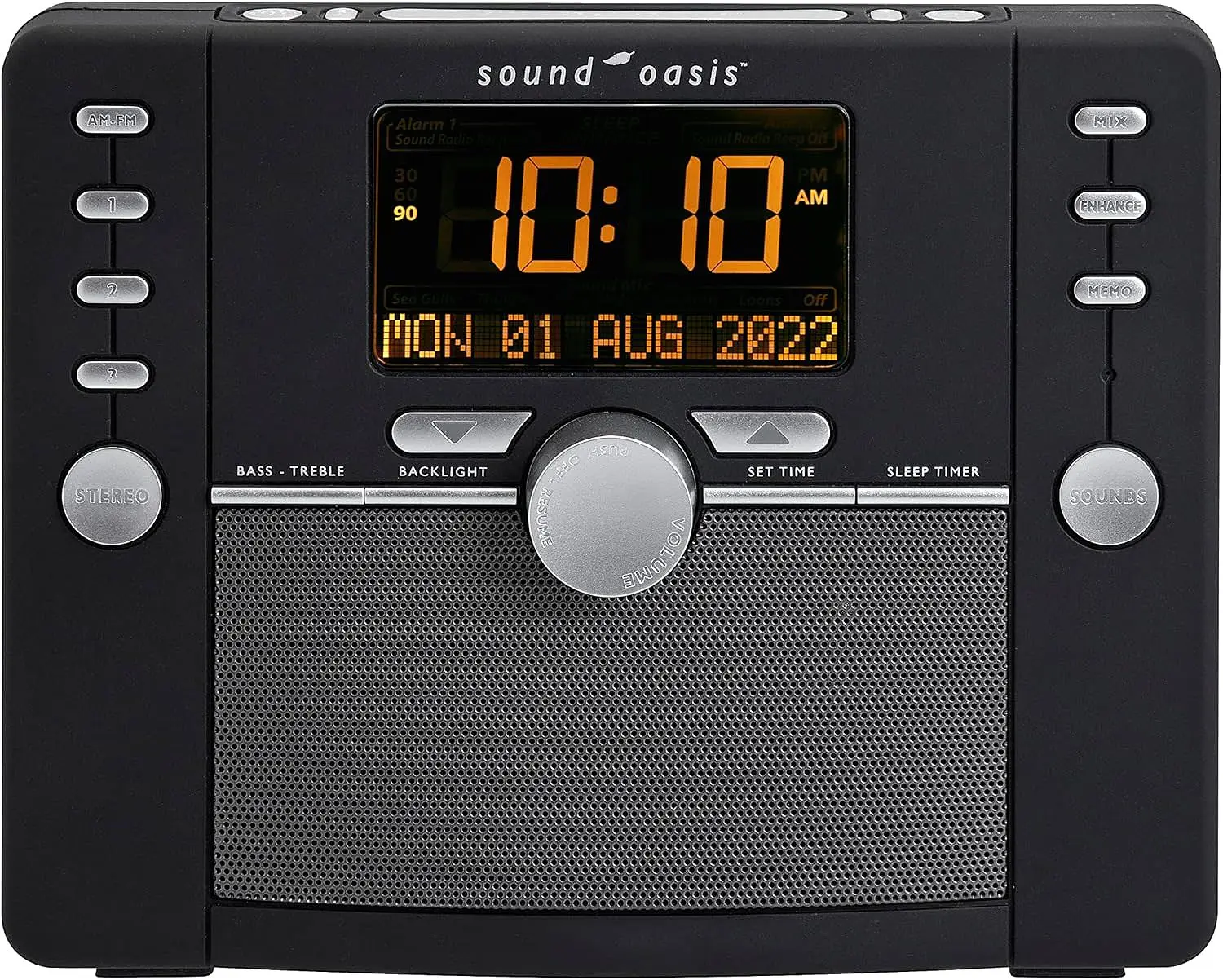
Sound Oasis Deluxe Bluetooth Sleep Tinnitus Sound Machine: Your Oasis of Tranquility in a Noisy World
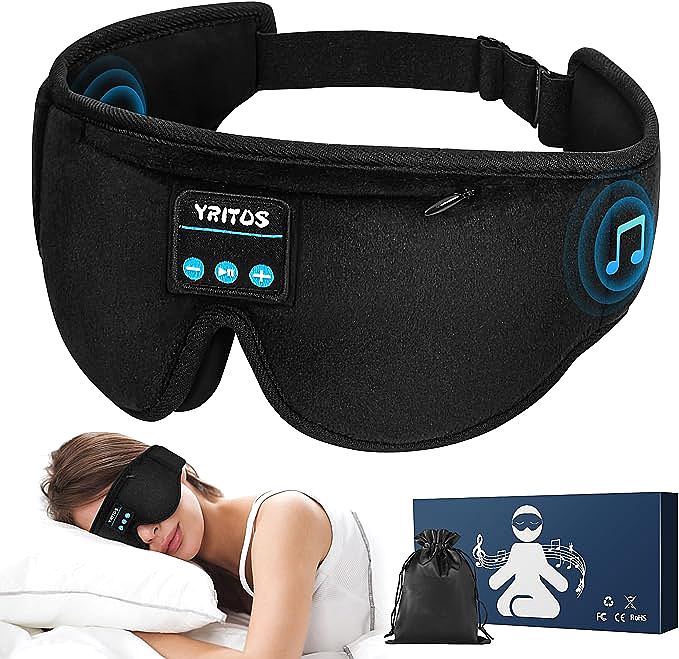
YRITOS TOS01 Sleep Headphones Bluetooth Sleep Mask
