The Modular Future: Why Detachable Audio Systems Survive the Wireless Age
Update on Dec. 31, 2025, 6:30 p.m.
In the grand timeline of consumer electronics, few components have sparked as much controversy, nostalgia, and technical debate as the humble headphone jack. For decades, the 3.5mm TRS (Tip-Ring-Sleeve) connector was the universal tongue of audio, a lingua franca that allowed a pair of headphones from 1980 to sing perfectly with a device from 2010. Its elegance lay in its simplicity: a purely analog signal path, unencumbered by handshakes, firmware updates, or battery levels.
However, the relentless march of miniaturization and the “wireless-first” philosophy of modern smartphone manufacturers have fractured this universality. We have entered the era of the “Dongle Apocalypse,” where the connection between source and transducer is mediated by fragile adapters, proprietary standards (Lightning), and the rising dominance of USB-C. In this chaotic landscape, the rigid, permanently attached cable has become a liability—a single point of failure that can render a perfectly good pair of headphones obsolete or unusable.
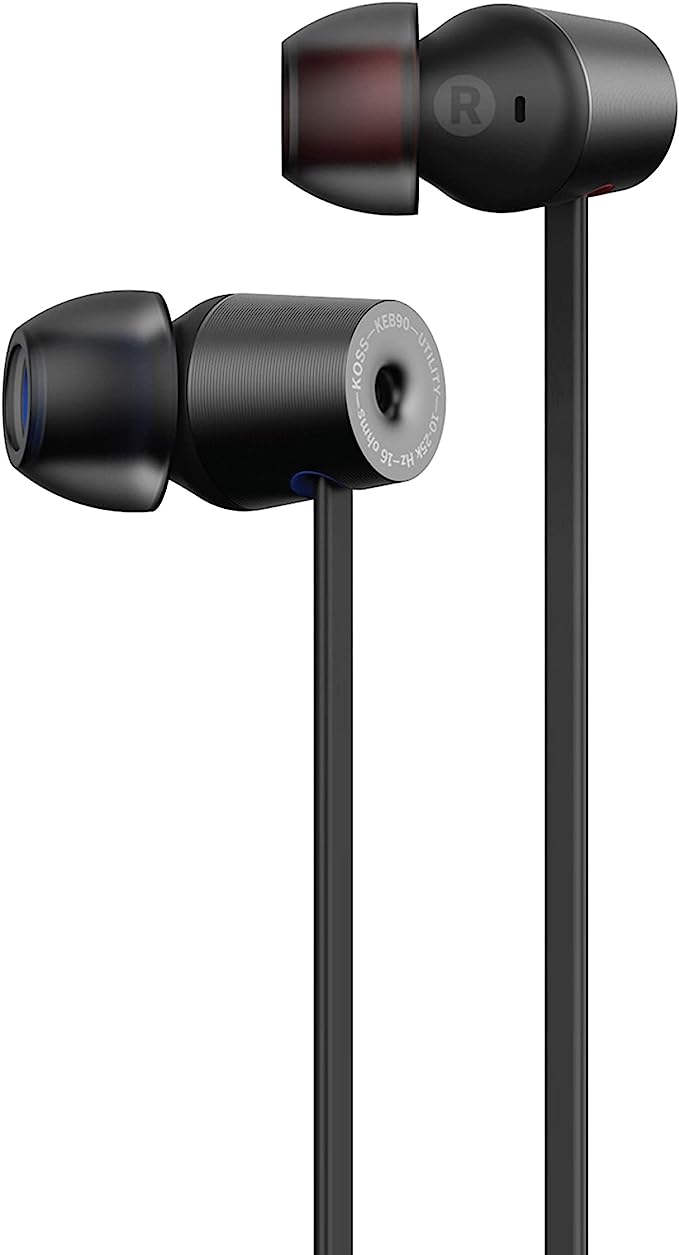
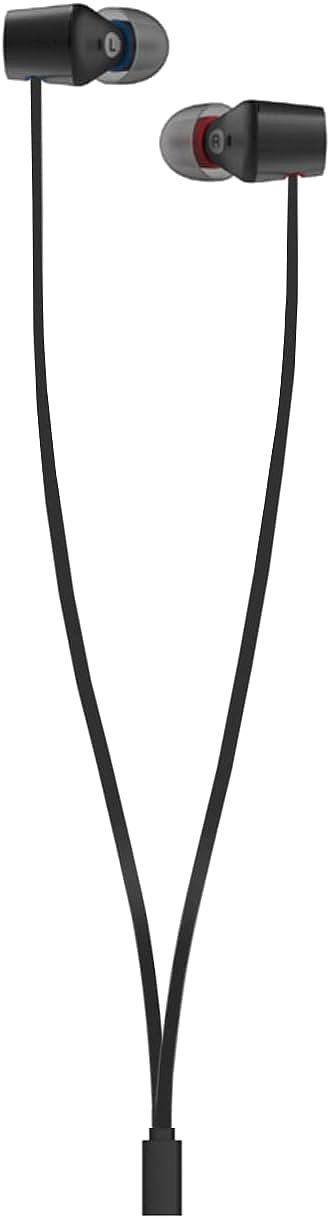
The Koss KEB90 Utility Earbuds emerge not merely as a listening device, but as a strategic response to this fragmentation. By adopting a detachable interchangeable cord system, they champion a philosophy of modularity that extends the lifespan of the product and restores user agency. This article delves deep into the history of audio interfaces, the physics of signal transmission, and why the separation of “driver” and “cable” is the only sustainable path forward for high-fidelity personal audio.
The Historical Trajectory of Audio Interfaces
To appreciate the significance of a modular system, we must first trace the lineage of the connection itself. The history of audio connectors is a history of friction between standardization and innovation.
The Reign of the Phone Connector
The original 6.35mm (1/4 inch) phone connector dates back to the late 19th century, designed for manual telephone switchboards. It was robust, tactile, and functionally immortal. As portable electronics emerged in the mid-20th century—driven by the transistor radio and later the Walkman—the need for miniaturization gave birth to the 3.5mm connector.
For nearly forty years, this standard reigned supreme. It relied on the playback device (the Walkman, the CD player, the iPod) to handle the heavy lifting: converting digital data into an analog voltage signal (DAC) and amplifying it (Amp) before sending it down the wire. The wire was a passive conduit. This architecture meant that headphones were universally compatible because they didn’t need to “understand” the source; they just needed to receive voltage.
The Digital Rupture
The removal of the 3.5mm jack from flagship smartphones marked a paradigm shift. It forced the audio processing chain—the DAC and the Amp—out of the phone and into the periphery. This created a bifurcation in the market:
1. Wireless (Bluetooth): Moving the DAC, Amp, and battery into the headphones themselves.
2. Digital Wired (USB-C/Lightning): Moving the DAC and Amp into the connector or a dongle.
This transition introduced “digital friction.” Headphones could no longer just be passive resistors; they had to participate in the digital ecosystem. A Lightning pair of headphones became useless on an Android device; a USB-C pair might struggle with a legacy laptop. The universality was lost.
The Philosophy of the Utility System: Solving the “Dongle Hell”
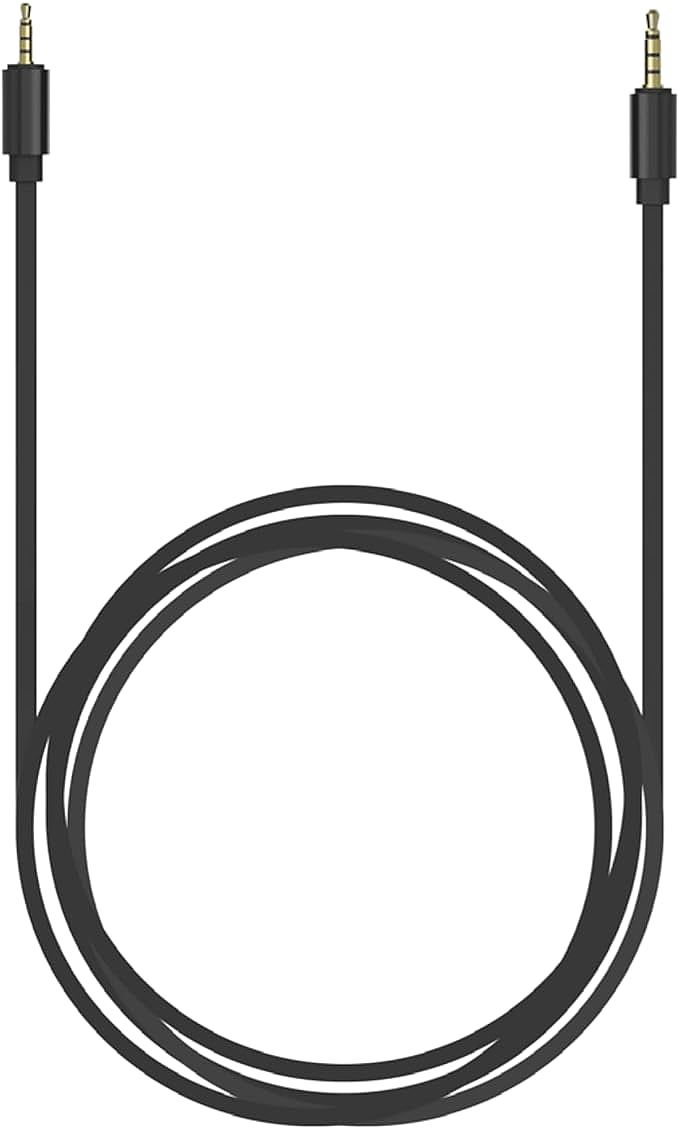
The Koss Utility Series, typified by the KEB90, proposes a solution to this interface chaos through modularity. Instead of embedding the connector permanently into the driver housing (as is common with standard earbuds) or relying on a clumsy external dongle that hangs off the end of a 3.5mm plug, the Utility system creates a structural split in the cable itself.
The 2.5mm Interconnect Strategy
At the heart of the system is a 2.5mm stereo jack located on the “Y-split” of the cable. This is a critical engineering decision. By placing the modular connection point here, rather than at the earbud shell (like MMCX or 2-pin connectors found on audiophile IEMs), Koss solves two problems:
1. Weight Distribution: Connectors at the ear can add bulk and leverage, pulling the earbud out. Moving the connector to the chest level keeps the earbud lightweight.
2. Universal Core: The “headphone” part (drivers + upper cable) remains constant. The “interface” part (lower cable) becomes a swappable module.
This allows the user to hot-swap between a standard 3.5mm Utility cord (analog pass-through) and a USB-C or Lightning Utility cord (digital processing). It effectively future-proofs the drivers. If USB-C is eventually replaced by a new standard in ten years, the user theoretically only needs a new lower cable, not new headphones. This is the essence of sustainable product design.
The Signal Chain: Analog vs. Digital Transmission
Understanding the KEB90’s modularity requires understanding what actually travels through these cables. The difference between the 3.5mm cord and the USB-C cord is not just physical shape; it is the difference between transmitting electricity and transmitting data.
The Analog Path (3.5mm)
When using the included 3.5mm Utility cord, the KEB90 operates as a traditional passive transducer. The smartphone or DAC handles the digital-to-analog conversion. The cable simply carries the alternating current (AC) voltage that drives the 16 Ohm dynamic drivers. In this mode, the sound quality is heavily dependent on the quality of the source’s internal DAC/Amp. If your laptop has a noisy headphone jack, the KEB90 will faithfully reproduce that noise.
The Digital Path (USB-C/Lightning)
When you swap to the USB-C Utility cord, the signal chain changes fundamentally. The phone sends raw binary data (0s and 1s) out of the port. The cable itself houses a miniaturized DAC (Digital-to-Analog Converter) and headphone amplifier within its housing.
This “inline DAC” supports high-resolution audio, typically up to 24-bit/96kHz. * Bit Depth (24-bit): Determines the dynamic range (the difference between the quietest and loudest sounds). 24-bit offers a theoretical dynamic range of 144dB, far exceeding the noise floor of any listening environment. * Sampling Rate (96kHz): Determines the frequency bandwidth. While human hearing caps at 20kHz, higher sampling rates push “aliasing noise” (digital artifacts) far into the ultrasonic range, allowing for gentler filtering and cleaner audible sound.
By integrating the DAC into the cable, the KEB90 ensures a consistent “Sound of Koss” regardless of the source device. The cable takes over the responsibility of audio quality from the phone. This is a crucial advantage for audiophiles who use devices with poor internal audio circuitry.
The Sustainability Imperative: Combating E-Waste
We live in a disposable culture. The average lifespan of a pair of cheap wireless earbuds is 18 to 24 months, usually dictated by the death of the non-replaceable lithium-ion battery. Once the battery dies, the entire device—plastic, drivers, magnets, PCBs—ends up in a landfill.
The Longevity of Passive Drivers
Dynamic drivers, like the ones in the KEB90, are incredibly durable mechanisms. A well-made driver can last for decades. The weak link in wired headphones has always been the cable—specifically the strain relief points near the jack and the earbud.
By making the cable detachable, the KEB90 transforms from a disposable consumable into a durable asset. If the cable frays (which reviews note can happen with the “flat cable” design), it can be replaced without discarding the functioning drivers. This aligns with the growing Right to Repair movement, which advocates for product designs that allow for component-level maintenance.
Furthermore, because the KEB90 has no internal battery, it is immune to chemical degradation. It does not suffer from charge cycles. A KEB90 purchased today will function exactly the same way in 2035, provided you have the correct cable adapter. In contrast, a TWS earbud purchased today will likely be functionally useless in five years due to battery failure. For the environmentally conscious consumer, wired, modular audio is the only responsible choice.
The Ergonomics of Modularity
While the theoretical benefits of modularity are clear, the practical execution determines the user experience. The KEB90 uses a flat cable design intended to reduce tangling—a common nemesis of the wired listener.
However, modularity introduces its own ergonomic challenges. The connection point (the 2.5mm jack) adds a small amount of weight and rigidness to the cable. Koss mitigates this by positioning it such that it rests naturally on the chest, but for active users (runners, gym-goers), this swinging connector can be a distraction. This highlights the trade-off inherent in the design: you gain versatility and longevity, but you sacrifice the streamlined simplicity of a single, unbroken wire.
The Stealth Grey Aluminum chassis of the KEB90 further reinforces this utilitarian aesthetic. It is not designed to be jewelry; it is designed to be a tool. The metal construction provides shielding against electromagnetic interference (EMI) and physical protection for the driver, ensuring that the modular “head” of the system is as robust as the replaceable “tail.”
Conclusion: The Wire as a Lifeline
In a world rushing towards a wireless future, the Koss KEB90 Utility Earbuds stand as a defiant, logical counter-argument. They remind us that the wire is not just a tether; it is a lifeline for high-fidelity audio. It creates a path for lossless transmission, eliminates battery anxiety, and, through the innovative Utility system, offers a bridge across the fragmented landscape of modern device ports.
By decoupling the driver from the connector, Koss has created a product that respects the user’s investment. It acknowledges that while digital standards change (USB-A to USB-C, Lightning to ?), the physics of a good speaker driver remain constant. The KEB90 is not just a pair of earbuds; it is a platform—adaptable, repairable, and enduring. For those who prioritize sound quality, sustainability, and reliability over the fleeting convenience of Bluetooth, the modular wire is the ultimate feature.