French Roast Coffee Chemistry: Pyrolysis and Oil Migration Science

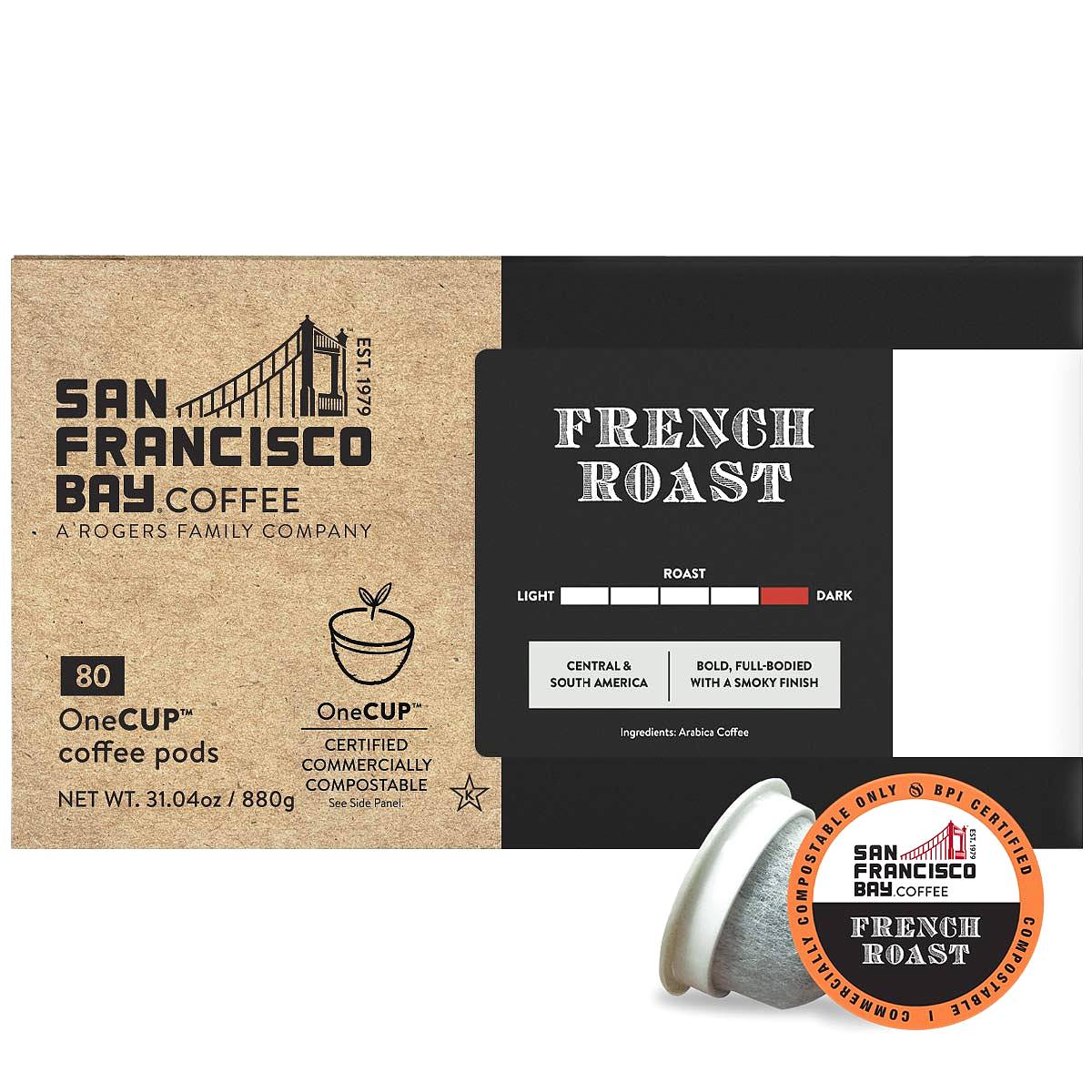
San Francisco Bay Compostable French Roast Coffee Pods
It begins with a sound—sharp, audible, like tiny bones snapping. First crack. Then, if you push further, a second crack arrives, softer and more ominous. Between these two moments lies the difference between a bright, acidic cup and something darker, smokier, more polarizing. French roast doesn't just cross the line; it obliterates it, trading origin character for the primal intensity of thermal transformation.
This is not art. It is chemistry—a precise sequence of endothermic and exothermic reactions that convert a dense, grassy seed into a brittle, aromatic brown bean. And at the far end of the roast spectrum, where temperatures approach 480°F, a specific chemical process takes over: pyrolysis, the thermal decomposition of organic matter in the absence of oxygen. It is this process that creates the signature smoky, bittersweet character of French roast, and it is unforgiving. Push too far, and you have charcoal. Stop too soon, and you have something merely dark, not French.
The Physics of the Roast Curve: Two Cracks and the Gap Between
Roasting is measured in cracks—audible markers of structural change inside the bean. These are not arbitrary checkpoints but physical events caused by steam and gas pressure fracturing the bean's cellulose matrix.
First crack arrives around 385°F. Water vapor trapped inside the bean escapes rapidly, causing the bean to expand and pop. This is the domain of light and medium roasts, where enzymatic flavors—fruit, floral, origin character—remain intact. The bean has dried, browned, and developed, but its fundamental identity reflects where it was grown, not how it was roasted.
Between first and second crack lies what roasters call "the gap." Here, chemical complexity builds. The Maillard reaction—browning of amino acids and sugars—creates hundreds of flavor compounds. Melanoidins form, contributing body and brown color. But the bean is still structurally sound, oils still trapped inside.
Second crack arrives around 435°F. The cellulose matrix fractures further, releasing carbon dioxide and, critically, coffee oils. This is the frontier of dark roast. The origin flavors that survived first crack now begin to fade, replaced by roast-derived character. But true French roast goes further still.
French roast occurs well into or just after second crack, typically between 465°F and 480°F. At this temperature range, the dominant chemical process shifts from Maillard reaction to pyrolysis. The distinction matters: Maillard creates complexity; pyrolysis creates intensity. One builds flavor, the other transforms it at a molecular level.
Pyrolysis: Thermal Decomposition and the Birth of Smoke
Pyrolysis is the thermal decomposition of organic material in the absence of oxygen. In the context of coffee roasting, it is what happens when sugars and cellulose fiber are pushed beyond caramelization into carbonization.
The chemical changes are profound:
Sugar carbonization: Complex sugars break down into simpler compounds, creating bittersweet notes. The sweetness of caramelization gives way to the char of pyrolysis.
Fiber decomposition: Cellulose, the structural material of the bean, begins to break down. This creates the "smoky" character that defines French roast—a flavor that comes not from the bean's origin but from the roasting process itself.
Acid reduction: Volatile organic acids—citric, malic, phosphoric—burn off during pyrolysis. This is why French roast has low perceived acidity. The bright, sharp notes that characterize light roasts are literally vaporized by heat.
The result is a cup that tastes not of where the coffee was grown, but of what was done to it. For some drinkers, this is heresy. For others, it is the entire point.
The Migration of Lipids: Why Dark Beans Shine
Hold a French roast bean to the light. It gleams—oily, almost wet. This sheen is not added flavoring or artificial coating. It is coffee oil, naturally present in the bean, now visible on the surface.
Green coffee beans contain 10-17% lipids by weight. These oils are trapped inside the cellular structure, protected from oxygen. As roasting progresses and the cellulose matrix fractures during second crack, these lipids migrate outward. By the time French roast temperatures are reached, the migration is complete: oils coat the surface of the bean.
This has two implications, one sensory and one practical.
Sensory: Coffee oils carry aromatic compounds. When these oils reach the surface and are extracted into the cup, they contribute to what drinkers describe as "full body" and "lingering aftertaste." The oils themselves are not flavor, but they transport flavor compounds that would otherwise remain trapped.
Practical: Surface oils are exposed to oxygen. Oxidation begins immediately, which means dark roasts have a shorter shelf life than light roasts. The same process that creates the desirable oily sheen also makes the beans more susceptible to rancidity. A French roast bean is at its peak for a shorter window than a light roast—a trade-off between intensity and longevity.
The Chemistry of Origin: Why Bean Quality Matters
It is a fundamental truth of roasting: you cannot roast a bad bean dark and make it good. You can only make it taste like burnt bad coffee. French roast, despite its intensity, still requires quality raw material.
This is why French roast typically uses Arabica beans grown at high altitude. Coffee grown at elevation—Central America, South America, East Africa—matures more slowly due to cooler temperatures. Slow maturation creates a denser bean with more complex sugar structures.
Density matters for dark roasting because denser beans can withstand higher temperatures without structural collapse. A soft, low-grown bean (such as some Robusta) pushed to French roast temperatures may simply turn to ash. A dense, high-altitude Arabica can survive the thermal stress, developing deep chocolate and carbony notes without losing all structural integrity.
The origin chemistry sets the ceiling. Roasting determines how much of that ceiling is reached—or whether it is incinerated entirely.
The Economics of Direct Trade: Quality as Investment
The relationship between farmer and roaster is not romantic; it is economic. Quality coffee requires investment, and investment requires trust. This is the logic behind Direct Trade sourcing.
Unlike Fair Trade, which establishes a certification-based floor price, Direct Trade involves direct relationships between roasters and farmers. The roaster specifies harvest standards, often pays premiums above commodity prices, and may invest in farm infrastructure. The farmer receives stable income and technical support. The roaster receives consistent quality and supply chain transparency.
For French roast specifically, this relationship matters because the roasting process is unforgiving. Beans must meet specific density and moisture standards to survive French roast temperatures without becoming bitter or ashy. Direct Trade relationships allow roasters to specify these standards at the farm level, ensuring the raw material can withstand the thermal transformation.
The farmers themselves—Maricela Aguilar in Honduras, Pedro Fiallos, Gustavo in Colombia—are not characters in a feel-good story. They are suppliers in a quality chain. Their livelihoods depend on producing beans that meet exacting standards. The roaster's livelihood depends on receiving those beans consistently. Direct Trade aligns these incentives.
The Environmental Question: Compostable Format
The chemistry of roasting is ancient. The format in which coffee is delivered is not. Compostable coffee pods represent a recent attempt to reconcile convenience with environmental responsibility.
The pods in question carry BPI certification—Biodegradable Products Institute—which requires compliance with ASTM D6400 or EN 13432 standards for compostability. This means the pod materials (including the outer bag and one-way valve) are made from plant-based polymers, not petroleum-based plastics. In an industrial composting facility, these materials decompose within 90-180 days.
This is not home composting. Industrial facilities maintain specific temperature and moisture conditions that accelerate decomposition. But it is a distinction that matters: traditional single-serve pods persist in landfills for centuries; compostable pods, properly handled, return to the earth within a season.
The roasting chemistry is unchanged by the format. A French roast bean is a French roast bean, whether ground for a drip machine or sealed in a pod. But the environmental calculus shifts when the delivery system itself is designed to decompose rather than persist.
Conclusion: The Heavyweight's Appeal
French roast is not subtle. It does not whisper of terroir or origin nuance. It shouts—smoke, char, bitterness, body. It is the heavy metal of coffee, loud and uncompromising, and it is not for everyone.
But it is not a blunt instrument, despite appearances. Achieving proper French roast requires precise thermal control. The roaster must navigate the gap between first and second crack, then push into pyrolysis without crossing into combustion. Too little heat, and the bean is merely dark. Too much, and it is charcoal. The line is thin, and walking it requires understanding not just the bean, but the chemistry of transformation itself.
The appeal of French roast is the appeal of intensity. It is coffee stripped of origin delicacy, reduced to its thermal essence. For some drinkers, this is loss. For others, it is liberation—the freedom from acidity, from origin variance, from the expectation that coffee should taste of where it was grown. Sometimes, coffee should taste of what was done to it.
And in that taste—smoke, oil, carbon—is a reminder that transformation has a price. The acids are gone. The origin character is gone. What remains is the roast itself, unapologetic and complete.