Capacitive Touch Failure in Workout Earbuds: The Physics of Sweat Interference

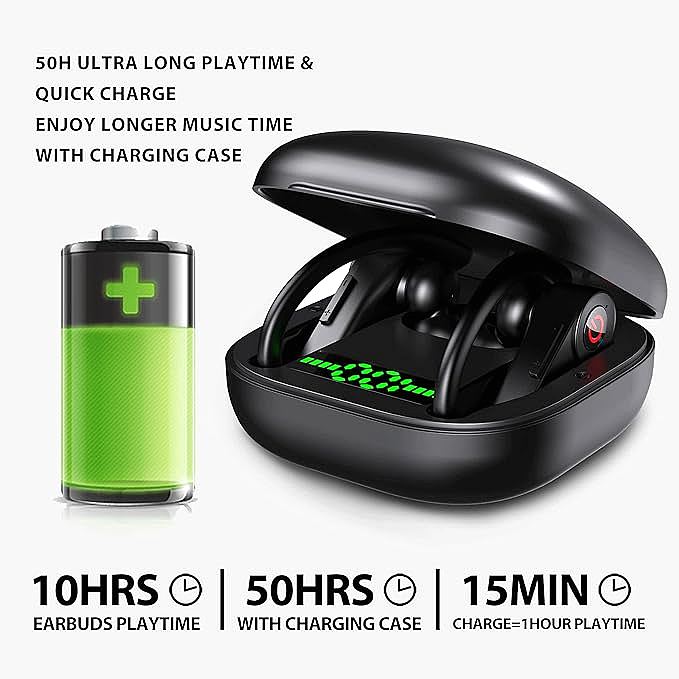
STRXBBR Power HBQ Pro-1 Wireless Earbuds
Your earbuds skip a track mid-rep. You did not tap anything. Sweat did. Three songs later, they pause on their own. You jab at the touch panel, but nothing registers. The controls are wet, and they have stopped listening.
This is not a defect. It is physics. Capacitive touch sensors, the technology inside most modern wireless earbuds, rely on the electrical properties of your skin to detect input. When sweat covers that surface, the physics that make touch controls convenient become the physics that make them unreliable. Many workout earbuds users report that their earbuds touch controls stop working precisely when they need them most—at peak exertion. The STRXBBR Power HBQ Pro-1 Wireless Earbuds take a different route with physical buttons, but the real story here is not about one product. It is about why mechanical switches work when capacitive sensors fail, and the engineering principles that explain the gap.
How Capacitive Touch Actually Works
Most earbud touch sensors use a method called self-capacitance measurement. The sensor electrode inside the earbud forms one plate of a capacitor. Your body, loosely coupled to ground through your internal resistance, forms the other plate. When your finger approaches, the capacitance between these two plates increases, and the controller chip registers that change as a touch event.
The numbers are small. An undisturbed sensor sits at a baseline capacitance of roughly 10 to 50 picofarads, depending on electrode geometry and size. Your finger adds between 1 and 10 picofarads when it makes contact. The touch controller continuously measures this capacitance, compares it against a running baseline, and triggers an action when the delta exceeds a threshold.
This works well in dry, stable conditions. Your skin has a consistent dielectric profile. The air gap between finger and sensor is predictable. The baseline stays still. But those conditions describe an office, not a gym.
When Water Becomes a Conductor: The Ghost Touch Problem
Sweat is not just water. It is an electrolyte solution, primarily sodium chloride dissolved at approximately 0.9% concentration on average, with a range spanning 0.1% to 2.5% depending on the individual and exertion level. That NaCl makes sweat conductive. Its electrical conductivity falls between 1 and 10 millisiemens per centimeter, which is enough to carry meaningful current across the surface of a touch sensor.
When sweat spreads across a capacitive touch panel, it does something the sensor was never designed to handle: it creates multiple conductive paths between the sensor electrode and ground. These paths add parasitic capacitance in parallel with the sensor's own capacitance. They also alter the dielectric constant of the boundary layer between your skin and the electrode. The result is a baseline that shifts unpredictably.
Ghost touches happen when the controller interprets a sweat-induced capacitance shift as a finger approach. The delta falls within the algorithm's detection threshold, so it fires a touch event that no one intended. Your music skips. Your call ends. Your volume spikes. The earbuds are responding to salt, not skin.
The problem compounds over time. During a workout, sweat accumulates on the surface, then partially evaporates during rest periods. This wet-dry cycling leaves NaCl crystals behind. Those crystals change the panel's dielectric constant, and when ambient humidity rises, they absorb moisture from the air and re-dissolve into a thin conductive film. You get a persistent layer of interference that does not go away when you wipe the surface. It reforms within minutes.

Why Adaptive Algorithms Cannot Keep Up
Modern touch controllers include adaptive baseline algorithms that continuously recalibrate the detection threshold to account for environmental drift. Barometric pressure changes, temperature shifts, and gradual humidity variations are exactly the kind of slow perturbations these algorithms were designed to filter.
Rapid sweat accumulation is a different problem. During intense exercise, the moisture layer on a touch surface can change significantly within seconds. The adaptive algorithm, tuned to track slow drift, cannot update its baseline fast enough to keep pace. This creates a vulnerability window where the sensor's reference point is stale and any sweat-induced capacitance change gets interpreted as input.
At humidity levels above 80% relative humidity, capacitive sensors also require longer integration times to filter environmental noise, which reduces responsiveness. In a gym during summer, or during a long outdoor run, those conditions are the norm, not the exception.
150 Grams of Certainty: Why Mechanical Switches Win
A physical button operates on a fundamentally different principle. Inside, a spring-loaded metal dome sits above two contact pads. When you press hard enough to compress the dome past its actuation threshold, it snaps through and creates an electrical connection. When you release, the spring returns the dome to its open position.
The threshold matters. Typical earbud buttons require between 150 and 200 grams of force to actuate. Water cannot apply that kind of directional force. It can only exert uniform hydraulic pressure, which distributes evenly across the dome surface rather than concentrating at the point needed to collapse it. A drop of sweat landing on a button housing does not push the dome closed. It pools and flows away.
This is the core distinction. Capacitive sensors detect presence through electric field perturbation. Mechanical switches detect intent through force application. One is confounded by a thin film of salt water. The other is indifferent to it.
The contact materials reinforce this reliability. Gold-plated contacts maintain low resistance, typically 20 to 50 milliohms when new, and resist oxidation even in humid environments. The silicone dome seal around the button assembly maintains its watertight integrity through the full range of motion, with a typical compression set rating below 10% even after 1000 hours at 85 degrees Celsius.
The false trigger data tells the story clearly. Physical buttons exhibit a false trigger rate below 1% across all conditions. Capacitive touch sensors during exercise can reach 15 to 20%. That is not a marginal difference. That is the gap between a control you trust and a control you avoid using.
For fitness enthusiasts seeking physical button bluetooth earbuds that perform reliably under sweat conditions, this engineering distinction matters more than any feature list. The choice between capacitive touch and mechanical switches determines whether your earbuds with buttons respond to your intent or to environmental noise.
Reliability Across Workout Environments
The failure modes of capacitive touch vary by activity, but they share a common thread: moisture and motion together create the worst-case scenario.
Running produces a steady layer of forehead and ear sweat that migrates into the earbud seal. The motion is rhythmic, which means the moisture layer is continuously redistributed rather than pooling in one spot. Touch sensors see a constantly shifting baseline.
CrossFit and HIIT training generate the highest sweat rates and the most erratic head movement. A burpee or box jump creates impact forces that can register as touch input on an overly sensitive capacitive panel, while simultaneous sweating corrupts the baseline. This is where ghost touches are most frequent.
Cycling at speed produces wind-driven evaporation that can temporarily dry the touch surface, but the salt residue remains. At lower speeds or during climbs, sweat accumulation resumes. The cycling between wet and semi-dry states creates the crystallization problem described earlier.
Outdoor winter running introduces cold temperature as an additional factor. Below 10 degrees Celsius, finger skin conductivity drops, which reduces the signal the capacitive sensor expects from a real touch. The sensor becomes less responsive to intentional input while remaining vulnerable to sweat interference, a frustrating combination.
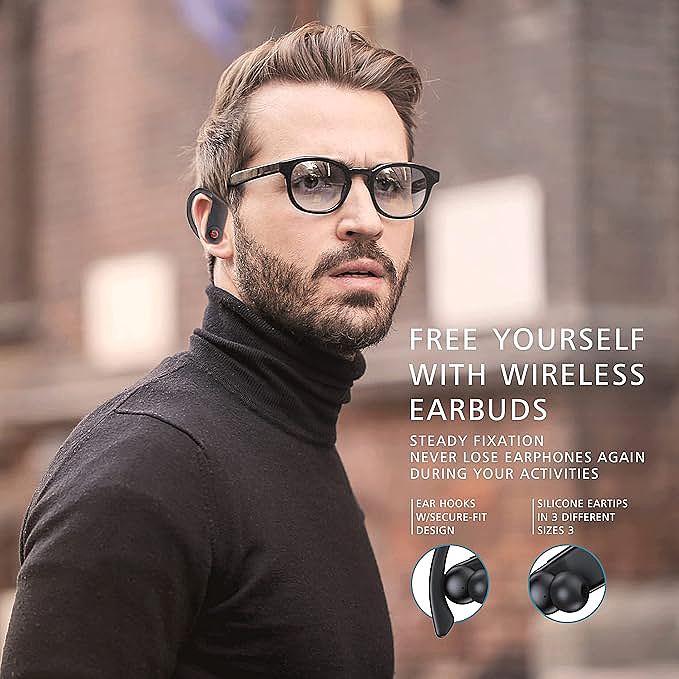
Physical buttons work in all of these conditions because their actuation mechanism is independent of the electrical properties of the environment. Whether the surface is wet, salty, cold, or dry, 150 grams of directed force will close the switch. This reliability makes these workout earbuds dependable for athletes who cannot afford mid-session control failures.
The IPX7 Trap: Waterproof Does Not Mean Touch-Proof
There is a persistent confusion between water resistance and touch reliability. An IPX7 rating means a device can survive submersion in one meter of fresh water for 30 minutes under controlled laboratory conditions. It says nothing about whether the touch controls will function correctly when the surface is covered in sweat.
The test conditions for IPX7 are static immersion at room temperature in fresh water. Real exercise involves dynamic pressure changes, salt-laden perspiration at elevated skin temperature, and repeated exposure over hundreds of sessions. Sweat at 0.9% NaCl is less concentrated than seawater at 3.5%, but it is still corrosive enough to degrade silicone seals over time. It is also conductive enough to interfere with capacitive sensing immediately, long before any seal degradation occurs.
Temperature extremes further widen the gap between the IPX7 test and real-world conditions. A sauna session, a winter run, or exposure to sunscreen and insect repellent chemicals are all outside the scope of the IPX7 test, yet they are exactly the conditions where touch reliability matters most.
An earbud can be fully IPX7 waterproof and still have controls that fail during a moderate workout. Water resistance protects the electronics from damage. It does nothing to ensure the touch sensor can distinguish between a finger and a film of salt water.
The Engineering Philosophy of Deterministic Input
When capacitive sensors first appeared in consumer earbuds, the appeal was obvious: fewer moving parts, sleeker surfaces, fewer points of water ingress. From a manufacturing standpoint, a flat touch panel is simpler to seal than a button that must penetrate the enclosure wall.
But simpler to seal does not mean simpler to rely on. The capacitive approach trades mechanical complexity for algorithmic complexity. Instead of a physical threshold that water cannot meet, it uses a statistical threshold that sweat routinely crosses. Instead of a binary switch that is either open or closed, it measures a continuous analog value and must decide in real time whether that value represents intent or interference.
The button that moves is the one that stays reliable. Mechanical switches age in predictable ways. Contact resistance may increase slowly over 100,000 cycles. The silicone dome may lose a fraction of its elasticity after years of compression. But the failure mode is gradual and measurable. Capacitive touch failure in sweaty conditions is sudden, unpredictable, and has no graceful degradation curve.
For anyone who has tried to adjust volume mid-run and ended up calling their mother instead, the choice between these two input methods is not aesthetic. It is about whether your controls answer to you or to your sweat. The physics of ionic conduction do not care about industrial design awards. They care about conductivity, surface contamination, and the gap between what an algorithm expects and what a workout delivers.
STRXBBR Power HBQ Pro-1 Wireless Earbuds
Related Essays

How to Pick a Budget Sports Earbud That Actually Stays Put

Why Your Earbuds Keep Falling Out — And What Physics Says About Fixing It

The Biomechanics of Endurance: Engineering the Soundcore Sport X10 for Extreme Motion

Why Do Workout Earbuds Fall Out? The Science of Secure Fit, Waterproofing, and Bass

Why Earbuds Fall Out and the Engineering That Finally Solves It

Why Your Earbuds Keep Falling Out During Workouts—and What Actually Helps

Locked In: Why Bobtot BE100’s Mechanical Hooks and IPX7 Rating Rule the Gym

Built for the Grind: An Athlete's Guide to Decoding Workout Earbud Specs

Why Your "Broken" Sport Earbuds Aren't: The 4 Fixes Every User Must Know
