Why Your Earbuds Keep Falling Out During Workouts—and What Actually Helps


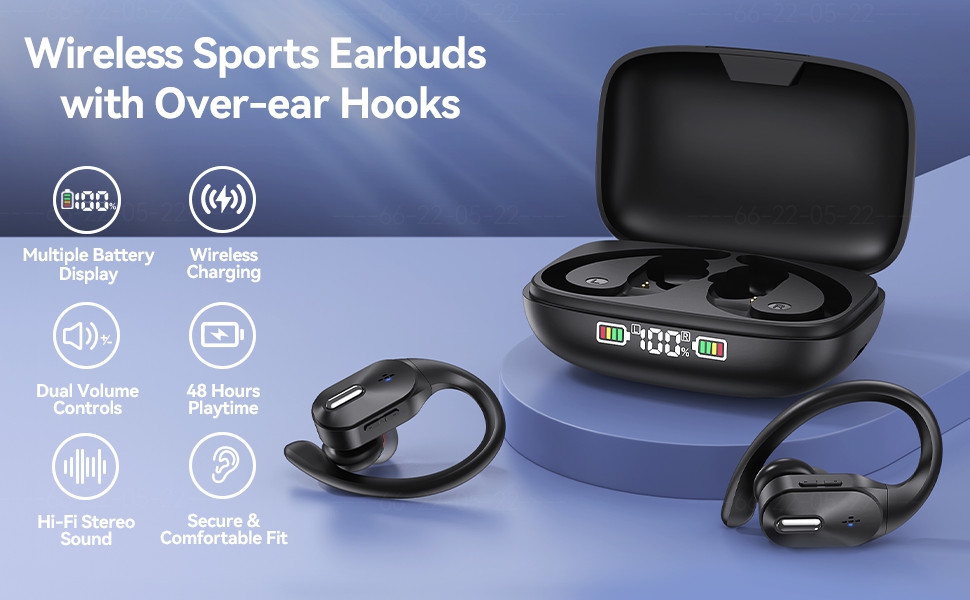
Whizzer B6 IPX7 Waterproof Upgrade Earphone
Every runner knows this moment. You're three miles into a run, your playlist is hitting the perfect beats per minute, and suddenly—your left earbud slides out and bounces off the pavement. You jam it back in. Ten seconds later, it happens again. By mile five, you've given up and shoved both earbuds in your pocket, running in silence like it's 2005.
This isn't just a personal annoyance. It's a multi-billion dollar engineering challenge that audio companies have been trying to solve for over a decade. And here's what makes it so difficult: the solution that works for marathon runners is completely different from what a yogi needs, which is different from what a weightlifter requires. The physics of keeping something in your ear during movement is surprisingly complex—and most marketing claims about "secure fit" are wildly exaggerated.
The Anatomy of a Slip
Before we can solve the problem, we need to understand what's actually happening when an earbud falls out. It turns out there are four distinct failure modes, each requiring a different engineering solution.
The first and most common is progressive migration. This is when the earbud starts feels fine, but slowly works its way out over the course of a workout. This happens because most ear canals are not cylindrical—they're actually D-shaped or even more complex geometries. As you move, the earbud gradually rotates and shifts position until it reaches an angle where it can escape.
The second failure mode is sudden expulsion. This typically happens during a specific movement—a sudden direction change, a heavy exhale, or what exercise scientists call the "Valsalva maneuver" (bearing down, which increases inner ear pressure). The earbud doesn't slowly migrate; it shoots out like a champagne cork.
The third mode is moisture lubrication. Sweat is not just water—it's a complex biofluid containing sodium, potassium, and fatty acids that can dramatically reduce friction between the earbud tip and your ear canal. An earbud that feels secure at the start of a workout can become dangerously slippery by the end. This is why some of the best-rated sport earbuds fail in humid conditions despite performing perfectly in laboratory tests.
The fourth mode is physical displacement. This happens when the earbud gets hit by something—an errant hand, a towel, or even hair. Unlike the other three modes, this one is largely unpredictable and may be unavoidable with any earbud design.
Why Your Ear Shape Matters More Than the Earbud
Here's the uncomfortable truth the audio industry doesn't like to admit: the fit problem is only 20% about the earbud and 80% about your ear geometry. And unlike software, you can't update your ear shape with a firmware patch.
Research from the University of Wisconsin's Department of Biomedical Engineering found that ear canal cross-sections vary dramatically between individuals. They identified six distinct ear canal shapes, and most people don't have a "standard" shape that matches the average dimensions used in earbud design.
The key insight is that your ear canal has natural narrowing points—essentially bottlenecks where the earbud tip naturally wants to seat. If an earbud tip sits above these natural narrowing points, it's working against gravity and momentum. If it seats below them, it benefits from the ear's own anatomy to stay in place.
This is why the "try 5 different earbud tips" advice, while well-meaning, often fails. You're essentially guessing at your ear geometry. The earbuds that come with foam tips in three sizes are designed for someone who might not exist—average ear canals that match the average tip dimensions.
The Engineering Approaches That Actually Work
Given these constraints, how do the best sport earbuds actually solve the fit problem? There are five distinct engineering approaches, and understanding them will help you make a much better purchasing decision.
Approach One: The Hook
The most reliable solution is also the least elegant. Ear hooks—like those on the Shokz OpenRun Pro 2—wrap around the ear's outer cartilage and physically prevent the earbud from escaping regardless of what happens inside the ear canal.
The tradeoff is comfort. Traditional ear hooks were thick, rigid, and uncomfortable for anyone wearing glasses. But newer designs like the JBL Endurance Race Plus use flexible memory wire that adapts to your ear shape while maintaining enough rigidity to prevent movement.
The research from Runner's World magazine's annual earbud test supports this approach for high-impact activities. Their testers consistently report that hook-based designs stay in place during activities involving significant vertical movement—trail running, mountain biking, anything where gravity is working against you.
Approach Two: The Wing
The second approach uses wing-like extensions that sit in the ear's outer cartilage fold (the antihelix). This provides some physical stop without the full hook enclosure.
The critical distinction is whether the wings are fixed or adjustable. Fixed wings work well if they happen to match your ear geometry, but like tips, they're designed for average dimensions that may not exist. Adjustable wings—like those on the Beats Powerbeats Pro 2—can be bent to fit your specific ear shape.
Runner's World testing found that wing designs work well for moderate activity but can work their way loose during high-impact movements. The wings provide lateral stability but don't prevent vertical migration.
Approach Three: The Memory Foam Tip
The third approach uses compressible memory foam tips instead of rigid silicone. When you insert the tip, it expands to fill your ear canal's unique shape, creating a custom fit that no silicone tip can match.
The problem is that memory foam tips degrade faster than silicone. They absorb moisture (remember, sweat is a complex biofluid, not just water) and lose their compressibility over time. Most manufacturers recommend replacing memory foam tips every three to six months for optimal fit—advice that almost no one follows.
Additionally, not all memory foam is equal. The Comply brand tips used by many audiophiles use a proprietary foam that maintains its shape better than the generic alternatives. But at $15-20 per pair, the cost adds up quickly.
Approach Four: The Open Design
Here's the approach that challenges conventional thinking: what if the earbud wasn't supposed to seal inside your ear canal at all?
Bone conduction earbuds—like those from Shokz and others—sit outside the ear canal entirely. They transmit sound through your cheekbones directly to the inner ear, bypassing the ear canal and the fit problem altogether.
The sound quality cannot match traditional earbuds at the same price point. But for users with unusual ear canal geometries or those who need to hear their environment for safety reasons (runners in traffic, cyclists), the tradeoff may be worth it.
The latest generation of bone conduction earbuds, like the Shokz OpenRun Pro 2, have addressed previous quality concerns with a hybrid design that uses both bone and air conduction. The result is surprisingly competitive audio quality while maintaining the situational awareness that open designs provide.
Approach Five: The Custom Mold
The most expensive and most effective solution is custom-molded earbuds. Companies like JH Audio, Ultimate Ears, and even some sport-focused brands offer molds made from impressions of your actual ears.
At $300-1000+ per pair, these are not impulse purchases. But for athletes who have tried everything else and still can't achieve a secure fit, custom molds represent the only solution that addresses individual ear geometry rather than working around average assumptions.
What Actually Happens in Real Workouts
Laboratory testing cannot fully replicate real-world workout conditions. This is why Runner's World's testing methodology—where products are used for weeks or months by real athletes in actual training situations—is so valuable.
Their 2025 earbud test involved twelve runners, six cyclists, and four gym users, each testing multiple products over an eight-week period. The results consistently showed a gap between laboratory fit ratings and real-world performance.
The products that performed best shared several characteristics: flexible ear hooks that accommodated glasses and头盔, IPX4 or higher water resistance for sweat protection, and multiple tip options including memory foam. The worst performers were typically the lightest and most compact designs—apparently, there's a direct tradeoff between minimum size and maximum security.
Weight matters more than most people assume. Every gram of mass in the earbud creates leverage against the ear canal walls during movement. A two-gram difference between earbuds can mean the difference between a secure fit and constant adjustment.
Battery life also correlates with workout staying-power, for a simple physical reason: larger batteries require larger housings, which means more mass, which means more migration force during movement. The earbuds with the longest battery life (10+ hours) tend to have hook or wing designs that offset the mass with physical support.
Making Your Decision
If you're reading this article because your earbuds keep falling out, here's a practical decision framework based on your activity type.
For running and trail running, prioritize hook designs. The vertical forces during running create the most challenging conditions for earbud retention. Accept the larger size and slightly lower aesthetic appeal in exchange for the security you need.
For cycling, consider either hooks (for long rides) or wing designs (for shorter, more aesthetic-conscious rides). The horizontal body position during cycling creates different forces than running, and many cyclists find wing designs sufficient.
For the gym, assess your workout style. Weightlifters typically do better with hooks because of the frequent head-down positions and straining. Group fitness participants may find wing designs work well, since there's less sustained high-impact movement.
For yoga and pilates, where you're often lying down or in inverted positions, wing or tip-only designs can work well. The movements are controlled and there's minimal vertical force.
For swimming, forget traditional earbuds entirely. Look at bone conduction designs or waterproof MP3 players that don't rely on ear canal retention at all.
The Uncomfortable Truth
After researching this extensively, I've come to an uncomfortable conclusion: there is no universal solution. The earbud that stays perfectly in your ears during a marathon may fall out every five minutes during a hot yoga class. The design that works for your friend may not work for you, even if you have similar ear shapes.
The audio industry has largely solved the problem of sound quality. What remains unsolved is the problem of human anatomy—our ears are as unique as our fingerprints, and expecting a mass-market product to fit everyone perfectly is mathematically impossible.
The best approach is to know your activity, understand the failure modes, and choose a design that addresses your specific needs. Ignore the marketing claims about "universal fit." There's no such thing.
And if you find yourself jamming your earbuds back in for the third time during a run, remember: this is a hard engineering problem, not a personal failure. Some of the smartest engineers in consumer electronics have been working on this for years. The fact that it's still not solved tells you something about how difficult it really is.
Whizzer B6 IPX7 Waterproof Upgrade Earphone
Related Essays

Why Earbuds Fall Out: The Engineering Physics Behind Secure-Fit Design
Why Earbuds Fall Out on Your Run: The Engineering Fix

How to Pick a Budget Sports Earbud That Actually Stays Put


MASTER & DYNAMIC MW07 GO True Wireless Earphones - Water Resistant Earbuds

Wireless Earbuds That Stay Secure During Workouts: bmani T16 Review

Xmenha Over Ear Wrap Around Earbuds: Solid but Flawed
How to Read a Sport Earbud Product Page: A Beginner's Guide to Specs

The Ergonomics of Stability: Why Your Sport Earbuds Fall Out (And How to Find a Pair That Won't)

