Aurasound BEANbuds: Tiny, Comfortable Earbuds for All-Day Wear and Sleep


Aurasound BEANbuds 2022 Bluetooth Earbuds
The Quest for Comfort: Why Finding the Right Earbuds Matters
In our increasingly connected world, earbuds have become almost an extension of ourselves. We use them to listen to music, podcasts, and audiobooks, take calls, and even block out distractions while we work or sleep. But as anyone who's spent hours with poorly fitting earbuds can attest, finding a pair that's both comfortable and provides good sound quality can be a surprisingly difficult task. Ear fatigue, pressure points, and the constant fear of an earbud popping out – these are all too common experiences. Why is it so hard to find the perfect fit?
The Shape of Sound: Ergonomics and the Human Ear
The answer lies, in part, in the sheer complexity and variability of the human ear. Our ears are not uniform, cookie-cutter shapes. They come in a wide array of sizes and contours, with subtle differences in the shape of the concha (the bowl-shaped part of the outer ear) and the ear canal itself. This is where ergonomics – the science of designing products to fit the human body – comes into play.
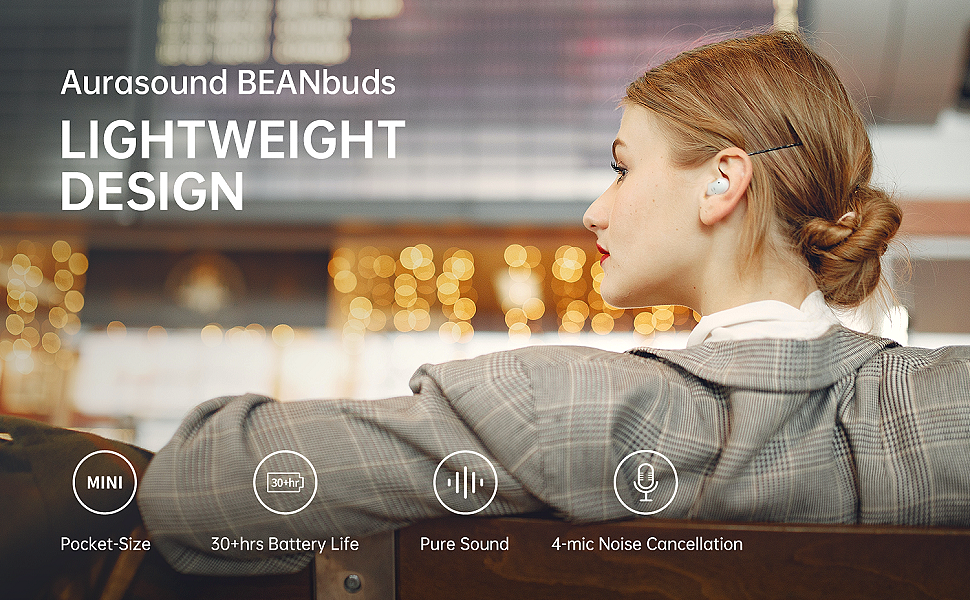
These earbuds, as their name suggests, take a unique approach to ergonomic design. Instead of the more common bulbous shape, they feature a smooth, bean-like form factor. This design, combined with their remarkably light weight (just 4 grams per earbud), is intended to minimize pressure points and distribute the weight evenly within the ear. The goal is to create a "barely there" feeling, allowing for extended wear without discomfort, even during sleep. The choice of materials also plays a role here: smooth, biocompatible plastics are the standard choice in this category precisely because they avoid skin irritation during long contact.
A Snug Fit: The Science of Passive Noise Isolation
The BEANbuds' design also contributes to what's known as passive noise isolation. It's important to distinguish this from active noise cancellation (ANC). ANC is a technology that uses microphones and electronic circuitry to generate sound waves that cancel out incoming noise. Passive noise isolation, on the other hand, relies on the physical properties of the earbud itself to block sound.
Think of it like closing a door to muffle outside noise. A well-fitting earbud, like the BEANbuds, creates a seal within the ear canal, physically obstructing the passage of sound waves. The tighter the seal, the better the isolation. This is why the BEANbuds' shape and size are so crucial. They're designed to nestle snugly within the ear, creating an effective barrier against external sounds. While this won't eliminate all noise, it can significantly reduce distractions, making it easier to focus on your work, enjoy your music, or drift off to sleep.
Small but Mighty: How Tiny Earbuds Deliver Big Sound
One might wonder how such small earbuds can produce a satisfying sound, especially in the lower frequencies. The answer lies in a fascinating field known as ear canal acoustics.
Your ear canal isn't just a hollow tube. It's a complex acoustic environment that shapes and amplifies sound waves. When an earbud is inserted, it creates a small, sealed chamber between the earbud's driver (the speaker) and your eardrum. The size and shape of this chamber, along with the properties of the earbud itself, influence how different frequencies are perceived.
In essence, the ear canal acts as a natural resonator, boosting certain frequencies and attenuating others. Skilled audio engineers take these acoustic properties into account when designing earbuds, carefully tuning the driver and the earbud's housing to achieve a desired sound signature. Even small earbuds, like the BEANbuds, can deliver surprisingly rich bass and clear highs when designed with a deep understanding of ear canal acoustics.
The 10mm Driver: Unpacking the Heart of the BEANbuds
At the heart of the BEANbuds' sound production is a 10mm dynamic driver. Dynamic drivers are the most common type of driver found in headphones and earbuds. They work on the principle of electromagnetism.
Here's a simplified explanation:
- Electrical Signal: An electrical audio signal is sent to the driver.
- Voice Coil: This signal flows through a small coil of wire (the voice coil) that's attached to a diaphragm (a thin, flexible membrane).
- Magnetic Field: The voice coil is positioned within a magnetic field created by a permanent magnet.
- Movement: When the electrical signal flows through the voice coil, it creates a fluctuating magnetic field that interacts with the permanent magnet's field. This interaction causes the voice coil, and thus the diaphragm, to vibrate.
- Sound Waves: The vibrating diaphragm pushes and pulls on the air, creating sound waves that travel to your eardrum.
The size of the diaphragm (10mm in this case) is a factor in the driver's ability to reproduce lower frequencies. Larger diaphragms can generally move more air, resulting in more powerful bass. However, size isn't the only factor; the material of the diaphragm, the strength of the magnet, and the design of the voice coil all play crucial roles in the overall sound quality.
Power in Your Pocket: Understanding Bluetooth 5.1 and Battery Life
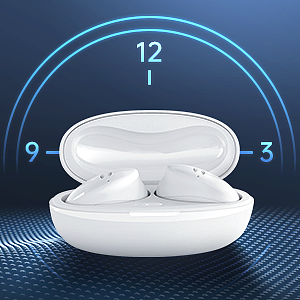
The BEANbuds rely on Bluetooth 5.1, a version released in 2019, to connect to your devices. For earbuds, the advantages that matter most come from the Bluetooth 5 generation as a whole rather than from any single point release. Lower power consumption is the headline benefit: the low-energy features introduced across these versions reduce the energy required to transmit and receive data, which translates directly into longer battery life. Connection reliability has also improved, with fewer dropouts in environments crowded with other wireless devices, pairing is quicker, and practical range - within the limits set by obstacles and interference - is greater than in the Bluetooth 4 era.
The BEANbuds offer 9 hours of playtime on a single charge, and the charging case provides an additional 30 hours, for a total of 39 hours of listening time. That endurance comes from pairing an efficient Bluetooth radio with a high-capacity, yet compact, lithium-ion battery. The inclusion of a Type-C port also supports faster charging compared to older Micro-USB ports.
Beyond Listening: The Four-Microphone System and Call Quality
The BEANbuds aren't just for listening; they're also designed for making clear calls. They feature a four-microphone system, a configuration that's becoming increasingly common in higher-quality earbuds. But how does it work?
The principle behind a multi-microphone system is to use the combined input from multiple microphones to isolate your voice and reduce background noise. This is often referred to as beamforming. Here's a simplified explanation:
- Sound Capture: Each microphone captures sound from slightly different angles.
- Signal Processing: Sophisticated algorithms analyze the signals from all four microphones, identifying the direction of the desired sound source (your voice) and the direction of unwanted noise (background sounds).
- Noise Reduction: The algorithms then selectively amplify the desired signal (your voice) while suppressing the unwanted noise, resulting in a clearer signal for the person on the other end of the call.
Whatever the manufacturer labels its noise reduction - Environmental Noise Cancellation (ENC) is the common marketing term - the four-microphone setup points to a meaningful improvement in call quality over earbuds with only one or two microphones, especially in noisy environments.
Ready for Anything: IPX4 Water Resistance Explained
The IPX4 rating signifies that a device is built to resist damage from splashing water. The "IP" stands for "Ingress Protection," and the "X" indicates that the device hasn't been specifically tested for protection against solid particles like dust. The "4" denotes the level of protection against water. This is not water proof.
The Lithium-Ion Revolution: A Brief History of Battery Power
The battery life of the BEANbuds would not be possible without decades of advances in battery technology. The key player here is the lithium-ion battery.
Lithium-ion batteries, first commercialized in the early 1990s, revolutionized portable electronics. Compared to earlier battery technologies like nickel-cadmium (NiCd) and nickel-metal hydride (NiMH), lithium-ion batteries offer several significant advantages:
- Higher Energy Density: They can store more energy in a smaller and lighter package. This is crucial for devices like earbuds, where space and weight are at a premium.
- No Memory Effect: Unlike NiCd batteries, lithium-ion batteries don't suffer from the "memory effect," which reduces their capacity if they're repeatedly recharged before being fully discharged.
- Slower Self-Discharge: They lose their charge more slowly when not in use.
The development of lithium-ion batteries was a crucial step in enabling the proliferation of portable devices, from smartphones and laptops to wireless earbuds like the BEANbuds.
What Separates a Comfortable Earbud From the Rest
For earbuds intended for long wear, fit comes before everything else: a pair that does not sit well goes unused no matter how it measures on paper, so ear tip sizes and housing shape matter as much as any spec. Sound signature is personal - bass-forward, neutral, or somewhere between - and the only reliable test is listening. The isolation approach comes next: a snug seal gives passive isolation for free, while active noise cancellation adds cost and drains battery. Battery endurance, water resistance, and call quality round out the picture, weighted by how and where the earbuds will actually be used.
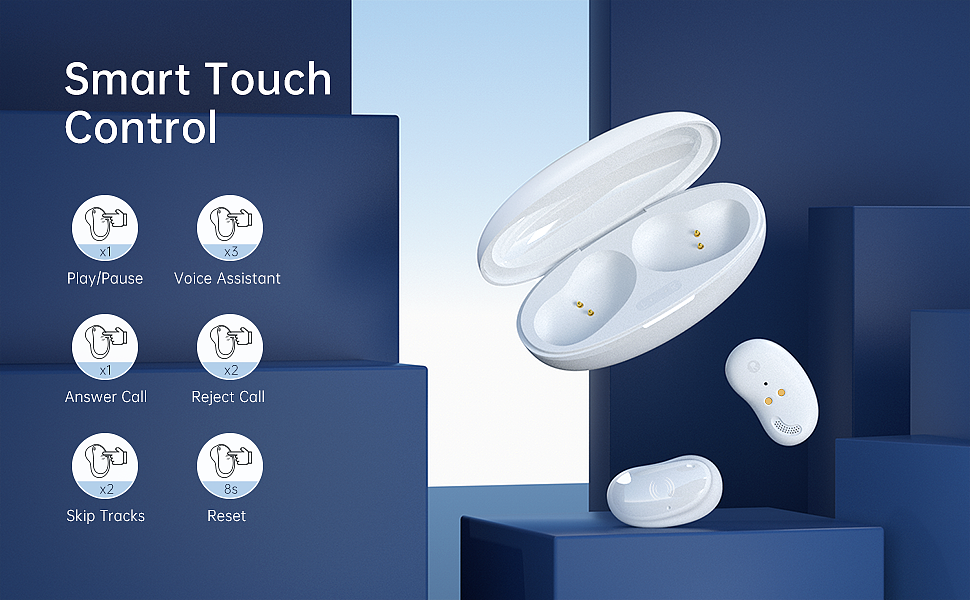
Measured against that framework, the BEANbuds concentrate their budget on comfort and endurance: the small bean-shaped housing suits smaller ears and long sessions, and the 39-hour total playback covers a full day and night of use. The trade-offs are equally clear. There is no active noise cancellation - only the passive isolation of the snug fit - and volume control lives on the paired device rather than on the earbud itself.
The Science Behind Comfortable Listening
The BEANbuds illustrate how far earbud design can go by focusing on fit rather than feature count. The bean shape addresses a concrete problem - pressure and discomfort during long wear - and the 39-hour endurance follows from two mature technologies: an efficient Bluetooth radio and compact lithium-ion cells. The category trade-offs remain visible: no ANC, no onboard volume control, and a sound signature tuned for comfort rather than critical listening. For sleep and all-day wear, that is a coherent engineering position rather than a spec-sheet gap.
The bean-shaped design is more than an aesthetic choice; it is a functional answer to earbud discomfort. And the long battery life, built on efficient Bluetooth and lithium-ion chemistry, reflects how portable power has matured. Whether the use case is work, exercise, or a full night of sleep audio, the design decisions line up with the same goal: keeping the earbud present in the ear and absent from attention.
Aurasound BEANbuds 2022 Bluetooth Earbuds
Related Essays

TBIIEXFL Headphones – Sweatproof Earbuds for Sports

KLUD Air3-PRO Wireless Bluetooth Earbuds – A Sound Investment

Loluka HD-SWL-JAD-ANCpro Wireless Headphones

Xmenha Invisible Sleep Earbuds : When Size Matters

FULAI Air Pro 2 Wireless Earbuds

Renimer IT100 Bluetooth Earbuds 5.2 – A Comprehensive

LARK L1 Bluetooth Wireless Earbuds - Recommended for Budget-conscious Users

The Acoustic Physics of Driver Size in Wireless Earbuds

JBL Tune 130NC TWS & GO2 Bundle: Immerse Yourself in Sound, Anywhere

