Wired Over-Ear Headphone Acoustics: Driver, Enclosure, and Cable Explained


Panasonic RP-HT161M Headphones
For most of the twentieth century, the only way to listen to something without filling the room with it was a pair of headphones on the end of a long wire. That cable feels like an afterthought next to today's wireless options, yet the wired path is precisely what makes a pair of over-ear monitors acoustically honest: no codec compression, no battery to age, no radio to fade in a subway tunnel. The sound you get is whatever the driver and the earcup are physically capable of producing.
That statement is worth exploring, because it hides a whole chain of physics. Every link in that chain is governed entirely by mechanical and acoustic laws, not by any electronics. A wired headphone is a miniature speaker system, and every link in the chain, from the copper conductor of the cable to the bend of the earcup that sits against your head, shapes what reaches your eardrum. This article follows that chain. The Panasonic RP-HT161M, a modest over-ear pair with a 30 mm driver, acts as the running example throughout.
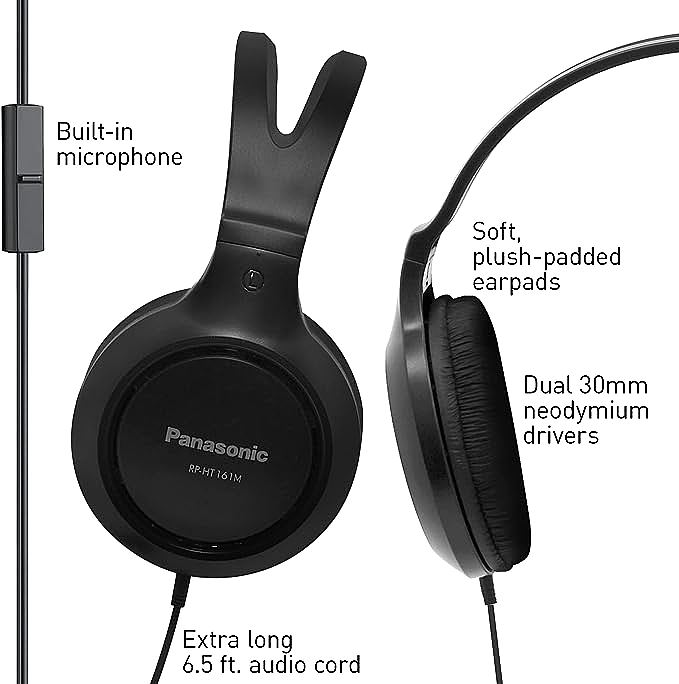
What actually happens inside a headphone driver?
The driver is a dynamic transducer, and it works on the same principle as a loudspeaker, just scaled down to fit inside an earcup. A thin diaphragm, often a polymer dome a fraction of a millimeter thick, carries a voice coil, a hair-thin wire wound into a ring. That ring sits inside the magnetic gap of a neodymium magnet, and when the audio signal, a voltage that mirrors the pressure variations of the original sound, flows through the coil, the coil's own magnetic field interacts with the magnet's field. The result is a tiny force, on the order of a micron of movement, that pushes the diaphragm back and forth thousands of times per second.
That movement is the entire story of sound production. The diaphragm displaces air, and the displaced air is what your ear receives. Everything else, the enclosure, the pads, the cable, is infrastructure to get the signal to the coil without corrupting it. That is why driver quality is the single biggest determinant of a headphone's character: the diaphragm's mass sets how fast it can reverse direction, its stiffness sets how evenly it moves, and its surface area sets how much air it can push, which is what you perceive as bass.

Why does the earcup shape matter as much as the driver?
The driver does not operate in a void. It sits inside an enclosure, and the enclosure's shape, internal volume and air vents, determine how the rear of the diaphragm behaves. When the diaphragm moves forward, it compresses the air inside the sealed cavity behind it; when it moves backward, it thins that air. A cavity that is too small makes that compression and rarefaction harsh, over-emphasizing the midrange and making the sound brittle. A cavity that is too large loses control, and the driver over-excursion on bass-heavy material.
Manufacturers tune this with a passive acoustic network, typically a small Helmholtz resonator, a vent shaped to open and close at a chosen frequency. Below that frequency, the rear of the driver is effectively short-circuited to the atmosphere and the response is smooth; above it, the cavity acts as a spring that boosts output. Getting that crossover point right is most of what separates a flat, musical response from a boomy one, and it is done entirely in plastic and air, with no electronics involved.
A passive bass boost is not a separate circuit; it is this same resonator detuned downward, so it reinforces the 60 to 150 Hz band where musical bass lives. The gain is real, typically 3 to 6 dB, but it is not free: detuning the resonator to that band narrows the usable low end, and the same reinforcement that makes a kick drum feel fuller also makes the bottom of a cello sound thick. It is a trade, not an improvement.
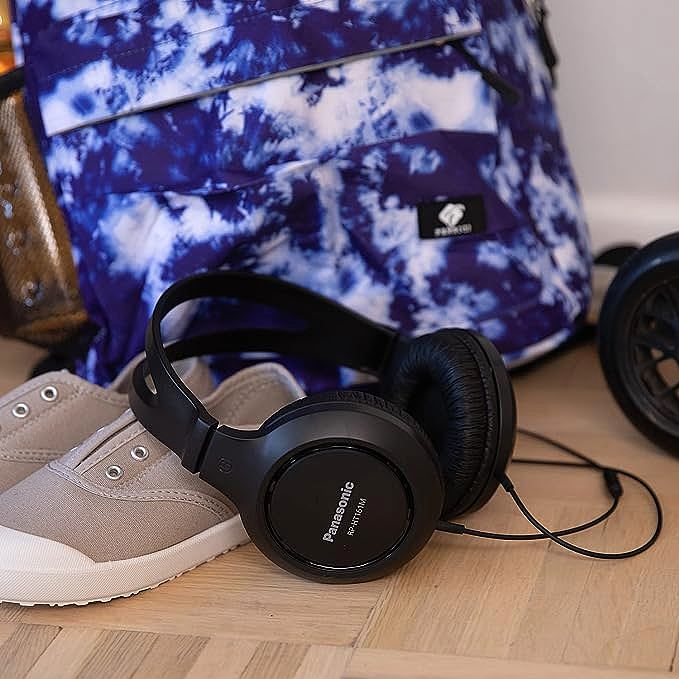
How does a wired connection carry both sound and a microphone?
A two-conductor cable carries only audio: one wire for the positive signal, one for the return, and the shield around them doubles as ground. The moment you add a microphone, the cable has to carry three logical channels, and there are only two conductors inside it. The solution is a three-pole or four-pole plug. A three-pole TRS plug splits the conductors into tip, ring and sleeve, enough for a mono microphone and mono audio. A four-pole TRRS plug, the standard on most modern phones, adds a fourth contact so that stereo audio and a microphone can all ride the same cable at once.
That mechanical trick has a real consequence for sound quality. The more poles a plug carries, the more the cable is doing double duty as a passive mix of two signals, and that is where crosstalk, the faint echo of one channel bleeding into the other, creeps in. A well-designed four-pole cable uses a separate conductor for the microphone to keep the bleed below the threshold of hearing. This is why the same physical jack can behave differently from one pair to the next: it is not the driver alone, it is the entire signal path from the plug to the diaphragm.

How does driver size change what a wired headphone can do?
Driver size is a trade between two competing needs. A larger diaphragm, say 40 or 50 mm, has more surface area and can push more air, which translates into deeper, more powerful bass without distorting. But the diaphragm's mass also goes up, and a heavier cone cannot reverse direction as quickly, which smears fast transients like a snare hit or a plucked string. The result is a warm, bass-rich signature that suits long listening sessions.
A smaller driver, 28 to 32 mm, is the opposite: lighter, faster, more precise in the mids and highs, but with less natural low-end extension. Most wired over-ear monitors sit in that 30 mm band, not because 30 mm is the best compromise, but because it is the cost-effective one: at that size a dynamic driver reaches the bass floor that most listening content needs without the mass penalty of a larger cone.
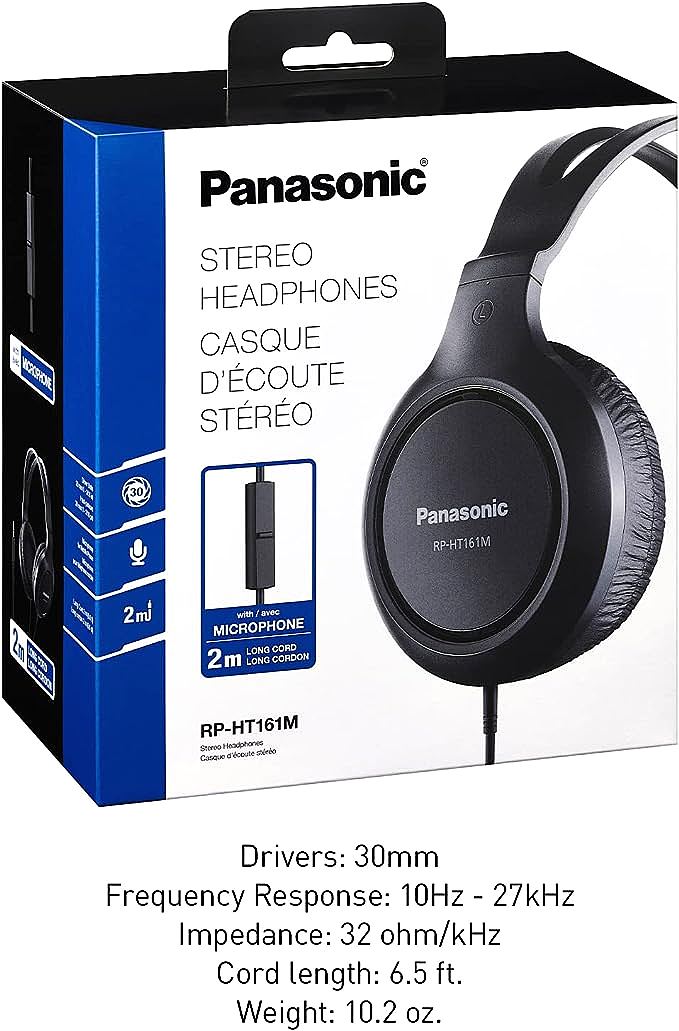
What does the cable's length and quality actually affect?
A high-quality cable has two measurable effects. The first is electrical: the cable's resistance, inductance and capacitance form a passive load that the source, a phone or a laptop, has to drive. A very long, thin cable can load a weak source hard enough to roll off the top of the range by a few decibels, which is why the cable matters more on a phone than on a dedicated amplifier. The second effect is mechanical: a cable that kinks or whips across a desk injects handling noise straight into the microphone contact, and that is what you hear on a call as a faint crackle. Both problems scale with length, which is why a 6.5-foot cable reaches across a desk without the loading penalty a 10-meter cable would impose.
Why do over-ear, on-ear and earbuds sound different at equal cost?
The difference is where the driver sits relative to the ear canal, and that placement sets the acoustic load on the diaphragm. Over-ear cups enclose the entire pinna, so the rear pressure of the driver is fully contained; the seal is large, the bass is strong, and passive noise isolation is the most complete of the three. On-ear cups press against the cartilage, so the seal is partial: some rear pressure leaks, and the response dips by several decibels around 100 Hz, which is why on-ear pairs often add an electronic bass boost to compensate. Earbuds seal the canal itself, the tightest possible seal, and that is why they sound bassier relative to their size than any on-ear design.
That seal is also the source of the most common complaint, the feeling of a pressurized space inside the ear. The eustachian tube equalizes that pressure over a few minutes, which is why the discomfort fades, but during the first minutes of a flight or a long study session the effect is real.
Panasonic RP-HT161M Headphones
Related Essays

Panasonic RP-HJE120-K ErgoFit Wired Earbuds – A Budget-Friendly Choice

ELECDER i39 Headphones: Great Sound and Comfort for Everyday Use
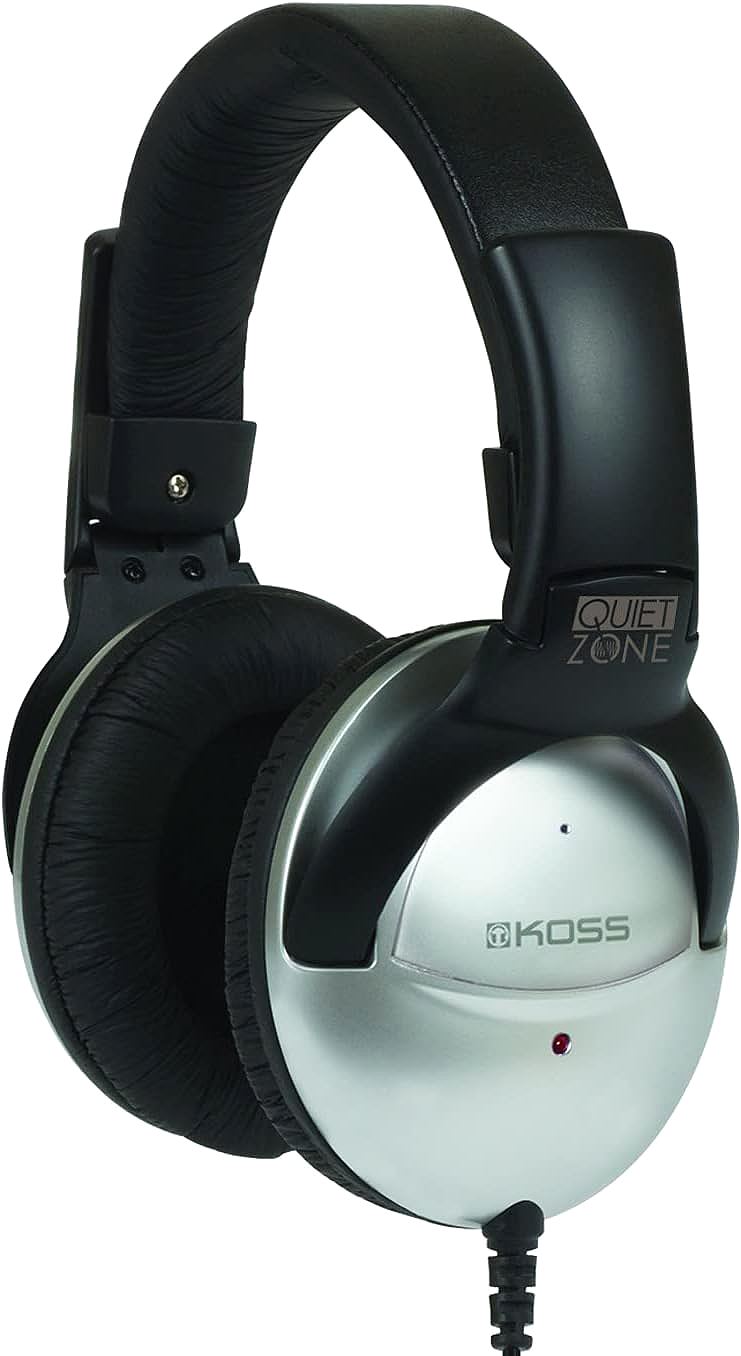
Koss QZ-Pro Wired Headphones: Experience Peace and Quiet with Noise Cancellation

Amazon Basics Wired Earbuds: Hear the Difference with Quality Sound
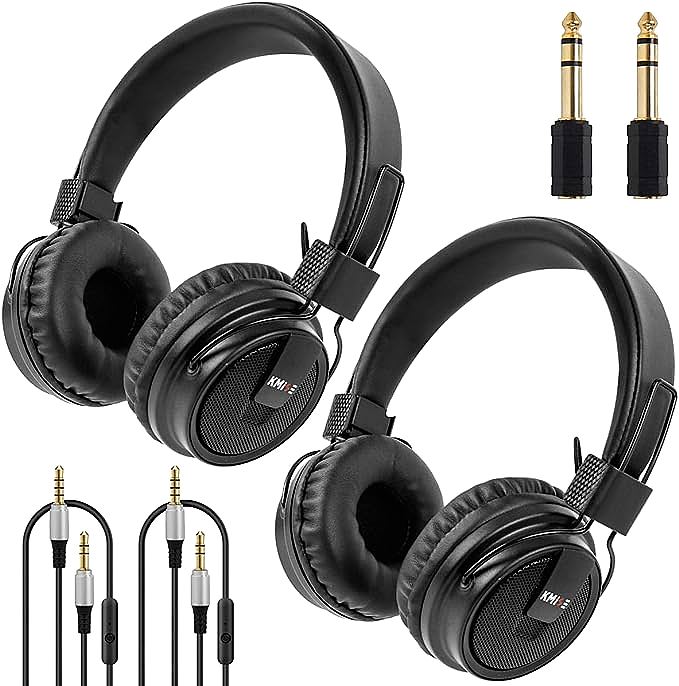
lotmusic MI2446 Headphones: Experience Immersive Sound with Super Bass

Maxell 190547 M2 Color EarBuds: Sound Science Meets Style

TBIIEXFL Waterproof Sports Earphones - Comfortable and Clear Sound

V-MODA Crossfade 2 Wireless Over-Ear Headphones - Rose Gold and BoomPro Microphone for Gaming & Communication

Master & Dynamic MW50 Wireless On-Ear Headphones – Recommended for Audiophiles

