Apple EarPods with Lightning Connector Review: Why Wired Audio Still Matters ...


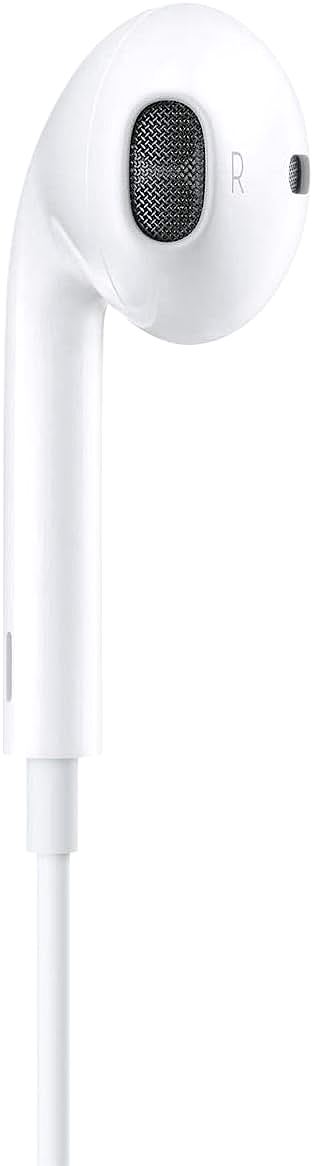
Apple EarPods with Lightning Connector
The Battery Anxiety Problem Nobody Talks About
Wireless earbuds promised freedom from cables. What they delivered instead was a quiet dependence on charging cables and lithium-ion chemistry that degrades predictably over eighteen to twenty-four months. You charge them nightly, pair them each morning, and accept that a two-year-old pair of wireless buds holds sixty percent of the battery it shipped with. The math is unforgiving: you pay once for the hardware and again every two years in lost runtime, codec degradation as battery sag forces lower power draw, and the environmental cost of another pair heading to recycling.
There is a segment of audio users for whom this tradeoff was never acceptable. Musicians monitoring a recording need latency measured in single-digit milliseconds. Commuters who forget to charge things overnight need a backup that works the moment it is plugged in. Anyone who has watched a pair of wireless buds lose their right-channel connection after a firmware update understands a specific frustration: the wireless protocol sits between you and your audio, and when it fails, the hardware becomes inert. A wired pair connected to a Lightning port draws power and receives signal through the same physical contact. No handshake timeout. No right-ear dropout at the worst possible moment.
Why Digital Signal Paths Still Beat Analog in Fidelity
The argument for wired audio is often framed as nostalgia. It is not. The physical cable eliminates two problems that wireless protocols cannot fully solve: latency and bit-perfect signal transfer.
Every Bluetooth audio chain introduces buffering. The source encodes audio into a compressed stream, the transmitter packetizes it, the receiver decodes it, and a DAC converts the reconstructed signal into analog voltage. Each stage adds delay. The total latency ranges from roughly 150 milliseconds in standard SBC mode to around 40 milliseconds with the lowest-latency codecs under ideal conditions. For video consumption the device compensates by delaying the picture. For live monitoring, gaming, or production work there is no compensation possible. The signal arrives late and there is nothing to be done about it.
The wired path removes that entire chain. When a Lightning cable carries audio, it transmits a digital bitstream directly. The DAC sits inside the earbud housing, not inside the phone. The source device sends the exact digital samples and the conversion happens at the endpoint closest to the driver. No re-encoding, no packet loss, no codec negotiation. The signal arrives at the speed of electrical propagation through copper, which is to say it arrives effectively instantaneously for any human perceptual threshold.
Bit depth and sample rate follow the same logic. A Bluetooth link renegotiates its codec based on signal strength and bandwidth availability. Under poor conditions it drops to a lower bitrate and the audible degradation can range from slight to severe. The wired digital link operates at a fixed rate determined by the DAC chip, not by RF interference from neighboring devices or the distance between your phone and your ear.
The Lightning Advantage: Why Apple Moved Audio Off the 3.5mm Jack
When Apple removed the headphone jack from the iPhone 7, the public conversation framed it as a commercial decision. The engineering story is more layered. The 3.5mm analog jack transferred analog voltage from an internal DAC through a mechanical connector. The quality of that analog signal depended on the quality of the internal DAC, the amplifier circuit, and the physical integrity of the jack contacts. Every connection point was a source of potential signal degradation.
Lightning changed the architecture. Instead of sending analog audio out through a mechanical jack, the Lightning connector transmits a digital stream. The DAC moves into the headphone itself. This matters because the conversion environment inside an earbud housing, while constrained, is isolated from the phone's internal RF noise, power regulation fluctuations, and shared audio circuitry.
The digital-over-Lightning approach also enables the earbud's internal DAC to be tuned for its specific driver. The driver knows what impedance and sensitivity profile it needs to drive. A generic phone DAC feeding a 3.5mm jack has no awareness of what is connected to the other end. A Lightning-connected earbud with an integrated DAC can match its conversion curve to the driver's response characteristics.
This is not a theoretical gain. DAC chips vary in their signal-to-noise ratio, their handling of low-level detail, and their jitter performance. Removing the conversion from the phone and placing it in the earbud lets the manufacturer select a DAC that fits the driver's needs rather than compromising for a jack that might connect to anything from a ten-dollar pair of buds to a five-hundred-dollar set of studio monitors.
Ergonomics: The Science of a Shape That Fits Most Ears
The most overlooked engineering achievement in budget in-ear audio is the shell contour. The round silicone tips used by many earbuds assume a roughly circular ear canal. Human ear canals are not round. They are oval, slightly irregular, and vary significantly between individuals.
The EarPod's design language comes from a different approach. Rather than funneling sound through a compressible tip that seats at the canal entrance, the shell rests against the outer ear geometry. The research involved scanning hundreds of ear casts and identifying the geometric features that recurred across different populations. The result is a hard plastic shell that does not require a seal to stay in place or to direct sound.
This matters for two reasons. First, a non-sealing design means there is no pressure differential between the inside and outside of the ear canal. Sealing in-ear tips create a closed air column; small changes in atmospheric pressure, barometric shifts during flights, or simply jaw movement can create uncomfortable pressure. The open design vents continuously, which eliminates the plugged-up sensation that drives some users away from in-ear monitors entirely.
Second, the sound signature of a sealed in-ear depends heavily on tip insertion depth. A shallow insertion creates a loose coupling and a bass-light sound. A deep insertion boosts bass through a pressure-chamber effect but can over-emphasize it and reduce spatial cues. The hard-shell design has no insertion variable. The driver-to-canal distance is fixed by the shell geometry, which means the frequency response is more consistent from one user to another than tip-based designs can achieve.
The tradeoff is isolation. Without a seal, ambient sound reaches the ear. This is a liability on a noisy subway and an asset for anyone who needs environmental awareness, such as runners, cyclists, or office workers who must hear colleagues. The design philosophy accepts reduced passive isolation as a necessary cost of comfort and consistency.
Day-to-Day Use: What Three Different Users Actually Experience
An iPhone 14 owner using these as a daily driver experiences something the wireless market has quietly stopped offering: zero-setup audio. There is no pairing sequence. You plug in and the phone detects the connection through the Lightning port's accessory pin. The volume control and microphone work through the same inline remote. There is no charging case to manage. The earbuds draw negligible power from the phone's battery when active, and zero power when disconnected.
For an audio enthusiast evaluating the sound signature outside of a studio environment, the characteristics are specific and consistent. The bass response is tuned to be present but not dominant; the midrange carries vocal and instrumental content with clarity that belies the price point; the treble is extended without aggressive peaks. The open-back nature of the design means the soundstage sits slightly outside the head rather than locked between the ears. This is a subtle but real difference for extended listening sessions, where an artificially enclosed sound field can produce fatigue.
A budget-conscious buyer weighing this pair against the three-year cost of a wireless alternative sees a clear picture. Wireless buds at one-third the price still require a battery that will degrade, replacement costs when individual buds are lost, and the eventual total replacement when the charging case battery fails. The wired pair has one failure mode: cable damage at the strain relief. That failure can be repaired with care, deferred with careful handling, and when it does occur the replacement cost is a fraction of the wireless alternative.
Where the Lightning Connector Hits Its Limits
Honesty requires naming the constraints. The Lightning connector is a legacy port. Apple's current iPhone lineup has transitioned entirely to USB-C following the European Union's common charger mandate. A pair of Lightning-connector earbuds has a shrinking pool of compatible devices. Anyone using an iPhone 15 or later, or any iPad released after 2023, needs an adapter. The adapter introduces an additional physical connection point and adds a small but measurable layer of complexity to what should be a simple signal path.
The sound quality has a ceiling. The integrated DAC produces a signal that is clean and adequate for casual listening and voice calls, but it does not match what a dedicated external DAC feeding high-impedance headphones can produce. The bass extension is competent but not authoritative; the dynamic range handles most music well but compresses slightly on heavily orchestrated passages. These are not flaws. They are engineering compromises dictated by the physical space and power budget available inside a small earbud shell.
Anyone whose primary listening environment is a noisy train, a plane cabin, or a crowded cafe will find the open-back design insufficient. Active noise cancellation is not possible in a passive, open-vent design. Ambient sound reaches the ear at a level that may require raising the volume above what is comfortable for long-term hearing health. In these environments a sealed-tip design with ANC is the more appropriate tool, and no amount of ergonomic refinement changes that basic acoustic reality.
The Engineering Case for a Simple Cable
The persistence of wired earbuds in 2026 is not about resistance to progress; it is about understanding tradeoffs. Wireless audio has improved, but the fundamental physics of RF transmission, battery chemistry, and codec compression have not been repealed. A wired digital connection still delivers lower latency, more consistent signal integrity, and a total cost of ownership that does not compound with battery degradation cycles.
For anyone who values reliability over novelty, a wired pair connected through a Lightning port remains a technically defensible choice. It is one physical connector, one DAC at the driver, and one signal path with no intermediate protocol. The engineering is visible in its simplicity. When the most important feature of an audio device is that it always works, fewer links in the chain is not a compromise; it is the point.
Apple EarPods with Lightning Connector
Related Essays
Why Expensive In-Ear Monitors Can Sound Worse Than Cheap Earbuds
OnePlus Nord Buds 2 - Affordable ANC Earbuds

JLab vs Soundcore: Sport Earbuds Showdown

Open Ear Earbuds for Running: How Air Conduction Drivers Work
Open Ear Earbuds for Running: How Air Conduction Drivers Work
JLab vs Soundcore: Sport Earbuds Showdown

Wireless Earbuds Noise Cancelling Explained: The Physics of Quiet and the Sensor

: Apple AirPods Pro (2nd Generation) Wireless Earbuds – Immersive Audio Experience

Are Bone Conduction Headphones Safe for Running?

