Audio Science: How Sound Technology Transforms Workout...

Wireless Earbuds
The rain was coming down in sheets, and the runner's usual playlist was turning into a frustrating symphony of static and dropouts. His product-9488, once again, were failing him at the precise moment when motivation was hardest to maintain. One bud kept threatening to fall out, the connection was spotty at best, and he was pretty sure the "sweatproof" claim was a lie. He sighed, yanked them out, and finished his run in silence, the rhythm of his feet the only soundtrack. This experience is far from unique. The promise of wireless freedom has often been hampered by the reality of unreliable connections, poor sound quality, and battery life that barely lasts a commute, let alone a marathon training session. But behind every frustrating workout moment lies a fascinating intersection of physics, psychology, and engineering that determines whether your audio technology helps or hinders your performance. The question isn't just "what earbuds should I buy?" It's something deeper: How does sound actually affect our bodies during exercise, why does the technology so often fall short of our needs, and what scientific principles should guide our understanding of workout audio? These are the questions that transcend any single product—questions about human physiology, acoustic physics, and the engineering trade-offs that shape every device on the market. 


 ## The Physics of Sound and Human Movement Before we can understand workout audio, we need to understand something counterintuitive: you don't just hear sound with your ears. You feel it with your entire body. When a bass note hits—whether it's the thumping drums of your workout playlist or the deep synthesized tones of electronic music—your body responds physiologically. Research in exercise psychology has consistently shown that music with a strong bass component can increase perceived exertion, which sounds negative but actually means you're working harder for the same perceived effort. This is the fascinating (paradox) of workout audio: the right sound can make the same workout feel more intense, or alternatively, can make a brutally difficult effort feel more manageable. The mechanism behind this is rooted in how our nervous systems process rhythmic stimuli. When we move to music, our motor cortex naturally synchronizes with the beat—a phenomenon called entrainment. This isn't just poetry; it's measurable brain activity. Studies using fMRI and other neuroimaging techniques have shown that when subjects run or cycle in synchrony with music, they exhibit greater motor cortex activation than when exercising without rhythmic auditory cues. But here's where it gets interesting for audio technology: the frequencies that matter most for this effect aren't the treble-heavy cymbals or the mid-range vocals. They're the low-frequency bass notes, typically below 150Hz. These frequencies cause physical vibration in our tissues—not just our ears, but our muscles, our joints, our internal organs. This somatic (body-level) response to bass is why a well-designed driver that can reproduce low frequencies accurately can actually change your workout experience in ways that expensive marketing claims about "crystal clear highs" simply cannot. This is the first principle of workout audio science: bass response isn't about loudness or thump—it's about physiological engagement. When you feel the bass in your chest during a hill repeat, that's your body using sound as a feedback mechanism, a way of measuring effort against rhythm. ## A Brief History of Workout Audio The idea of combining music with exercise isn't new. In fact, it predates electronic audio entirely. In the 1970s, researchers began systematically studying what they called the "running to music" phenomenon. Dr. Costas Karageorghis, one of the pioneering researchers in this field, has spent decades documenting how music affects exercise performance. His work established that carefully selected music could reduce perceived exertion by up to 10%—a massive margin in competitive athletics. But the technology to deliver music during workouts took longer to evolve. The Sony Walkman, launched in 1979, was the first truly portable audio device that could accompany someone on a run. Yet it required a wire connecting the headphones to a device clipped to your waist, and the constant threat of getting tangled made it less than ideal for high-intensity workouts. The real revolution came with digital audio compression and Bluetooth. When MP3 became mainstream in the late 1990s and early 2000s, it enabled small, lightweight digital audio players. But wireless Bluetooth audio didn't become practical for high-quality playback until the protocol evolved enough to handle the data rates required for uncompressed audio. Each leap forward—cassette to MP3, wired to wireless, Bluetooth 2.0 to Bluetooth 5.0—represented not just incremental improvement but genuine liberation for athletes. The difference between a runner with a wire bouncing against their chest and one with truly product-9488 isn't merely cosmetic. It's the difference between a technology that reminds you of its presence and one that disappears into the background of your workout. The historical arc of workout audio technology points toward a clear destination: devices so reliable, so comfortable, and so well-integrated with human physiology that they become invisible—present when needed, forgotten when not. ## Understanding Wireless Audio Technology To understand why some product-9488 excel at workouts while others fail, we need to demystify the technology without drowning in jargon. Bluetooth operates on radio waves in the 2.4GHz frequency band—a frequency that happens to be the same used by WiFi routers, microwave ovens, and countless other devices. This crowded spectrum is why Bluetooth can sometimes experience interference. When your earbuds drop out in a crowded gym or near a router, it's because multiple devices are competing for the same radio real estate. The evolution from Bluetooth 4.0 to Bluetooth 5.1 brought meaningful improvements for audio applications. The key advancement was data throughput: newer Bluetooth versions can transmit more data per second, enabling higher quality audio without compression artifacts.
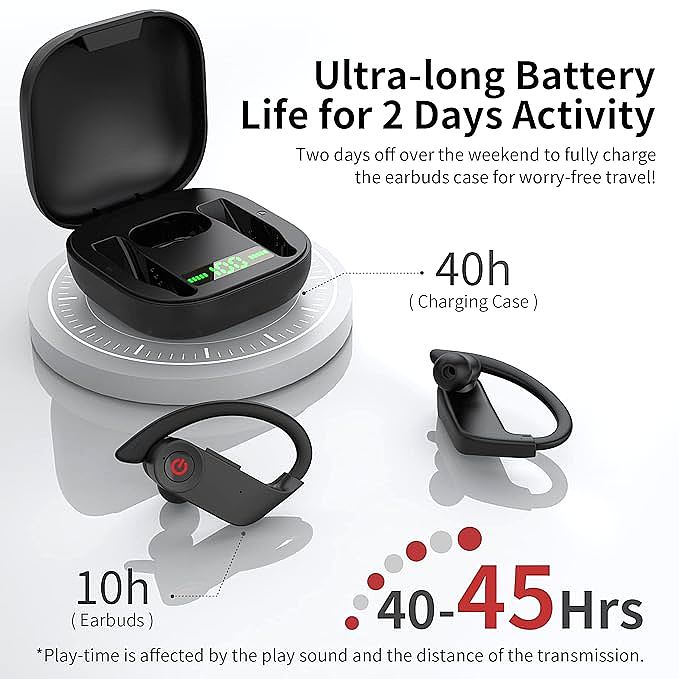
But here's what the marketing often omits: the codec used to compress audio matters as much as the Bluetooth version itself. A codec is an algorithm that compresses audio for wireless transmission and decompresses it on the receiving end. The default codec, SBC, has been part of Bluetooth since its inception and offers decent quality at reasonable bitrates. But it was designed for efficiency, not fidelity. Higher-quality codecs like AAC (used by Apple devices) and aptX (developed by Qualcomm) offer better sound quality, but they require both the source device and the headphones to support them. For workout scenarios, what matters most isn't whether your earbuds support LDAC or LHDC—it's whether the connection is stable and whether the latency is low enough that you don't perceive a disconnect between what you see and what you hear. When you're watching instructor-led workout videos on your phone, for instance, audio latency can cause the voice to drift out of sync with the movements, destroying the experience. The practical takeaway: Bluetooth version numbers are less important than connection stability and codec compatibility with your source device. A set of earbuds with Bluetooth 5.1 using SBC might perform worse in your specific setup than Bluetooth 4.2 earbuds using aptX, depending on your phone and your workout environment. ## Battery Technology and the Psychology of Endurance There's a psychological phenomenon that researchers call "attention residue." When you're engaged in one task but worried about another, cognitive resources are being diverted from the primary activity. For workouts, this means that any mental energy spent worrying about your equipment is energy not devoted to your performance. Battery anxiety—the nagging awareness that your device might die mid-workout—is a form of attention residue. And unlike the distraction of a poor fit or uncomfortable ear tips, battery anxiety is insidious because it builds over time. In the first 20 minutes of a workout, you might not think about battery life at all. But as you approach the edge of your earbuds' rated runtime, more and more cognitive resources are diverted to monitoring, to planning, to the metadata of your workout rather than the workout itself. This is where battery technology becomes a psychological issue as much as a technical one. The rated playtime of product-9488—say, 50 hours total with the charging case—only tells part of the story. Real-world factors like volume level, codec choice, and environmental interference can significantly impact actual battery life. A pair of earbuds rated for 10 hours per charge might deliver 8 hours at moderate volume, but only 5 hours at maximum volume with aptX encoding in a noisy environment. Modern lithium-ion battery technology has enabled dramatic improvements in energy density—the amount of power that can be stored in a given volume. This is the same technology that revolutionized electric vehicles and smartphones. But there are physical limits approaching. The energy density of lithium-ion batteries has roughly tripled since their commercial introduction in 1991, but we're approaching fundamental chemical and physical constraints. For workout audio devices, this means we're likely in an era where battery life improvements will be incremental rather than innovative. The focus has shifted from raw capacity to efficiency—getting more from each electron through better chip design, more efficient codecs, and smarter power management. The deeper principle here: battery life matters not just for practical reasons but for psychological ones. When you know your earbuds can outlast your longest workout, you stop monitoring, you stop worrying, and you free up mental energy for the effort that actually matters. ## The Engineering Trade-offs Every audio device is a collection of compromises, and understanding these trade-offs helps explain why no single product can be perfect. The fundamental tension in wireless earbud design is between four competing priorities: driver size, battery capacity, comfort/form factor, and durability. These priorities are not merely different—they're often in direct opposition. A larger driver (the component that actually produces sound) typically delivers better bass response and overall sound quality. But larger drivers require more physical space, which conflicts with the goal of making earbuds small and light enough to be comfortable during extended wear. The Zebroy 62-7 addresses this with an earhook design that distributes weight more broadly than true wireless designs, allowing for larger drivers without the same comfort penalty. Battery capacity is a function of volume—the bigger the battery, the longer the life, but also the heavier and larger the earbud. This creates the classic trade-off: you can have long battery life or a small, light design, but optimizing for both requires either innovative battery technology or accepting compromises elsewhere. Water and sweat resistance adds another layer of complexity. The IPX rating system measures protection against both water and dust, but achieving high ratings requires (sealing) that can affect breathability and comfort. An IPX7-rated earbud can survive submersion in water, but this same sealing can make it feel stuffy during a hot, sweaty workout. Perhaps most overlooked in marketing materials is microphone placement. For workout earbuds that double as call devices, microphone quality matters—but placing microphones for optimal voice capture while minimizing wind noise requires careful engineering. The best workout earbuds solve this through multiple microphones with sophisticated DSP (digital signal processing) algorithms that distinguish between voice and environmental noise. These trade-offs aren't failures of engineering—they're the inevitable consequences of designing devices for human bodies. Every choice represents a priority, and understanding the priorities behind a product helps you determine whether it aligns with your specific needs. ## Sound Design for Movement Not all earbuds are designed equally for motion, and the differences go far beyond whether they have wires or not. When you run, your foot strikes create vibrations that travel up through your body. These vibrations can cause earbuds to shift position, and if they're not designed with this in mind, they'll gradually work loose. The solution most workout-oriented earbuds employ is some form of
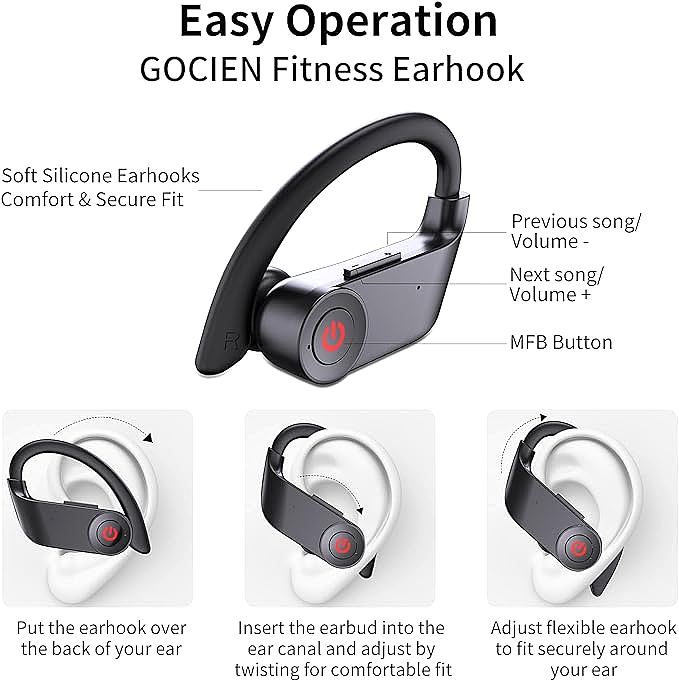
"wing" or "fin" that sits in the outer ear's concha (the bowl-shaped area), providing mechanical stability beyond what the ear tip alone can offer. But stability is only part of the equation. Comfort during extended wear requires understanding pressure distribution. The earhook design used by certain workout earbuds—where the main body rests against the outer ear while an over-ear hook provides support—can actually be more comfortable for prolonged use than "true wireless" designs that rely entirely on the ear tip for stability. This is because the weight is distributed across a larger surface area, reducing pressure at any single point. Sound signature matters significantly for workout applications. Research on music and exercise suggests that tempo is one of the most important factors—music between 120 and 140 BPM tends to be optimal for maintaining workout intensity. But bass response also plays a crucial role in perceived exertion. A V-shaped sound signature (enhanced bass and treble) can make music feel more energetic, while a flatter response provides more accurate reproduction that audiophiles prefer but might feel less motivating during exercise. The acoustic design of the ear canal itself creates what engineers call the "occlusion effect." When you insert earbuds, your own voice sounds louder and more resonant to you than it would without them. This effect is more pronounced with in-ear designs than with over-ear headphones, and it can be distracting during high-intensity intervals where breathing becomes heavy. Some premium earbuds address this through vent holes that allow some sound to escape, reducing the occlusion effect at the cost of some bass response. Understanding these design considerations helps explain why general-purpose earbuds often fail during workouts despite working fine for casual listening. The demands of movement, perspiration, and sustained wear create requirements that aren't present in stationary listening scenarios. ## The Future of Workout Audio The trajectory of technology points toward several emerging possibilities, though which will actually materialize remains uncertain. Bone conduction technology, which transmits sound through the skull rather than the ear canal, offers a fundamentally different proposition: you can hear both your music and your environment simultaneously. This seems ideal for outdoor runners concerned about traffic safety. However, bone conduction typically produces less bass response than traditional drivers and can feel strange to users accustomed to conventional audio. The technology has improved significantly, but it still occupies a niche rather than mainstream market position. Spatial audio—the technology that creates a three-dimensional sound field—has begun appearing in product-9488. Initially developed for immersive movie and gaming experiences, spatial audio could theoretically enhance workout audio by creating a sense of presence—a feeling of being "in" the music rather than merely listening to it. Early implementations are promising but inconsistent, and the additional processing required can impact battery life. Biometric integration represents perhaps the most intriguing possibility. Some earbuds already track heart rate through optical sensors in the ear tip. As this technology matures, we could see audio systems that automatically adjust music tempo to match your current heart rate zone, or that use physiological markers to determine optimal workout playlists. The convergence of audio and biometric monitoring points toward a future where your earbuds know your body better than you do. However, the most significant advances may not be in the earbuds themselves but in the supporting infrastructure. Bluetooth LE Audio, the next generation of Bluetooth audio, promises improved efficiency, better audio quality, and a new feature called Auracast that allows multiple devices to receive the same audio stream from a single source. For gym environments, this could enable shared audio experiences—everyone in a class hearing the same instructor cues without wires. The key insight: future workout audio will likely be defined less by the earbuds themselves and more by how they integrate with broader ecosystems of health and fitness tracking. ## Making Technology Serve Your Goals Understanding principles matters only insofar as it helps you make better decisions. What should you actually look for when evaluating product-9488 for workouts? First, forget about most specifications. Bluetooth version numbers, driver sizes, and frequency response ranges tell you relatively little about real-world performance. Instead, focus on use-case fit: What activities will you use these for? How long are your typical sessions? Do you need to hear your environment? Second, understand that the best earbuds for you might not be the highest-rated or most expensive. A pair of earbuds that works clearly for a casual listener might be inadequate for serious athletes, and vice versa. The Jabra Elite Active 75t that some reviewers pan for mediocre sound quality might be the perfect choice for runners who prioritize stability and water resistance over audiophile-grade reproduction. Third, consider the total cost of ownership beyond the purchase price. Battery degradation is inevitable—lithium-ion batteries lose capacity over time, and after two to three years of regular use, you might find your "50-hour" earbuds delivering only 35 hours. Some manufacturers offer replaceable batteries; others don't. If sustainability matters to you, this is a factor worth investigating. Finally, remember that technology is means, not end. The goal isn't to have the most advanced earbuds—it's to enhance your workout experience in ways that help you achieve your fitness objectives. Whether that's crushing a personal record, maintaining consistency through difficult weather, or simply making tedious cardio sessions more bearable, the principle is the same: your audio technology should serve your goals, not become a source of distraction or anxiety. The science of audio motivation tells us that sound affects our bodies as much as our minds—that bass frequencies we feel can drive us forward just as much as lyrics we hear. But technology only works when it disappears into the background of our lives, when we forget it's there and focus entirely on the effort. In that sense, the perfect workout earbuds might be the ones you never think about at all. What questions should you ask next?
Perhaps: How does your current workout audio setup
Wireless Earbuds
Related Essays

The Physics of Bone Conduction: Why Bass Is Hard and How...
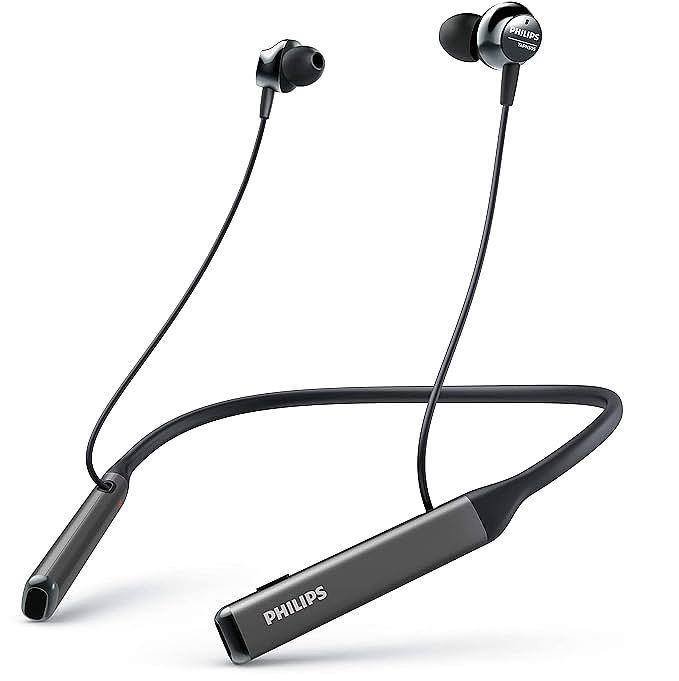
The Neckband Renaissance: Engineering Comfort and Fidelity...

The Science Behind True Wireless Audio: Belkin SoundForm...

Budget Wireless Earbuds Review: What to Look for Under $50

Beyond the Eardrum: The Hidden Physics of Bone Conduction

Why Your Headphones Lie to You: The Physics of Sound That...

Passive Noise Isolation: How a Silicone Seal Outsmarts Digital Noise Cancellation

The Engineering Zero-Sum Game Behind Marathon Battery Claims

Why Hybrid IEMs Sound Like One Voice, Not Two
