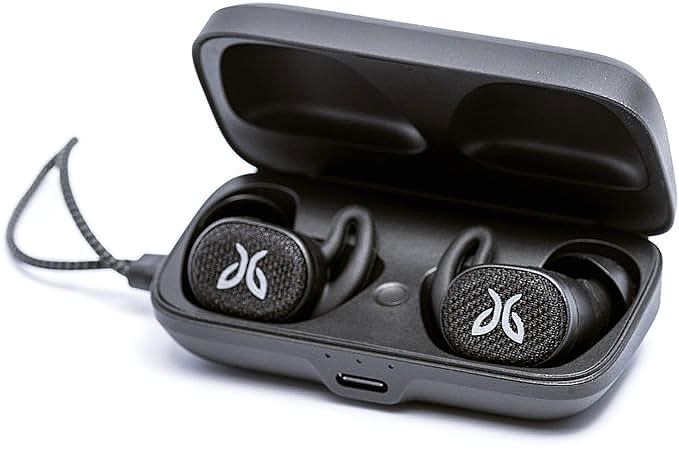
Why Earbuds Fall Out: The Engineering Physics Behind Secure-Fit Design


Wisezone Q63-6 Wireless Bluetooth Earbuds
It happens mid-stride on a Thursday morning run. You are cresting the hill near the park, legs burning, music driving your pace, when you feel it. The slow, inevitable creep of your right earbud loosening from its perch. One more stride and it tumbles onto the pavement, leaving you fumbling to pick it up while your heart rate spikes for all the wrong reasons.
If this sounds familiar, you are far from alone. The reason your earbuds keep falling out is not that you have weird ears or that you are wearing them wrong. The real culprit is a fundamental physics problem that most earbud designs never actually solve.
The vast majority of true wireless stereo earbuds on the market today rely on a single mechanism to stay in place: friction. A silicone tip wedged into your ear canal creates an acoustic seal, and that seal is simultaneously responsible for both sound isolation and physical retention. The moment anything disrupts that friction, whether it is a drop of sweat, a sudden head movement, or the natural shifting of your jaw during exercise, the earbud loses its only anchor point and gravity takes over.
Understanding why this happens, and more importantly how engineering solutions address it, requires looking at earbud retention through the lens of physics rather than marketing claims. The answer involves cantilever beams, load redistribution, and a two-millimetre difference in ear canal diameter that most manufacturers conveniently ignore.
The Physics of Ear Canal Retention: Why Friction Fails
To understand why earbuds fall out, you first need to understand what is holding them in. Standard in-ear earbuds use a silicone or foam tip that compresses slightly when inserted into the ear canal. The elastic properties of the tip material create an outward force against the canal walls, and the resulting friction is what resists the earbud being pulled out by gravity, head movement, or the jarring impact of running.
This works well enough when you are sitting at a desk. But during physical activity, three forces conspire against this friction-based seal.
First, there is kinetic energy. Every foot strike during running generates forces of roughly two to three times your body weight travelling upward through your skeletal system. These vibrations propagate through your skull and jaw, subtly changing the shape of your ear canal with each stride. A study published in Nature Scientific Reports in 2023 confirmed that ear canal geometry is not static; it deforms measurably during jaw movement and physical exertion, breaking the precise contact that friction-based seals depend on.
Second, there is moisture. Sweat does not merely make things wet. It fundamentally changes the coefficient of friction between the silicone tip and your skin. A dry silicone tip against skin has a static friction coefficient of roughly 0.8 to 1.2. Introduce even a thin film of sweat, and that drops to between 0.3 and 0.5. In practical terms, the force required to dislodge the earbud drops by more than half the moment you start perspiring.
Third, there is the geometry problem. The human ear canal is not a uniform cylinder. It is an S-shaped tube averaging 2.5 centimetres in length in adults, but ranging from 1.8 to 3.4 centimetres across the population. The lateral third is cartilaginous and somewhat flexible, while the medial two-thirds is bony and rigid. The canal curves anteroinferiorly, meaning it angles downward and forward, not straight back. This complex geometry means that a standard round silicone tip, no matter how well-designed, can only make partial contact with the canal walls at any given time.
When you combine dynamic canal deformation, reduced friction from sweat, and imperfect geometric contact, you have a system that is fundamentally unreliable under the conditions where stability matters most: during exercise.
The Cantilever Principle: How Ear Hooks Change the Physics
The solution to the friction problem is not more friction. It is a completely different engineering approach, one borrowed from bridge building and structural engineering: the cantilever beam.
An ear hook is essentially a flexible arm that extends from the body of the earbud and loops over the top of the ear, specifically hooking around the helix, which is the curved outer rim of the auricle. When vertical forces, whether from gravity, running impact, or head bobbing, try to pull the earbud downward, the hook engages with the underside of the helix.
Here is where the cantilever principle comes into play. In structural engineering, a cantilever is a beam anchored at only one end. When a load is applied to the free end, the anchor point experiences both a bending moment and a shear force. In the context of an ear hook, the anchor point is where the hook meets the earbud body, and the load is the downward gravitational and kinetic force acting on the earbud.
The hook converts this downward force into a clamping force. The harder gravity and momentum pull the earbud down, the harder the hook presses against the helix, creating a self-tightening mechanism. This is fundamentally different from friction-based retention, which weakens under load. Cantilever retention strengthens under load.
This load redistribution is critical for comfort as well as stability. Without a hook, the entire weight of the earbud, which includes the driver, battery, circuit board, and housing, must be supported by the ear canal alone. With a hook, much of this weight is transferred to the helix root, the sturdy upper curve where the ear connects to the head. The helix is structurally far more robust than the delicate cartilage of the ear canal, making it a superior load-bearing surface.
Materials matter here. Modern ear hooks typically use flexible thermoplastic elastomers, memory wire with silicone coating, or medical-grade silicone. The ideal material must be soft enough to conform to the wide variation in ear shapes while maintaining sufficient structural rigidity to function as a cantilever. Memory wire cores allow users to mold the hook to their specific ear geometry, creating a custom fit that retains its shape over time.
Anatomy of a Secure Fit: The Dual-Retention System
While ear hooks provide excellent vertical stability, the most robust engineering approach combines multiple retention mechanisms into what audio engineers call a dual-retention system. This architecture uses two complementary anchoring points that address different types of movement.
The first component is the ear hook, which provides gross stabilization. It resists vertical displacement from gravity and the up-and-down jarring of running. Think of it as the primary load-bearing element.
The second component is the ear wing, also known as a fin or stabilizer. These are smaller protrusions that extend from the earbud body into the concha, the bowl-shaped portion of the outer ear. Unlike the ear hook, which fights vertical forces, the wing provides lateral stability. It prevents the earbud nozzle from rotating or shifting side to side within the ear canal, which can break the acoustic seal and degrade sound quality even when the hook prevents the bud from falling out entirely.
The dual-retention approach creates mechanical redundancy. If the ear canal seal loosens due to sweat or canal deformation, the hook keeps the bud from falling. If the hook shifts slightly during an aggressive head movement, the wing maintains the nozzle position. Together, they provide a level of stability that neither could achieve alone.
This redundancy is particularly important because it addresses the comfort-versus-stability trade-off that plagues single-mechanism designs. Traditional in-ear buds that rely solely on a tight canal seal must be inserted firmly, which creates pressure on the sensitive canal walls. A 2023 study by the National Institute of Advanced Industrial Science and Technology, measuring real-time canal wall deformation in 42 commuters using high-resolution otoscopic imaging, found that subjects wearing standard silicone tips reported pain onset at a median of 107 minutes. Those using anatomically contoured memory-foam tips lasted longer, with a median pain onset at 163 minutes. But neither group was immune to eventual discomfort.
A dual-retention system changes this equation. Because the hook and wing handle the structural work, the ear canal tip does not need to bear the full weight or provide the primary anchor. This allows for a lighter, more comfortable seal that prioritizes acoustic quality over brute-force retention.
Sweat, Salt, and the Failure of Friction-Based Solutions
One of the most persistent misunderstandings in sports audio involves IP ratings and their relationship to actual sweat exposure. The IP, or Ingress Protection, code is an international standard defined by IEC 60529. When you see a rating like IPX7, it means the device has been tested to withstand immersion in one metre of freshwater for 30 minutes. IPX8 extends this to continuous immersion beyond one metre.
The critical word here is freshwater.
Human sweat is not freshwater. Its average pH ranges from 4.5 to 6.8, making it mildly acidic. Its sodium concentration is approximately 0.9 percent, comparable to saline solution. This salty, acidic composition is far more corrosive than freshwater. Over time, sweat accelerates oxidation on charging contacts, degrades the rubber seals that IP ratings depend on, and can compromise the structural integrity of silicone tips.
This matters for retention because degraded silicone tips lose their elastic properties. A tip that once provided a snug friction seal becomes slick and loose after months of sweat exposure, accelerating the very slippage problem it was designed to prevent.
The lesson is straightforward: IP ratings tell you about water resistance, not sweat resistance, and not retention stability. A pair of earbuds with an IPX7 rating will survive a rainstorm, but if they rely solely on friction for retention, they will still fall out during a sweaty workout. Mechanical anchoring through hooks and wings is impervious to sweat lubrication because it does not depend on friction in the first place.
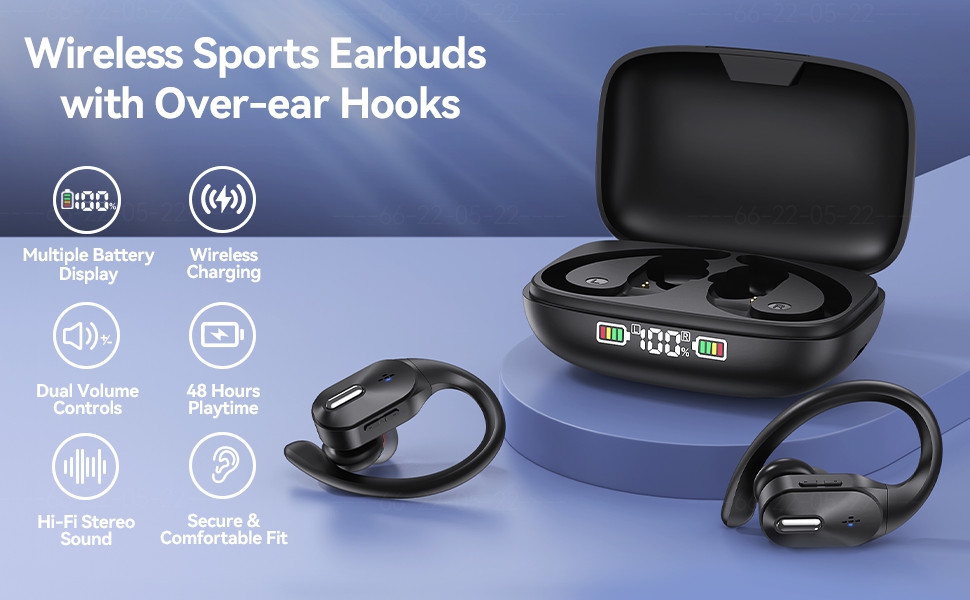
For active users, the optimal approach combines adequate IP protection, ideally IPX5 or above for heavy sweat, with mechanical retention that works independently of the canal seal. This is precisely the engineering philosophy behind sport-oriented designs like the Wisezone Q63-6, which pairs an ear hook architecture with IPX7 waterproofing to address both the moisture and stability challenges simultaneously.
Choosing the Right Fit System for Your Ears
Understanding the physics is useful, but applying it requires practical knowledge about your own anatomy and use patterns. Here is a framework for selecting the right retention system.
For high-impact activities like running, CrossFit, or basketball, ear hooks are non-negotiable. The vertical forces generated during these activities will defeat any friction-only system, regardless of tip material or insertion technique. Look for hooks with memory wire cores that can be molded to your ear shape, and verify that the hook material is soft enough to avoid pressure points behind the helix.
For moderate activities like walking, gym weightlifting, or cycling on smooth roads, wingtips or fins may be sufficient. These provide lateral stability without the added bulk of a full hook. They are also less visible, which some users prefer for casual or office use.
For stationary use like desk work or commuting, standard silicone or foam tips are adequate. The forces involved are minimal, and comfort becomes the primary concern. Memory foam tips like those from Comply provide superior comfort for extended wear, as the AIST study data suggests.
Tip sizing deserves special attention. Most earbuds ship with three to four tip sizes, typically ranging from extra-small to large. The correct size is the largest one that fits comfortably without creating pressure pain. A tip that is too small will not create adequate contact for friction or acoustic sealing. A tip that is too large will cause the canal to deform excessively, leading to the kind of dynamic instability described earlier.
Consider also that your left and right ear canals may differ in size. Anthropometric data consistently shows that ear canal diameter varies significantly not just between individuals but between the left and right ears of the same individual. Do not assume both ears need the same tip size.
Why Mechanical Anchoring Beats Friction Every Time
The fundamental insight from this analysis is that earbud retention is an engineering problem, not a comfort preference. Friction-based retention fails under precisely the conditions where you need it most: during physical activity, in the presence of sweat, and under dynamic loading.
Mechanical anchoring through ear hooks, and ideally through a dual-retention system combining hooks with wings, improves the physics of the problem. Instead of fighting against sweat and movement with increasingly desperate friction, a cantilever-based system uses those very forces to enhance stability. The harder you run, the more securely the hook grips.
This is not a marginal improvement. It is a categorical shift from a fundamentally unreliable mechanism to one that is structurally sound. The next time your earbud falls out mid-run, remember that the problem is not your ears. It is the engineering of the product you are wearing. And the solution is not to shove it in harder. The solution is to choose a design that anchors rather than wedges.
The Wireless Earbuds exemplify this engineering philosophy with their integrated ear hook design, Bluetooth 5.3 connectivity, and IPX7 waterproofing. By pairing mechanical anchoring with 13mm drivers and CVC 8.0 noise cancellation, they address both the stability equation and the audio quality that active users demand.
Wisezone Q63-6 Wireless Bluetooth Earbuds
Related Essays

Why Your Earbuds Keep Falling Out During Workouts—and What Actually Helps

DUNGZDUZ BSU-03A Sport Earbuds: The Ideal Exercise Earbuds with a Secure Fit
Why Earbuds Fall Out on Your Run: The Engineering Fix


MASTER & DYNAMIC MW07 GO True Wireless Earphones - Water Resistant Earbuds

Wireless Earbuds That Stay Secure During Workouts: bmani T16 Review

Xmenha Over Ear Wrap Around Earbuds: Solid but Flawed

How to Read a Sport Earbud Product Page: A Beginner's Guide to Specs

The Ergonomics of Stability: Why Your Sport Earbuds Fall Out (And How to Find a Pair That Won't)