The Science of Audio: Understanding 40mm Neodymium Drivers and Wireless Technology

pollini TP 19 Wireless Headphones
In our modern world, headphones have become essential companions in our daily lives. Whether commuting to work, exercising at the gym, or simply unwinding with music, we rely on these devices to deliver our personal audio experiences. But have you ever wondered about the fascinating science and engineering that makes your listening experience possible? This headphone Wireless Headphones, like many contemporary audio devices, represent a remarkable convergence of acoustic physics, materials science, and wireless communication technology. Understanding these underlying principles can transform your appreciation of everyday technology and help you make more informed decisions as a consumer.
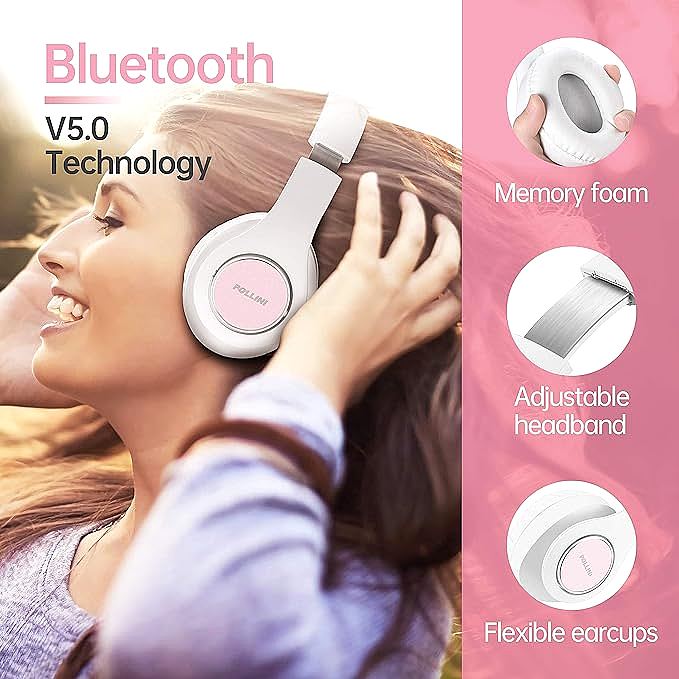
The Heart of Sound: Understanding 40mm Neodymium Drivers
At the core of every headphone lies the driver, the essential component responsible for converting electrical signals into the sound waves we perceive. This headphone features a 40mm neodymium driver, a specification that hints at sophisticated audio engineering. But what exactly does this mean for your listening experience?
The driver functions essentially as a tiny voice box within your headphones. When electrical signals from your audio source travel through the voice coil, they interact with the permanent magnet's magnetic field, causing the coil to move rapidly back and forth. This movement vibrates the diaphragm, which in turn creates pressure waves in the air that our ears interpret as sound.
The "40mm" designation refers to the diameter of the diaphragm within the driver. This measurement matters significantly because larger diaphragms can move more air with each oscillation. Think of it like the difference between a small drum and a large bass drum in an orchestra—the larger surface area of the bass drum can produce more resonant, powerful low-frequency sounds. In headphone terms, a 40mm driver typically delivers deeper, more impactful bass compared to smaller drivers commonly found in earbuds.
The "neodymium" part of the equation refers to the type of magnet used in the driver's construction. Neodymium magnets, made from an alloy of neodymium, iron, and boron, represent one of the most significant advancements in magnet technology since their commercial introduction in the 1980s. These remarkably strong permanent magnets can produce magnetic fields approximately ten times stronger than traditional ferrite magnets of the same size.
This superior magnetic strength translates directly into improved audio performance. With a stronger magnetic field, the voice coil can be controlled with greater precision and efficiency. The diaphragm responds more quickly and accurately to incoming electrical signals, resulting in sound reproduction that more faithfully represents the original recording. High-frequency details become clearer, low frequencies extend deeper, and the overall sonic signature feels more dynamic and lifelike.
The Invisible Connection: Bluetooth 5.0 Wireless Technology
The transition from wired to wireless headphones represents one of the most significant convenience improvements in personal audio history. At the heart of this wireless revolution lies Bluetooth technology, a communication protocol that has evolved dramatically since its introduction in the late 1990s.
Bluetooth operates using radio waves in the 2.402 to 2.480 GHz frequency band, which falls within the ISM (Industrial, Scientific, and Medical) radio band reserved internationally for general-purpose wireless communication. Unlike Wi-Fi, which prioritizes high data throughput, Bluetooth was designed from the ground up for low-power, short-range communication between multiple devices.
This headphone utilizes Bluetooth 5.0, a version that brought substantial improvements over its predecessors. One of the most significant enhancements is data transmission speed. Bluetooth 5.0 can achieve data rates up to 2 Mbps—double the maximum speed of Bluetooth 4.2. For audio applications, this increased bandwidth provides several benefits.
Audio signals must be encoded before transmission over Bluetooth. Different encoding schemes, or codecs, sacrifice varying degrees of audio quality for reduced data requirements. Higher-quality codecs like aptX and AAC require more bandwidth but preserve more of the original audio information. With Bluetooth 5.0's increased data capacity, these higher-quality codecs can operate more reliably, resulting in better-sounding wireless audio.

The Power of Endurance: Understanding Battery Technology
Battery life often ranks among the most important specifications for wireless headphone shoppers, and for good reason. Few experiences prove more frustrating than having your music interrupted by a low battery warning mid-commute or workout session. Understanding the technology behind headphone power management can help set realistic expectations and enable better comparison between products.
This headphone incorporates an 800mAh lithium polymer battery, a specification that tells only part of the story. Milliampere-hours (mAh) represent a unit of electric charge—essentially the "fuel tank capacity" of the battery. An 800mAh battery can theoretically provide 800 milliamps of current for one hour, 400 milliamps for two hours, or 80 milliamps for ten hours before requiring recharging.
However, actual battery life depends heavily on how that power gets consumed. Several factors influence the actual playback time you'll experience. The volume level at which you listen directly affects power consumption—playing music at maximum volume requires significantly more energy than listening at moderate levels.

The Comfort Factor: Materials Science in Headphone Design
Perhaps no specification proves more important for extended listening sessions than comfort. Even the most sophisticated audio technology becomes irrelevant if the headphones prove uncomfortable to wear. Modern headphone comfort relies heavily on materials science, particularly in the design of ear cushions and headband padding.
This headphone features memory foam ear cushions wrapped in protein leather—a combination that represents decades of materials engineering for comfort applications. Understanding these materials reveals why they have become standard in quality headphones.
Memory foam, technically known as viscoelastic polyurethane foam, was originally developed by NASA in the 1960s for aerospace seat cushioning. The term "viscoelastic" perfectly describes its unique combination of properties. "Viscous" refers to fluid-like behavior—the foam yields slowly when pressure is applied. "Elastic" describes its ability to return to original shape once pressure is removed.
When you place memory foam against your head and ears, the material slowly conforms to your exact contours. This personalized fit distributes pressure evenly across the contact surface rather than concentrating it at specific points. The result feels like the cushion has been molded specifically for your head—because it has, at least temporarily.
The Complete Audio Experience
Modern wireless headphones like this headphone represent far more than simple audio playback devices. They embody the convergence of multiple scientific and engineering disciplines—acoustics, electromagnetism, electrochemistry, and materials science—all working together to create an experience that enhances our daily lives.
Understanding the principles behind these technologies does more than satisfy intellectual curiosity. It enables consumers to make informed decisions, comparing products based on meaningful specifications rather than marketing language. The next time you slip on your headphones for your commute or workout, you might find greater appreciation for the remarkable engineering condensed into these compact companions that shape our daily soundscapes.
Sources: SoundGuys (soundguys.com), Rtings (rtings.com), NASA Spinoff (nasa.gov), Britannica (britannica.com)