Budget Sports Earbuds: JLab vs Soundcore — Two Designs, One Decision

JLab Go Sport+
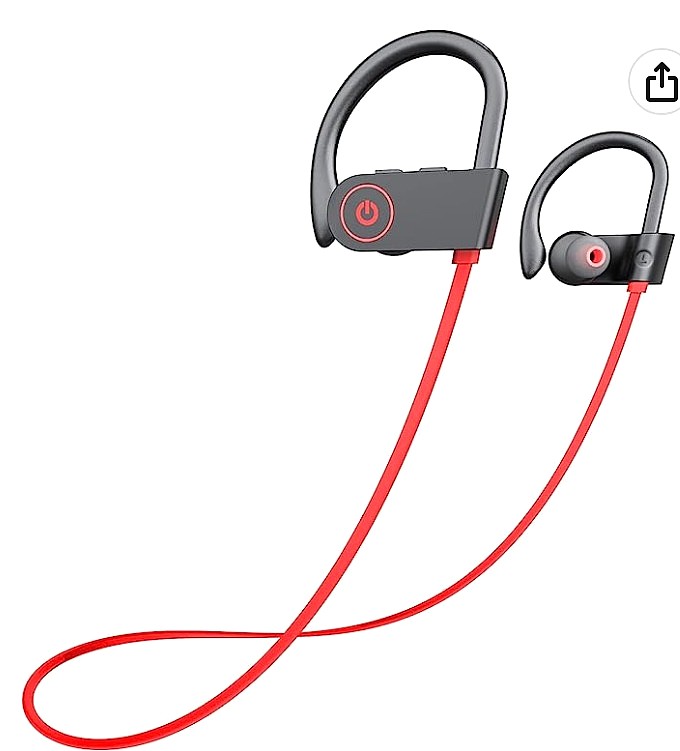
Walk into any big-box electronics aisle or scroll through the budget earbud category online, and you will quickly find yourself facing two products that sit within two dollars of each other. One costs $24.99. The other costs $26.99. At that proximity, price stops being a differentiator and design philosophy takes over as the real decision point. The JLab Go Sport+ seals your ear canal with a silicone tip and anchors itself with a flexible hook that wraps around the outer ear. The Soundcore V20i does the opposite: it leaves your ear canal completely open and rests a speaker housing just outside it, firing sound inward without making contact with the canal wall.
Neither approach is a mistake. Each represents a coherent set of trade-offs that cascade through every aspect of the listening experience: bass response, sweat resistance, battery endurance, call clarity, and what you can hear of the world around you. The comparison is not about which product is better. It is about which set of trade-offs matches how you actually train.
At a Glance: JLab Go Sport+ vs Soundcore V20i
If you need the short version before diving into each dimension, here is the split. The JLab model prioritizes physical durability, acoustic isolation, and long battery endurance. It carries an IP55 certification for dust and water-jet resistance, supports Bluetooth multipoint for simultaneous dual-device connections, runs over 35 hours from a single case charge, and includes a two-year warranty. The earhook design keeps it anchored during rapid movement, and the sealed fit blocks gym noise without requiring you to push the volume to unsafe levels.
The Soundcore model prioritizes comfort and environmental awareness. Its open-ear architecture eliminates the canal pressure that causes fatigue during extended wear, while preserving your natural ability to hear approaching cars, training partners, and equipment cues. It uses larger 16mm titanium-coated drivers driven by Anker BassUp processing, and it connects to the Soundcore App, which offers a deeper customization toolkit than JLab provides. However, several specifications are not published by the manufacturer: battery runtime per charge, total endurance with the case, an IP rating for dust or water resistance, and confirmation of multipoint Bluetooth support. These are data gaps, not defects. But they limit the precision of any side-by-side comparison on those dimensions.
At roughly $25 and $27 respectively, these two products compete on design intent rather than spec-sheet dominance. This comparison is in the end a question about your training environment, not a spec-sheet shootout. The rest of this article unpacks what that means across eight dimensions that matter for fitness use.
Design Philosophy: In-Ear Security vs Open-Ear Awareness
The core engineering difference between these two products can be understood through basic acoustics. A speaker driver moves air. How much of that moving air reaches your eardrum depends on whether the path between them is sealed or open.
When a silicone tip seals the ear canal, the driver diaphragm and the eardrum form the two ends of a small, enclosed air column. Every movement of the diaphragm pressurizes and depressurizes this fixed volume directly. Low frequencies, with their long wavelengths, benefit enormously from this arrangement. A 40 Hz bass note has a physical wavelength of over eight meters. In open air, most of that energy never reaches your ear because it disperses in all directions before covering even a fraction of that distance. Inside a sealed canal, the driver does not need to project bass across a room. It only needs to pressurize a few cubic centimeters of trapped air. This is why even small in-ear drivers can produce bass that feels present and controlled.
The sealed design also blocks external sound passively. No electronics, no processing, no battery drain. The silicone tip itself is an acoustic barrier. In a noisy gym with clanging barbells, blaring facility speakers, and treadmill motors running at speed, passive isolation lets you hear your music without cranking the volume to levels that cause long-term hearing damage. The earhook adds a second layer of security: it wraps around the outer ear and distributes retention force across a larger surface area than a friction-fit tip alone can manage. During burpees, box jumps, or rapid direction changes on a trail, the hook keeps the earbud where it belongs.
The trade-off is comfort over time and awareness of your surroundings. A sealed canal can feel fatiguing after two or three hours of continuous wear. The occlusion effect, where your own footsteps and breathing sound amplified because the sealed canal traps those bodily vibrations, is audible during running. And the isolation that blocks gym noise also blocks traffic noise, which becomes a safety concern for outdoor runners and cyclists.
The open-ear design solves these problems by never sealing the canal in the first place. The driver sits outside the ear, firing sound toward the canal opening without making airtight contact. Your ear canal remains at atmospheric pressure. There is no occlusion effect, no fatigue from tip pressure, and no electronic pass-through mode needed to hear the world around you. The ambient awareness is real and instantaneous. You hear the car before you see it, not a processed version of it delivered through a microphone with latency.
What the open design gives up is bass efficiency. A driver firing into open air, even a 16mm one, cannot pressurize the canal the way a sealed driver can. No amount of digital signal processing fully closes this gap, because the physical energy transfer is limited by acoustics, not by software. The open-ear format also relies on a less mechanically locked-in fit. Soundcore addresses this with four adjustable positions to accommodate different ear shapes, but without a hook or a seal, the earbud is inherently less anchored than a dedicated sport design during high-impact movement.
For fitness specifically, the choice maps onto where you train. Indoor gym work, where noise isolation and secure fit matter most, favors the sealed approach. Outdoor running and cycling, where environmental awareness is a safety factor, favors the open approach. Neither design does both perfectly.
Sound Quality: EQ3 Modes vs BassUp Technology
Both manufacturers have added processing layers on top of their hardware, and the approaches reflect their design priorities.
The JLab offers three EQ modes, switchable through the companion app or directly on the earbuds with a triple-tap gesture. Signature mode presents a balanced curve that works across genres. Balanced mode pulls back the low end and pushes the midrange forward, making it a better fit for podcasts, audiobooks, and acoustic music where vocal clarity matters more than bass impact. Bass Boost mode does what the name suggests, elevating low frequencies for electronic, hip-hop, and metal, the genres that dominate most workout playlists. JLab does not specify the driver diameter in its published materials, which prevents a direct acoustic comparison with Soundcore published 16mm spec.
The Soundcore deploys 16mm titanium-coated dynamic drivers paired with BassUp, Anker real-time low-frequency enhancement algorithm. Titanium, as a diaphragm material, is stiff relative to its mass. This is useful because at higher volumes, softer diaphragm materials begin to distort through a phenomenon called breakup, where different regions of the diaphragm surface vibrate out of phase. A stiffer diaphragm maintains pistonic motion across a wider volume range, which translates to cleaner sound when you push the output during an intense workout. BassUp analyzes the incoming audio in real time and selectively boosts low frequencies, compensating for the open-ear design's inherent bass loss.
The practical question for a listener is what kind of audio you consume during exercise. If your playlist is built around sub-bass drops, kick drums, and low-end synth lines, the sealed in-ear design has a physics advantage that processing cannot fully bridge. The driver does not need to fight open-air dispersion to deliver bass energy to the ear. If your workout audio is mostly spoken word, acoustic guitar, or podcasts, the open-ear presentation may actually sound more natural. The larger Soundcore driver and the absence of a sealed cavity create a more open, less claustrophobic soundstage, even if the lowest octaves roll off earlier than they would in a sealed design.
For additional context at this price tier, the TOZO NC9 at $27.99 adds active noise cancellation to the equation. It claims 60 hours of battery with ANC disabled. These figures are not independently verified, but they illustrate the range of trade-offs available at the $25-to-$30 level. Some products invest in isolation, others in awareness, others in active cancellation.

Battery Life: 35+ Hours vs Unspecified Competitor
Battery endurance is one of the few dimensions where the data asymmetry between these two products is unambiguous, and it matters more than most spec-sheet comparisons because it directly affects how often you reach for a charging cable.
The JLab provides up to nine-plus hours of playback from the earbuds on a full charge. The charging case stores an additional 26-plus hours, bringing the combined total to over 35 hours. For a user who exercises five times per week for roughly an hour per session, this translates to charging the case roughly once every four weeks. The case includes a permanently attached USB-A charging cable tucked into its base, which solves the small but persistent annoyance of hunting for a cable when the battery indicator goes red. The cable is short and non-detachable, a trade-off between convenience and flexibility, but for a gym-bag earbud that lives in a specific pocket, the always-there cable design makes practical sense.
The Soundcore V20i battery specifications are not published in the manufacturer official documentation. Anker does not state the per-charge playback time, the case capacity, or the combined total runtime. This is not a judgment about the actual battery performance. Open-ear designs can sometimes be more power-efficient than sealed in-ear designs at equivalent perceived volume because they do not need to pressurize a sealed cavity. But this is an engineering inference, not a specification. Without published numbers, a comparison based on official sources cannot give the Soundcore a battery figure to place alongside the JLab 35-plus hours. Users who rank battery longevity among their top purchase criteria will find a clear, verified number on one side and a question mark on the other.
Water and Sweat Resistance: What IP55 Means for Your Workout
The IP rating system, defined by the International Electrotechnical Commission under standard IEC 60529, is widely referenced in product marketing and widely misunderstood in practice. Breaking down what IP55 certifies and what it does not certifies clarifies where the JLab stands and why the Soundcore missing rating introduces uncertainty.
An IP55 rating decodes into two separate protections. The first digit, 5, means the enclosure is dust-protected. Limited dust ingress is permitted, but not in quantities that would interfere with normal operation. The second digit, 5, means the enclosure withstands water jets from a 6.3-millimeter nozzle spraying at 12.5 liters per minute and 30 kilopascals of pressure, directed at the enclosure from any angle for a minimum of three minutes at a distance of three meters. These are standardized, repeatable laboratory conditions, not marketing language.
In a fitness context, this means the JLab can handle heavy, continuous sweat dripping directly onto the earbud housing. It can handle running through light to moderate rain. It can survive the condensation that builds up inside a gym bag after a workout. It cannot handle submersion. Do not swim with them, do not shower with them, and do not rinse them under a faucet. IP55 is a splash-and-sweat rating. For comparison, IPX7 certifies temporary submersion up to one meter for 30 minutes. IPX8 certifies continuous submersion beyond one meter. Both are well above what the JLab is tested for.
For the typical fitness user, IP55 covers the actual environmental threats: sweat, rain, humidity, and trail dust. It does not cover swimming, which realistically requires a dedicated waterproof headset regardless of the earbud. The important distinction is that a verified rating provides a tested baseline, while the absence of one forces reliance on assumptions about build quality.
The Soundcore V20i does not carry a published IP rating. The manufacturer has not certified any formal level of dust or water resistance for this model. Open-ear designs, by their nature, have fewer sealed internal cavities and therefore fewer potential ingress points. But structural resilience to moisture is not the same as a tested and certified rating. For users who train outdoors in wet climates or who sweat heavily during indoor sessions, the absence of a rating introduces a variable that a specification is designed to eliminate.
Bluetooth Multipoint: Connecting Two Devices at Once
Bluetooth multipoint is one of those features that sounds niche until you use it for a week and then cannot go back. It allows a single pair of earbuds to maintain simultaneous connections to two source devices, typically a phone and a laptop. Audio plays from whichever device is active. If a call comes in on the phone, the earbuds switch to it automatically. When the call ends, playback resumes from the laptop. No Bluetooth settings menu, no disconnecting and reconnecting, no forgetting a device and re-pairing it later.
The JLab supports multipoint through its Bluetooth 5.4 chipset. This feature is standard in earbuds priced above $80 and appears inconsistently in the $40-to-$60 range. Finding it in a $24.99 product is notable because it addresses a real daily friction point for users who move between devices throughout the day. Someone who watches workout tutorials on a tablet while keeping a phone connected for messages, or someone who transitions from a work laptop during the day to a phone for an evening run, will experience multipoint as a genuine quality-of-life improvement.
The Soundcore official documentation does not list multipoint Bluetooth among its specifications. Anker has not confirmed whether the V20i chipset can maintain simultaneous dual-device connections. Like the battery and IP rating gaps, this does not mean the feature is absent. It means that using only official manufacturer sources, a comparison on this dimension cannot give the Soundcore a definitive yes or no. For users whose daily routine involves device switching, the confirmed multipoint support on the JLab eliminates a recurring inconvenience that the Soundcore may or may not address.
Call Quality: Dual MEMS vs 4-Mic AI Enhancement
Voice calls on workout earbuds are a secondary use case, but they happen often enough to matter. Taking a quick call between sets or answering a work call from a quiet room should not require swapping to a different headset.
The JLab uses a dual MEMS microphone configuration. MEMS, which stands for Micro-Electro-Mechanical Systems, are silicon-based sensors fabricated using semiconductor processes. They handle the vibration, temperature swings, and humidity of a gym environment better than traditional electret condenser microphones. The JLab divides the workload: one MEMS mic captures the voice, and the second captures environmental noise. The noise signal feeds into a subtraction algorithm that removes ambient sound from the voice channel. This is a purpose-built architecture where each component has a defined job.
The Soundcore uses a 4-microphone array with AI-based noise reduction. Four mics provide more spatial sampling points for beamforming, a signal processing technique that electronically steers pickup sensitivity toward the speaker mouth while attenuating sound from other directions. The AI processing layer attempts to distinguish voice from background noise in real time, adapting to the acoustic environment.
Both systems handle indoor calls adequately. Both will struggle with wind noise outdoors, which is a physical challenge for any earbud microphone regardless of price. The Soundcore has more raw microphones, while the JLab has a task-dedicated architecture. Neither is a decisive advantage unless call quality in noisy environments is your primary daily requirement, in which case a dedicated headset with a boom mic would serve better than any earbud at this price.
App Ecosystem and Customization
Both products connect to companion apps, and the app experience reflects the broader difference between the two products: one provides depth, the other provides essentials.
The Soundcore App reflects Anker years of development across a wide audio product line. It offers BassUp toggling, multiple EQ presets, a custom parametric equalizer, per-gesture touch control remapping, and controls for the V20i RGB lights on the earbud housing. The interface is polished, the feature set is broad, and the app receives regular updates that add functionality over time. If you enjoy fine-tuning how your earbuds sound and behave, the Soundcore App is the stronger offering.
The JLab App is narrower in scope but covers what matters for fitness use. It provides the three EQ modes (Signature, Balanced, Bass Boost), adjustment for the Be Aware ambient pass-through level, and touch control customization. It also delivers firmware updates, which matters for long-term stability. The app does not offer parametric EQ or light controls because the JLab hardware has no lights and no BassUp-style processing layer to toggle. It aims to be functional rather than comprehensive.
Neither app is required for basic operation. Both earbuds work as standard Bluetooth audio devices without the companion software. If you value a mature, feature-rich app ecosystem with deep customization, Soundcore leads. If you prefer a focused toolset that stays out of the way, the JLab App is sufficient.

Matching Each Design to Your Workout Style
Most comparison questions come down to a single word: which. But for these two products, the better question is: which type of training defines your week?
The sealed, earhook-anchored design fits users whose workouts involve heavy sweating, rapid multi-directional movement, extended sessions, or exposure to weather. This includes HIIT classes, CrossFit, marathon training, trail running, hot yoga, and any gym routine where you move between stations without pausing. The IP55 rating directly addresses sweat and rain. The earhook keeps the earbud in place through burpees, sprints, and kettlebell swings. The 35-plus-hour battery means you are not charging mid-week. The multipoint support accommodates users who work from a laptop during the day and train with a phone in the evening. The two-year warranty adds a layer of long-term confidence.
The open-ear, canal-free design fits users who prioritize all-day comfort, who have had discomfort from in-ear tips in the past, or who exercise in settings where hearing ambient sound is a safety requirement. This includes urban running and cycling, casual gym sessions where you want to hear training partners or equipment cues, and users who wear earbuds for hours beyond the workout window. The design eliminates canal pressure entirely, which matters if you have previously abandoned in-ear models because of discomfort. The 16mm titanium-coated drivers with BassUp push the acoustic limits of the open-ear format, though bass depth remains constrained by the physics of uncoupled air radiation. The deeper app customization supports users who treat audio tuning as part of the experience.
If you are still uncertain, three questions tend to cut through the noise more effectively than any spec sheet. Does sweat or rain regularly soak your current earbuds? Do you need to hear traffic, training partners, or equipment sounds during exercise? Does extended in-ear wear cause discomfort? Answering these three will point toward one design philosophy or the other because they address the immutable trade-offs: isolation versus awareness, physical security versus comfort, sealed bass efficiency versus open-air naturalness.
JLab Go Sport+ vs Soundcore V20i: Where Each Design Lands
These two products do not compete on the same axis, and they are not trying to. At $24.99 and $26.99, they share a price bracket but not a design philosophy. One is built for the physical demands of training: sweat, movement, weather, and long sessions, backed by verified specifications that support those demands. The other is built for the sensory experience of training: comfort, awareness, and audio tuning, delivered through an open-ear architecture that eliminates the discomfort some users associate with in-ear designs.
This comparison, when you strip away the spec sheets and marketing copy, is a question about your training environment. If your workout is loud, sweaty, and physically intense, the sealed, hooked, IP55-rated design solves the problems that environment creates. If your workout is outdoors, social, or awareness-dependent, the open-ear design preserves what the sealed design blocks. Neither product is incorrect. Each makes a different set of engineering choices, and those choices either align with your training routine or they do not.
The fact that a choice this meaningful exists at $25 is itself worth noting. A few product generations ago, a sports earbud at this price came in one shape with one sound signature and whatever moisture tolerance the plastic shell happened to offer. Now the budget tier offers two coherent, well-executed design philosophies at roughly the cost of a monthly gym membership. The right pick is the one whose trade-offs you will not notice because they line up with how you already train.
JLab Go Sport+
Related Essays

Open-Ear Earbuds for Sports: The Science of Staying Aware
Open-Ear Earbuds for Sports: The Science of Staying Aware
Open-Ear Earbuds for Sports: The Science of Staying Aware

MTYBBYH S12 Waterproof Headphones: Enjoy Music Underwater with MP3 Mode

The Science of Staying in the Zone: How Sports Earbuds Protect Your Flow State

Xmenha Black Wireless Smallest Invisible Earbuds

Choosing the Best Open Ear Earbuds for Sports: What Runners and Cyclists Should

The Engineering of Battery Endurance: Why Some Wireless Earbuds Last Weeks While Others Die in Hours
Boean U8 Wireless Headphones: Your Ultimate Workout Companion with Bluetooth 5.3
