Beyond Bone Conduction: The Physics of Air Conduction and Open-Ear Fidelity
Update on Nov. 23, 2025, 5:02 p.m.
The personal audio market is currently bifurcated into two dominant philosophies: isolation and integration. While noise-canceling technology strives to seal the listener in a vacuum, a rapidly growing sector is focused on removing barriers entirely. This is the realm of Open-Ear Audio.
However, a significant misconception persists in this category. Many consumers conflate “Open-Ear” exclusively with “Bone Conduction.” The Monster Open Ear AC311 challenges this narrative. It represents a different, and arguably superior, approach known as Air Conduction. By leveraging massive 16.2mm drivers and the latest Bluetooth 5.4 protocol, it demonstrates how directing air—rather than vibrating bone—can achieve a synthesis of environmental awareness and acoustic fidelity that traditional methods struggle to match.

The Physics of Delivery: Air Conduction vs. Bone Conduction
To appreciate the engineering of the AC311, one must distinguish between the two primary transmission methods for open-ear audio.
Bone Conduction works by vibrating the transducers against the zygomatic arch (cheekbone), sending sound waves directly to the cochlea. While effective for swimming or severe hearing impairments, it faces inherent physical limitations:
1. Frequency Response: High-frequency vibrations are dampened by skin and bone, often leading to a muddy sound.
2. The “Tickle” Effect: Deep bass requires strong vibrations, which can cause an uncomfortable itching sensation on the skin.
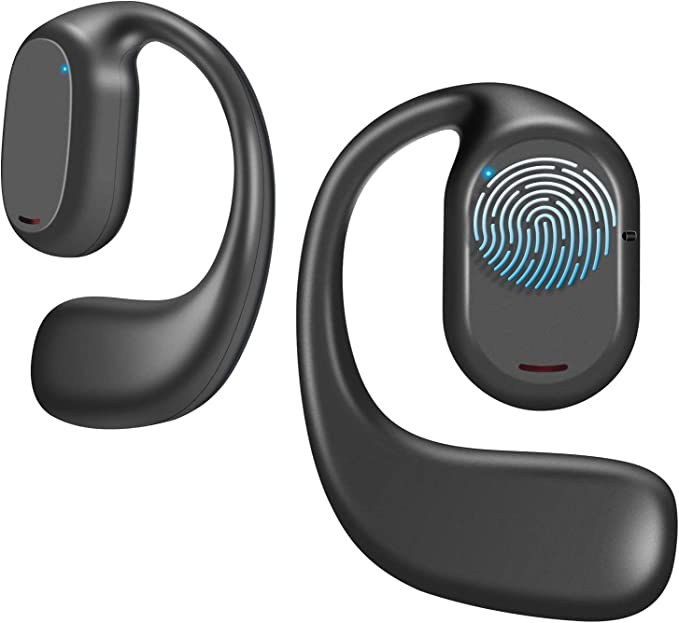
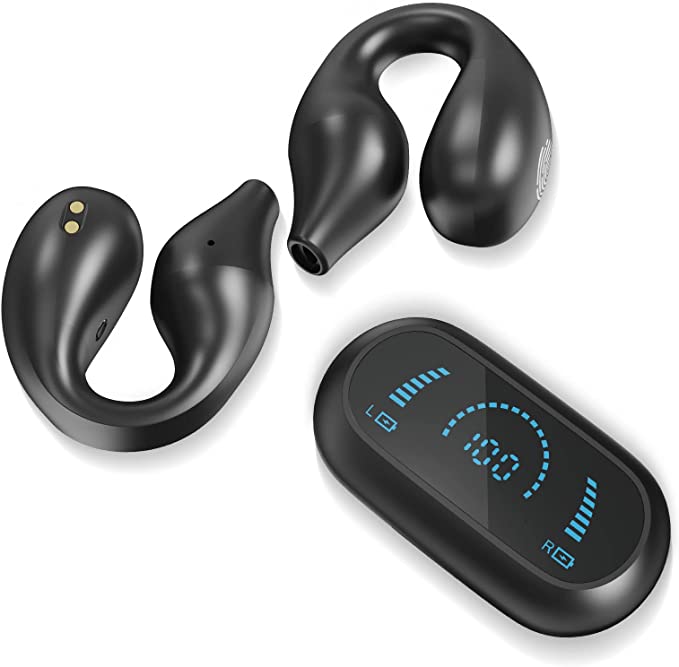
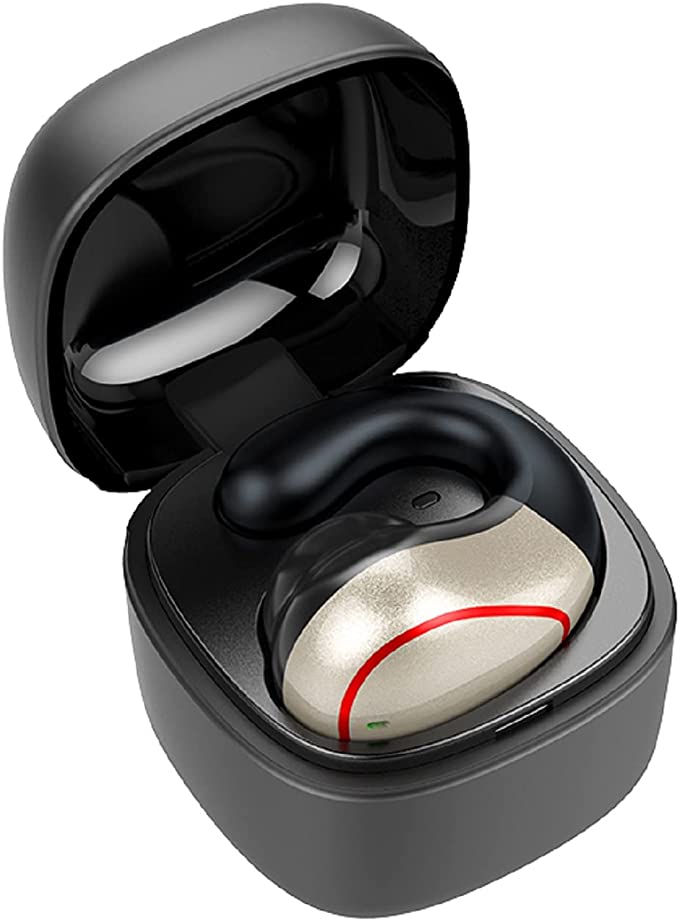
Air Conduction, employed by the Monster AC311, utilizes Directional Audio.
* The Mechanism: The device functions like a precision-engineered near-field monitor hovering over the ear canal. It projects sound waves through the air, utilizing the outer ear (pinna) to naturally funnel sound to the eardrum.
* The Advantage: This method preserves the natural resonances of the ear canal
, resulting in a wider soundstage and, crucially, the ability to reproduce bass frequencies without physical vibration. It creates a “Personal Audio Sphere” that feels immersive yet non-intrusive.
The 16.2mm Driver: Overcoming Signal Loss
In traditional in-ear monitors (IEMs), the driver is sealed within the ear canal. This creates a pressurized chamber where even tiny 6mm drivers can produce powerful bass. In an open-ear design, there is no seal. Low-frequency energy dissipates rapidly in open air (following the inverse-square law).
To counteract this Low-Frequency Loss, the AC311 integrates a massive 16.2mm Dynamic Driver. * Surface Area: A driver of this magnitude moves a significant volume of air. This raw displacement power allows the device to project robust bass frequencies across the gap between the speaker and the ear canal. * Engineering Challenge: Controlling such a large diaphragm requires a stiff yet lightweight material to prevent distortion at high volumes. This acoustic architecture ensures that users don’t just hear the music; they feel the depth, addressing the primary complaint associated with open-ear headphones.

Bluetooth 5.4: The Efficiency Frontier
The AC311 is one of the early adopters of the Bluetooth 5.4 standard. While audio codecs often grab the headlines, the real story of 5.4 in this form factor is Power Efficiency and Connection Robustness.
Open-ear headphones typically require higher power output to drive large speakers and compete with ambient noise. * Energy Management: Bluetooth 5.4’s optimized transmission protocols contribute significantly to the AC311’s impressive 30-hour total playtime. It allows the device to maintain a stable, high-bitrate connection with the source device while minimizing battery drain. * Latency: For video consumption and gaming, Bluetooth 5.4 reduces the handshake time and data packet delay, ensuring that the audio image remains perfectly synchronized with the visual—a critical factor that budget wireless earbuds often fail to deliver.
Situational Awareness as a Safety Protocol
In urban environments, total isolation is a safety hazard. Active Noise Cancellation (ANC) with “Transparency Mode” attempts to solve this by using microphones to pipe outside sound in. However, this is a digital recreation of the world, often marred by hiss, wind noise, or processing lag.
The AC311 offers Passive Transparency. Because the ear canal is physically unobstructed, the user hears the environment exactly as it is—unprocessed and in real-time. * The “Occlusion Effect”: Traditional earbuds trap body sounds (chewing, footsteps, breathing) inside the ear canal, creating a booming sensation known as the occlusion effect. By leaving the canal open, the AC311 eliminates this phenomenon, making it far more comfortable for runners who find the “thud-thud” of their own footsteps distracting. * Spatial Orientation: Hearing traffic, bicycle bells, or other pedestrians naturally preserves the brain’s ability to spatially locate hazards, a capability that is often compromised by digital transparency modes.

Durability: Decoding IPX5
For a device designed to live outside the ear, exposure to the elements is a given. The AC311 carries an IPX5 rating. * The “X”: Indicates it hasn’t been rated for dust resistance (common for audio grilles). * The “5”: This is the crucial metric. It signifies protection against low-pressure water jets from any direction. Practically, this means the device is impervious to heavy sweat during a workout or being caught in a sudden rain shower. It is a “weather-ready” build, distinct from merely “splash-proof” IPX4 devices, offering a higher threshold of reliability for active users.
Conclusion: The Evolution of Listening
The Monster Open Ear AC311 is not just a safety tool; it is a statement about how we integrate technology into our lives. It rejects the notion that high-quality audio requires isolation. By combining the physics of Air Conduction with the raw power of 16.2mm drivers and the efficiency of Bluetooth 5.4, it offers a listening experience that is physically comfortable, acoustically rich, and safely connected to the world. It proves that sometimes, the best way to listen is to keep your ears open.