The Engineering of Access: How IPX8 and Wireless Charging Migrated to Entry-Level Audio
Update on Nov. 22, 2025, 4:55 p.m.
In the consumer electronics industry, the “trickle-down” effect is a defining force. Technologies that debut as flagship exclusives—Retina displays, biometric sensors, solid-state drives—eventually permeate the mass market as manufacturing processes mature and component costs stabilize. This phenomenon is currently reshaping the personal audio landscape, specifically within the entry-level segment.
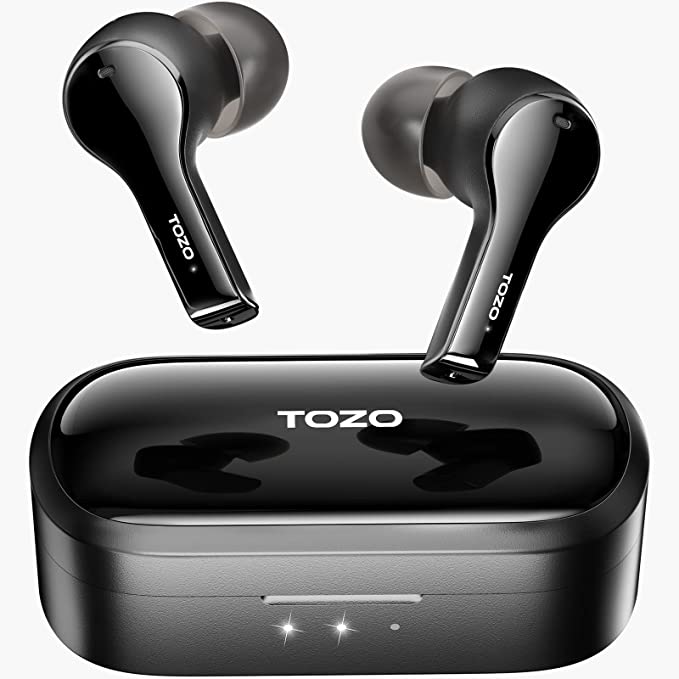
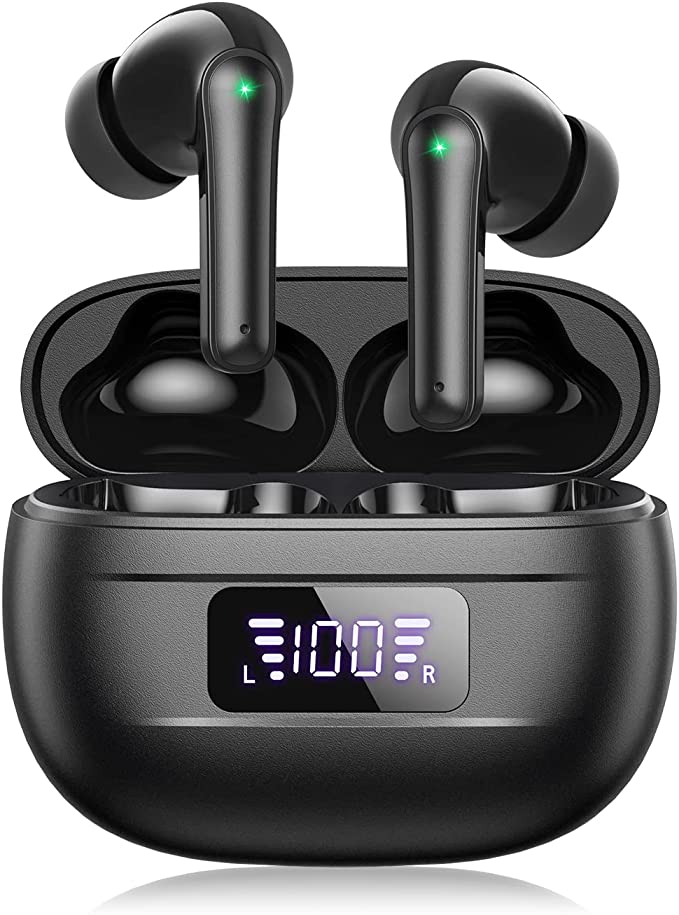
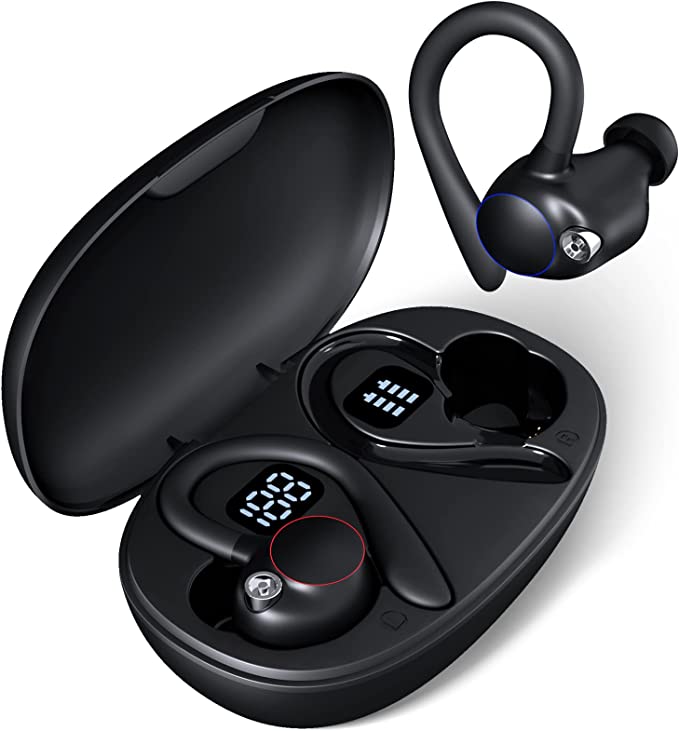
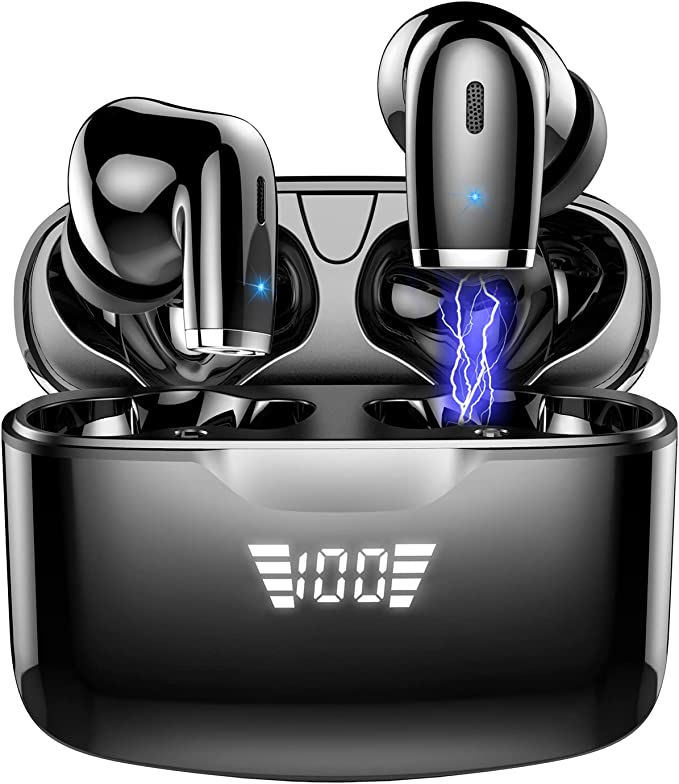
We are witnessing a moment where the distinction between “budget” utility and “premium” functionality is blurring. High-specification features such as inductive charging coils and military-grade waterproofing, once reserved for devices costing upwards of $200, are now standardizing in the sub-$50 category. The TOZO T20 serves as a compelling engineering case study for this shift. By deconstructing its feature stack, we can understand how supply chain efficiencies are effectively democratizing robust hardware design.

The Waterproofing Paradox: Decoding IPX8
One of the most significant engineering challenges in portable audio is moisture ingress. The Ingress Protection (IP) rating system classifies a device’s resistance to solids and liquids. For years, “sweatproof” (typically IPX4 or IPX5) was the ceiling for affordable audio. Achieving higher ratings required expensive ultrasonic welding, specialized gaskets, and conformal coatings that drove up manufacturing costs.
However, the presence of an IPX8 rating in accessible devices marks a breakthrough in assembly precision. IPX8 is a rigorous standard, denoting capability for continuous submersion beyond 1 meter. In technical terms, this means the chassis must maintain hermetic integrity under hydrostatic pressure. * The Engineering Reality: Achieving this requires tight tolerance controls in the molding process and the application of hydrophobic nano-coatings on internal printed circuit boards (PCBs). * Practical Implication: While physics dictates that Bluetooth signals (2.4GHz) attenuate rapidly in water—making listening while swimming technically unfeasible without onboard storage—the structural integrity required for IPX8 ensures exceptional durability against accidental submersion, rain, and corrosive sweat. It transforms the device from a fragile accessory into a ruggedized tool.

Energy Density and the Inductive Coil
Battery anxiety has historically plagued the true wireless stereo (TWS) form factor. The constraint is physical volume: fitting a battery, driver, antenna, and logic board into an earbud weighing a few grams is a puzzle of geometry.
The industry solution, exemplified by modern implementations like the T20, involves a two-pronged approach: Bluetooth efficiency and case utility.
1. Bluetooth 5.3 Efficiency: The migration to the Bluetooth 5.3 protocol significantly reduces power consumption during signal transmission. This efficiency allows for smaller batteries (like the 57mAh cells found here) to deliver extended runtimes—in this case, a remarkable 10.5 hours on a single cycle. This defies the previous norm where 5-6 hours was considered standard.
2. Wireless Charging Integration: Perhaps the most surprising addition to the entry-level BOM (Bill of Materials) is the Qi-standard inductive charging coil. Integrating a copper receiver coil and the necessary power management integrated circuits (PMICs) adds complexity and cost. Its presence in affordable units signals that wireless charging has transitioned from a luxury convenience to a commoditized expectation.

Signal Processing: The Distinction Between ENC and ANC
A common point of confusion for consumers is the terminology surrounding noise cancellation. It is crucial to distinguish between ANC (Active Noise Cancellation) and ENC (Environmental Noise Cancellation).
- ANC focuses on the listener, using microphones to generate anti-noise that cancels out ambient sound in the ear canal.
- ENC, which is the technology utilized in the TOZO T20’s dual-mic array, focuses on the recipient of a call. It uses beamforming algorithms to isolate the speaker’s voice while suppressing background noise (wind, traffic, chatter).
Understanding this distinction is vital for managing expectations. Devices in this category prioritize communication clarity (outgoing audio) over isolation (incoming audio). The “Dual Mic” setup functions as a filter, ensuring that voice data is transmitted cleanly, even if the user can still hear their surroundings—a trade-off often preferred for situational awareness in outdoor environments.
Software-Defined Audio: The EQ Revolution
Hardware is static; software is fluid. The final frontier in the democratization of audio is app connectivity. Historically, budget earbuds were “tuned at the factory” with a fixed sound signature—typically a V-shaped curve emphasizing bass and treble to mask mid-range deficiencies.
The integration of companion apps changes the hardware’s value proposition. By allowing users to access the Digital Signal Processor (DSP) through an equalizer, a single pair of 10mm dynamic drivers can be adapted for different content types—boosting vocal ranges for podcasts or deepening low-end frequencies for workouts. This “software-defined” approach extends the product’s versatility, allowing the user to correct or enhance the physical driver’s characteristics.

Conclusion: The New Baseline
The audio market is no longer defined by what you can’t get for under $40, but by how much engineering is being packed into that price point. Devices like the TOZO T20 are not anomalies; they are the new baseline. They demonstrate that robust waterproofing, all-day battery life, and wireless convenience are no longer gatekept features. For the informed consumer, this means looking beyond brand prestige and focusing on the spec sheet—because the gap between “pro” and “entry-level” hardware is narrower than ever before.