How to Read a Sport Earbud Product Page: A Beginner's Guide to Specs
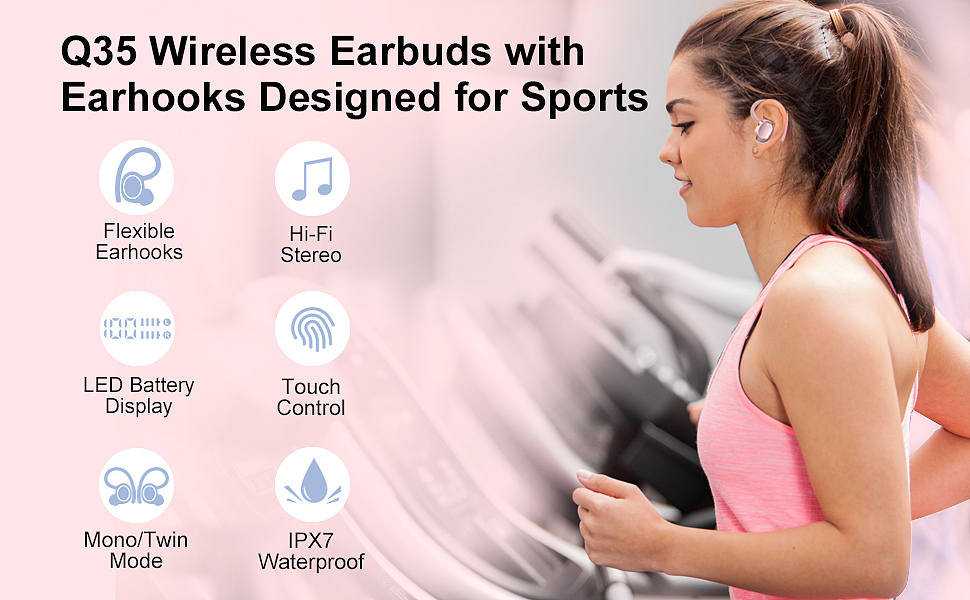
Sprtoybat Q35 Wireless Earbuds
Sprtoybat Q35 Wireless Earbuds
The Sprtoybat Q35 Wireless Earbuds combines solar charging technology with active noise cancellation, offering up to 80 hours of battery life on a single charge — and potentially infinite playtime in sunlight.
Priced at $135.99 for Midnight Black and $199.00 for Sand Gold, it targets outdoor commuters and travelers who want to eliminate cable anxiety.
Priority #1: The Deal-Breaker — Fit, Comfort, and Stability
Before we talk about any technology, let's talk about physics. If an earbud doesn't stay in your ear, its sound quality and battery life are irrelevant. For sports, this is the single most important factor.
What to Look For:
- Secure-Fit Mechanism: Look for terms like "ear hooks" or "ear wings/fins."
- Ear Tip Options: The product should include multiple sizes (S, M, L) of silicone tips.
- Weight: Lighter is almost always better.
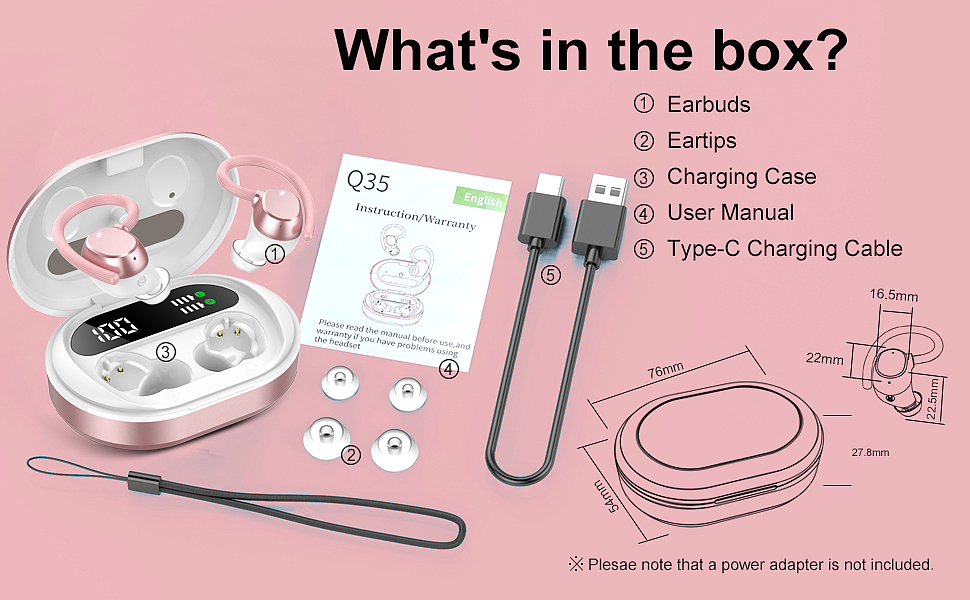
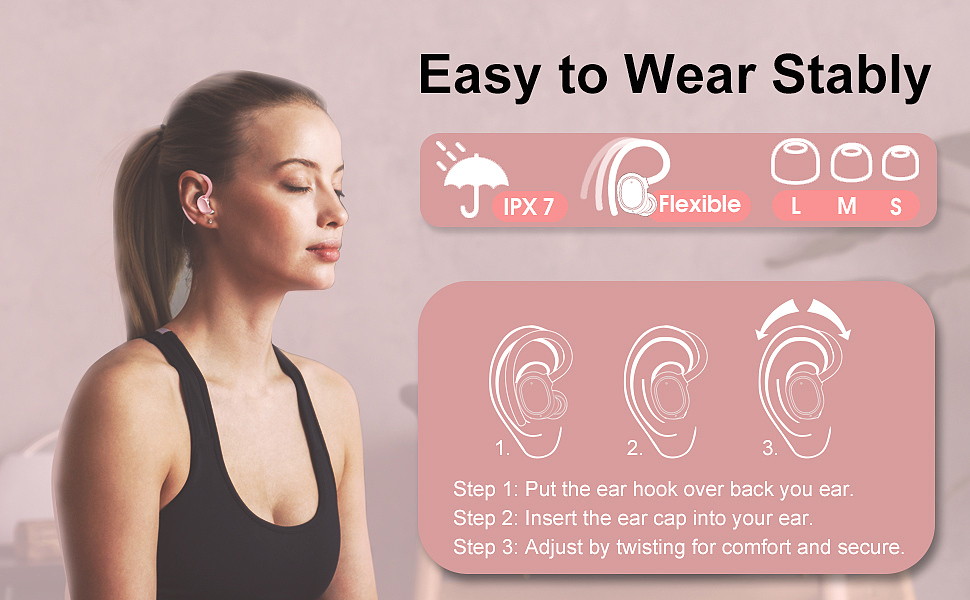
Let's look at our case study. The Q35 page lists "flexible, secure-fitting silicone ear hooks" and "three different sizes of silicone eartips."
Here's the science:
The ear hook is pure ergonomics. It uses the solid cartilage of your outer ear (your pinna) as an anchor. This prevents the earbud from falling out during high-impact movements like running or jumping. The silicone material provides grip without abrasion.
The "three different sizes" of eartips are just as important. The tip creates a seal inside your ear canal. A poor seal not only lets the earbud fall out, but it also "leaks" sound, especially bass. One reviewer of this exact product noted they were "ecstatic" to find a fit for their "small ears." This highlights that a "one-size-fits-all" approach rarely works.
Finally, the Q35 page states each earbud weighs only "6 grams." This is crucial. Remember $Pressure = Force / Area$. By minimizing the mass (and thus the force of gravity), the earbud puts less pressure on your ear, preventing that "ear fatigue" ache you get after wearing heavy buds for an hour.
Mentor's Takeaway: For sports, always prioritize a physical locking mechanism (like hooks) and multiple tip sizes.
Priority #2: The Workout-Proofer — Decoding IP Ratings
You'll see "IPX7" or "IPX4" on almost every sport earbud. This is the Ingress Protection standard, and it's not a suggestion—it's a specific durability rating.
- First Digit (e.g., '6' in IP67): Rates protection against solids (like dust). 'X' just means it wasn't tested for this.
- Second Digit (e.g., '7' in IPX7): Rates protection against liquids. This is the one you care about.
Here is a simple breakdown for athletes: * IPX4: Splash-resistant. This is the minimum you should accept. It can handle sweat and light rain, but not a heavy downpour. * IPX7: Waterproof (in a lab). This is the gold standard for non-swimming sport buds. It means the device can be submerged in up to 1 meter of fresh water for 30 minutes. * IPX8: Swim-proof (continuous submersion).
Our Q35 case study claims "IPX7 rated waterproof." This is a strong rating. It means you can sweat profusely, run in a torrential downpour, or even accidentally drop it in a puddle without fear.
A critical mentor warning: IPX7 does not mean "shower-proof" or "swim-proof." Showers involve soap (which compromises seals) and pressurized water jets. Swimming pools have chlorine. The Q35's own FAQ correctly states, "do not use it while swimming or bathing."
Mentor's Takeaway: For general fitness and running, IPX4 is acceptable, but IPX7 provides genuine peace of mind.
Priority #3: The Endurance Test — Battery Math That Makes Sense
Battery life claims are confusing. You'll see "5 Hours" and "30 Hours" on the same box.
Let's break down the two numbers you need to find:
1. Earbud Playtime: How long the buds last on a single charge.
2. Total Playtime: How much extra power the charging case holds.
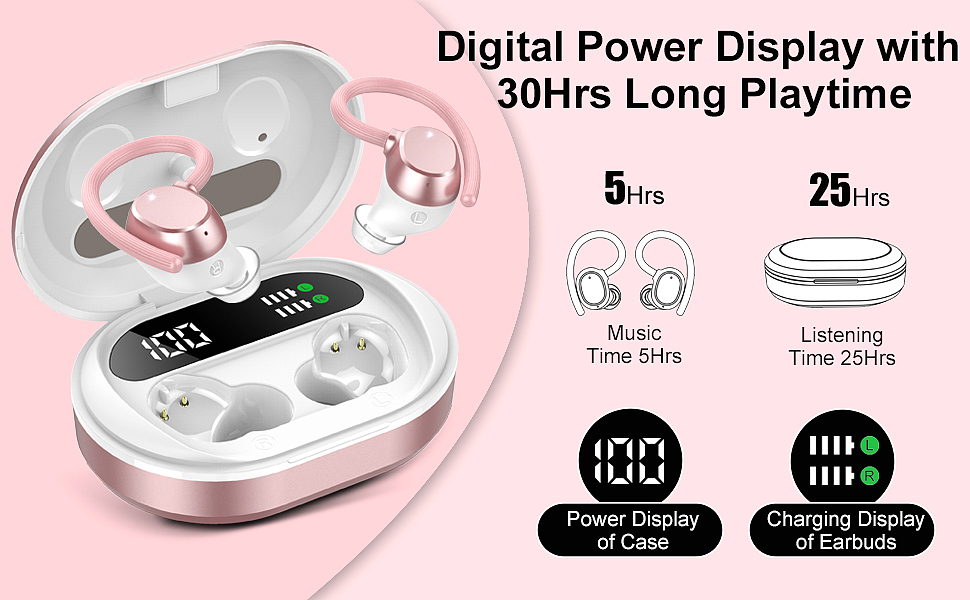
The Q35 page says "up to 5 hours of music playback time" and a "built-in 400mAh battery" in the case provides "a total of 30 hours."
Here's the real math: * 5 hours (from the buds) + ~25 hours (from the case) = 30 total hours. * The 400mAh case can recharge the earbuds "5 times" (5 recharges x 5 hours/charge = 25 hours).
"Up to 5 hours" is the key variable. This is tested at medium volume. If you blast your music, you might only get 3.5 or 4 hours. This is normal.
Two other features listed for the Q35 are genuinely helpful:
1. Dual LED Digital Display: This is fantastic. It shows the exact percentage of the case battery and a separate bar for each earbud. This eliminates the "am-I-at-10%-or-50%?" guessing game.
2. Type-C Fast Charging: This refers to the port on the case. It's the modern, reversible standard. If you see "Micro-USB" on a product in 2025, it's using old technology.
Mentor's Takeaway: Look for at least 4-5 hours of earbud playtime. A case with an LED display is a major quality-of-life feature.
Priority #4: The Connection — Bluetooth 5.3 and "One-Step Pairing"
Nothing kills a run faster than music that stutters and drops. This is all about the Bluetooth chip.
The Q35 page lists "Bluetooth 5.3 technology." This isn't just a random number; it's a newer version of the Bluetooth standard.
Think of it this way: * Bluetooth 4.x: An old, two-lane country road. It works, but it can get congested and uses more gas (battery). * Bluetooth 5.x (5.0, 5.2, 5.3): A modern, multi-lane highway. It's more stable (fewer dropouts), more power-efficient (better for your battery), and has a longer range.
The difference between 5.2 and 5.3 is minor for music listening. The key is to look for "Bluetooth 5.0" or higher.
The page also mentions a "Hall switch" and "one-step pairing." This is a tiny piece of tech that makes a big difference. A Hall switch is a sensor that detects magnets. When you open the case lid, the sensor detects it and immediately tells the earbuds to turn on and connect to your phone. This is why they connect before you even get them in your ears.
Mentor's Takeaway: Look for Bluetooth 5.0 or higher. A Hall switch (often just called "auto-pairing" or "one-step pairing") is a standard feature you should expect.
Priority #5: The Command Center — Understanding Touch Controls
To avoid pulling your phone out mid-run, you need on-bud controls. The Q35 has a "multi-function touch panel."
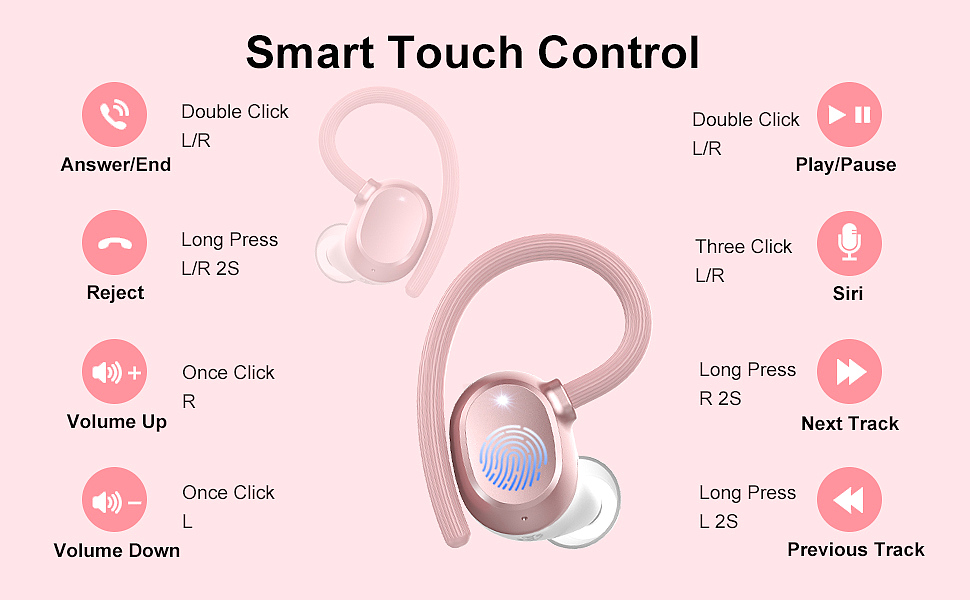
This uses "capacitive touch"—the same tech as your phone screen. It senses the electrical properties of your finger.
The most important commands to check for are: * Play/Pause (Usually a single tap) * Volume Up/Down (Often a tap-and-hold on right/left buds) * Track Skip (Often a double-tap) * Answer Call
The Q35 lists all of these, which is a good, comprehensive set. The main challenge with touch controls (on any earbud) is that they can be sensitive to rain or accidental touches when you're just adjusting the fit.
Mentor's Takeaway: Ensure the controls include volume and track skip, not just play/pause.
Priority #6: The Sound — Decoding "HiFi" and "10mm Drivers"
This is where marketing jargon runs wild. Let's cut through the noise.
"10mm Speaker" (or Dynamic Driver)
This is the physical part that makes sound. It's a tiny, traditional speaker cone. A "10mm" driver is relatively large for an earbud. Generally, a larger driver can move more air, which can create a "richer bass range," as the Q35 page claims. But the tuning of the driver matters more than its size.

"HiFi Stereo"
This stands for "High Fidelity." In the budget earbud world, this term is functionally meaningless. It's a marketing claim, not a technical standard. Ignore it and focus on other specs.
"Volume-optimized Active Equalizer"
This is interesting. It suggests the earbud has a Digital Signal Processor (DSP) chip. This chip acts like a tiny sound engineer, automatically adjusting the bass and treble as you change the volume. It stops the music from sounding "tinny" at low volumes or "muddy" at high volumes.
The MOST Confusing Spec: "Noise-Canceling Microphone"
Please read this twice. The Q35 claims a "noise-canceling microphone." The FAQ also says, "The earbuds don't have Active Noise Cancellation (ANC)."
This is not a contradiction. It's the most common point of confusion for buyers. * Active Noise Cancellation (ANC): This is for you. It uses microphones to listen to the outside world (like a plane engine) and creates an "anti-noise" wave to cancel it out, giving you silence. This is a premium feature. * Noise-Canceling Microphone (ENC/cVc): This is for the person you are calling. It uses microphones to isolate your voice and cut down on the wind or background traffic noise around you, so they can hear you more clearly.
The Q35 has ENC (for your calls), not ANC (for your listening).
Mentor's Takeaway: Don't be fooled by "HiFi." A 10mm driver is a good sign for bass. And always check if "noise cancellation" applies to your listening (ANC) or your phone calls (ENC).
Sprtoybat Q35 Wireless Earbuds
Related Essays

TWS Earbuds Engineering Trade-Offs: Why Every Spec Has a Hidden Cost

The Physics Behind Why Your $25 Earbuds Die in Six Months

The Neuroscience of Workout Focus: How Audio Engineering Protects Flow State

The Budget Earbud Paradox: Unpacking the Tech Behind "Hi-Fi" Sound
Beyond the Spec Sheet: Decoding the Tech That Defines True Sport Earbuds

The Tech Inside: How Features Like Bluetooth 5.3 & IP7 Waterproofing Became Standard

Beyond the Buzzwords: A Deep Dive into Wireless Earbud Tech

The Unheard Battle: How Your Living Room Became the Final Frontier for Perfect Sound

Osdfono U5 Wireless Earbuds: Stay Connected and Enjoy Deep Bass on the Go
