Why Running Feels Easier With the Right Beat: The Science of Rhythm Entrainment
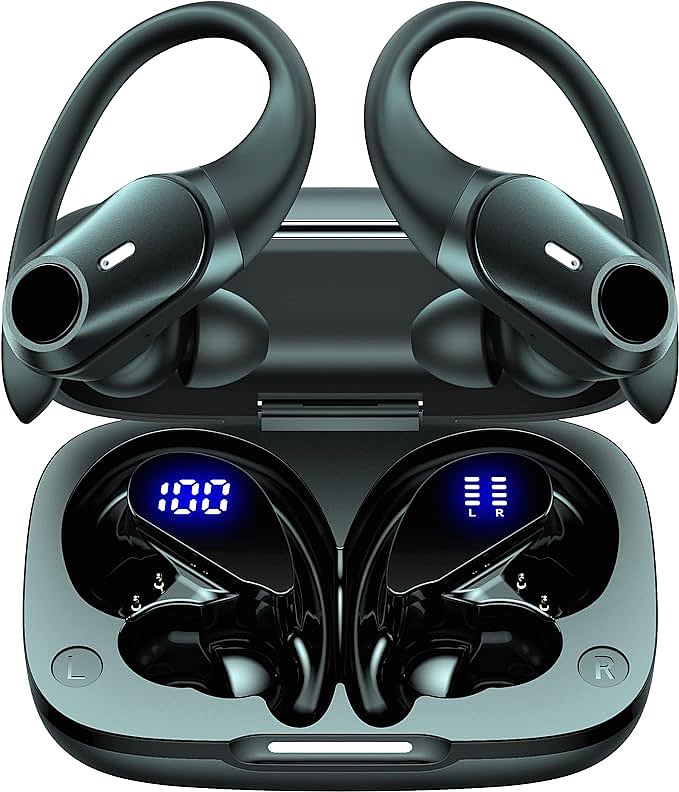
GOLREX T59 Wireless Earbuds
GOLREX T59 Wireless Earbuds
The GOLREX T59 Wireless Earbuds combines solar charging technology with active noise cancellation, offering up to 80 hours of battery life on a single charge — and potentially infinite playtime in sunlight.
Priced at $135.99 for Midnight Black and $199.00 for Sand Gold, it targets outdoor commuters and travelers who want to eliminate cable anxiety.
The Brain's Hidden Metronome
To understand why a song can make your legs move faster or slower without any conscious decision on your part, you have to look inside a part of the brain most people never think about: the basal ganglia.
Tucked deep beneath the cerebral cortex, the basal ganglia — a cluster of structures including the putamen, caudate, and pallidum — serve as the brain's internal timekeeper. This is where your sense of rhythm lives. When you hear a steady beat, neurons in the basal ganglia begin firing in lockstep with it. Within milliseconds, the premotor cortex receives these rhythmic signals and begins preparing movement patterns that match the tempo. The cerebellum joins in, coordinating the precise timing of muscle contractions.
Michael Thaut, a neuroscientist at Colorado State University, spent decades mapping this auditory-to-motor pathway. His work, beginning in the early 1990s, demonstrated something remarkable: the auditory system processes temporal information with far greater precision than visual or tactile systems. Sound, it turns out, is the brain's preferred medium for timing. When you hear a rhythmic cue, your brain doesn't just perceive it — it uses it as a "continuous time reference," an external clock that the motor system can lean on to organize movement.
The implications are startling. Thaut's research showed that once auditory-motor entrainment occurs — once your brain locks onto a beat — your movements stay locked to that rhythm even when the tempo shifts subtly, and you won't even notice. Your body corrects itself automatically, guided by a neural circuit that operates below conscious awareness.
The Dopamine Reward for Moving in Time
Here is where the story takes a turn from mechanical to chemical. In 2019, researchers at the University of Toronto, led by Yuko Koshimori, used PET brain imaging with a specialized dopamine tracer to peer inside the brains of people synchronizing their finger taps to rhythmic auditory cues. They were looking for the neurochemical mechanism behind entrainment — the "why" behind the brain's willingness to lock onto a beat.
What they found was the first direct evidence that rhythmic auditory stimulation modulates dopamine release in the ventral striatum, a key node in the brain's reward system. Dopamine, often called the "feel-good" neurotransmitter, is the same chemical that surges when you eat something delicious, receive praise, or fall in love. And it turns out, it also surges — or more precisely, its receptors become more actively engaged — when your movements align with a steady rhythm.
This is not a metaphor. This is biochemistry. When your foot strikes the ground in time with a drum beat, your brain literally rewards you with neurochemical reinforcement. The researchers found that participants who performed better at synchronizing with the rhythm showed stronger dopamine-related activity. The better you are at moving to the beat, the more your brain rewards you for doing it.
This creates a feedback loop: rhythm drives movement, movement triggers reward, reward reinforces the desire to keep moving. It is, in neurological terms, a self-sustaining cycle — and it helps explain why so many people find it almost painfully difficult to exercise in silence after they have grown accustomed to working out with music.
Recent EEG research by Huanqing Zhang and colleagues in 2024 has further identified beta-band neural oscillations — electrical rhythms in the 13 to 30 Hz range — as the specific frequency at which the cortex and muscles communicate during synchronization. When you tap, step, or pedal in time with music, your brain's beta waves literally synchronize with the external rhythm, creating a measurable electrical bridge between your auditory system and your muscles.
The Invisible Hand That Speeds Your Stride
In 2015, a team led by Marc Leman at Ghent University in Belgium published a study that should have changed how every runner thinks about their playlist. They recruited recreational runners and had them run on a treadmill while listening to music at slightly different tempos — variations of only 2 to 3 percent from their natural running cadence, changes so subtle that no conscious listener could detect them.
The results were striking. Faster music led to faster running cadence. Slower music led to slower cadence. And the runners had absolutely no idea it was happening. They could not perceive the tempo shifts, yet their bodies adapted by up to 2 percent of their original stride rate, entirely unconsciously.
The statistical significance was overwhelming (p < .001). A linear relationship emerged: the faster the music, the faster the legs, in direct proportion. Leman's team described this as a "basin of entrainment" — a window within which the body will automatically synchronize to an external rhythm without any conscious effort or awareness.
Consider what this means in practice. A runner with a natural cadence of 160 steps per minute who puts on music at 164 BPM — a difference of just four strikes — will unconsciously increase their cadence to match. They will not feel like they are working harder. They will simply... run faster. The music becomes an invisible hand, gently pushing their pace.
Leman's study also uncovered a gender difference: the entrainment effect was significantly stronger for women than for men. The reasons remain unclear but may relate to differences in auditory processing or attentional patterns. Regardless, the practical implication is clear — music tempo is not merely a motivational tool. It is a physiological lever.

When 120 BPM Became Humanity's Sweet Spot
If there is a magic number in the science of rhythm and movement, it is 120.
In 2010, Schneider and colleagues proposed that 120 pulses per minute represents an optimally efficient frequency for human movement and rhythmic perception — a kind of biological resonant frequency. It is the tempo at which people naturally tap their feet when asked to simply "tap along." It is the preferred tempo in musical traditions spanning continents and centuries. It is also remarkably close to the natural cadence of walking and the resting heart rate of a healthy adult.
For running, the optimum shifts upward. Research by Schneider's team identified 2.6 to 2.8 Hz — approximately 156 to 168 steps per minute — as the most metabolically efficient stride frequency for running at moderate intensities. This is the range where the body covers the most ground per unit of energy expended.
A practical rule emerged from subsequent research: setting a rhythmic cue at 8 to 10 percent above an individual's preferred cadence produces the highest gait synchronization. A runner at 160 SPM benefits most from music around 173 to 176 BPM. The slight overshoot creates a "pull" effect, encouraging the body to move slightly faster than its default setting without triggering conscious resistance.
The universality of these tempo preferences raises a deeper question: why does the human brain have a sweet spot at all? The answer likely lies in our evolutionary history.
The capacity for rhythmic entrainment may have provided a survival advantage for early humans engaged in collective movement — coordinated hunting, migration, or defense. Groups that moved in synchrony would have been more efficient, less detectable by predators, and better able to maintain cohesion over long distances. The neurological wiring that makes your foot tap to a drum beat may be the same wiring that helped your ancestors survive.
From Greek Olympians to Your Morning Playlist
The relationship between music and physical performance is not a modern invention. It predates the scientific method by millennia.
At the ancient Olympic Games, musicians — particularly players of the aulos, a double-reed instrument — were fixtures at training grounds and competitions. Athletes warmed up to rhythmic accompaniment, believing that music improved both technique and stamina. Pythagoras himself advocated for specific musical modes to prepare warriors for battle, establishing a link between sound and physical readiness that persists in every modern gym.
Roman legions used rhythmic drumming and chanting to coordinate the march of thousands of soldiers across vast distances. The cadence was not merely disciplinary; it was energetically efficient. Soldiers marching in unison expend less metabolic energy than those walking at their own pace — an ancient precursor to the efficiency gains documented by modern sports science.
The tradition continued through military cadence calls, the rhythmic chants known as "Jody calls" that emerged during World War II. These served dual purposes: synchronizing group movement and distracting from physical discomfort. The psychological benefits were recognized long before PET scanners and dopamine tracers existed to explain them.
Then came 1979. the Walkman TPS-L2 weighed fourteen ounces and played ninety minutes of cassette tape. It was, by modern standards, a brick. But it was a innovative brick. For the first time, an individual could carry a personal soundtrack while exercising. The device landed in the middle of a running boom catalyzed by Frank Shorter's 1972 Olympic marathon victory, and the two cultural waves merged. The modern concept of the "workout playlist" was born.
The 1980s aerobics craze turned BPM-specific music into a commercial product. Jane Fonda's workout videos and the aerobics studio culture that swept the world created the first large-scale recognition that tempo mattered — that 120 to 140 BPM was the sweet spot for high-impact exercise. Today, streaming platforms like Spotify offer BPM-filtered workout playlists as a standard feature, and apps like RockMyRun match song tempo to running cadence in real time. The science of entrainment has become consumer technology, available to anyone with a smartphone.

The Efficiency Paradox: Less Energy, More Distance
Perhaps the most extraordinary finding in the science of music and exercise is not that it feels easier. It is that it actually is easier — metabolically, measurably, objectively easier.
In 2012, Peter Terry, Costas Karageorghis, and colleagues conducted a landmark study with elite triathletes. These were not weekend joggers; they were highly trained endurance athletes. The researchers had them run on treadmills under three conditions: self-selected motivational music, neutral music, and silence. The athletes ran in time with the music — synchronous, not just background.
The results defied expectations. Time-to-exhaustion increased by 18.1 percent with motivational music and 19.7 percent with neutral music. These are not marginal improvements. In competitive endurance sports, an 18 percent gain would be the difference between finishing mid-pack and standing on a podium.
But the more remarkable finding was physiological. The athletes consumed less oxygen at submaximal intensities when running to music. Their running economy improved. Their blood lactate levels were lower. Their bodies were literally doing more work with less biochemical fuel.
Karageorghis had previously documented a 15 percent increase in endurance during treadmill walking at 75 percent of maximal heart rate reserve with motivational synchronous music. Simpson and Karageorghis had shown improved 400-meter sprint times with synchronous music. The pattern was consistent across exercise types, intensity levels, and populations: when movement aligns with rhythm, the human machine operates more efficiently.
The mechanism appears to be a combination of factors. Rhythmic cues reduce the variability of motor timing, allowing muscles to fire with greater consistency. The anticipatory time signals from the auditory system streamline motor planning, reducing the computational load on the brain. And the improved affect — the simple fact that exercise feels more pleasant — may reduce the activation of stress-response systems that waste metabolic resources.
For anyone who has ever felt that running with the right song makes the miles melt away, the science confirms the intuition. Your body is not imagining the ease. It is objectively, biochemically, neurologically real.
The Pendulum's Last Swing
Return, for a moment, to Huygens' wall. Two clocks, swinging in unison, connected by a wooden beam they never consciously chose to share. The physicist was puzzled. Three centuries later, the puzzle has deepened rather than simplified. The same force that synchronized those pendulums — entrainment, the tendency of oscillating systems to find shared rhythm — turns out to be woven into the fabric of human biology.
Your basal ganglia process a beat before your conscious mind registers it. Your premotor cortex prepares a matching movement before you decide to move. Your ventral striatum releases dopamine as a reward for the synchronization you did not intend. And your muscles fire with greater efficiency because the rhythm gave them a template they did not have to generate themselves.
The next time you run, and the right song comes on, and your feet somehow find the beat without asking permission, know this: you are not motivated. You are entrained. You are the pendulum. The music is the beam. And the clock on the wall has been ticking in your favor since 1665.