Why Your Headphones Lie to You: The Physics of Sound That...

PHILIPS Fidelio L2BO Over-Ear Premium Portable Headphones
The cello on your playlist does not sound like a cello. It sounds like an approximation of one—a shadow stripped of the wooden resonance, the breath of the bow hair, the micro-vibrations of the bridge transferring energy into the body. You blame the streaming service, maybe the bitrate. But the real culprit sits on your head, and it has been lying to you for years.
Portable audio engineering involves a chain of physical compromises so deep that most listeners never realize what they are missing. The signal leaves your phone as a stream of electrons, passes through a coil of wire suspended in a magnetic field, vibrates a membrane, and pushes air against your eardrum. Every link in that chain either preserves or destroys information. The mathematics of what gets lost—and why—is a story that connects Claude Shannon to 1920s loudspeaker patents to the glass transition temperature of polyurethane foam.

The Compression Paradox: Infinite Library, Finite Resolution
The Nyquist-Shannon sampling theorem established in the 1940s that capturing an analog signal requires sampling at twice the highest frequency present. A standard compact disc operates at 44.1 kHz with 16-bit depth, capturing frequencies up to 22.05 kHz with a amplitude range of roughly 96 decibels. For decades, this was treated as the ceiling of perceptible audio quality.
Then psychoacoustic compression arrived. Algorithms like MP3 and AAC do not compress data the way a ZIP file does. They analyze the audio stream in real time and permanently delete frequencies the human brain is statistically unlikely to notice—a process called auditory masking. If a loud snare hits at the same moment as a quiet hi-hat, the hi-hat’s data is simply removed. The fundamental pitch remains. The harmonic overtones—the high-frequency resonances that let your ear distinguish a cello body from a synthesizer oscillator—are gone.
High-Resolution Audio standards reject this deletion. Operating at 24-bit/96kHz or 24-bit/192kHz, these formats expand amplitude range from 96 dB to approximately 144 dB. A 24-bit recording can resolve the intake of a vocalist’s breath alongside a full orchestral fortissimo without clipping either. But here is the catch that equipment manufacturers rarely discuss: feeding a 24-bit/192kHz lossless file into a transducer that cannot physically start and stop vibrating with microscopic precision turns that extra data into analog distortion. The mathematics of the file outpaces the physics of the hardware.
The Magnet Problem: How Mass Betrays Motion
The moving-coil loudspeaker mechanism has been fundamentally unchanged since Rice and Kellogg patented it in 1925. An alternating current representing the audio waveform passes through a coil suspended in a permanent magnetic field. As the current fluctuates, the resulting electromagnetic interaction pushes and pulls the coil—and the attached diaphragm—back and forth. This is the Lorentz force in action.
Generating a strong enough permanent magnetic field once required massive ferrite or Alnico magnets. Making headphones portable meant shrinking those magnets, which meant reducing magnetic flux density, which produced sluggish driver movement and muddy, distorted bass. The physics were merciless: less magnetic force meant less control over the diaphragm, which meant the transducer could not accurately track rapid transient signals.
The commercial availability of neodymium changed the equation entirely. This rare-earth alloy produces a magnetic field up to ten times stronger than ferrite at the same mass. In a 40mm neodymium driver, the dense magnetic field gives the coil extraordinary positional control. When a sharp transient hits—a snare strike, a plucked string—the magnetic force accelerates the diaphragm almost instantly to trace the leading edge of the waveform. More critically, when the signal ceases, that same dense field acts as an electromagnetic brake, stopping the diaphragm’s motion within milliseconds.
This braking action matters more than the acceleration. A poorly controlled driver continues vibrating after a bass note ends, bleeding low-frequency energy into the midrange and producing the muddy, boomy character that plagues cheap headphones. The relationship between magnetic flux density and transient accuracy is not linear; it follows the inverse square law, meaning small improvements in field strength produce outsized improvements in driver control.

The Back-Wave Dilemma: Sound You Were Never Meant to Hear
When a headphone diaphragm pushes air toward your ear canal, it simultaneously pushes an equal volume of air in the opposite direction—into the headphone housing. This back-wave is the acoustic problem that separates competent headphone design from incompetent design, and it is governed by the same fluid dynamics principles that dictate how exhaust manifolds and organ pipes behave.
A fully closed-back headphone seals this back-wave inside a plastic or metal cup. The advantage is excellent passive noise isolation. The disadvantage is severe internal reflection. The pressurized air bounces off the rear wall of the cup and strikes the back of the driver, causing phase cancellation and resonance peaks at specific frequencies. The result is a soundstage that feels trapped—music that exists strictly between your ears, never beyond them. Recording engineers often prefer closed-back designs for monitoring because isolation matters more than spatial realism in a studio setting.
Open-back headphones eliminate this problem by removing the rear barrier entirely. The back-wave escapes freely, internal cup resonance disappears, and the soundstage expands to approximate the experience of listening to speakers in a room. The fatal trade-off is zero isolation. You hear your environment, and your environment hears your music. Open-back headphones are functionally useless on a train, in an office, or anywhere beyond a quiet room.
The semi-open architecture attempts a calculated thermodynamic compromise. Instead of sealing or exposing the driver, the housing incorporates specifically tuned acoustic vents covered by resistance meshes. These vents control the volume and velocity of the escaping back-wave, functioning similarly to a bass reflex port on a loudspeaker cabinet. By managing acoustic impedance—the ratio of sound pressure to particle velocity—the semi-open design mitigates internal resonance while retaining enough back-pressure for impactful low-frequency response and a functional degree of noise isolation. It is controlled leakage, engineered at the millimeter scale.
Why Your Earcup Material Is a Second Speaker
The structural material of the earcup is not passive. When a powerful neodymium driver generates low-frequency pressure waves, the internal air pressure exerts physical force against the cup walls. If those walls are made of thin injection-molded ABS plastic—the industry standard for sub-fifty-dollar headphones—the plastic itself flexes in sympathy with the music.
This is modal resonance, also called housing coloration. The vibrating plastic functions as an unplanned secondary driver, introducing harmonic distortion peaks absent from the original recording. It smears midrange clarity and adds a hollow, synthetic timbre. The problem is measurable: cup resonance typically appears as sharp peaks in frequency response measurements between 200 Hz and 800 Hz, right where the human ear is most sensitive to vocal intelligibility.
Defeating housing coloration requires manipulating two material properties: stiffness (Young’s modulus) and internal damping. Aluminum possesses a significantly higher stiffness-to-weight ratio than polycarbonate, meaning it resists flexing under acoustic pressure. When an aluminum earshell is mounted on a secondary layer of high-density engineering plastic, the combination creates a constrained-layer damping system. The aluminum provides rigidity; the plastic layer absorbs whatever microscopic vibrational energy manages to excite the metal and converts it to heat.
The result is an acoustically inert chamber. The only component vibrating and producing sound is the driver itself. This inert background is what allows the micro-details captured in high-resolution recordings—the spatial positioning of instruments, the decay of reverb tails, the texture of a fingernail on a guitar string—to emerge from the noise floor and become perceptible.
The Impedance Trap: When Your Phone Cannot Push
A common failure mode in portable audio has nothing to do with the headphone and everything to do with the device driving it. High-end home and studio headphones frequently carry impedance ratings of 250 to 600 ohms. These high-impedance voice coils use extremely thin wire with many windings, keeping the coil light for fast transient response but requiring substantial voltage to drive current through the circuit.
Modern smartphones and ultrathin laptops operate on low-voltage lithium-ion batteries. Their internal amplifiers, integrated into the system-on-a-chip, cannot generate the voltage swings needed to push current through a 300-ohm load. The amplifier clips—running out of headroom at transient peaks—and the low-frequency response collapses entirely because bass reproduction demands the most electrical current. The headphone sounds quiet, flat, and lifeless, not because it is poorly designed, but because the source device is physically incapable of driving it.
Engineering a headphone for mobile efficiency means designing the voice coil with low electrical impedance. At 16 ohms, the coil offers minimal resistance to alternating current, allowing even weak mobile amplifiers to deliver sufficient current for full full-range output. This is not a compromise in quality; it is a recognition that the amplifier and the transducer form a single electrical circuit, and that circuit must be designed as a matched system rather than two independent components.
The Seal: Where Biology Defeats Engineering
The final variable in the audio reproduction chain is the most unpredictable: the shape of your skull. No two human heads present the same surface geometry to an earcup. Eyeglass arms, jawline width, the depth of the temporal fossa—all of these create potential gaps between the earpad and the skin.
Low-frequency sound waves have long wavelengths and require the movement of substantial air volumes to propagate. For a 40mm driver to deliver bass energy to the eardrum, the space between the driver and the ear must become a pressurized, sealed chamber. Any gap between earpad and skin creates an acoustic short circuit. The high-pressure air generated by a bass note escapes through the path of least resistance into the room, and the low-frequency response rolls off catastrophically. The music sounds thin and harsh because treble frequencies—which are directional and do not depend on pressure chamber physics—reach the ear uninhibited while the bass energy simply vanishes.
Memory foam addresses this through a materials science principle called viscoelasticity. Unlike standard open-cell foam, which compresses like a spring and rebounds immediately, memory foam responds to both pressure and temperature. When the earcup presses against the head, body heat causes the foam to exceed its glass transition temperature. The material softens and flows, filling every microscopic contour and crevice around the ear and jawline. Once conformed, the dense foam wrapped in a non-porous covering creates a hermetic seal that traps long-wavelength acoustic energy. The physical impact of a kick drum reaches the tympanic membrane rather than dissipating into the atmosphere.
This seal also enables the semi-open design to function as intended. Without adequate isolation from the earpad, the controlled back-wave vents would be overwhelmed by ambient noise flooding in from the environment. The foam gasket and the acoustic vents work as a paired system—one managing what escapes, the other managing what enters.
The Wire That Still Matters
The audio industry is moving aggressively toward wireless transmission. Bluetooth codecs have improved substantially over the past decade. But wireless audio remains constrained by the Shannon-Hartley theorem, which defines the maximum rate at which information can be transmitted over a communications channel of a specified bandwidth. Even the most advanced Bluetooth codecs struggle to transmit uncompressed 24-bit/192kHz audio through the congested 2.4 GHz radio band without introducing latency, compression artifacts, or both.
A physical copper connection has effectively infinite bandwidth for analog electrical waveforms. It is immune to radio interference, battery degradation, and algorithmic compression. The signal that leaves the digital-to-analog converter arrives at the voice coil as a precise electrical analog of the original waveform, unaltered by codec mathematics.
This is not an argument against wireless audio, which serves a genuine convenience need. It is an acknowledgment that the bottleneck of audio fidelity has shifted. As streaming platforms begin offering lossless high-resolution libraries, the limitation is no longer the software or the file format. The limitation is the physical transducer strapped to your head—its magnetic control, its structural inertia, its acoustic venting, its electrical efficiency, and its ability to form a seal against the irregular surface of a human head.
Sound is not merely data to be transmitted. It is a mechanical force to be managed—a pressure wave that must be accelerated with precision, braked with authority, housed in material that refuses to vibrate, driven by circuits matched in impedance, and sealed against surfaces that no two people share. The engineering of a competent portable headphone is not a single problem. It is six problems, each governed by different physics, all requiring simultaneous solution.
PHILIPS Fidelio L2BO Over-Ear Premium Portable Headphones
Related Essays

The Neckband Renaissance: Engineering Comfort and Fidelity...

Why Hybrid IEMs Sound Like One Voice, Not Two
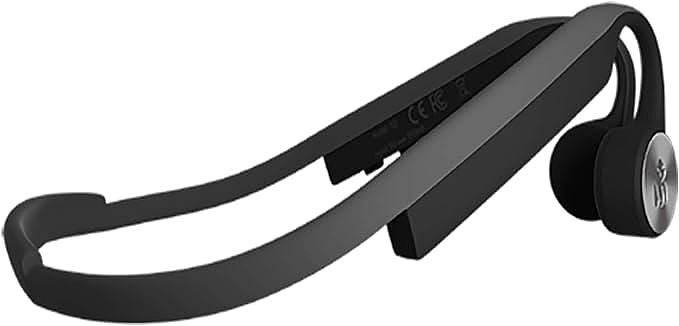
Osteophony and Acoustics Engineering Open-Ear Transducers

Why Do Headphones Sound Different? The Science of Audio Physics

The Paradox of Stillness: When Opposing Forces Create Perfect Silence

Beoplay H95: Experience Silence and Sound with Adaptive ANC

HUAWEI FreeBuds Pro 2: Immerse Yourself in Sound with Intelligent Noise Cancellation

Unleash the Symphony Within: Audio-Technica ATH-TWX7BK Wireless Earbuds

Technics EAH-AZ80-S Earbuds: Immerse Yourself in Hi-Fi Sound Without the Noise
