Escaping the Bandwidth Bottleneck: How Adaptive Algorithms Reshaped Portable Acoustics


TRANYA T6 Wireless Earbuds
For decades, the pursuit of high-fidelity audio was tethered to the physical limitations of copper wire. The audiophile community built a fortress of exclusivity around thick, oxygen-free cables, massive analog amplifiers, and towering loudspeakers. The transition to wireless audio was initially met with justifiable skepticism. Early Bluetooth protocols were notorious for aggressive compression, high latency, and fragile connection stability, effectively treating complex musical arrangements as disposable data.
However, the rapid miniaturization of silicon and the evolution of digital signal processing (DSP) have fundamentally altered the portable audio landscape. The barrier between premium, studio-grade listening experiences and mass-market consumer electronics is dissolving. Devices that fit comfortably within the ear canal are now performing real-time algorithmic gymnastics that would have required rack-mounted servers in the late 1990s.
To truly grasp this paradigm shift, we must look beyond marketing brochures and examine the underlying physics and software architectures. By using the hardware framework of a contemporary device—specifically the TRANYA T6 wireless earbuds—as our analytical subject, we can dissect the specific technologies that make modern untethered audio possible. This is an exploration of radio frequency telemetry, psychoacoustics, user interface ergonomics, and the relentless engineering battle against the constraints of the 2.4GHz spectrum.

The Invisible Traffic Controller in Your Ear Canal
To understand the core challenge of wireless audio, one must understand the concept of digital bandwidth within the context of the Shannon-Hartley theorem. This foundational principle of information theory dictates the maximum rate at which data can be transmitted over a communication channel subject to noise. The 2.4GHz Industrial, Scientific, and Medical (ISM) radio band, which Bluetooth relies upon, is an exceptionally noisy environment. It is constantly bombarded by interference from Wi-Fi routers, microwave ovens, and overlapping wireless peripherals.
Historically, wireless audio relied on static codecs (Coder-Decoder algorithms) like SBC (Subband Codec). These legacy systems operate like a highway with a rigid, unchangeable speed limit. When the radio frequency (RF) environment becomes congested, the static codec cannot adapt. It continues attempting to push the same volume of data through a shrinking pipeline, resulting in packet loss, audio stuttering, and eventual disconnection.
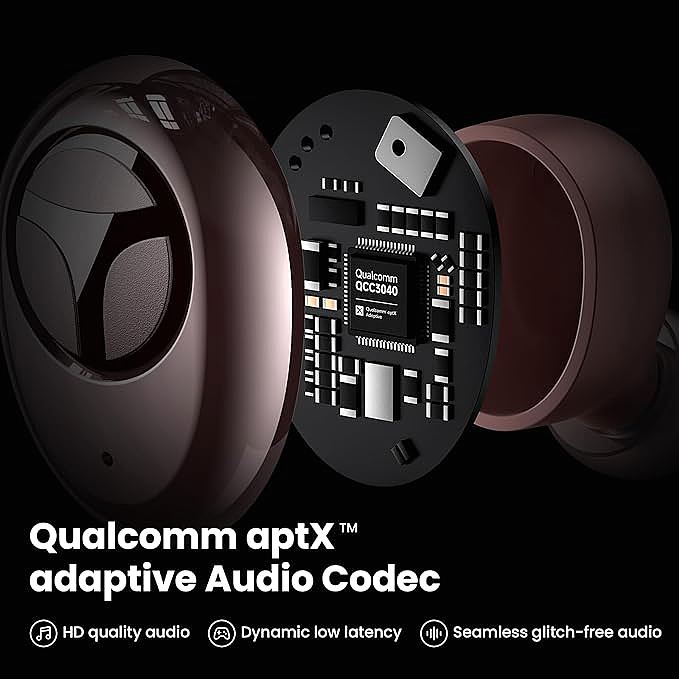
The integration of Qualcomm’s aptX Adaptive technology represents a shift from a static pipeline to an intelligent, variable-rate telemetry system. Instead of blindly transmitting data, the chipset inside the earbuds continuously monitors the integrity of the RF link. It acts as an invisible traffic controller, assessing the electromagnetic "weather" hundreds of times per second.
When the user is in a quiet RF environment—such as reading alone in a living room—the algorithm recognizes the available bandwidth and scales the transmission bitrate upwards. It can expand to accommodate 24-bit/96kHz high-resolution audio files. In digital audio theory, bit depth determines the dynamic range (the difference between the quietest whisper and the loudest explosion), while the sample rate (96kHz) defines the maximum frequency that can be accurately reproduced, pushing well past the limits of human hearing into ultrasonic frequencies to preserve harmonic transients.
Conversely, if the user walks into a crowded subway station filled with hundreds of competing Bluetooth signals, the aptX Adaptive algorithm detects the rising interference and packet collision rate. Instead of dropping the connection, it instantly and imperceptibly scales the bitrate down. It dynamically compresses the audio, sacrificing the absolute highest tiers of audiophile resolution to maintain an unbroken, stable connection. This fluid scalability is the defining characteristic of modern premium audio architectures, prioritizing the continuity of the human experience over rigid adherence to a specific mathematical data rate.
From Dropped Packets to Seamless Handshakes
If variable bitrate solves the problem of connection stability, the evolution of Bluetooth topological networks solves the problem of workflow friction. For years, the standard Bluetooth connection was strictly point-to-point. A headset formed a dedicated "Piconet" with a single master device (a smartphone). If the user wished to watch a video on their laptop, they were forced into a frustrating ritual: manually opening the phone's settings, severing the connection, opening the laptop's settings, and initiating a new pairing handshake.
The implementation of Multipoint Connectivity is a sophisticated orchestration of network profiles. It allows a single peripheral, like the TRANYA T6, to maintain simultaneous active links with two different master devices. To achieve this, the device's firmware must juggle different Bluetooth protocols in real time.
The system relies primarily on two distinct profiles: A2DP (Advanced Audio Distribution Profile) and HFP (Hands-Free Profile). A2DP is the high-bandwidth pipeline designed for streaming stereo music or video audio. HFP is a lower-bandwidth, bi-directional pipeline optimized for voice communications, carrying both the incoming speaker audio and the outgoing microphone signal.
In a practical multipoint scenario, the earbuds might establish an active A2DP link with a laptop playing a Spotify playlist, while simultaneously maintaining a dormant HFP link with a smartphone. The headset’s internal processor acts as an autonomous routing switch. When an incoming cellular call triggers the smartphone, the phone signals the earbuds. The processor instantly executes a complex logic tree: it sends a pause command to the laptop's media player via AVRCP (Audio/Video Remote Control Profile), suspends the A2DP stream, and fully activates the HFP stream from the phone.
Once the call is terminated, the logic tree reverses, seamlessly resuming the music. This architectural leap transforms personal audio from a passive listening tool into a proactive node within a multi-device productivity ecosystem, effectively eliminating the hardware friction of the modern hybrid workspace.

Why Mechanical Clicks Outperform Smart Touchscreens
In the realm of industrial design, there is often a tension between sleek aesthetics and functional ergonomics. Over the past five years, the consumer electronics industry has overwhelmingly favored capacitive touch interfaces. By utilizing the conductive properties of human skin to bridge an electrostatic field, manufacturers eliminated moving parts, resulting in smooth, futuristic hardware exteriors.
However, the application of capacitive touch to wearable ear-worn devices introduces severe usability flaws, creating what human-computer interaction (HCI) researchers call a high "False Positive Rate." Because the interface relies on capacitance, it cannot distinguish between the intentional tap of a fingertip and the accidental brush of wet hair, the fabric of a hooded sweatshirt, or a drop of sweat during intense physical exertion. Furthermore, capacitive surfaces lack haptic feedback—the physical, tactile confirmation that an action has been registered by the system.
The decision to utilize physical button controls, as seen in the TRANYA T6, is a calculated rejection of form over function. It is a return to fundamental mechanical engineering principles that prioritize cognitive certainty.
When a user presses a physical microswitch, they engage their somatosensory system. The physical resistance of the button, followed by the definitive mechanical "click" as the metal dome collapses and completes the circuit, provides immediate neuromuscular feedback. The user's brain receives absolute confirmation that the input was successful before the audio software even reacts.
This precision is critical for complex command macros. Navigating modern audio features often requires sequences like a "triple-click" to activate a low-latency mode or a "long-press" to reject a call. Executing a rapid triple-tap on a rigid, non-responsive capacitive surface frequently results in the system misinterpreting the input as a double-tap, leading to intense user frustration. The physical button eliminates this ambiguity. It operates flawlessly through heavy winter gloves, pouring rain, and rigorous motion, proving that in environments characterized by physical chaos, mechanical reliability consistently outperforms theoretical aesthetic elegance.
How Does Software Erase Background Chaos?
The terminology surrounding noise reduction is perhaps the most heavily obfuscated area of consumer audio marketing. Users frequently misinterpret the capabilities of their hardware because they do not understand the distinction between acoustic isolation technologies. It is imperative to separate Active Noise Cancellation (ANC) from Clear Voice Capture (cVc).
ANC is an inward-facing technology. It is designed to alter the psychoacoustic reality of the wearer. By utilizing external microphones to sample ambient environmental noise (like airplane engine drone), the internal DSP generates an inverted, anti-phase sound wave. When this anti-noise is played into the ear canal alongside the music, the physical peaks and troughs of the two sound waves collide and cancel each other out through destructive interference. ANC protects the listener's ears.
The TRANYA T6 utilizes cVc 8.0 technology, which is an outward-facing algorithmic suite. It provides absolutely no noise cancellation for the person wearing the earbuds. Instead, its sole purpose is to surgically clean the audio signal being transmitted to the person on the other end of a phone call.
cVc operates on the principles of spatial beamforming. The device utilizes multiple micro-electro-mechanical systems (MEMS) microphones spaced millimeters apart. When the user speaks, their voice reaches these microphones at slightly different fractions of a millisecond. The DSP analyzes these microscopic Time Difference of Arrival (TDOA) metrics to calculate the precise geometric location of the user's mouth.
Once this three-dimensional coordinate is established, the algorithm constructs a virtual "beam" or cone of acoustic sensitivity focused directly on the mouth. Simultaneously, it applies aggressive phase-cancellation and gating filters to any sound waves originating from outside that cone. If an ambulance siren wails in the background, or wind rushes past the user's face, the cVc algorithm mathematically identifies that these sounds lack the correct spatial origin and harmonic signature of the user's vocal cords. It rapidly attenuates those frequencies before they are encoded into the outgoing Bluetooth transmission. Thus, the software acts as a digital bouncer, ensuring that the listener on the far end hears pristine vocals, regardless of the acoustic warfare happening in the speaker's actual environment.
Surviving the 40-Millisecond Reaction Window
Audio engineering is not merely about reproducing sound; it is deeply intertwined with human biology and cognitive processing. When humans consume passive media—like listening to a studio album—latency is irrelevant. If the music takes 500 milliseconds to travel from the phone to the earbud, the brain never notices the delay because there is no visual counterpart to synchronize it with.
However, in interactive digital environments such as competitive gaming or high-frame-rate video playback, the synchronization of visual and auditory stimuli is critical. The human brain is remarkably adept at detecting discrepancies between sight and sound. If a user sees a digital gunshot on screen, but the corresponding audio transient arrives 200 milliseconds later (the standard delay for generic Bluetooth SBC codecs), the brain registers the disconnect. The illusion of reality shatters, and in gaming, that delay translates directly to a fatal reaction-time penalty.
To survive in this high-stakes reaction window, adaptive architectures must ruthlessly prioritize transmission speed. When the aptX Adaptive codec detects the specific data headers of interactive media, or when the user manually engages a low-latency mode, the internal processor fundamentally alters its operational matrix.
It achieves a 40-millisecond latency floor through aggressive computational trade-offs. First, it drastically shrinks the size of the audio buffer—the digital safety net that stores a few seconds of audio to prevent skipping. With a microscopic buffer, data is processed and flushed to the speaker drivers almost instantaneously. Second, it shifts the mathematical compression parameters, utilizing less CPU-intensive encoding algorithms that require fewer microsecond clock cycles to package and unpackage the data.
The result is a transmission speed that operates below the threshold of human conscious perception. The biological delay of the human nervous system processing the visual stimulus of a screen flash and sending a motor command to the finger is often slower than the 40ms it takes the audio to travel through the air. This engineering feat proves that absolute audio fidelity must sometimes be sacrificed at the altar of raw temporal velocity.
Battery Density vs. Silicon Efficiency
Every capability discussed thus far—variable bitrate encoding, multipoint routing, spatial beamforming, and low-latency packet switching—requires significant computational horsepower. In a desktop computer, running complex DSP algorithms is trivial. In a wireless earbud, where the internal volume is measured in cubic millimeters, it is a thermodynamic and electrochemical battle.
The absolute bottleneck of portable technology remains lithium-ion battery chemistry. There have been no Moore's Law-style exponential leaps in battery energy density in recent decades. The cells inside modern earbuds are minuscule, often holding a capacity of less than 50 milliampere-hours (mAh). Extracting 9 hours of continuous playback from such a microscopic energy reserve is not achieved through better batteries, but through obsessive silicon efficiency.
Modern SoCs (System on a Chip) are fabricated using advanced sub-10-nanometer semiconductor processes. This miniaturization allows transistors to switch states using fractions of a volt, drastically reducing the thermal waste and electrical draw of the processor. Furthermore, advanced firmware utilizes aggressive "micro-sleep" architectures. The processor does not remain fully active; it wakes up for microseconds to receive a data packet, decodes it, fills the tiny audio buffer, and immediately shuts down its primary cores, relying on ultra-low-power sub-systems to keep the Bluetooth radio handshakes alive.
The charging case serves as the logistical backbone of this power ecosystem, housing a significantly larger lithium-polymer cell (often 400-500 mAh). By utilizing magnetic pogo-pin contacts, the system ensures that the earbuds are continually trickle-charged whenever they are not in the ear canal, expanding the total operational envelope to 34 hours. This architecture acknowledges the physical limits of battery chemistry and works around them through software-defined power management and mechanical docking solutions.

Pushing the Boundaries of Psychoacoustics
As hardware matures and reaches theoretical physical limits, the frontier of audio innovation has decisively shifted to software and personalization. The concept of a "perfectly tuned" headphone is a biological fallacy. Human hearing is profoundly subjective, influenced by age, genetics, and cumulative acoustic damage. The Fletcher-Munson curves—a fundamental concept in psychoacoustics—demonstrate that our ears do not perceive all frequencies at the same volume. We are naturally highly sensitive to mid-range frequencies (where human speech resides) and drastically less sensitive to deep sub-bass and extreme treble, especially at lower volumes.
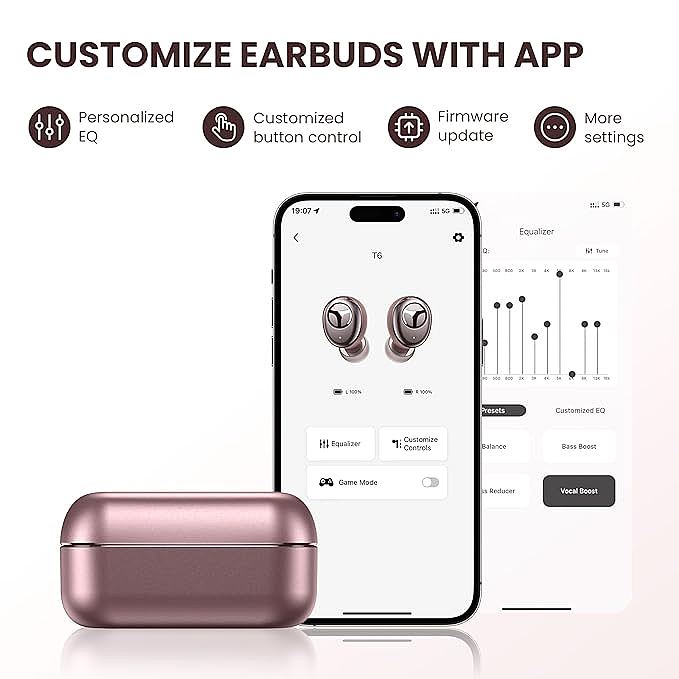
Consequently, hardware manufacturers are increasingly relinquishing control of the final acoustic signature to the end-user. The integration of dedicated companion software, such as the Tranya Audio App, represents this transition. These applications bypass the limitations of the physical 10mm dynamic drivers by manipulating the digital signal before it is ever converted into an analog wave.
By utilizing multi-band parametric equalizers within the app, users can counteract their own physiological hearing deficiencies or tailor the frequency response curve to match specific genres of music. If a user finds the high-frequency crash of cymbals fatiguing, they can digitally suppress the 8kHz to 10kHz band. If they require more kinetic impact for electronic music, they can boost the sub-80Hz frequencies.
Furthermore, these applications allow for the granular customization of the mechanical interface, permitting users to remap physical button inputs to align with their specific workflow habits, and offering firmware updates over the air (OTA) to patch algorithmic inefficiencies long after the hardware has left the factory.
This evolution signifies the death of the static consumer electronic device. Modern portable audio equipment is no longer defined strictly by the neodymium magnets or polymer diaphragms sealed inside the plastic chassis. It is defined by the silicon architecture, the adaptability of the codec, the spatial awareness of the microphone array, and the continuous refinement of the software layer. By decoding these underlying engineering principles, consumers are empowered to navigate the marketing noise and appreciate the profound scientific achievements resting quietly in their ears.
TRANYA T6 Wireless Earbuds
Related Essays

Why Bluetooth Audio Sounds Worse Than Wired — And What...

How Digital Sound Becomes Wireless: The Physics Behind...

How Bluetooth 5.2 Changed Wireless Earbuds: Stability, Battery, and Audio
How Digital Sound Becomes Wireless: The Physics Behind Bluetooth Audio

The Hidden Danger in Your Ears: Open-Ear Design and Outdoor Safety

Why Your Coffee Tastes Bitter and Sour at the Same Time: The Channeling Problem Nobody Talks About

The Architecture of Focus: Decoding Hybrid ANC and Multipoint in Modern TWS

The Geometry of Sound: Deconstructing the Tonearm Physics and Wireless Mechanics of the AT-LP70XBT

Cracking the Codec: The Science Behind Nintendo Switch's Audio Lag and How to Fix It

