Beyond the Eardrum: The Evolutionary Science of Bone Conduction and Aquatic Audio
Update on Jan. 1, 2026, 3:06 p.m.
The human ear is a marvel of evolutionary engineering, a delicate instrument capable of detecting the faintest rustle of leaves or the roar of a jet engine. For most of human history, our understanding of hearing was limited to the “air conduction” pathway: sound waves travel through the air, enter the ear canal, vibrate the tympanic membrane (eardrum), and are mechanically transmitted to the cochlea. This is how we converse, how we listen to concerts, and how traditional headphones have worked for a century.
But there is a second pathway, a secret backdoor to the brain that nature designed but technology has only recently fully exploited. It is a pathway that bypasses the eardrum entirely, turning the human skeleton itself into a transmission medium. This is the science of Bone Conduction.
Simultaneously, humanity has sought to bring the soundtrack of life into environments hostile to electronics, specifically the aquatic realm. Water is the natural enemy of both electricity and radio waves. Bridging these two frontiers—transmitting sound through the skull while submerged in a medium that blocks wireless signals—represents a significant convergence of biomechanics and physics. The ANINUALE K9 PRO Bone Conduction Headphones stand as a modern archetype of this convergence, a device that solves the specific physical problems of “listening while swimming” by leveraging principles that date back to Ludwig van Beethoven.
To understand why this technology is not just a gimmick but a necessity for certain environments, we must excavate the history of hearing itself and the physics of the underwater world.
Stratum I: The Ludwig Connection (The Origins of Osteo-Hearing)
The concept of bone conduction is often marketed as a futuristic innovation, but its most famous user lived in the early 19th century. Ludwig van Beethoven, the legendary composer, began to lose his hearing in his late 20s. As his condition deteriorated due to otosclerosis (a calcification of the bones in the middle ear), the air conduction pathway was slowly walled off. He could no longer hear the music traveling through the air.
However, Beethoven discovered a hack. He found that by clenching a metal rod between his teeth and resting the other end on the soundboard of his piano, he could “hear” the faint vibrations of the notes. The sound traveled from the piano, through the rod, into his teeth, through his jawbone (mandible), and directly into the temporal bone of his skull, which houses the cochlea. The cochlea, floating in fluid, detected these vibrations and sent electrical signals to the brain. The auditory nerve was intact; only the mechanism to get sound to it was broken. Beethoven had intuitively discovered bone conduction.
The Military Application
Fast forward to the 20th century, and this principle found a grim but practical application: tactical warfare. Soldiers on the battlefield need to maintain Situational Awareness. Blocking the ear canal with traditional headphones to hear radio comms means blocking out the sounds of approaching footsteps or distant gunfire—a fatal trade-off.
Military engineers developed bone conduction headsets that rested on the cheekbones (zygomatic bones). This allowed soldiers to hear radio transmissions through their skull while leaving their ear canals open to the ambient environment. This “dual-channel” hearing capability is the foundational logic behind modern open-ear sports headphones. It is not just about comfort; it is about survival.
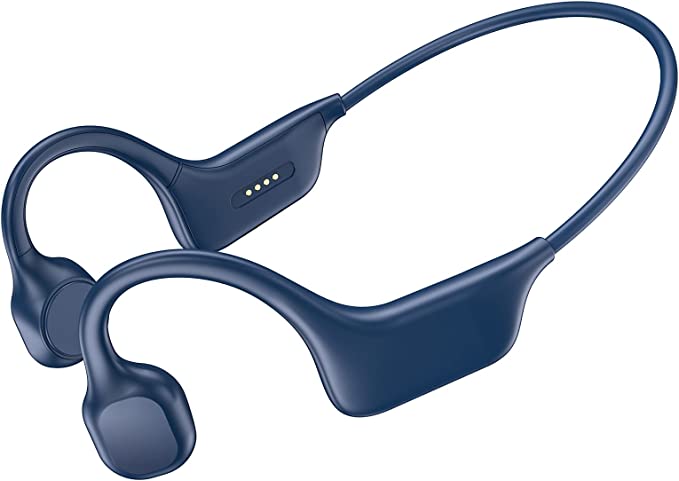
In devices like the K9 PRO, this technology is miniaturized. Transducers (vibrating motors) generate mechanical waves that mimic the audio signal. These waves are transmitted through the skin and bone with remarkable fidelity. By bypassing the eardrum, these devices eliminate “listener fatigue” caused by air pressure in the ear canal and prevent the hygiene issues associated with jamming silicone tips into the ear for hours.

Stratum II: The Physics of the Abyss (Why Bluetooth Drowns)
Taking this technology underwater introduces a new antagonist: Physics. Specifically, the interaction between electromagnetic waves and water molecules.
Many consumers purchase “waterproof Bluetooth headphones” only to find that the music cuts out the moment they submerge. They assume the device is broken. In reality, the device is fighting the laws of nature, and nature is winning. Bluetooth operates in the 2.4 GHz ISM band (2.400 to 2.4835 GHz). This frequency is significant because it is extremely close to the resonance frequency of water molecules.
The Microwave Oven Principle
Think about how a microwave oven works. It blasts food with 2.45 GHz radiation. The water molecules in the food absorb this energy, begin to rotate and vibrate (heat up), and the energy of the wave is dissipated as heat.
When you try to transmit a Bluetooth signal through a swimming pool, the pool acts like a giant microwave oven (without the cooking). The water molecules aggressively absorb the 2.4 GHz radio waves. The signal attenuation is massive—a Bluetooth signal that can travel 30 feet in air might not travel 3 inches underwater. This is why “Bluetooth Swimming Headphones” is a misnomer. You cannot stream Spotify from your phone on the pool deck to your headset underwater; the physics of the medium forbids it.
The Resurrection of Local Storage
This physical limitation forced engineers to revive a technology that the rest of the world has largely abandoned: Local Storage. In the age of 5G and cloud streaming, the MP3 player is considered a relic. But in the aquatic environment, the cloud does not exist.
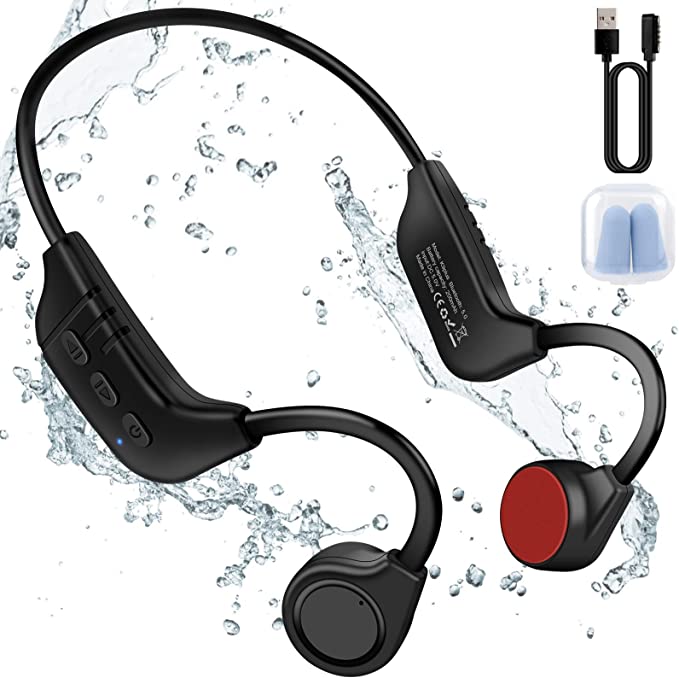
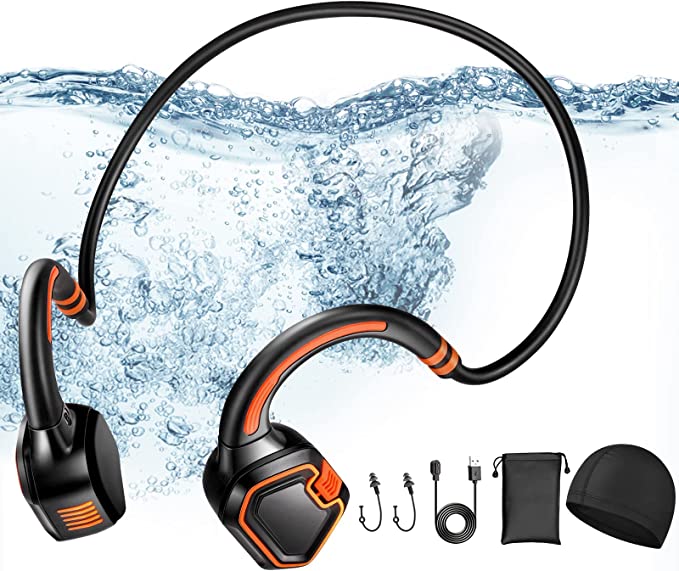
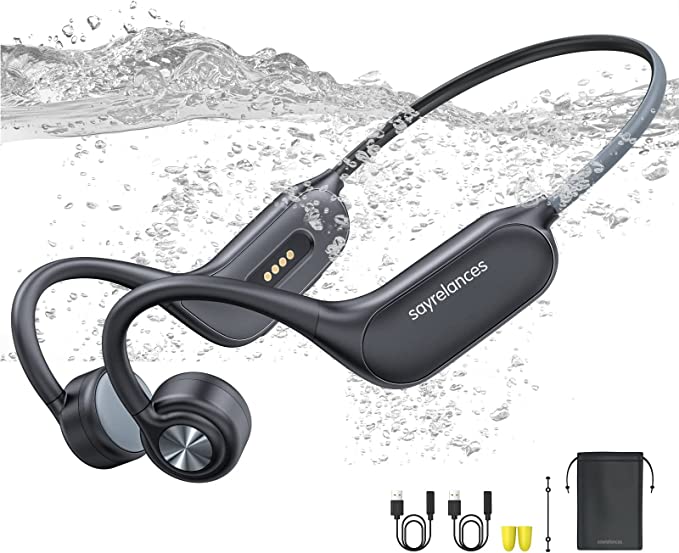
The ANINUALE K9 PRO solves the “Bluetooth Barrier” by incorporating 32GB of built-in NAND flash memory. This effectively turns the headphones into a standalone computer, capable of storing approximately 9,000 songs. By moving the data source inside the receiver, the need for wireless transmission through water is eliminated.
This marks a fascinating divergence in technological evolution. While terrestrial tech moves towards “dumb terminals” connected to the cloud (like smart speakers), aquatic tech must remain “smart” and self-sufficient. The inclusion of widespread file format support (MP3, WAV, WMA, AAC, FLAC) acknowledges the need for a versatile, offline ecosystem. It forces the user to return to the ritual of “curating a library”—selecting specific tracks, converting files, and loading them onto the device—a deliberate process that contrasts with the infinite, passive consumption of streaming algorithms.

Stratum III: Engineering Invincibility (The IP68 Standard)
For a device to operate underwater, it must do more than just play music; it must survive. Water is relentless. It exerts pressure, it conducts electricity (shorting out circuits), and it corrodes metals. The IP68 rating carried by the K9 PRO is a certification of its defensive engineering.
As discussed in previous analyses, the Ingress Protection (IP) code is maintained by the International Electrotechnical Commission (IEC). * 6: The highest rating for dust protection. The device is dust-tight. * 8: The rating for continuous immersion in water beyond 1 meter.
Achieving IP68 in a device with buttons, charging points, and vibrating transducers is a feat of material science.
- The Charging Interface: Traditional USB ports are gaping wounds for water entry. The K9 PRO utilizes magnetic charging. This eliminates the cavity of a USB port entirely. The contacts are typically plated with corrosion-resistant materials like rhodium or gold-plated nickel to withstand electrolysis and oxidation from pool chlorine or ocean salt.
- The Structural Seal: The casing is likely assembled using ultrasonic welding or high-performance adhesives that create a hermetic seal.
- The Nanocoating: Internal components are often treated with hydrophobic nano-coatings. Even if a microscopic amount of moisture were to breach the shell, the circuit board itself repels the water, preventing short circuits.
The “Pro” designation in the model name often implies this higher tier of waterproofing (up to 2 meters deep for 5 hours), distinguishing it from “water-resistant” devices that can only handle sweat or rain.

Stratum IV: The Psychology of Open-Ear Listening
Beyond the physics and the engineering, there is a psychological and evolutionary argument for bone conduction technology. Humans are not designed to be isolated from their environment. Our ancestors survived because they could hear the twig snap under the predator’s paw or the rustle of the grass.
The Isolation of Modern Audio
The trend in consumer audio for the last decade has been Active Noise Cancellation (ANC). We seek to create a bubble of silence, erasing the world around us. While pleasant on a train, this is biologically unnatural and potentially dangerous in dynamic environments like city streets or hiking trails.
Bone conduction represents the antithesis of this trend. It is Augmented Reality (AR) for the ears. By leaving the ear canal open, the K9 PRO layers the digital soundtrack over the physical world rather than replacing it. You hear the car approaching and the podcast; you hear the lifeguard’s whistle and the bass line.
This “Open-Ear Comfort” aligns with a growing desire for technology that integrates seamlessly with life rather than blocking it out. It is a more social, safer, and biologically congruent way to consume information. For swimmers, this is particularly acute; the sensation of water filling the ear is part of the feedback loop of swimming—knowing your orientation and speed. Blocking the ear canal with silicone plugs changes this proprioception. Bone conduction preserves the natural sensation of the swim while adding the motivation of music.
Conclusion: The Convergence of Elements
The ANINUALE K9 PRO is more than just a pair of headphones. It is a case study in how technology adapts to the constraints of the physical world. * Because water blocks radio waves, it resurrected the MP3 player. * Because we need situational awareness, it adopted military bone conduction. * Because electronics die in water, it employed IP68 sealing.
It is a device shaped by the elements it is designed to conquer. In a world where we increasingly live in virtual, cloud-based environments, these headphones remind us that we are still physical beings moving through water and air, relying on bones and biology to hear. The “miracle” is not just in the electronics, but in the seamless integration of 19th-century discovery, 20th-century radio physics, and 21st-century material science to bring music to the silent world beneath the surface.