Beyond Silence: How Active Noise Cancellation and Transparency Mode Actually Work
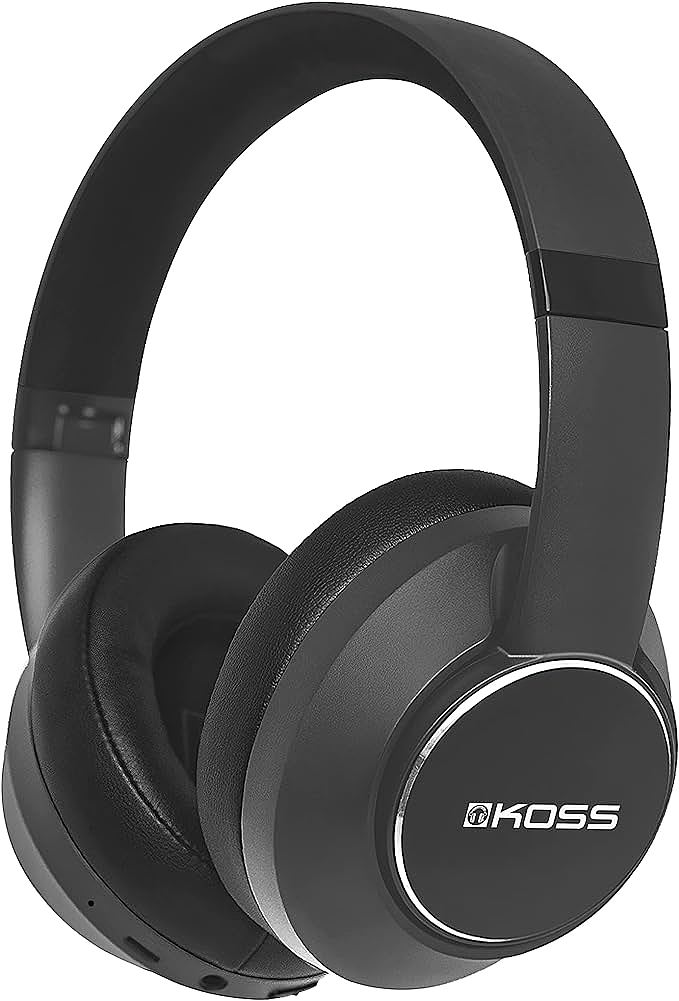
Koss BT740iQZ Active Noise Cancelling Wireless Headphone
Welcome to class.
If you've shopped for headphones recently, you've been bombarded with two acronyms: ANC and Transparency Mode.
They're marketed as magic. One button, and the roar of a plane engine disappears. Another button, and the outside world floods back in, clear as day. But how? It's not magic, it's fascinating science.
My goal is simple: by the time you finish this guide, you will understand this technology. You won't just know what the labels mean; you'll know exactly what's happening inside those earcups. To make this practical, we'll use a real-world example, the Koss BT740iQZ, as our "lab equipment" to see how these concepts are applied.
Ready? Let's get started.
Part 1: The Two Ways Headphones Fight Noise
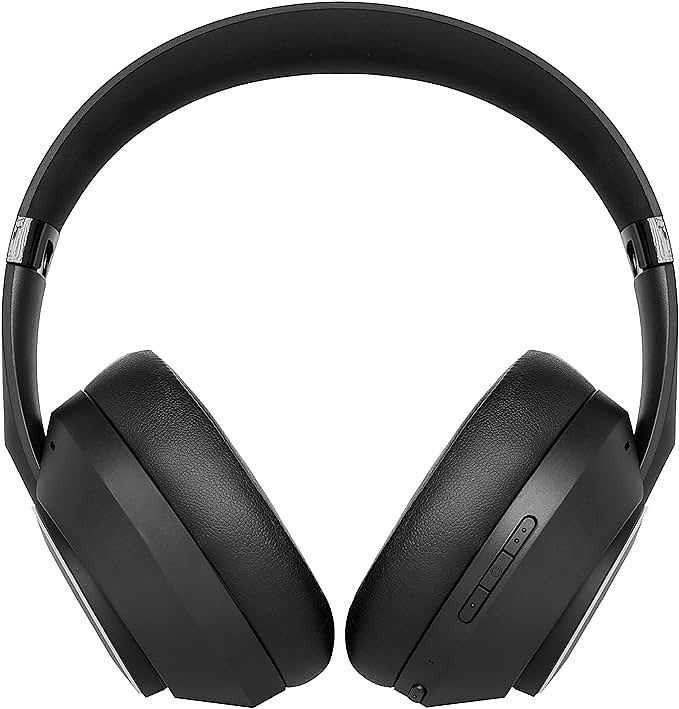
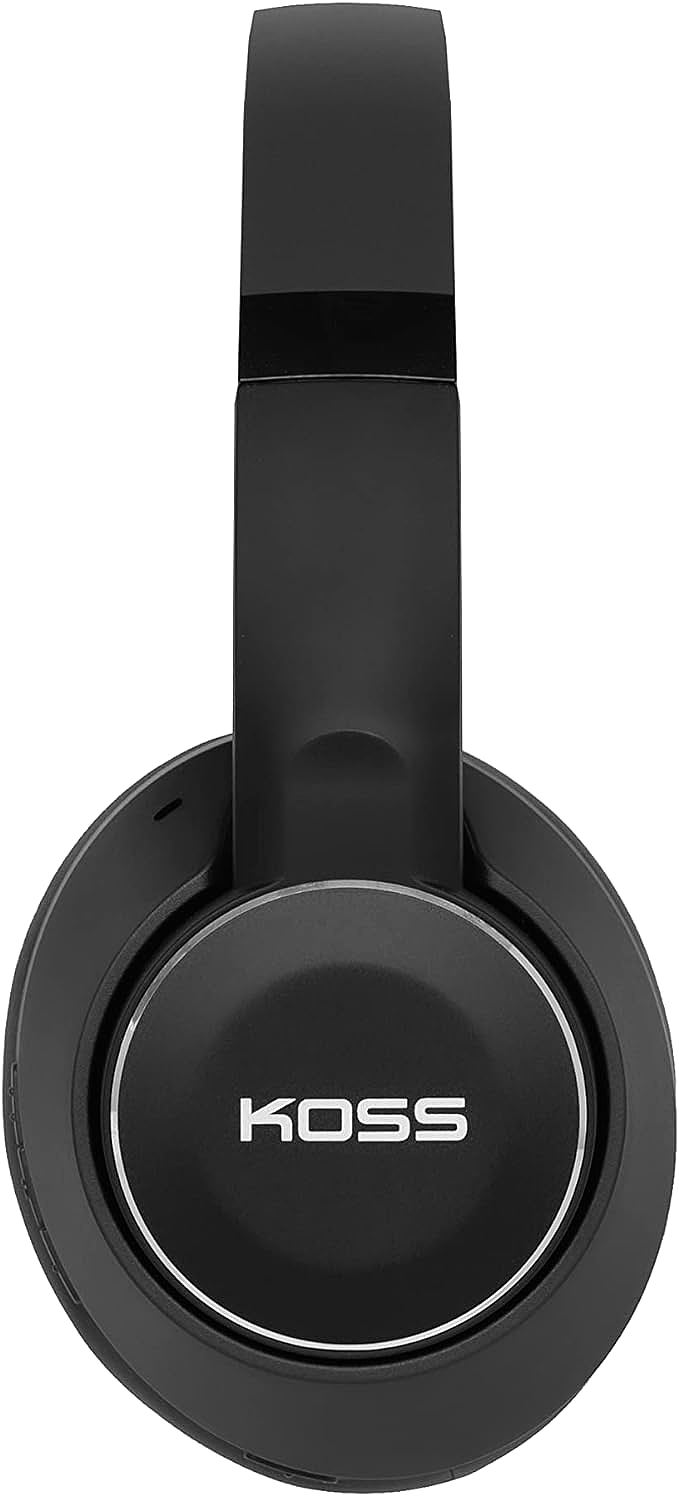
First, we need to get a crucial concept straight. Headphones like the one below fight noise in two completely different ways.
1. Passive Noise Isolation (The "Muffler")
This is the simple, physical, "common sense" way.
Think of it as putting your hands over your ears. The bulky, over-ear design of a headphone, the plush leatherette cushions, the solid-backed earcups—all of this creates a physical barrier. This barrier muffles sound.
- What it's good at: Blocking irregular, high-frequency sounds. Think of a dog barking, a baby crying, or the "chatter" of a busy office.
- What it's bad at: Low-frequency, constant sounds. That physical barrier won't do much to stop the deep drone of a jet engine or the rumble of a train car.
This "passive" isolation is your first line of defense. But for that persistent, low-frequency hum, you need something... "active."
2. Active Noise Cancellation (The "Anti-Noise Machine")
This is the high-tech, electronic solution. It doesn't block noise; it creates silence.
Instead of just muffling that engine drone, ANC creates a new sound wave that is the exact opposite of the drone. When these two waves meet, they cancel each other out.
This is a concept called destructive interference. It’s the audio equivalent of adding +1 and -1 to get 0.
Part 2: How ANC Creates "Anti-Noise" (Step-by-Step)
This process happens thousands of times per second. Here’s the play-by-play.
Step 1: The External Mic Listens
A tiny microphone on the outside of the headphone earcup (see the small grille on the side of the Koss headphone below?) has one job: listen to the world around you. It picks up that constant, low-frequency drone of the airplane engine.
Step 2: The "Brain" Analyzes and Flips
That noise signal is sent to a tiny computer chip inside the headphones, known as a Digital Signal Processor (DSP). The DSP analyzes the sound wave in real-time and instantly generates its perfect mirror image—the "anti-noise" wave.
Where the engine drone's wave goes "up" (a peak), the DSP creates a wave that goes "down" (a trough).
Step 3: The Speaker Plays the "Anti-Noise"
The headphone's internal speaker then plays this "anti-noise" wave directly into your ear, at the exact same time as the real engine drone.
Step 4: Cancellation
The "up" wave of the engine and the "down" wave of the anti-noise meet... and neutralize each other. The result? Silence.
Your music, podcast, or audiobook is then played on top of this newly created "canvas" of silence. It's why music sounds so much clearer and richer when ANC is on.
The "Dual-Mode" Difference
Some headphones, like our Koss BT740iQZ example, offer "Dual-Mode ANC" (High and Low). This isn't a gimmick.
- ANC High: This is maximum power. It's for an airplane or a loud train. It targets the broadest range of low frequencies as aggressively as possible.
- ANC Low: This is for an office or a coffee shop. It's more subtle, designed to just cut out the hum of the air conditioner or the whir of a fan, without making you feel too isolated.
Part 3: The "Other" Mic: What Makes ANC Good?
This next part is what separates cheap, "meh" ANC from truly impressive, "wow" ANC.
Many high-quality ANC systems actually use two microphones per earcup.
- The "Feed-Forward" Mic: This is the one we just talked about—the one on the outside listening to the world.
- The "Feed-Back" Mic: This is a second microphone placed inside the earcup, right near your ear.
This internal mic's job is quality control. It listens to what you are actually hearing. It asks, "Did our anti-noise wave work? Did we miss any of the drone? Is our anti-noise wave accidentally messing with the music?"
It then sends this "feedback" to the DSP, which makes even finer adjustments. This "dual-microphone" system (sometimes called a "hybrid" system) is a constant, real-time correction loop. It's what allows the ANC to be so precise and to adapt to changes, like if you turn your head.
Part 4: Transparency Mode — The Brilliant Counterpart
Okay, so we have this amazing hardware—microphones on the outside of our headphones that listen to the world.
What if we used them for the exact opposite purpose?
Instead of using those mics to cancel the world, what if we used them to listen to the world and then play that sound inside our headphones?
That is Transparency Mode.
It's also called "Ambient Mode" or "Hear-Through." When you press the button, the ANC process stops. A new process begins:
- The external microphones capture your surroundings (a colleague's voice, a car horn, a coffee barista).
- The internal processor slightly amplifies these sounds.
- The headphone speakers play these external sounds along with your music.
This is an incredible feature. It means you can order a coffee, listen for a station announcement, or safely cross a busy street—all without ever taking your headphones off. The same hardware that creates a "bubble of silence" can also be used to give you "super-hearing."
Part 5: How This Tech Affects Everything Else
Now that you understand the core science, all the other features on the box make more sense.
- Battery Life: You will always see two battery ratings. For the Koss BT740iQZ, it's "30+ hours" (ANC off) and "22+ hours" (ANC on). Why the difference? Because that DSP chip and those microphones are working hard. Creating "anti-noise" takes energy. This is a normal and expected trade-off.
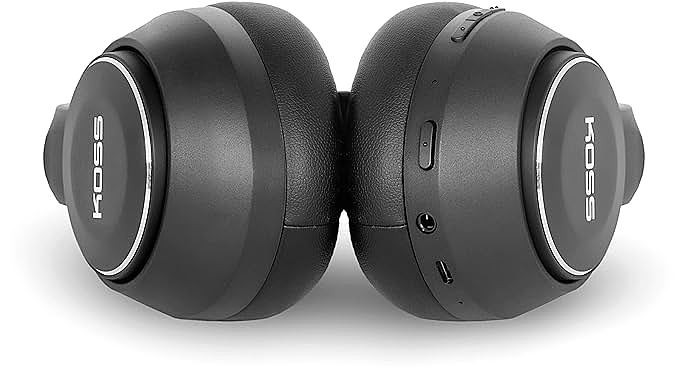
- The 3.5mm Audio Jack: What happens when that battery dies? All the "active" tech stops. No ANC, no Transparency Mode, no Bluetooth. But you can still plug in a 3.5mm cable (like the one shown above) and use them as "passive" headphones. It's the perfect failsafe.
- Bluetooth 5.0 & Multipoint: This is simply the "wireless" part of the equation. It’s the digital pipe delivering the music from your phone to the headphones. A feature like Multipoint Connectivity (which this model has) is a convenience feature on top, letting the headphones connect to your laptop and your phone at the same time.
Part 6: Why Comfort and Fit are Critical for ANC
This brings us full circle.
Remember Part 1: Passive Noise Isolation? The "muffler" effect of the ear cushions?
This is just as important as the electronics.
If your headphones don't create a good, comfortable seal around your ears, the entire system fails.
1. High-frequency sounds (like voices) will leak in, defeating the passive isolation.
2. The external drone sound will also leak in, meaning the active cancellation has to work much harder and will be less effective. The "anti-noise" wave won't be able to cancel a sound it's not perfectly matched to.
This is why companies obsess over "plush leatherette cushions," "adjustable headbands," and "articulating earcups." It's not just for comfort—it's an essential part of the engineering. A good fit enables the ANC to do its job properly.

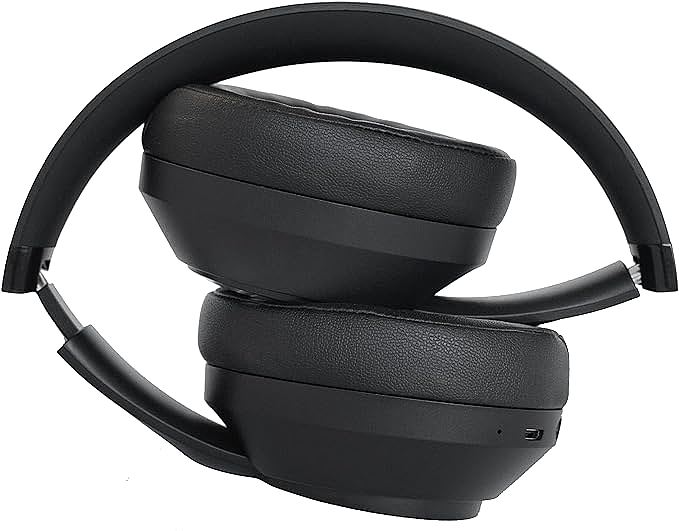
A collapsible design, as seen here, is a bonus for portability, but the fit is what determines the quality of the sound.
A Quick Note on Charging: The Micro-USB Port
One final, practical note. The concepts we've discussed (ANC, Transparency, Bluetooth 5.0) are all very modern. However, as noted in the original article, the Koss BT740iQZ uses a Micro-USB port for charging.
This doesn't affect the sound or the ANC performance at all. But it is a convenience factor. Most modern phones, laptops, and tablets use the new, reversible USB-C standard. This just means you'll need to keep a separate, older-style cable for charging these specific headphones. It's a small detail, but it's an excellent example of something to check when you're comparing a product's "brain" (the new tech) with its "body" (the physical ports).
Your Graduation: You're Now an Audio Expert
So, there you have it.
Active Noise Cancellation is no longer magic. It's the science of "anti-noise"—a microphone, a processor, and a speaker working together to neutralize sound waves.
Transparency Mode is its brilliant counterpart, using the same microphones to let the world in when you need it.
When you next see these features advertised on a product—whether it's the Koss BT740iQZ or any other—you are now fully equipped to understand what's happening. You know that "dual-mode" gives you control, "dual-microphones" (hybrid) means better quality, and that a snug, comfortable fit is the foundation that makes it all possible.
The goal was never to buy a product; it was to understand a technology. And now you do.
Koss BT740iQZ Active Noise Cancelling Wireless Headphone
Related Essays
The Unseen Partnership: How Bluetooth 5.3 Makes Active Noise Cancellation Better

Lavales E500Pro Bluetooth Headphones - A Premium Audio Experience

TOLDIM XY-15BN Noise Cancelling Wireless Earbuds: Immersive Audio On The Go

The Physics of Silence: How Active Noise Cancellation Works

Sony WH-XB910N Noise Cancelling Headphones: A Bass-Thumping, Noise-Canceling Audio Feast

Why Your Noise Cancelling Headphones Cannot Stop a Baby Crying

JBL Tune 760NC: Escape the Noise with Active Noise Cancellation

The Art of the Possible: Deconstructing the Science Inside Budget Noise-Cancelling Earbuds

Soundcore Life Q30 Headphones: The Budget Noise-Cancelling Headphones Worthy of the Hype