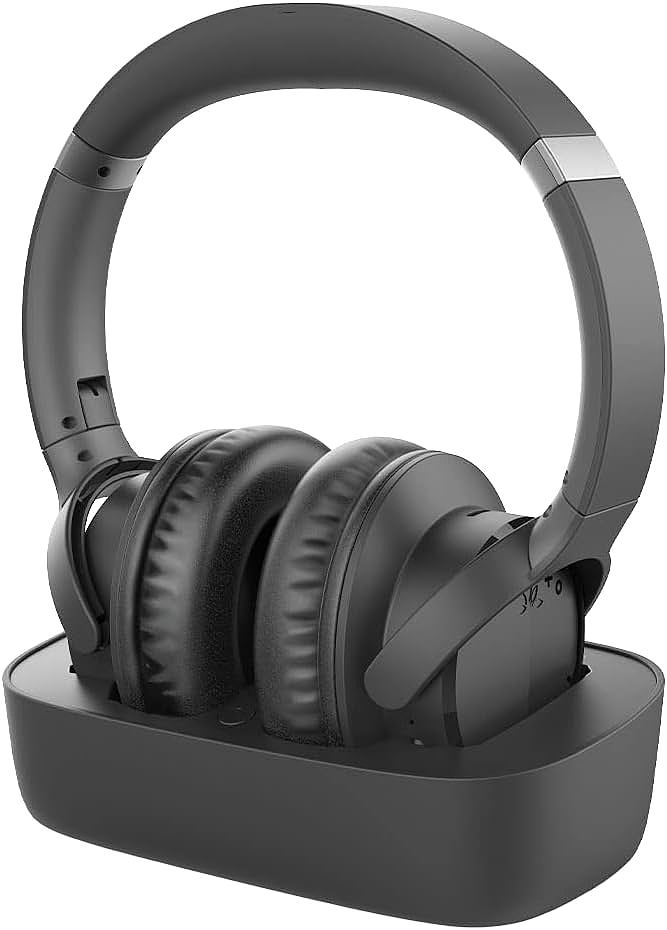
Avantree HF027 & HS907 Bundle and the Case for Wired Audio in a Wireless World


Avantree HF027 & HS907
Five meters of copper cable asks a question Bluetooth hasn't learned to answer.
The Living Room Geometry Problem
Your TV sits on a stand. Your couch sits three meters away. The perfect listening position—the one where bass and treble arrive in sync, where dialogue is crisp and effects have weight—sits precisely where you do.
But Bluetooth has other plans.
Wireless audio introduces 100-300 milliseconds of delay, depending on codec. Watch a film and you'll notice it: dialogue leaves the actor's mouth, then arrives at your ears a fraction later. The effect is subtle enough that most viewers adjust without knowing. Their brains quietly correct the sync error, the same way they correct for a speaker placed slightly behind the visual frame.
But correction is not elimination. The friction is real, even when invisible.
The Avantree HF027 & HS907 Bundle takes a different approach: five and a half meters of cable. Not wireless. Not a compromise. A statement that the oldest audio technology in common use still solves specific problems better than anything that's replaced it.
The Cable Question
Cable length is one of the most underrated specifications in audio equipment. A cable that's too short creates tension—literally. It pulls the source device toward the listener, or it forces the listener toward the source. A cable that's long enough eliminates this geometry problem entirely.
The HF027 & HS907 combination offers 3.5 meters of coiled cable plus a 2-meter extension, totaling 5.5 meters. This is not accidental engineering. It's designed for rooms, not pockets. A listener can sit at a normal couch distance from a wall-mounted TV without any cable tension, without range extenders, without pairing protocols that may or may not work with a specific television model.
Coiled cable adds another consideration: it stretches. A straight 5.5-meter cable would loop and tangle. A coiled cable contracts when relaxed, expands under tension, and returns to a manageable size when not stretched. The physics is similar to a spring—mechanical potential energy stored and released.
This matters in living room environments. Straight cables collect under furniture, get kicked, create trip hazards. A coiled cable stays organized. It was a common feature in studio equipment for exactly this reason: in a fixed listening position, manageability matters as much as conductivity.
What Passive Isolation Actually Does
The HF027 headphones use in-ear drivers with noise-isolating tips. This is passive isolation—mechanical attenuation of external sound through a sealed fit. No microphones, no processing, no power required.
Active Noise Cancellation (ANC) dominates consumer audio marketing, and the technology is genuinely impressive for certain use cases. Airplane cabin noise at 700 Hz, air conditioning hum at 60 Hz—these consistent, predictable sounds respond well to active cancellation. An ANC system captures the external sound, generates an inverted waveform, and routes the cancellation into the listener's ears.
But ANC has limits that marketing rarely acknowledges. Irregular sounds—conversations, sudden impacts, the midrange frequencies where most music and dialogue live—don't cancel as easily. The algorithm makes decisions about what to suppress based on patterns trained on average acoustic environments. A living room at night with a spouse sleeping in the next room is not an average acoustic environment.
Passive isolation doesn't make decisions. It simply blocks. A properly seated ear tip creates a physical barrier—a mechanical attenuator that reduces all external sound proportionally. The reduction is not frequency-selective. It doesn't require power. It doesn't introduce processing artifacts.
For late-night TV listening, passive isolation has a quiet advantage: it doesn't process the audio you want to hear. ANC circuits, however sophisticated, are still making choices about your content. A passive seal delivers what the source sent.
The Dependency Chain in Wireless Audio
Wireless audio creates dependency chains that wired audio avoids entirely.
Bluetooth pairing requires negotiation between source and receiver. The source—your TV, phone, computer—encodes audio into a format the receiver can decode. That format may be SBC (universal, high latency), AAC (Apple-optimized, moderate latency), aptX (Qualcomm, lower latency), or LDAC (Sony, higher bandwidth but still compressed). The negotiation chooses the best format both devices support, which may not be the best format for your specific use case.
Once paired, battery life enters the equation. The wireless receiver in your headphones or earbuds must power microphones, processors, and radio transceivers. This power has to come from somewhere—usually a battery that adds weight, limits listening time, and eventually dies.
The HF027 & HS907 bundle carries no battery. It draws power from the source device through the cable—a connection that simultaneously delivers the audio signal and the energy to reproduce it. The only power consideration is the source device itself, which is almost certainly plugged into a wall.
This creates a different dependency chain: a working 3.5mm output and a working cable. No pairing. No codec negotiation. No battery management. No firmware updates that change performance characteristics between sessions.
For professional or semi-professional use—editing video with accurate audio sync, monitoring a recording in progress, conducting an interview where timing matters—these dependencies matter. A cable either connects or it doesn't. The signal path is debuggable in seconds.
The Hanger Question
Bundled accessories reveal manufacturer priorities.
The HF027 & HS907 package includes a headphone hanger holder—a curved silicone support designed to store headphones on a desk edge or shelf. The material is soft enough not to scratch surfaces, firm enough not to collapse under the weight of over-ear headphones.
This is a mundane inclusion, but it points to a specific use case: desk-based listening. The long cable suggests a fixed position—couch or chair, television or computer. The hanger suggests the user finishes a session and wants to store the equipment cleanly.
Wired headphones that are meant to be moved constantly—jogging, commuting, traveling—tend to ship with carrying cases. Cases add bulk but protect during transit. The hanger suggests the manufacturer assumed a different user: someone who sets up a listening station and returns to it, who values organization and cable management, who is willing to trade portability for performance.
This is not a criticism. Every design choice trades something for something else. The HF027 & HS907 trades extreme portability for cable length, living room suitability, and a dependency profile that doesn't include battery anxiety.
What 3.5mm Still Means in 2024
The 3.5mm audio jack disappeared from most flagship smartphones between 2016 and 2020. The move was framed as progress—wireless was the future, dongles were temporary, Bluetooth audio had matured enough for mainstream use.
For certain use cases, this framing holds. Wireless earbuds excel for commuting, exercise, and casual listening. The convenience of no cable outweighs the latency and compression trade-offs for most users most of the time.
But the 3.5mm jack's removal from phones did not affect its presence elsewhere. Televisions still include analog audio outputs. Desktop and laptop computers still include 3.5mm jacks. Audio interfaces—the devices that connect professional microphones and instruments to computers—almost universally use 3.5mm or 1/4-inch analog connections. Gaming consoles include optical and analog outputs. Many Android devices still include the jack.
The HF027 & HS907 targets these remaining 3.5mm outputs. It works with any device that has a standard headphone jack—a category that includes most non-portable electronics. The compatibility is essentially universal in the home entertainment and computing space.
This universality is itself a form of reliability. No compatibility matrix. No "will this work with my TV" uncertainty. The cable has a 3.5mm plug. The device has a 3.5mm socket. They connect. Audio plays.
The Long Cable Use Case
Not every listening situation benefits from a five-meter cable. In-ear monitors for jogging require wireless or very short cables. Commuting headphones need to be portable. Studio headphones used with mobile recording setups often require extensions or wireless systems.
But for a specific configuration—television in a living room, computer at a desk, any fixed source with a listener who prefers to sit at a comfortable distance—the long cable solves problems that wireless either cannot solve or solves more expensively.
Wireless solutions for this use case require either the television to support Bluetooth output (not all do, and those that do may introduce lip-sync issues) or a Bluetooth transmitter accessory that adds another device, another power requirement, and another potential point of failure.
The cable solution requires none of this. It is a single cable between two points. The signal quality is limited only by the cable's construction and the source device's output quality—factors that are stable, debuggable, and do not change between uses.
The Question of Priority
Choosing wired audio in 2024 requires accepting a premise: that specific problems—latency, compression, battery dependency, pairing complexity—matter more than the convenience of no cable.
For casual listeners, the premise often fails. Wireless earbuds at the gym, wireless headphones for commuting—these use cases prioritize freedom of movement over every technical metric.
For specific use cases, the premise holds. Video editing where audio must sync precisely to frame. Music monitoring during recording where timing affects performance. Late-night listening where passive isolation protects hearing without processing artifacts. Living room setups where the television is too far for wireless convenience but not far enough for other wireless solutions to work reliably.
The HF027 & HS907 bundle occupies this specific use case. It is not a general-purpose headphone. It is a targeted solution for users who have identified specific problems—cable length, passive isolation, no latency, no battery dependency—and decided those problems matter more than the freedom wireless provides.
The five meters of cable is not a limitation. It is the product.
Avantree HF027 & HS907
Related Essays
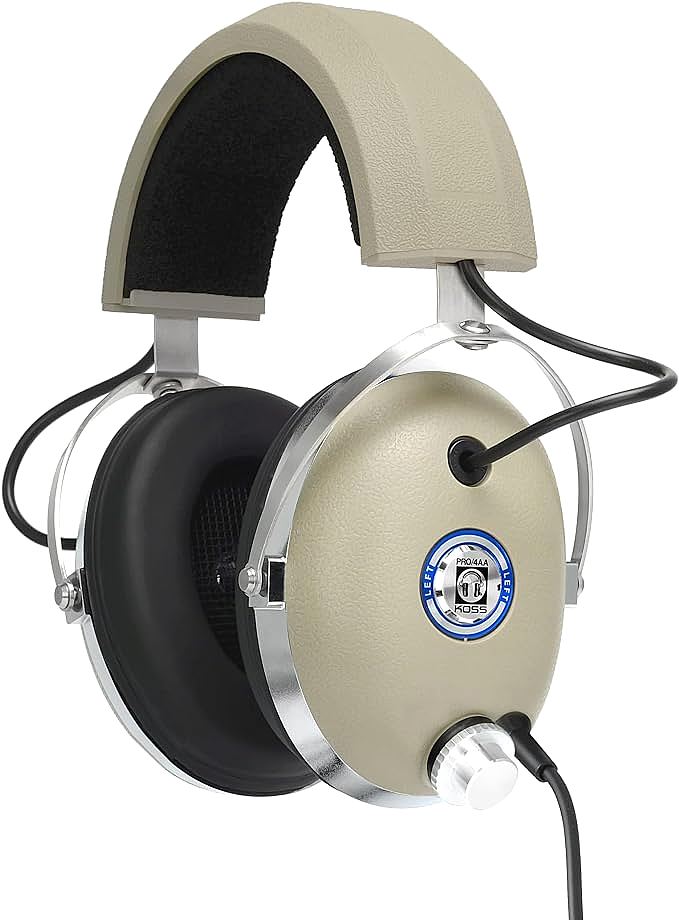
Headphone Impedance Explained: Why 250 Ohm Still Matters

Sennheiser CX Sport Bluetooth Sports Headphone – A Perfect Companion for Your Workout

Avantree Duet - Dual Wireless Headphones for TV Watching with Transmitter/Charging Stand 2-in-1

3.5mm Jack Audio Quality: Why Wired Beats Wireless

The Logic of Open Audio: Why Wired Earbuds Are Making a Comeback

Bioworld ER3D64HPT Harry Potter EarBuds, Deathly Hallows Accessories

JUSTRVN N8B USB C Headphones: The Science of Secure Sound for Your Active Life
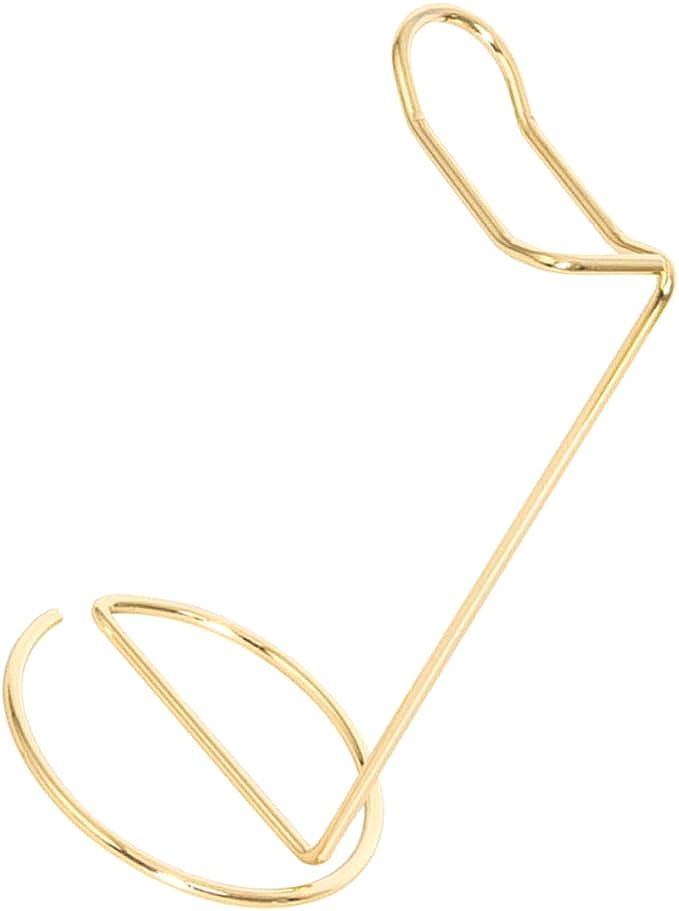
Hemobllo 30NH1465CU1O Headset Headphone Stand
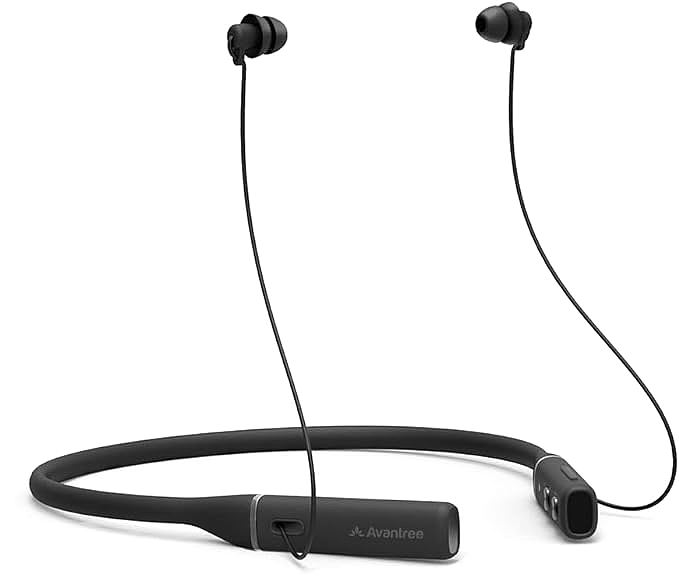
Avantree Repose: Sleep Soundly with Comfortable Bluetooth In-Ear Headphones