Sony MDREX110APB Deep Bass Earbuds: Punchy Lows for Your Auditory Pleasure


Sony MDREX110APB Deep Bass Wired Earphones
In the endless sea of personal audio, a peculiar phenomenon occasionally surfaces. A user, "The Guern," leaves a review for a modest pair of wired earbuds, the Sony MDREX110APB, and makes a claim that borders on heresy in the tech world: "Better than earphones costing 5x more." It’s a statement that flies in the face of conventional wisdom, where price tags are often seen as direct indicators of quality.
This begs a fascinating question. Is truly satisfying sound a luxury, gated behind expensive components and exotic materials? Or is it something more fundamental, rooted in the clever application of physics and engineering principles we all learned in high school? Let's use this unassuming pair of Sony earbuds not as a product to be reviewed, but as a scientific specimen to be dissected. What we'll find is a masterclass in getting the essentials absolutely right.
The Tiny Engine with an F1 Heart
At the center of every sound you hear from an earbud lies what engineers call a dynamic driver—a miniature sound engine. Its job is to vibrate and push air, creating the pressure waves that your brain interprets as music. The Sony MDREX110APB features a 9mm driver, a respectable size for its class, but the real secret lies in its heart: a neodymium magnet.
Think of it this way: if a standard iron or ferrite magnet in a driver is like the engine in a reliable family sedan, a neodymium magnet is like the engine from a Formula 1 car. Neodymium is a rare-earth element capable of producing a magnetic field vastly more powerful for its size. According to the principles of electromagnetism, this intense magnetic field allows for incredibly precise and forceful control over the driver's diaphragm—the delicate membrane that actually moves the air.
This superior control translates directly into what we perceive as audio quality. It means the diaphragm can start and stop on a dime, reproducing crisp, detailed notes without a muddy overhang. It reduces audible distortion, even at higher volumes, because the "engine" has more than enough power to handle the load. So, when these earbuds deliver that satisfying "deep bass," it's not just a marketing term; it's the direct result of a tiny, powerful magnetic heart working with ruthless efficiency.
The Goldilocks Dilemma and the Fortress of Bass
A powerful engine is useless if the tires can't grip the road. In the world of in-ear audio, the "tires" are the silicone tips, and their "grip" is the acoustic seal they form in your ear canal. One user, Joel Miller, perfectly described this challenge as a "Goldilocks" dilemma, where the included tips were "either too big, too small, or too rubbery to stay in." This isn't a mere complaint about comfort; it's a crucial scientific observation.
Here’s why: low-frequency sound waves—the bass—are long and powerful. To be perceived fully, they need to be contained within a closed space. Imagine trying to fill a bucket with a crack in it; the water will leak out before it ever fills. The same is true for bass. If the earbud seal is imperfect, that rich, low-end energy simply escapes into the open air. This is the core principle behind Passive Noise Isolation: a good seal physically blocks outside noise from getting in and, just as importantly, stops your music's bass from getting out.
This physical reality is amplified by a fascinating quirk of human hearing described by the ISO 226:2003 standard, better known as the equal-loudness contours (or Fletcher-Munson curves). These curves show that at lower, more comfortable listening volumes, our ears are naturally much less sensitive to low frequencies compared to mid-range frequencies (like human voices). Audio engineers know this, so they deliberately tune headphones to have a slightly boosted bass response to compensate. But if your earbud doesn't seal properly, you lose that engineered boost, and the music sounds thin and lifeless. Finding that "just right" fit isn't about preference; it's about allowing the physics and the psychoacoustics to work as intended.
The Purity of an Unbroken Path
In an age of wireless everything, one user, Michael, wryly noted he bought these earbuds by mistake, having wanted a wireless pair. His "mistake" highlights one of the most underappreciated virtues of wired technology: signal integrity.
Let’s use an analogy. A wired connection is like a direct nerve pathway from your device to the sound engine in your ears. The audio signal travels as a continuous, analog wave, uncompressed and unaltered. Wireless audio, via Bluetooth, is more like having a very skilled, very fast interpreter. Your device sends a digital signal, which the Bluetooth codec (like the standard SBC or AAC) compresses to save bandwidth. The earbuds then receive this compressed data, decompress it, and convert it back into an analog signal.
While this process is remarkably fast, it's not instantaneous. It introduces a small but measurable delay known as latency. For just listening to music, it's unnoticeable. But for gaming, where a 100-millisecond delay can mean the difference between victory and defeat, or for watching a movie, where it can cause a distracting mismatch between an actor's lips and their voice, that delay matters. The wired connection's near-zero latency makes it the undisputed champion for these applications. It’s a direct descendant of the same reliable 3.5mm jack that powered the original Sony Walkman, offering a pure, unbroken path for sound that requires no pairing, no charging, and no compromises.
The Science of a Sweet Spot
So, we return to our original anomaly. How can this simple device compete with far more expensive gear? The answer lies in a fundamental economic principle: the Law of Diminishing Returns. In audio, the journey from a $10 pair of pack-in earbuds to a well-engineered $20-$50 pair like the Sony MDREX110APB yields a massive, immediately obvious leap in quality. You're gaining the benefits of all the core physics we've discussed.
However, the journey from a $200 pair to a $2000 pair yields improvements that are far more subtle and incremental. That extra cost buys you exotic diaphragm materials, meticulously hand-tuned housings, and infinitesimally lower distortion rates—gains that are often only perceptible to a trained ear in a quiet room. The Sony MDREX110APB thrives because it absolutely masters the "sweet spot" of the value curve. It focuses its entire budget on executing the foundational principles of good sound—a powerful driver, a critical acoustic seal, and a pure signal path—flawlessly.
It doesn’t try to be everything. It doesn’t have active noise cancellation or multi-point pairing. Instead, it embodies an elegant engineering philosophy: excellence in the essentials is more valuable than mediocrity in the superfluous. In our relentless chase for the next feature, we sometimes forget that there is a profound and enduring wisdom in technology that is simple, reliable, and perfectly suited to its task. The best tool isn't always the newest or most complex; sometimes, it's the one that just gets the physics right.
Sony MDREX110APB Deep Bass Wired Earphones
Related Essays

The Persistence of the Wire: Why Simple Earbuds Can Be the Smartest Choice
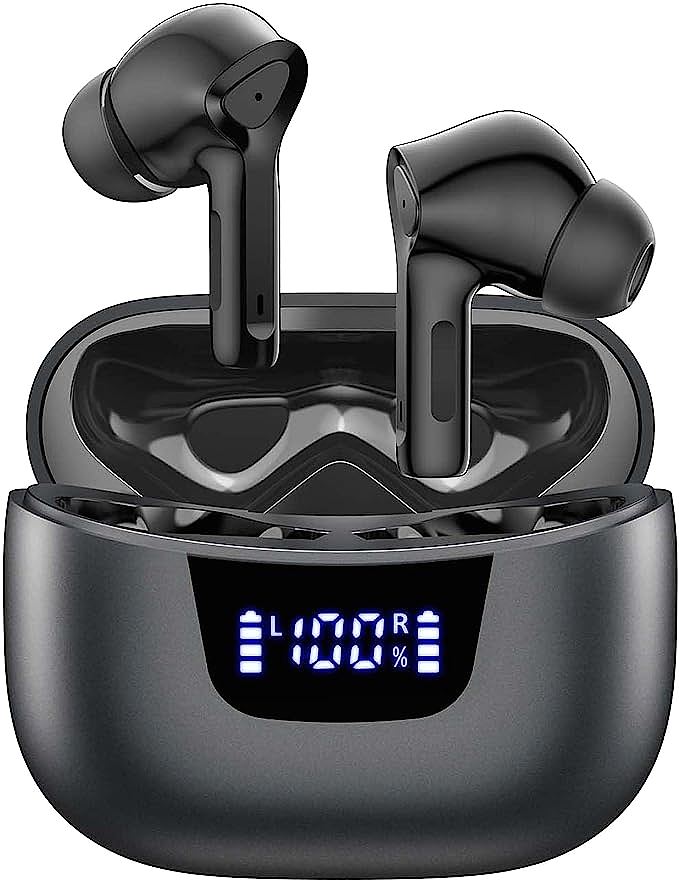
FORTECLEAR Wireless Bluetooth Earbuds: The Top Choice for Wireless Earbuds

Sennheiser MOMENTUM True Wireless 3 Earbuds: Immerse Yourself in Superior Sound

Assistrust Wireless Earbuds - Excellent Sound and Comfort at a Budget Price

vastland v7 Audifonos Earbuds: HiFi Sound Quality In-Ear Headphones

Holiper 023 Wired Earphones: A Budget-Friendly Option with Hi-Fi Sound and Comfort

Samsin ECOBUDT25 ECO Disk Headset: The Science and Niche of the 2.5mm Wired Audio Jack

Decoding Sound: The Science Behind Generic EP-W001 Soundmax In-Ear Wired Earbuds

Planar Magnetic Drivers in In-Ear Monitors: Engineering Constraints and Performance Variability

