Gravity and Anatomy: The Physics of Secure Audio in Motion
Update on Dec. 20, 2025, 10:31 a.m.
In the world of consumer electronics, the trend is almost always towards miniaturization. Smaller, lighter, more invisible. However, in the specific niche of high-intensity athletics, this trend hits a hard wall of physics: gravity. When a runner strikes the pavement, the impact force can travel through the body at up to three times their body weight. This shockwave, combined with the rapid head movements of a HIIT workout or the lateral G-forces of a trail run, creates a hostile environment for standard “friction-fit” earbuds.
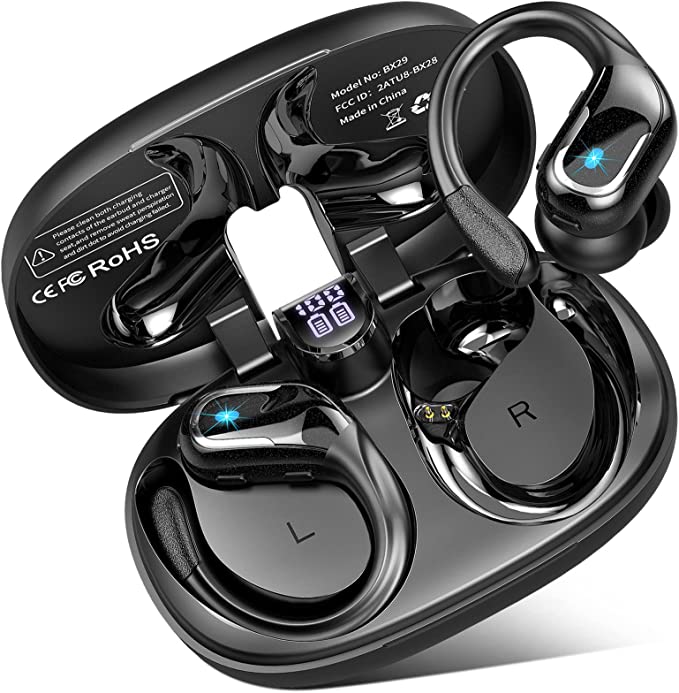
The solution to this biomechanical challenge is not stronger glue or tighter canal seals, but a fundamental rethinking of retention. It requires engaging the outer ear’s anatomy as a structural anchor. This is the domain of the Earhook.
The Biomechanics of Retention
The human ear is a complex landscape of cartilage ridges and valleys. Most true wireless earbuds rely on the concha (the bowl of the ear) and the auditory canal for retention. They depend on outward pressure and friction. However, sweat is a lubricant. As a workout intensifies, the coefficient of friction drops, and the earbuds inevitably slide out.
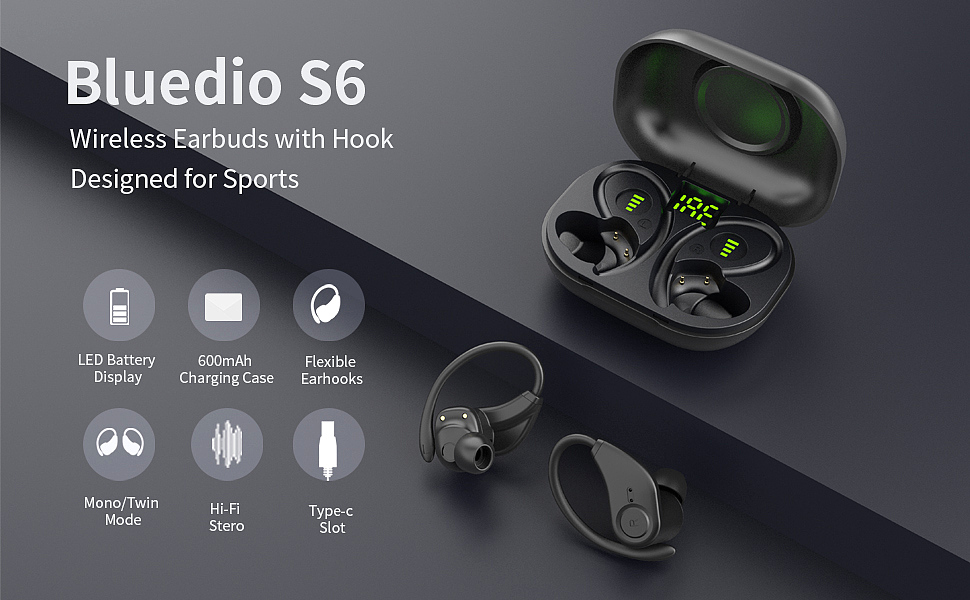
Earhooks, like those found on the Bluedio S6, bypass this failure point by utilizing the helix root—the curve where the ear joins the head. By hooking over this ridge, the device shifts its retention mechanism from friction to gravity itself. The weight of the earbud is distributed across the top of the ear, turning the ear’s own structure into a load-bearing shelf.
This “cantilever” effect ensures that downward forces (gravity/impact) actually seat the hook more firmly, rather than dislodging it. For athletes, this means the cognitive load of worrying about equipment failure is removed. They can sprint, jump, and invert without breaking their “flow state,” secure in the knowledge that physics is holding their gear in place.
The Stability of Connection: Bluetooth 5.1
Physical stability is only half the equation. Electronic stability is equally vital. In a gym environment crowded with dozens of other Bluetooth devices, Wi-Fi routers, and electromagnetic interference from treadmills, maintaining a solid signal is a challenge.
The adoption of Bluetooth 5.1 represents a maturation of wireless protocol. Unlike earlier versions that broadcasted blindly, 5.1 improves the precision of signal direction finding and connection robustness. It reduces the “jitter” and latency that can occur when the body itself blocks the signal (since water, and thus humans, absorb 2.4GHz radio waves). For a sport earphone, this means the music doesn’t stutter mid-rep, maintaining the rhythmic drive that is often essential for athletic performance.