The $110 "Sony Killer": How LDAC and Silk Drivers Define the Soundcore Q35


Soundcore Life Q35 Active Noise Cancelling Headphones
In the headphone market, the $300-$400 price point is dominated by giants like Sony and Bose, built on a promise of industry-leading Active Noise Cancellation (ANC). But for a massive, tech-savvy audience, the question is: "What's the smartest way to spend $110?"
This is the "prosumer" value proposition, and it's why the Soundcore Life Q35 (from Anker) has a 4.4-star rating from over 10,000 users. It's an engineering case study in intelligent compromise.
The 10,000+ reviews are a goldmine of this exact purchasing decision. "My son has the Sony WH-1000XM5... I tried them out... impressive. But I wasn't about to spend $300+... these seemed to offer much of the features that the Sony's did," writes one 5-star reviewer ("John Clark").
This isn't a review, but an analysis of how Soundcore delivers 90% of the "pro" experience for 30% of the price. They did it by focusing on the two things that actually define audio quality: the codec and the driver.
The "Data" Advantage: Decoding LDAC (The 3x Codec)
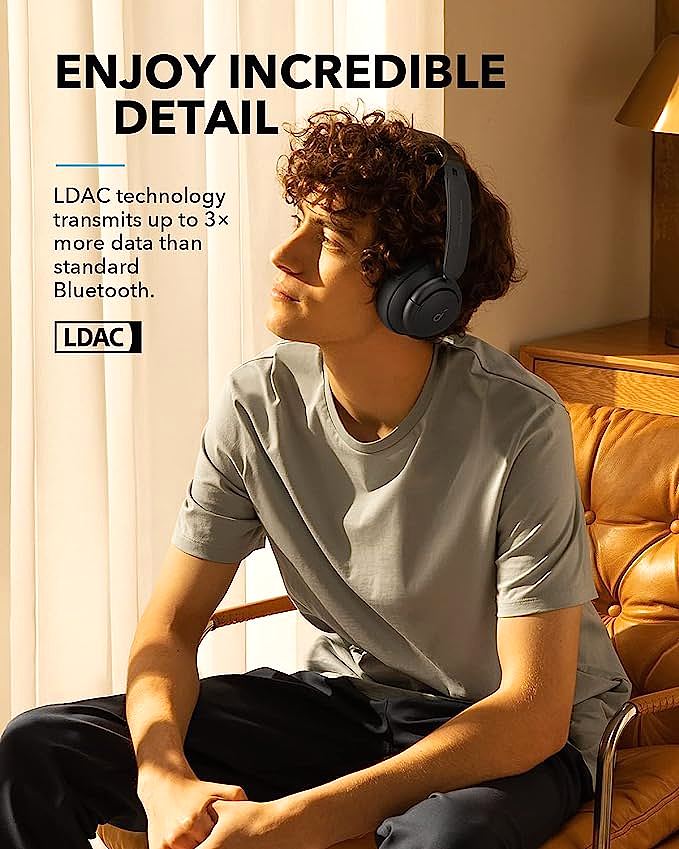
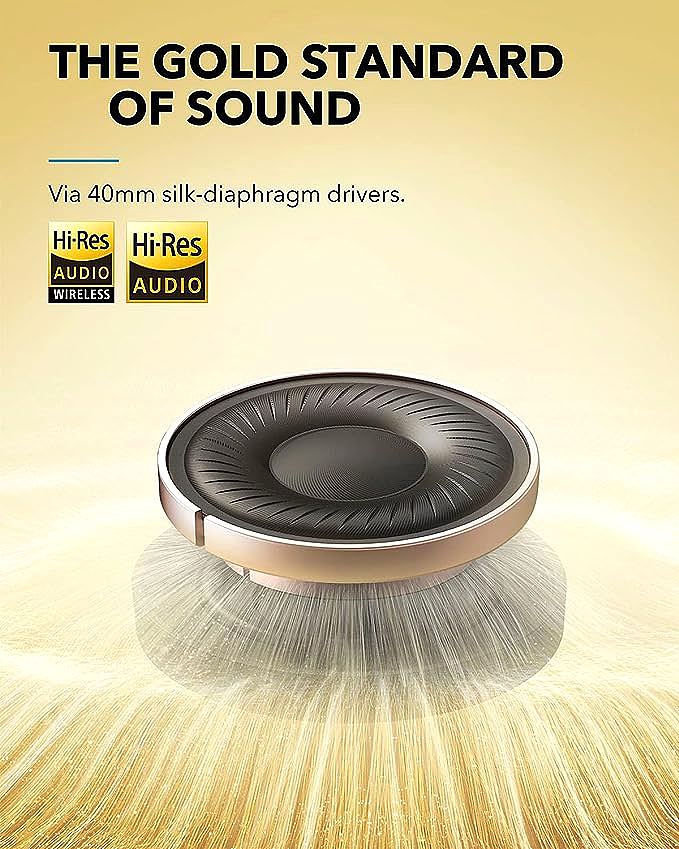
This is the Q35's secret weapon and its "Gold Standard of Sound." Most wireless headphones, including standard AirPods, use basic Bluetooth codecs (SBC or AAC) that transmit data at a "lossy" 256-328 kbps. This is a "data bottleneck." You can have the best headphones in the world, but if the signal is low-quality, the sound will be, too.
The Life Q35, however, is Hi-Res Audio Wireless certified because it uses LDAC technology. * What is LDAC? Developed by Sony (and licensed to brands like Soundcore), LDAC is a high-fidelity audio codec. It transmits data at a staggering 990 kbps—three times more data than standard Bluetooth. * Why it Matters: This "lossless transfer" means none of the music's detail is discarded. It's the difference between streaming a pixelated 480p video (SBC) and a pristine 4K Blu-ray (LDAC).
This is what reviewers are actually hearing. When "HJeffK" says the sound is "crisp and vibrant" and "breathtaking," he is describing the audible result of a massive data pipeline. He even instructs other Samsung users on how to manually enable LDAC in their phone's developer options. This is the Q35's core advantage.
The "Material" Advantage: 40mm Silk-Diaphragm Drivers
If LDAC is the high-quality signal, the 40mm silk-diaphragm drivers are the high-performance engine built to handle it. The driver's material is one of the most critical factors in audio engineering.
- The Problem: A driver must be extremely light (to move fast and create clear treble) and extremely rigid (to avoid deforming and creating "muddy" bass). Cheap drivers (plastic, paper) can't do both.
- The Solution: Silk is an almost perfect acoustic material. It is incredibly strong and rigid for its weight, but it also has high internal damping.
- The Result: The silk diaphragm can vibrate with the speed needed for "shining" treble, while its rigidity and damping deliver "deep" bass that is "punched in" and "cut out" from distortion.
This combination of a 3x data stream (LDAC) feeding a high-performance silk driver is how a $110 headphone can, as one user put it, feel like there is "no discernible difference in quality from the Sony headphones."
The "Smart" Compromise: Where the $110 is Saved
So, if the audio chain is "pro-level," where did Soundcore save the money? The 10,000+ reviews are perfectly clear: the ANC and the "smart" features.
1. The ANC Trade-Off:
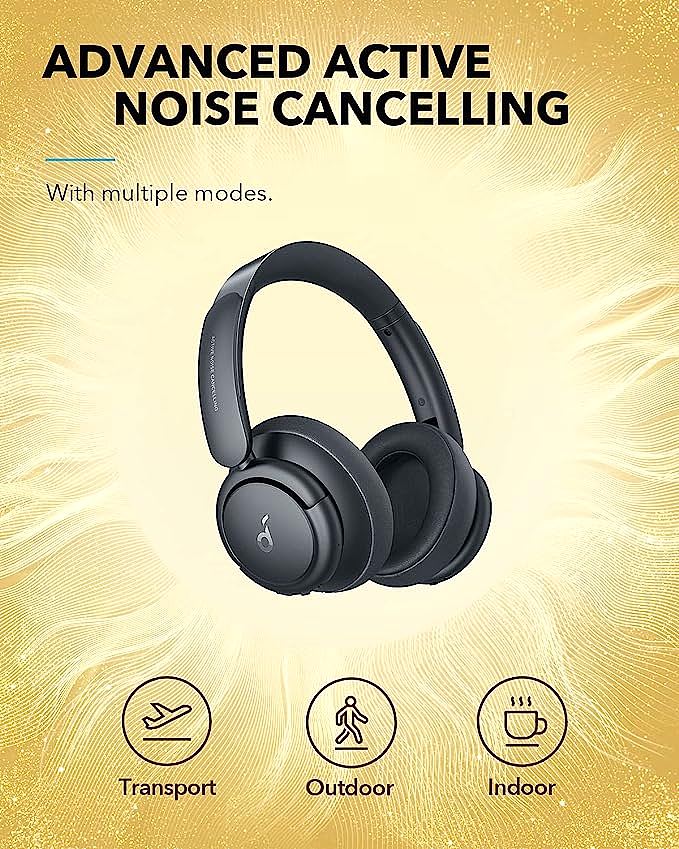
The Q35 has Hybrid Active Noise Cancelling (which is very good), but the consensus is: "The ANC is good... It is not Sony / Bose good" (HJeffK). Another user ("RTW") confirms: "Don’t expect the same performance as a more expensive set." This is the primary, and most intelligent, compromise. Soundcore recognized that "very good" ANC is "good enough" for most users, allowing them to put the real money into the sound.
2. The Software Trade-Off (The "Gimmicks"):
The Q35 is packed with "smart" features that, according to users, aren't so smart.
* Wearing Detection: "The gimmicky 'pause playback when you remove the headset' is alpha-level software at best" (LightCC). "when sleeping... it will repeatedly auto pause your media" (Nova).
* Multipoint Connection: "I stopped trying after a couple weeks because it is so painfully bad." (Copper Minehart). [Note: This review is from 2023, while "julie" (2022) praises it. This may be inconsistent or fixed via firmware.]
This is the "Anker Philosophy": over-deliver on hardware (LDAC, silk drivers, 4.7-star battery) and meet expectations on software (the app, ANC) and "smart" features (which are often the first to fail).
The Final Win: The 5.0-Star Comfort Rating
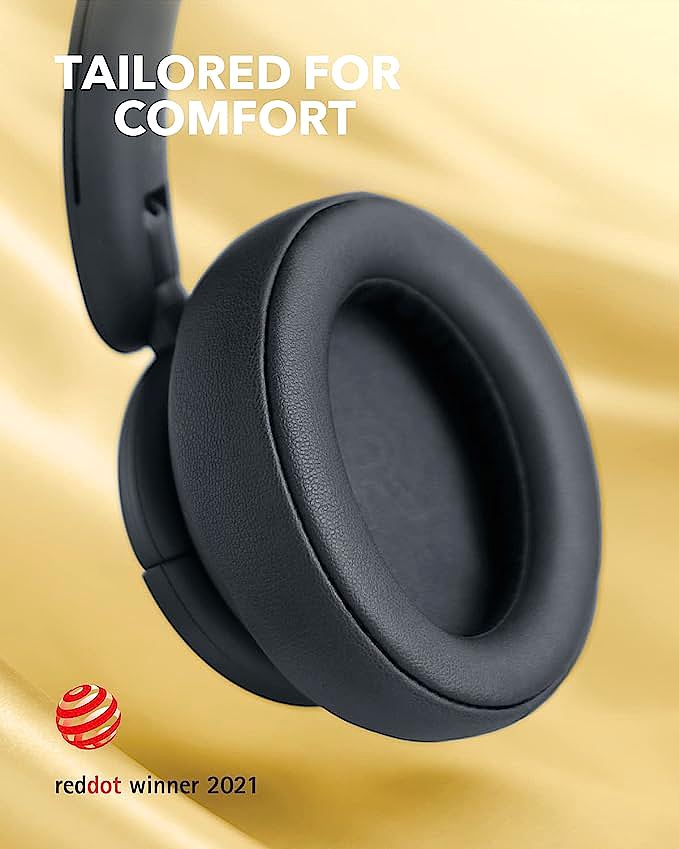
The last, and perhaps most important, victory for the Q35 is its 5.0/5.0 comfort rating. This is achieved through a "lightweight build" and "protein leather-covered memory foam" earcups that "adjust by up to 15°." As one reviewer ("Kade") with a small head and glasses noted:
"The padding is... soft enough that it doesn't press my glasses into my face."
Coda: The $110 "Smart" Choice
The Soundcore Life Q35 is not a "Sony clone." It is an intelligent alternative. It is a $110 headphone that forces a critical question: Do you want to pay $350 for "Perfect" ANC? Or do you want to pay $110 for "Perfect" Comfort, "A+" Battery Life, and "Audiophile-Grade" LDAC sound?
For 10,000+ users, the answer is clear. It is the pragmatic, "audio-first" choice.
Soundcore Life Q35 Active Noise Cancelling Headphones
Related Essays
Stainless Steel Paradox: Why a $29 Headphone Built to Outlast Everything Else

Acoustic Democratization: Engineering High-Fidelity Audio on a Micro-Budget

Chasing the Fletcher-Munson Curve: The Acoustic Architecture of V-Shaped Audio

The Anatomy of Audio: Physics of Dynamic Drivers and Passive Isolation

The Silence Economy: How Advanced ANC Technology Became a Modern Essential

MuveAcoustics Drive Wired Headphones: Decoding the Physics of the $10 Audio Miracle

The Software-Defined Earbud: How Algorithms Are Reshaping Budget Audio

Commoditized Excellence: Deconstructing the Engineering Behind Budget Sport Audio

The Anatomy of Affordable Hi-Fi: Decoding Drivers, Diaphragms, and Connectivity