Echoes in the Skeleton: Transcending the Auditory Barrier


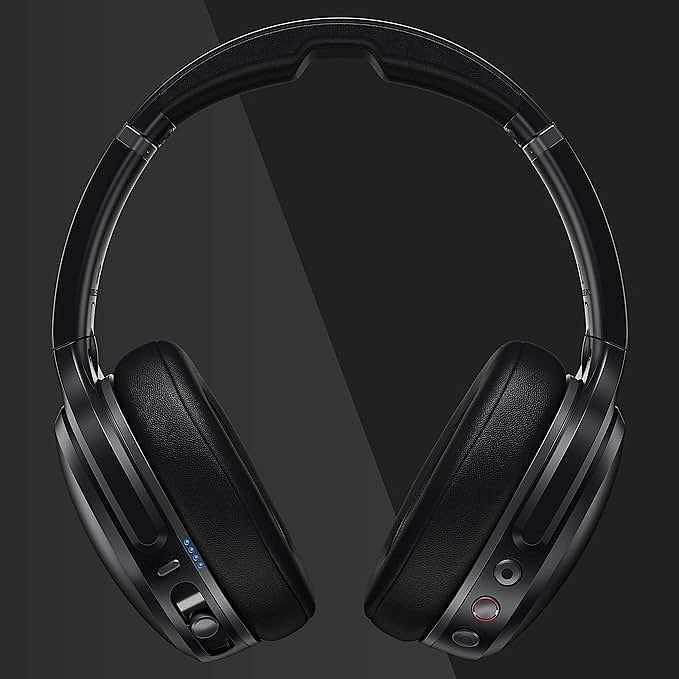
Skullcandy Crusher ANC Over-Ear Wireless Headphones
Acoustic science has spent over a century optimizing a single pathway: the trajectory of a pressure wave from an external transducer to the delicate tympanic membrane. We measure fidelity in terms of frequency response curves, total harmonic distortion, and signal-to-noise ratios. Yet, anyone who has stood near a jet engine, attended a live symphony, or felt the reverberations of a thunderstorm knows that this purely auditory model is incomplete. Sound is not merely a phenomenon of hearing; it is a profound physical event.
The modern paradigm of portable consumer audio isolated the listener, shrinking massive soundstages into microscopic drivers that fit inside the ear canal. While this achieved unprecedented convenience and spatial isolation, it fundamentally severed the human body from the kinetic energy of sound. We traded physical impact for acoustic data. Now, a paradigm shift driven by somatosensory integration is attempting to bridge this divide. By bypassing the eardrum and transmitting mechanical energy directly into the skeletal structure, modern tactile audio devices propose a radical thesis: true immersion requires the collision of biology and kinetics.
Why Do Low Frequencies Trigger Biological Alarm Systems?
Before we can manipulate physical sound, we must evaluate how the human organism evolved to process it. High-frequency waves, characterized by short wavelengths, dissipate rapidly over distance and are easily absorbed by the environment. They carry highly specific directional information—the snap of a twig, the chirp of a bird. In contrast, low-frequency waves (ranging from 20Hz to 80Hz) possess immense energy, traveling vast distances and penetrating solid obstacles with ease.
From an evolutionary standpoint, the Earth produces extreme low frequencies almost exclusively during catastrophic or massive events: earthquakes, volcanic eruptions, the approach of a massive predator, or thunder. The human nervous system did not simply evolve ears to hear these frequencies; it weaponized the entire body as an antenna.
Pacinian corpuscles, rapidly adapting mechanoreceptors located deep within the dermis and joints, are hypersensitive to vibrations in the 200-300Hz range, but they also respond to sheer mechanical displacement at lower frequencies. When a 40Hz wave strikes the human torso, it compresses the thoracic cavity, resonating against the ribs and the fluid-filled viscera. This stimulation bypasses the auditory cortex entirely, routing signals directly to the amygdala and triggering a mild sympathetic nervous system response. The adrenaline spike experienced during a massive bass drop in a nightclub is not merely an emotional reaction to music; it is an ancient survival mechanism reacting to perceived environmental force.
Traditional dynamic drivers in headphones completely fail to engage this biological alarm system. They lack the surface area and excursion limits required to displace enough air to compress the listener's skin or bone. The acoustic information reaches the brain, but the somatic nervous system remains dormant, resulting in a perceptual mismatch that leaves the listener feeling detached from the recorded event.
From Room-Sized Subwoofers to Wearable Actuators
To solve the physical deficit of portable audio, engineers historically relied on brute force. The LFE (Low-Frequency Effects) channel in cinematic sound design was pioneered precisely to deliver this tactile impact, utilizing massive, high-wattage subwoofers bolted to theater floors. Moving this experience to the personal scale required an entirely different mechanical philosophy.
Instead of attempting to miniaturize a subwoofer—a physical impossibility given the laws of fluid dynamics—tactile audio systems replace acoustic air displacement with direct mechanical coupling. The Skullcandy Crusher ANC (Model S6CPW-M448) serves as a functional case study of this transition. Rather than routing low-frequency electrical signals to an oversized speaker cone, the architecture diverts frequencies below 100Hz to secondary electro-mechanical actuators housed within the earcups.
These haptic drivers operate similarly to eccentric rotating mass (ERM) motors or linear resonant actuators (LRAs) found in industrial robotics and gaming peripherals, but they are critically tuned to musical frequencies. When an explosive transient or a sustained bass note is detected, the actuator converts the electrical pulse into kinetic energy, violently oscillating the chassis of the headphone against the listener's cranium. Because the human skull is highly conductive to vibration, the mechanical energy propagates through the temporal bone directly to the cochlea (bone conduction) while simultaneously stimulating the mechanoreceptors in the skin around the ear.
The result is a localized recreation of the LFE experience. It requires a fraction of the power of an atmospheric subwoofer and generates zero external noise pollution, yet it successfully bridges the gap between acoustic information and kinetic force.
Rewiring Neurological Expectations Through Cross-Modal Fusion
The sheer mechanical vibration of a plastic chassis against the head should, logically, feel artificial. Yet, users consistently report a sensation of vast acoustic space and profound physical weight. This illusion is not a triumph of hardware, but an exploitation of human neuroplasticity known as cross-modal perception.
The human brain is an aggressive synthesis engine. When it receives simultaneous inputs from disparate sensory pathways—in this case, the auditory cortex processing the pitch and tone of a bass guitar from the primary acoustic drivers, and the somatosensory cortex processing the rhythmic mechanical vibration from the haptic motors—it does not perceive them as separate events. The brain fuses them into a single, cohesive sensory object.
This neurological trickery is highly efficient. Because the brain expects heavy physical vibration to accompany loud, low-frequency sounds, the localized rattling of the haptic drivers is hallucinated into a whole-body experience. The sensory input fills the "missing data" gap. Consequently, the user perceives a psychoacoustic illusion of immense volume and room-shaking depth, without actually exposing their delicate eardrums to the high Sound Pressure Levels (SPL) that cause noise-induced hearing loss. The brain writes the check, but the ears don't have to pay the toll.
Quiet Vibrations Outperform Deafening Decibels
Counter-intuitively, the integration of intense kinetic energy often allows for lower overall listening volumes. In standard acoustic isolation paradigms, listeners frequently turn up the volume to dangerous levels in a vain attempt to "feel" the music, seeking a visceral impact that tiny drivers can never deliver.
By offloading the low-frequency impact to a dedicated mechanical system, the primary acoustic drivers are freed from the burden of extreme excursion. This reduces intermodulation distortion, allowing the mid-range and high-frequency arrays to articulate vocals and subtle instrumentation with greater clarity. An adjustable parameter—often implemented as a physical slider or software toggle—allows the user to define the exact ratio of acoustic signal to kinetic feedback.
At a low threshold, the haptics act as a subtle acoustic restorative. They introduce a faint resonance to the strike of a timpani or the pluck of a double bass, returning the "woodiness" and structural decay that digital compression algorithms often strip away. At maximum threshold, the system ceases to be an audiophile tool and becomes an amusement park simulator, prioritizing raw physiological impact over spectral accuracy. Both extremes demonstrate the flexibility of decoupled sensory channels.

Signal Purity vs. Physical Impact: The ANC Dilemma
No engineering breakthrough exists without an equal and opposite compromise. Integrating highly active kinetic motors into a sealed acoustic chamber introduces severe operational friction, particularly when layered with other advanced digital signal processing (DSP) features like Digital Active Noise Cancellation (ANC).
Active noise cancellation relies on an array of external and internal microphones constantly measuring ambient pressure waves, generating an inverted phase signal to cancel out background noise. However, when a device is physically vibrating violently, the internal feedback microphones can struggle to differentiate between external acoustic intrusion and the self-generated mechanical resonance of the haptic motors.
In consumer implementations like the aforementioned Crusher ANC, this complex signal routing can manifest as a subtle, audible hiss—reminiscent of the noise floor on an analog cassette tape. While this artifact is entirely masked during active media playback, it highlights the immense difficulty of stabilizing a closed-loop acoustic environment while simultaneously using it as a kinetic battering ram.
Furthermore, the physical requirements of tactile systems demand robust structural integrity. The clamping force must be unyielding; if the earcups are loose, the kinetic energy dissipates into the air rather than transferring to the skull. This necessitates heavy-duty hinges and dense, isolating ear pads. While effective for energy transfer, this design inherently traps thermal radiation. During intense, hyper-stimulating sessions—such as active gaming or rapid transit—the localized heat buildup becomes a physiological bottleneck, restricting long-term comfort.
When the LFE Channel Drops During a Virtual Firefight
The most profound application for haptic audio technology is rapidly shifting away from passive music consumption toward interactive digital environments. The architecture of modern gaming engines and virtual reality (VR) simulators relies heavily on the spatial and physical localization of events.
Consider a digital combat simulation. When an artillery shell detonates to the player's left, traditional stereo panning alerts the auditory system to the direction. However, if that acoustic cue is paired with a synchronized, high-torque mechanical impact localized precisely to the left side of the skull, the player's reaction time and spatial awareness increase dramatically. The LFE channel, once trapped in a living room subwoofer, becomes a wearable, directional force vector.
This integration extends to utilitarian functions seamlessly embedded into the hardware ecosystem. Because these devices are increasingly heavy and expensive investments, secondary integrations—such as built-in Bluetooth tracking modules (e.g., Tile tracker architecture)—become necessary fail-safes. The convergence of spatial audio, physical haptics, and geographic hardware tracking represents the transition of headphones from simple output devices to comprehensive wearable computing nodes.
The Physicality of the Digital Future
We are accelerating toward an era where digital experiences demand physical validation. As our media becomes increasingly disembodied, the hardware we use to interface with it must evolve to anchor us back to reality. The integration of haptic feedback into personal audio is not merely a novelty for bass enthusiasts; it is a fundamental correction of a century-old acoustic oversight.
By acknowledging that the human skeleton and the nervous system are critical components of the listening experience, engineers are unlocking a multidimensional canvas. We are no longer just listening to the pressure waves of a distant event; we are inviting the storm directly into our bones.
