Engineering for Awareness: The Mechanics of Open-Ear Safety


Kimwood HS1 Bone Conduction Wireless Headphones
In the realm of personal audio, isolation has long been the gold standard. Noise-canceling technology strives to erase the world, creating a vacuum of pure sound. However, for a cyclist navigating city traffic or a trail runner in bear country, isolation is not a feature; it is a danger. This has given rise to the category of open ear wireless headphones, devices engineered not to block, but to coexist. The Kimwood HS1 serves as a prime example of how material science and industrial design converge to solve the problem of situational awareness.
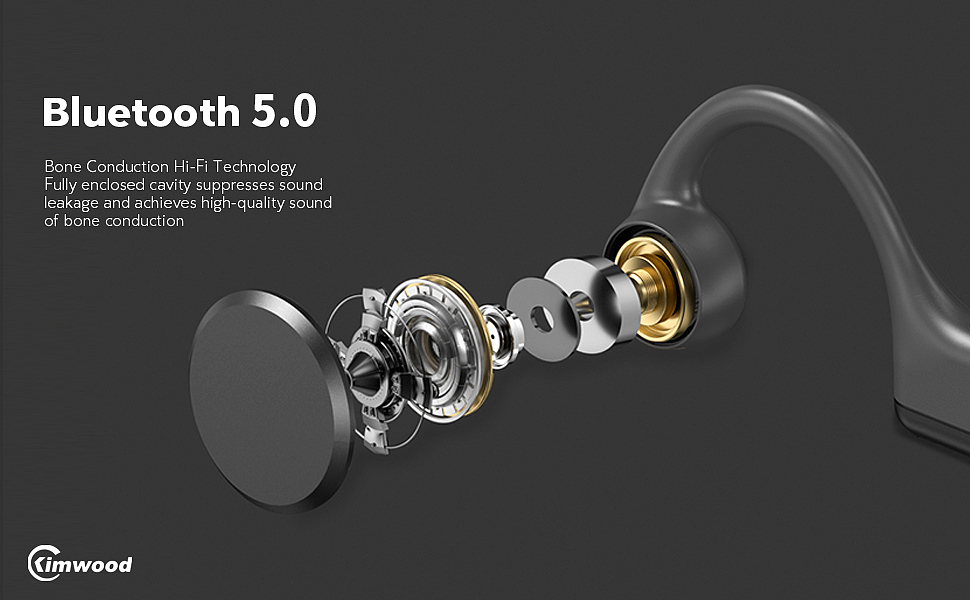
The Physics of Dual-Channel Hearing
The primary function of open-ear design is to maintain the natural acoustic path of the ear canal. By positioning the audio source on the cheekbone rather than inside or over the ear, the pinna (outer ear) and ear canal remain fully exposed to the environment. This creates a "Dual-Channel" listening experience.
Channel One is the environmental sound: traffic noise, bird calls, or conversations. These sound waves enter via air conduction, striking the eardrum normally. Channel Two is the digital audio: music or podcasts transmitted via bone conduction through the skull. The brain integrates these two distinct inputs. Unlike "transparency modes" in ANC earbuds, which digitize and re-process the outside world (often introducing latency or artifacts), the open-ear approach relies on unadulterated physics. There is no microphone processing lag; the sound of an approaching car is heard in real-time, with accurate spatial cues intact.
Material Science: The Titanium Mandate
For a device intended to be worn during vigorous motion, structural integrity is paramount. Plastic frames often suffer from fatigue failure—snapping after repeated bending. The HS1 utilizes a high-strength memory titanium alloy for its core frame.
Titanium allows for elastic deformation. The frame can be bent, twisted, or stretched significantly and will return to its original shape without plastic deformation. This "memory" property is crucial for a one-size-fits-all device. It ensures that the clamping force remains constant over the lifespan of the product, regardless of how many times it is taken on or off. Furthermore, titanium is biocompatible and resistant to corrosion, making it the ideal substrate for a device that sits directly against sweaty skin for hours at a time.

Ingress Protection: Decoding IP55
Outdoor electronics must contend with the elements. The HS1 carries an IP55 waterproof rating. To understand the engineering value, we must decode the International Protection (IP) standard.
The first digit, "5," refers to protection against solid objects. It indicates the device is "Dust Protected"—dust can enter, but not in sufficient quantity to interfere with operation. The second digit, "5," refers to liquids. Crucially, IPX5 denotes protection against "water jets projected by a nozzle (6.3 mm) against enclosure from any direction."
This is a significant step up from IPX4 (splashes). It means the device's internal circuitry, battery, and transducers are sealed against sustained, low-pressure water streams. In practical terms, this covers heavy sweat saturation, running in the rain, or rinsing the headset under a tap after a workout. It does not, however, mean the device is submersible (which would require IPX7). The "fully enclosed cavity" design mentioned in the HS1's specs is the key engineering feature here, using gaskets and ultrasonic welding to create a hermetic seal against moisture intrusion.

Industry Implications: A New Standard for Public Spaces
The shift toward open-ear technology has broader implications for public safety and social etiquette. As more jurisdictions consider banning in-ear headphones for cyclists and drivers due to safety concerns, bone conduction offers a compliant alternative. It represents a technological compromise that respects the shared acoustic space of the public realm while preserving the individual's right to a private audio experience. The engineering choices in devices like the HS1—titanium durability, sweat-proofing, and open architecture—are setting the baseline for this new category of "socially aware" personal audio.
Kimwood HS1 Bone Conduction Wireless Headphones
Related Essays

Mu6 Ring Air Conduction Headphones: Open-Ear Comfort, Immersive Sound

Urban Running Safety: Why Open-Ear Design Helps You Hear Traffic

The Physics of Open-Ear Audio: Why Hearing Your Surroundings Changes Everything

Open-Ear Audio Physics: Why Bass Limitations Are Physics, Not Design Flaws

Beyond the Eardrum: The Hidden Physics of Bone Conduction

Taiyoko dg08 Bone Conduction Wireless Headphones - Your Perfect Open Ear Companion for Sports

Open-Ear Earbuds Explained: The Safety Science Behind Outdoor Sports Audio

The Hidden Danger in Your Ears: Open-Ear Design and Outdoor Safety

Bone Conduction Headphones: Open-Ear Audio for Safety and Awareness

