Beyond the Buds: The Ultimate Guide to Open-Ear Headphones and Bluetooth 5.3

TRAUSI T6 Open Ear Headphones
Headphones have become an essential part of our daily uniform. We wear them to focus at work, power through workouts, and lose ourselves in podcasts. But for years, we’ve accepted a fundamental trade-off: to tune in, we had to tune out the world around us. The rise of Open-Ear Headphones is changing that equation entirely, and it’s time we understood the clever technology making it all possible.
This isn’t just another product review. This is a guide for anyone who has ever felt isolated by their earbuds, missed a bike bell on their commute, or simply wanted to enjoy their music without losing touch with reality. We’re going to break down the science of situational awareness and explore how advancements like Bluetooth 5.3 are quietly revolutionizing our listening experience. We'll use the TRAUSI T6 Open Ear Headphones as our case study, not to sell you a product, but to illustrate these concepts in a real-world device.
The Open-Ear Promise: Hearing Everything, Without Missing Anything
First, let's get on the same page. What exactly are open-ear headphones? Unlike traditional earbuds that plug your ear canal or over-ear cans that seal you in, open-ear designs rest comfortably outside your ear. They use technologies like air or bone conduction to deliver sound, leaving your ear canal completely open.
This might sound strange at first, but the benefit is immediate and profound: situational awareness.
You can be fully immersed in an audiobook while still hearing your dog barking, a colleague asking a question, or, most importantly, approaching traffic on your morning run. This design philosophy is built for: * Athletes and Cyclists: Who need to stay aware of their surroundings for safety. * Office Professionals: Who want to listen to music but remain accessible to coworkers. * Commuters: Who need to hear platform announcements and traffic sounds. * Anyone who finds in-ear buds uncomfortable: The open design eliminates pressure and ear fatigue, making them ideal for all-day wear.
But creating a great open-ear experience is a delicate balancing act. You need clear, rich sound without sound leakage, a secure and comfortable fit, and a rock-solid wireless connection. This is where the underlying technology becomes the true hero.
The Unsung Hero: Why Bluetooth 5.3 is Your Silent Partner
When you look at a spec sheet, you’ll see numbers like "Bluetooth 5.3." It’s easy to dismiss this as just another incremental update, but for wireless headphones, it’s a massive leap forward that directly solves some of the most common user frustrations. Think of it less as a feature and more as the reliable foundation upon which your entire listening experience is built.
Let's break down what it actually does for you.
1. Rock-Solid Stability in Crowded Spaces
Have you ever had your music stutter or disconnect while walking through a busy airport, a crowded gym, or even just your own home filled with Wi-Fi devices? That’s radio frequency (RF) interference. The 2.4 GHz band that Bluetooth uses is a busy place.
Here’s the mentor-moment: Think of the 2.4 GHz band as a multi-lane highway. Older Bluetooth versions were like polite drivers who stuck to one lane, even if it got congested. Bluetooth 5.3, however, is like a smart GPS navigation system. It introduces a feature called Channel Classification that constantly scans all the lanes on the highway. It intelligently identifies and avoids the "congested" or "bad" lanes (those with interference) and hops to clearer ones.
For you, this means a far more stable and uninterrupted connection. Your music just works, letting you focus on your workout, not on troubleshooting your gear.
2. Radical Efficiency for True All-Day Power
Battery life is the eternal struggle of wireless devices. How can a tiny earbud possibly last for hours on end? While battery chemistry is part of the answer, intelligent power management is the bigger piece of the puzzle.
Bluetooth 5.3 is fundamentally more efficient. It allows devices to enter low-power "sleep" states much faster and more effectively. It also helps filter out redundant data, so the device isn't wasting energy processing the same information twice.
When a product like the TRAUSI T6 claims 10 hours of continuous playback on a single charge and a total of 50 hours with its charging case, it’s not just about cramming a bigger battery in. It's about having a smarter, more efficient Bluetooth standard that sips power instead of guzzling it. This efficiency is also what enables fast-charging features, where just a few minutes of charging can provide enough power for an entire workout.
3. Reduced Latency for Synchronized Sight and Sound
Latency is the small, sometimes infuriating delay between what you see on a screen and what you hear in your headphones. With music, it's unnoticeable. But when you’re watching a video or playing a game, even a slight delay can ruin the experience.
Bluetooth 5.3 helps to further reduce this delay. While it won't eliminate it entirely (that's a goal for future standards like LE Audio), it makes the experience much smoother and more synchronized, ensuring that dialogue matches lip movements and sound effects align with the on-screen action.
Beyond the Connection: The Art of Open-Ear Audio
A great connection is crucial, but it’s meaningless if the sound quality is poor. Open-ear audio presents a unique challenge: how do you produce full, rich bass and clear treble without a sealed ear canal?
This comes down to two things: driver size and acoustic design.
The "driver" is the tiny speaker inside the headphone responsible for creating sound. Larger drivers can move more air, which generally leads to more powerful and present bass. The TRAUSI T6, for example, uses relatively large 16.2mm drivers, which are engineered to deliver a fuller sound profile than you might expect from an open-ear design.
Furthermore, a unique chambered acoustic design helps manage air pressure and prevent sound loss. This ensures the audio is directed towards your ear effectively, providing clarity for both music and phone calls, even when you're in a moderately noisy environment. The noise-cancelling microphone technology focuses on capturing your voice, allowing you to be heard clearly on calls without having to shout.
Your First Five Minutes: From Box to Broadcast
Great technology should feel invisible. The moment you open the charging case, your headphones should power on and instantly connect to your phone. This seamless experience, often called "fast pairing," is a hallmark of modern wireless devices.
The initial setup is straightforward:
1. Enable Bluetooth on your phone or device.
2. Open the charging case. The earbuds will automatically enter pairing mode.
3. Select the device (e.g., "TRAUSI T6") from your Bluetooth list.
That's it. From then on, the Hall switch inside the case will ensure the earbuds connect automatically every time you open it. This eliminates the frustrating ritual of manually turning earbuds on and off or navigating through menus. It’s a small detail that makes a huge difference in daily usability.
In the end, understanding the technology inside your headphones empowers you. It transforms abstract numbers like "5.3" into tangible benefits you can appreciate every day: the unwavering connection during your commute, the confidence that your battery will last, and the freedom to enjoy your world and your audio, together.
TRAUSI T6 Open Ear Headphones
Related Essays
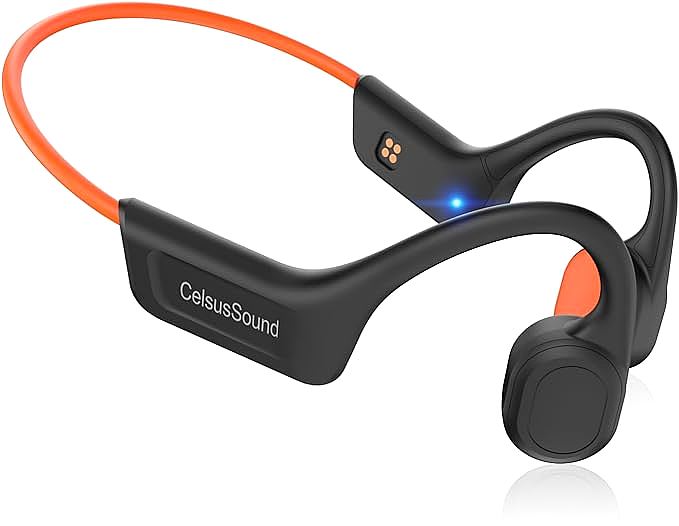
CelsusSound S800C Bone Conduction Headphones: Hear the World, Protect Your Hearing
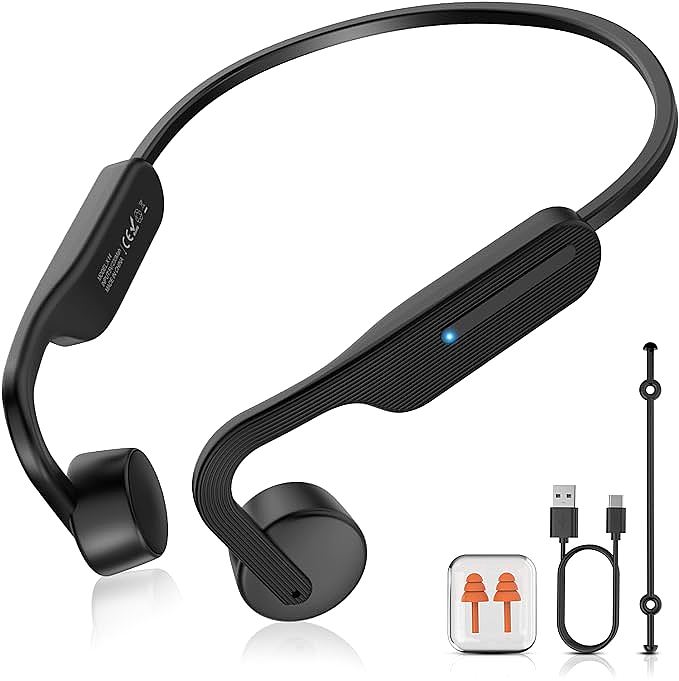
The Sound of Silence: How Bone Conduction Headphones Let You Hear Your World and Your Music

KARFOO W9 : The Truth About Budget Bone Conduction Headphones

Musqua BT15 Wireless Headphones: The Science of Open-Ear Audio for Active Lifestyles and All-Day Comfort

Eixpdaye Le Bone Conduction Headphones: The Science of Open-Ear Audio for Active Lifestyles

Open-Ear Headphones: Stay Aware, Stay Connected with Avantree Breeze

OMFG BB13 Wireless Earbuds - Advanced Features and Comfortable Design

Keklle2 Wireless Earbuds – Crystal Clear Sound and Waterproof Design

HITY A4 Wireless Earbuds Bluetooth 5.3 Headphones Touch Control – Top Choice for Music Enthusiasts
