Overcoming the Bandwidth Bottleneck: R2R Conversion in Wearable Acoustics
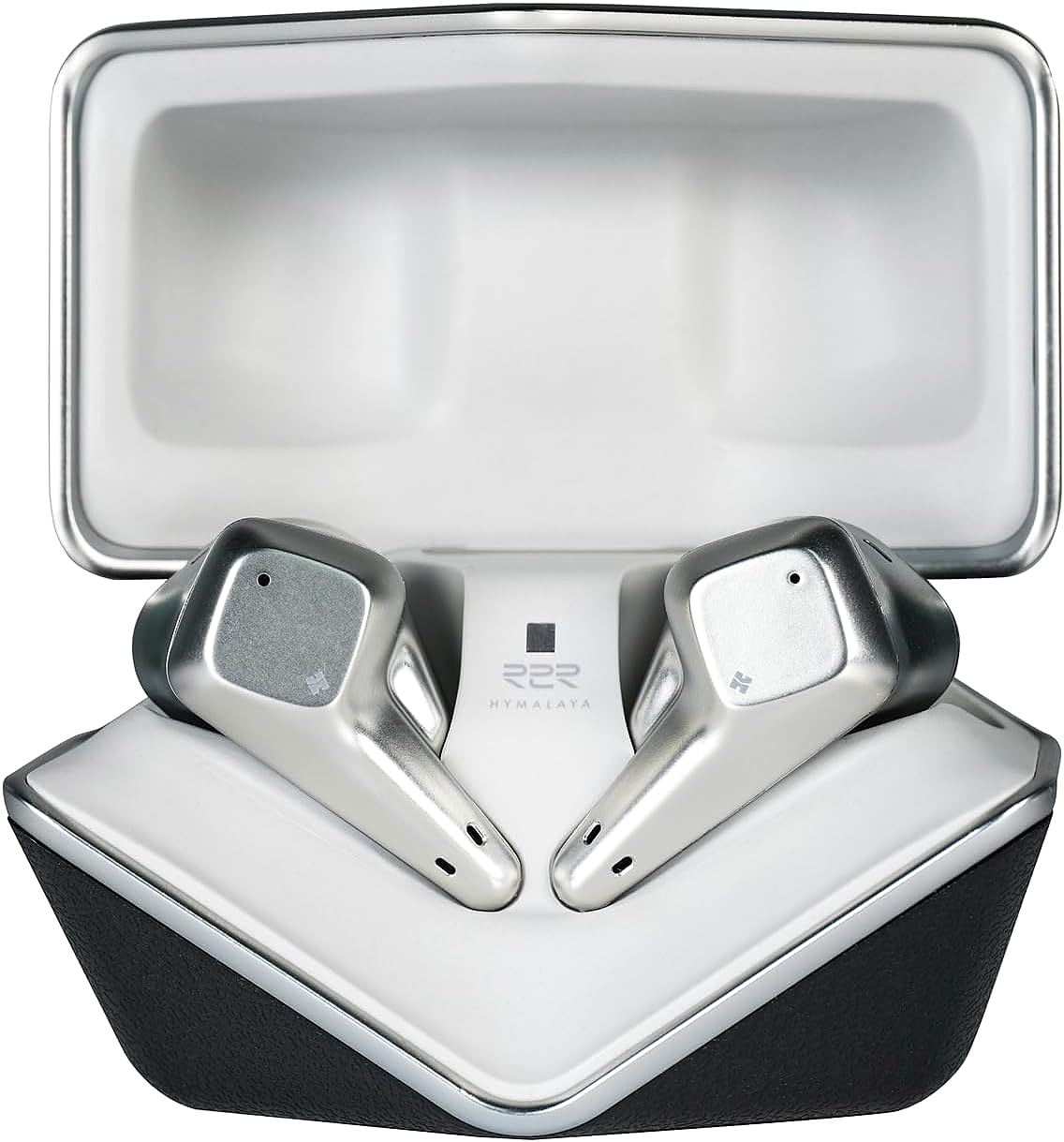
HIFIMAN SVANAR Wireless Noise Cancelling Bluetooth in-Ear Hi-Fi Earphones
Why Does Bluetooth Audio Inherently Degrade Signal Fidelity?
To understand the immense mechanical and computational hurdles of transmitting high-resolution audio over a wireless protocol, one must first confront the absolute limits of information theory. The transmission of digital audio from a host device to a wearable receiver is not a continuous, unbroken stream of music; it is the chaotic packaging, transmitting, and unpacking of discrete mathematical values across a highly congested spectrum of electromagnetic radiation.
According to the Nyquist-Shannon sampling theorem, accurately capturing an analog audio signal requires sampling it at a rate at least twice the highest frequency present in the signal. For standard uncompressed audio, this means sampling 44,100 times per second, with each sample containing 16 bits of data per channel (left and right). This yields a data rate of 1,411 kilobits per second (kbps). High-resolution audio, which captures a wider dynamic range and higher frequencies, often operates at 24-bit depth and 192,000 samples per second, requiring a staggering 9,216 kbps of bandwidth.
Bluetooth protocols operate within the 2.4 GHz Industrial, Scientific, and Medical (ISM) radio band. This spectrum is universally shared by Wi-Fi routers, microwave ovens, and countless other consumer electronics. Due to strict regulatory limits on transmission power and the inherent constraints of the Bluetooth protocol, the maximum theoretical bandwidth available for audio transmission falls drastically short of uncompressed requirements. Standard Bluetooth audio relies on the Subband Codec (SBC), which caps out around 328 kbps. To fit a 1,411 kbps stream into a 328 kbps pipe, the codec must ruthlessly discard data using psychoacoustic models, stripping away frequencies that the algorithm assumes the human ear cannot perceive. This lossy compression permanently destroys the acoustic spatial data, transient details, and harmonic decay of the original recording.
To bypass this bottleneck, advanced acoustic hardware integrates specialized, high-density codecs. The LDAC codec, engineered to push the absolute boundaries of Bluetooth bandwidth, operates at a maximum bitrate of 990 kbps. While still requiring compression to transmit high-resolution 24-bit/192kHz files, LDAC retains three times the data volume of standard SBC. However, pushing nearly a megabit of data per second across the congested 2.4 GHz spectrum introduces severe instability, a phenomenon that forces engineers to drastically rethink the internal processing architecture of the receiving earbuds. The challenge is no longer just receiving the data, but perfectly reconstructing the damaged digital waveform back into a pristine analog voltage before it reaches the acoustic transducer.
From Room-Sized Resistor Ladders to Millimeter Silicon
The digital-to-analog converter (DAC) is the fundamental arbiter of audio quality in any digital playback system. It is the component responsible for taking the binary code—the zeros and ones transmitted over Bluetooth—and translating it into the continuous analog voltage required to drive a physical speaker diaphragm. The history of this translation process reveals a cyclical return to foundational electrical engineering principles, driven by the relentless pursuit of signal purity.
The Delta-Sigma Domination
By the late 1990s, the audio industry had almost universally adopted Delta-Sigma modulation for digital-to-analog conversion. The appeal of Delta-Sigma lies in its manufacturing efficiency and cost-effectiveness, characteristics that eventually made it the default architecture for modern smartphones and true wireless (TWS) earbuds. A Delta-Sigma DAC does not convert a multi-bit digital word directly into an analog voltage. Instead, it relies on extreme oversampling. It takes the incoming 16-bit or 24-bit audio data and converts it into a 1-bit stream running at a massively high frequency (often millions of times per second).
This 1-bit stream represents the audio wave not through specific voltage levels, but through the density of ones and zeros—pulse-density modulation. To filter out the immense high-frequency noise generated by this rapid switching, the architecture relies on complex digital filters and noise-shaping algorithms. While mathematically brilliant and easily integrated into single-chip System-on-a-Chip (SoC) solutions used in 99% of wireless earbuds, Delta-Sigma conversion inherently relies on approximation and heavy algorithmic interference. Audiophile purists frequently argue that this heavy digital filtering introduces phase shifts and temporal smearing, resulting in a sound that is sterile, clinical, and stripped of natural analog warmth.
Resurrecting the R-2R Architecture
To achieve absolute signal integrity without the reliance on predictive noise shaping, engineers must look backward to a much older, significantly more difficult methodology: the R-2R Resistor Ladder.
An R-2R DAC is an exercise in brute-force electrical physics. It consists of a physical array of resistors arranged in a ladder-like configuration, utilizing only two resistor values ($R$ and $2R$). When a 24-bit digital word is received, each of the 24 bits triggers a specific switch connected to a specific rung of this resistor ladder. The most significant bit (MSB) controls the largest voltage output, while the least significant bit (LSB) controls the smallest fraction of voltage. The electrical current flows through these active resistors, summing together instantly to produce the exact analog voltage required for that specific microsecond of audio.
There is no oversampling, no noise shaping, and no algorithmic approximation. It is a direct, one-to-one translation of binary code into electrical current. However, implementing an R-2R ladder requires terrifying manufacturing precision. If the resistor responsible for the MSB is off by even a fraction of a percent due to thermal variance or manufacturing tolerance, its error will completely overshadow the delicate voltage contributions of the lower bits, resulting in severe non-linear distortion.
Historically, achieving the necessary 0.001% resistor tolerances required massive, discrete components, confining R-2R DACs to heavy desktop amplifiers costing thousands of dollars. The implementation of this architecture within a wearable chassis requires lithographic manufacturing techniques to print microscopic, hyper-precise resistor arrays directly onto silicon. The HIFIMAN SVANAR Wireless utilizes this exact approach with its proprietary "Hymalaya" DAC. By successfully shrinking an R-2R ladder to fit within the restrictive physical envelope of an 8-gram in-ear monitor, the system bypasses the algorithmic limitations of standard TWS chipsets, generating an analog signal of staggering purity entirely independent of the host device's processing capabilities.
The Trampoline Effect and Nanoparticle Control
Once the analog electrical signal is perfectly reconstructed by the DAC and amplified, it must be converted into physical kinetic energy. This is achieved via the dynamic driver, a mechanism consisting of a voice coil suspended in a magnetic field, attached to a thin, flexible membrane known as a diaphragm. As the alternating audio current flows through the coil, it creates an oscillating magnetic field that pushes and pulls against a permanent magnet, forcing the attached diaphragm to vibrate and displace air.
Ideally, the diaphragm should operate as a perfect piston—a completely rigid surface moving back and forth uniformly across its entire diameter. In reality, physical materials are subject to the laws of elasticity and mass.
Imagine a large, circular trampoline. If you press down perfectly in the dead center, the entire mat depresses evenly. However, if you strike the center of the trampoline at high velocity, waves of kinetic energy ripple outward toward the edges, reflect off the springs, and crash back into the center. The surface of the trampoline begins to warp, creating complex, chaotic undulations where some parts of the fabric are moving upward while other parts are moving downward.
In acoustics, this is known as "modal breakup." When a driver diaphragm is tasked with reproducing high-frequency sounds—vibrating thousands of times per second—the material cannot maintain structural rigidity. The outer edges of the diaphragm begin to vibrate out of phase with the center. This chaotic flexing generates severe acoustic distortion, introducing harsh, resonant peaks and muddying the separation of distinct instruments.
Standard wireless earbuds attempt to mitigate this by utilizing stiffer materials like titanium-coated mylar or beryllium. While these materials push the threshold of modal breakup to higher frequencies, they do not eliminate it.
An alternative engineering approach involves directly intervening in the geometric flexibility of the diaphragm surface. The "Topology Diaphragm" design applies specific, geometric patterns of nanomaterials directly onto the surface of the driver. By utilizing vacuum deposition to apply microscopic layers of varying densities and stiffnesses in precise shapes—such as concentric rings or starbursts—engineers can selectively alter the Young's modulus (stiffness) across different zones of the membrane.
Instead of relying on a uniform sheet of material, the nanoparticle coating acts as a complex damping network. When high-frequency kinetic energy ripples across the diaphragm, the varying structural densities disrupt the standing waves, absorbing resonant energy and preventing the chaotic flexing of modal breakup. This strategic geometric reinforcement forces the diaphragm to behave more closely to the theoretical perfect piston, yielding a transient response and acoustic clarity that bare polymers cannot physically replicate.
Audiophile Hardware vs. Human Ergonomics
The integration of discrete, desktop-grade audio architecture into a wearable chassis introduces a severe conflict between acoustic engineering and human biology. The laws of thermodynamics and energy storage strictly penalize manufacturers who refuse to compromise on signal fidelity. When evaluating high-fidelity wireless platforms, the resulting physical specifications reveal the direct cost of uncompressed audio processing.
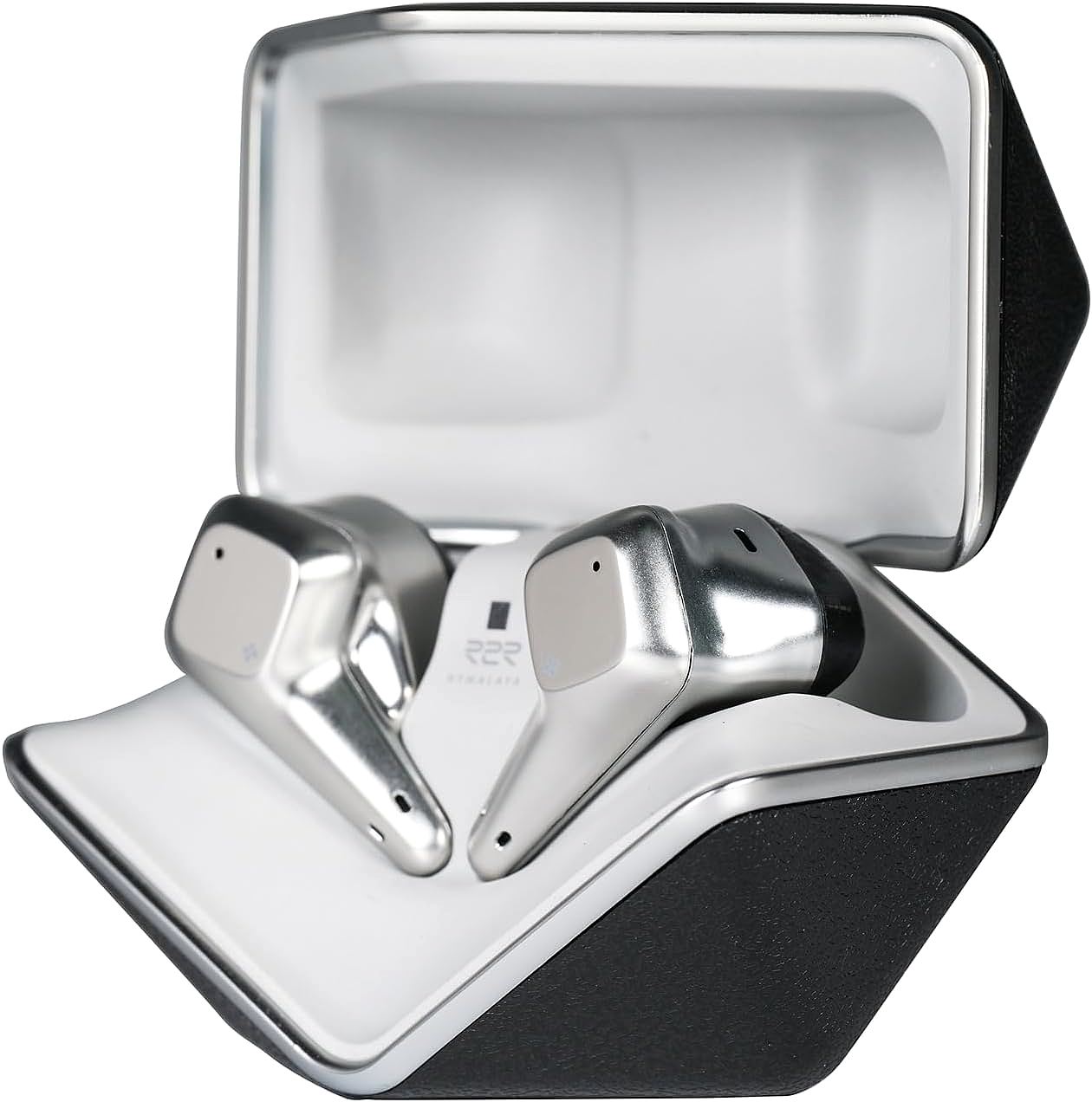
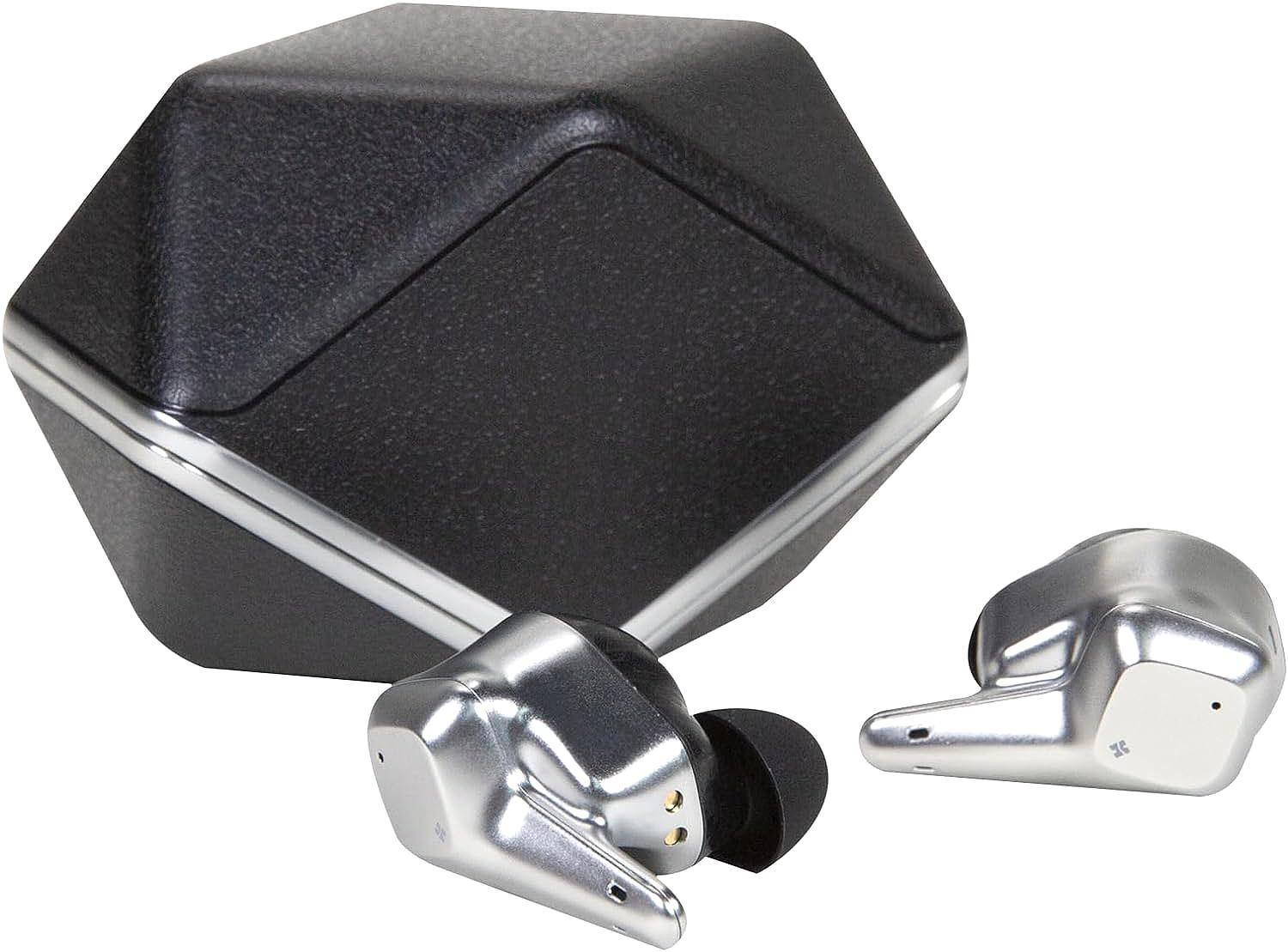
- Volumetric Mass: A standard TWS earbud utilizes a highly integrated System-on-a-Chip (SoC). This single millimeter-scale silicon die handles the Bluetooth reception, digital-to-analog conversion, and signal amplification simultaneously. The SVANAR Wireless rejects this integration, requiring separate physical footprints for the Bluetooth transceiver, the discrete Hymalaya R2R DAC, and the dedicated headphone amplifier. This vastly increases the internal component volume, resulting in an earbud housing that weighs 8 grams per unit. While 8 grams appears statistically negligible, when cantilevered outside the human ear canal, it generates significant leverage and rotational torque, accelerating user fatigue and requiring specialized ergonomic curves to lock the unit into the concha of the ear.
- Thermal Dissipation: Unlike highly efficient Class-D amplifiers found in standard earbuds, audiophile-grade amplification and discrete R-2R ladders draw significantly higher electrical current. The first law of thermodynamics dictates that this increased power consumption yields an equal increase in waste heat. The internal chassis of the earbud must be engineered to dissipate this thermal load away from the lithium-polymer battery to prevent thermal runaway, further necessitating a larger, more robust physical housing.
- The Energy Budget Deficit: The most unforgiving constraint in wearable technology is energy density. An earbud can only hold a battery of a specific physical dimension. The relentless processing power required to decode a 990 kbps LDAC stream, operate a discrete resistor ladder array, power a high-output amplifier, and run active noise cancellation algorithms drains energy at an accelerated rate. Consequently, operating the system in its uncompromised "Hi-Fi Mode" restricts continuous playback to a mere 4 hours.
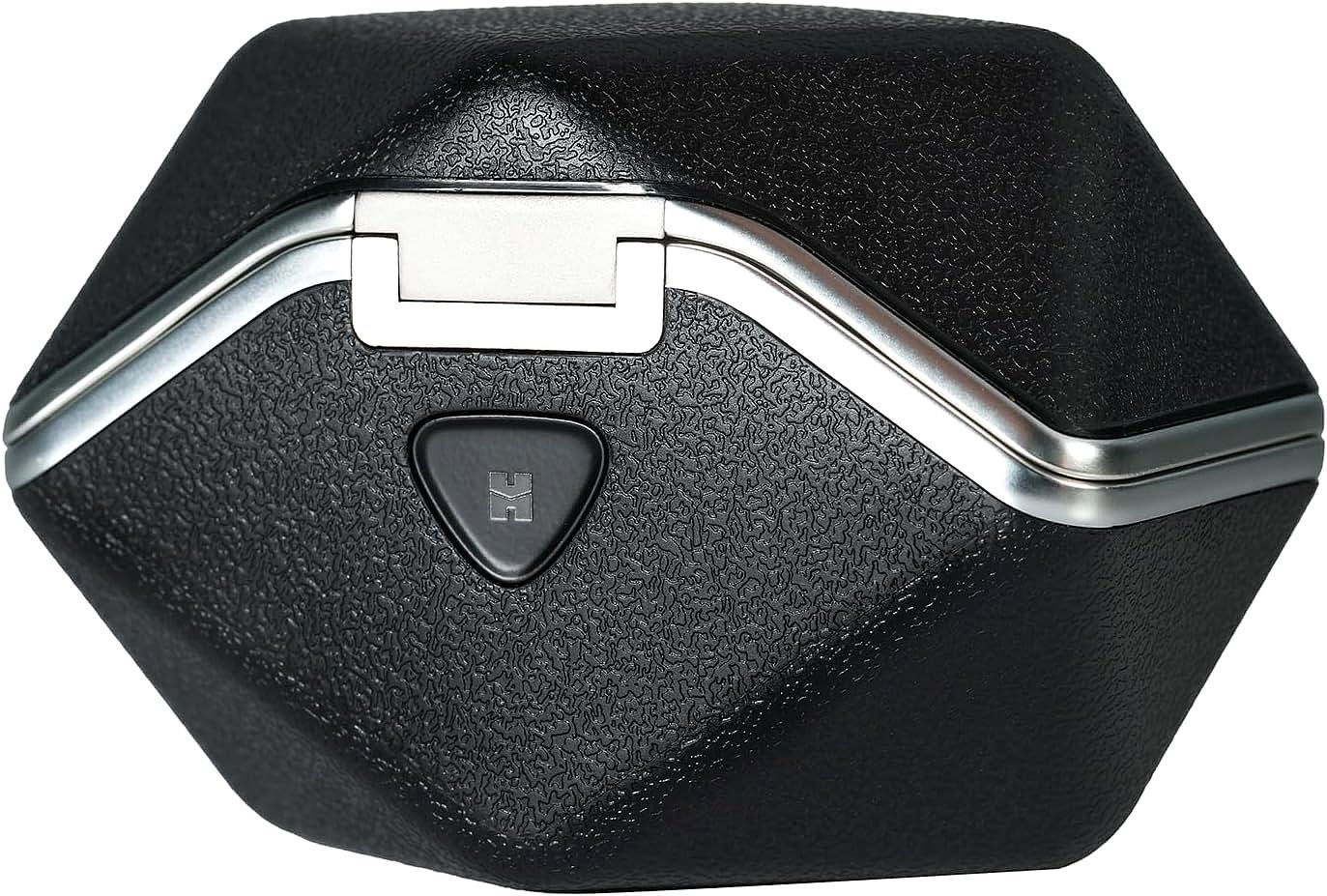
To offset this severe energy deficit, the auxiliary charging case must be oversized to house a much larger lithium-ion reservoir. The resulting 83.7g charging case is substantially bulkier than standard consumer counterparts, proving that true acoustic fidelity remains heavily tethered to the physical limitations of current chemical battery technology.
When 990 kbps Collides with Urban Radio Frequency Interference
The theoretical capabilities of an audio protocol frequently clash with the brutal realities of environmental signal propagation. The deployment of high-density codecs like LDAC is predicated on the assumption of a clean, uninterrupted transmission corridor between the host device and the receiver. In application, this ideal environment rarely exists.
Bluetooth telemetry utilizes the 2.4 GHz ISM band, dividing the spectrum into 79 channels spaced 1 MHz apart. To mitigate interference, devices employ Frequency-Hopping Spread Spectrum (FHSS), rapidly switching between these channels hundreds of times per second.
When transmitting a standard 328 kbps audio stream, the data packets are relatively small. If the earbuds hop onto a channel temporarily jammed by a passing Wi-Fi router or a microwave emission, the packets are corrupted, but the low data density allows the system's error-correction algorithms to request retransmission on the next clean hop without interrupting the playback buffer. The user hears continuous music, entirely unaware of the background packet loss.
However, when an operator activates the 990 kbps LDAC protocol to fully saturate a discrete R2R DAC, the telemetry dynamics become highly volatile. The data packets are massive, requiring almost the entire available bandwidth of the Bluetooth connection.
When a user wearing such a device walks through an urban environment—such as a subway station or a dense office building—the ambient 2.4 GHz spectrum is heavily polluted. The earbuds inevitably hop onto congested channels. Because the LDAC data packets are so large, the system's internal buffer cannot hold enough reserve audio to cover the delay caused by packet corruption and retransmission.
This results in the exact failure modes frequently cited in technical user logs: stuttering, rapid disconnections, and audible digital "glitches" as the device drops the connection and initiates a frantic handshake to re-establish the link. To prevent total signal failure, the LDAC algorithm is forced to dynamically step down its bitrate. It will autonomously throttle the transmission from 990 kbps down to 660 kbps, and eventually down to 330 kbps, to maintain stability. Therefore, achieving the advertised 24-bit/192kHz high-definition listening experience is not merely a matter of hardware capability; it requires the user to remain in a highly controlled, radio-frequency-sterile environment, strictly limiting the practical mobility of the "wireless" device.
Reversing Acoustic Waves to Isolate the Tympanic Membrane
The pursuit of absolute audio fidelity is entirely pointless if the pristine analog signal is masked by the chaotic low-frequency rumble of a jet engine or an urban commute. To isolate the human tympanic membrane (eardrum) from environmental interference, advanced acoustic platforms deploy Active Noise Cancellation (ANC), a process that relies on the precise mathematical manipulation of longitudinal pressure waves.
Sound is not a physical object; it is a mechanical wave of high and low pressure propagating through a medium (air). When a low-frequency sound wave—such as the hum of an HVAC system—approaches the listener, it carries a specific amplitude and phase.
Passive isolation, achieved by sealing the ear canal with dense silicone or memory foam, is highly effective at blocking high-frequency noise (like voices or typing) because high-frequency waves lack the energy to penetrate dense physical barriers. However, low-frequency waves possess immense kinetic energy and long wavelengths. They pass directly through silicone, plastic, and human tissue, vibrating the eardrum and destroying the perceived dynamic range of the music.
Active Noise Cancellation relies on the principle of destructive interference. The earbud utilizes exterior feed-forward microphones to constantly sample the incoming environmental acoustic waves. This analog pressure data is converted into a digital signal and fed into a dedicated Digital Signal Processor (DSP).
The DSP analyzes the frequency and phase of the incoming noise. Operating in fractions of a millisecond, the processor generates a secondary acoustic wave that is the exact mirror image of the offending noise—an anti-phase signal. If the ambient noise wave reaches a high-pressure peak, the DSP commands the internal dynamic driver to output a corresponding low-pressure trough of the exact same amplitude.
When these two opposing waves collide within the physical space of the ear canal, their pressure differentials mathematically cancel each other out, effectively erasing the ambient sound before it reaches the eardrum. Achieving a reduction of up to -35dB requires extraordinary computational speed. If the DSP lags by even a millisecond, the anti-phase wave will not align perfectly with the incoming noise wave. Instead of destructive interference, the misalignment can cause constructive interference, accidentally amplifying the background noise and inducing severe nausea or vertigo in the user.
Why Heavier Earpieces Actually Require Larger Acoustic Vents
The Physics of the Occlusion Effect
The mechanical design of an in-ear monitor dictates far more than just comfort; it fundamentally governs the acoustic impedance of the ear canal. When a user inserts an earbud deeply and achieves a hermetic seal using a silicone or foam tip, they create a closed acoustic chamber between the driver diaphragm and the eardrum.
While this seal is necessary for maximizing bass response and passive noise isolation, it triggers a severe biological consequence known as the occlusion effect. Human bone and tissue are excellent conductors of low-frequency vibrations. When you speak, chew, or walk, low-frequency vibrations travel through your jawbone directly into the ear canal. Normally, these pressure waves escape out the open ear. However, when the ear canal is plugged by a dense, 8-gram earbud, the low-frequency pressure is trapped. It bounces off the earbud and reflects violently back against the eardrum.
This causes the user to hear their own footsteps as booming, concussive thuds, and their own voice as a muffled, overwhelming echo. This biomechanical feedback loop destroys the acoustic transparency of the audio presentation and induces severe listener fatigue.
Engineering the Controlled Leak
To neutralize the occlusion effect while maintaining the necessary acoustic seal, engineers must design calibrated acoustic vents. These vents are microscopic ports drilled through the exterior shell of the earbud, connecting the sealed internal ear canal chamber to the outside atmosphere.
Venting an earbud introduces a perilous fluid dynamics puzzle. If the vent is too large, the low-frequency pressure generated by the dynamic driver will escape into the room instead of traveling to the eardrum, resulting in an anemic, bass-deficient sound. If the vent is too small, it fails to relieve the trapped biological pressure, leaving the occlusion effect unchecked.
The integration of advanced materials, such as the carbon fiber components observed in high-end chassis designs, complicates this venting. Carbon fiber provides extreme structural rigidity, preventing the shell of the earbud from flexing and absorbing acoustic energy. Because the shell refuses to yield, all internal pressure must be managed exclusively through the engineered vents.
Furthermore, these vents must be heavily defended. To achieve an IPX5 water-resistance rating—certifying survival against sustained, low-pressure water jets—the acoustic vents must be lined with hydrophobic polytetrafluoroethylene (PTFE) meshes. These micro-porous membranes allow air pressure to pass through, equalizing the barometric load, while utilizing high surface tension to physically repel liquid water molecules.
The Spatial Logistics of the Charging Vault
The requirement for physical comfort dictates that the earbud itself must remain as ergonomic as possible, pushing logistical burdens onto the secondary charging case. The charging case is not merely a battery reservoir; it is a critical component of the user's acoustic workflow.
Audiophiles frequently reject stock silicone eartips in favor of aftermarket, oversized memory foam or multi-flange silicone tips to guarantee a perfect seal in asymmetrical ear canals. In standard TWS systems, the charging case cavities are molded to exact tolerances based on the factory-supplied tips. When a user installs a larger, custom tip, the earbud will no longer physically fit into the charging cradle. The user is forced to strip the silicone tips off the earbud every single time they need to charge the battery, accelerating the mechanical degradation of the nozzle lip and infuriating the operator.
Anticipating this mechanical friction, intelligent case architecture intentionally expands the internal volume of the charging bays. By increasing the spatial clearance around the nozzle shafts, the case accommodates oversized and third-party acoustic seals. This seemingly minor volumetric increase eliminates a repetitive, frustrating mechanical task, ensuring that the precision acoustic seal remains permanently seated on the driver nozzle, protecting the delicate internal acoustic filters from unnecessary physical handling and environmental contamination.
As wireless audio continues to evolve, the distinction between convenience and fidelity is narrowing. The miniaturization of complex analog architectures—such as discrete resistor ladders and nanoparticle-doped diaphragms—proves that the boundaries of wearable acoustics are defined only by our ability to manage thermal dissipation and power density. The future of mobile audio relies entirely on successfully shrinking the physics of the listening room into the confines of the human ear canal.
HIFIMAN SVANAR Wireless Noise Cancelling Bluetooth in-Ear Hi-Fi Earphones
Related Essays

5 Costly Mistakes People Make When Buying Noise Cancelling...

KENKUO K68 Wireless Gaming Earbuds: Immerse Yourself with ANC & Low Latency
OnePlus Nord Buds 2 - Affordable ANC Earbuds
Google Announces Pixel Buds Pro: A Premium In-Ear Truly Wireless Earbuds with Active Noise Cancellation

The Physics of Silence: How Active Noise Cancellation Works

The Physics of Silence: Decoding 30dB Reduction and...

Jabra Elite 7 Active: The Science of Secure Fit and Immersive Sound for Your Active Life

Skullcandy Indy ANC Earbuds: The Science of Immersive Sound and Personalized Audio

Sony WF-1000XM3: Unpacking the Science of Early True Wireless Noise Cancellation
