The Neckband Renaissance: Engineering Comfort and Fidelity in the Wireless Age
Update on Dec. 31, 2025, 6:22 p.m.
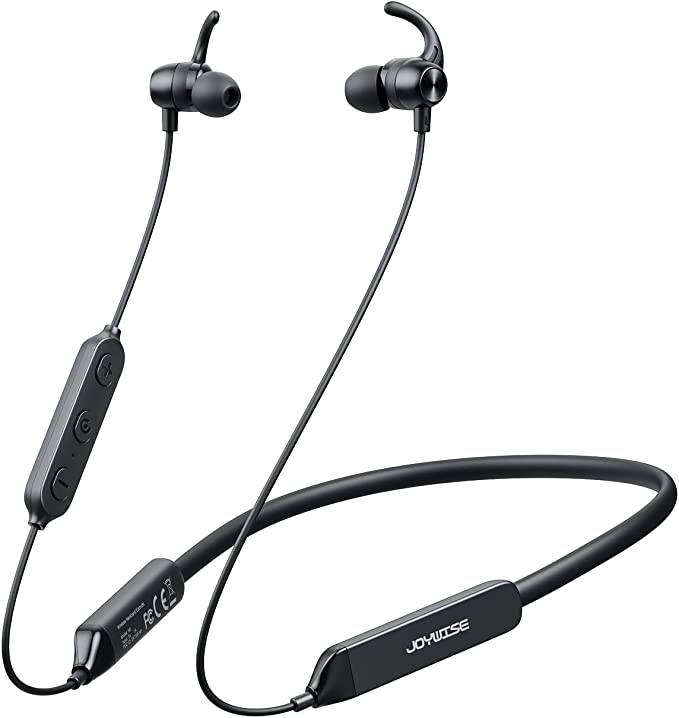
In the rapid evolution of personal audio, the trajectory seemed linear: from tangled wires to bulky wireless cans, and finally to the minuscule, independent earbuds that now dominate the market. Yet, amidst the saturation of True Wireless Stereo (TWS) devices, a distinct form factor has not only survived but thrived among discerning users: the wireless neckband. This persistence is not a matter of nostalgia but of engineering necessity. For the user who demands all-day connectivity, uncompromised battery life, and superior acoustic physics, the neckband represents a “golden mean”—a design philosophy that balances the freedom of wireless with the stability of a tethered system.
The resurgence of interest in devices like the Philips PN505 Wireless Neckband Headphones highlights this trend. While the market floods with disposable compact buds, the neckband form factor offers a permanence and reliability that appeals to the “always-on” professional. This article delves deep into the structural and acoustic advantages of this design, exploring why placing the technology around your neck—rather than squeezing it all into your ear canal—remains a superior solution for fidelity and endurance.
The Ergonomics of Endurance: Why the Neckband Persists
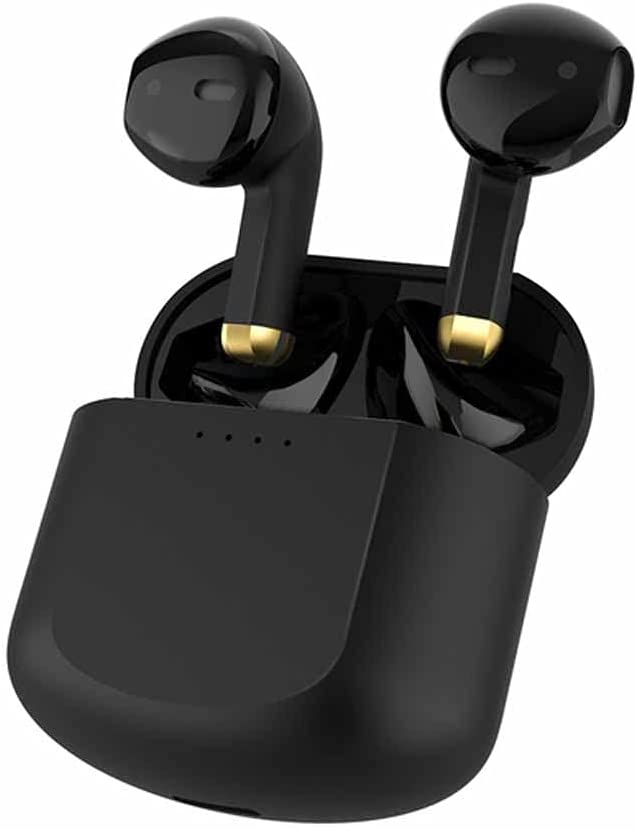
To understand the value of the neckband, we must first analyze the constraints of the human ear. The ear canal is sensitive, and the outer ear (pinna) has limited load-bearing capacity. TWS earbuds force the battery, antenna, digital-to-analog converter (DAC), amplifier, and driver all into a capsule that must hang precariously from the ear itself. This creates an inevitable trade-off: increase battery life, and you increase weight and discomfort; reduce weight, and you sacrifice longevity or audio quality.
The Physics of Weight Distribution
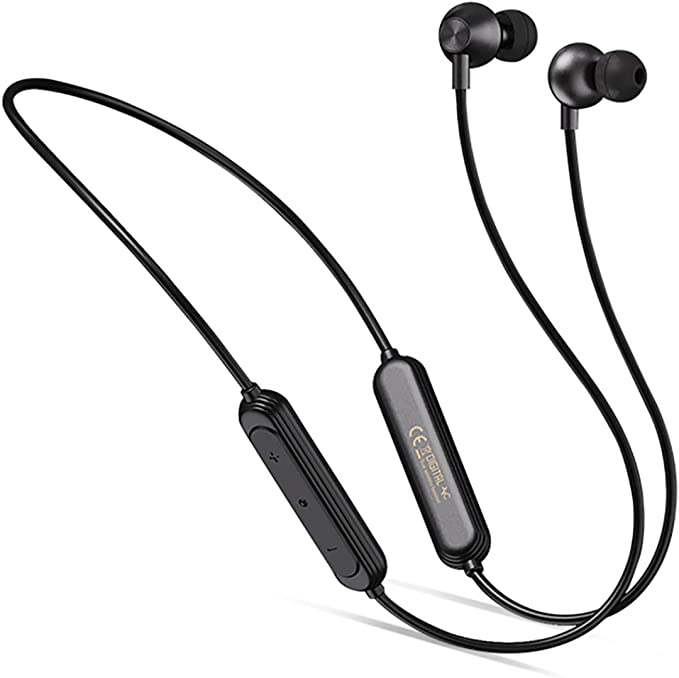
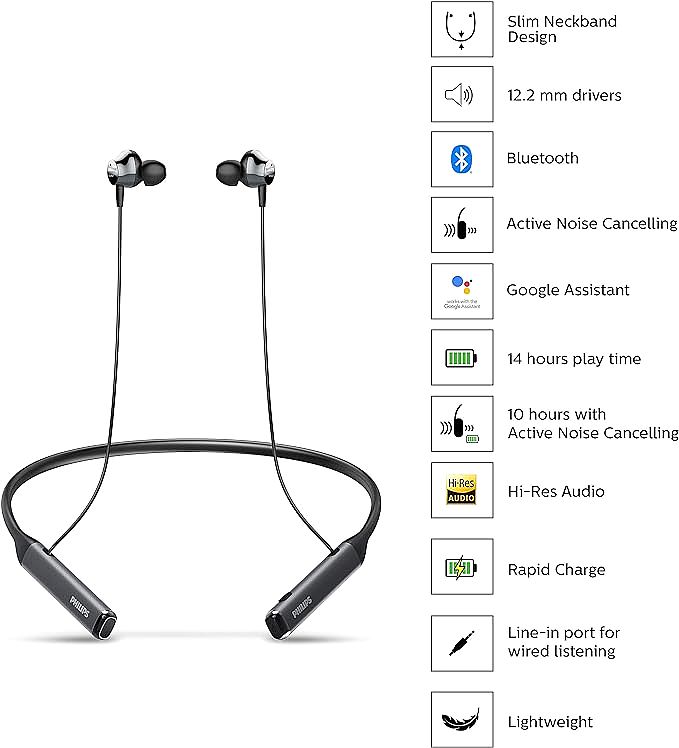
The neckband solves this fundamental engineering conflict by shifting the “heavy lifting” components—specifically the battery and the connectivity chipset—away from the ear and onto the shoulders. The neck, supported by the trapezius muscles and the clavicle, can comfortably support significantly more mass than the ear canal without fatigue. In models like the Philips PN505, this “slender and lightweight neckband design” allows for a larger battery capacity—delivering up to 14 hours of play time—without the user feeling the burden.
The result is a sensation of weightlessness at the point of insertion. The earbuds themselves need only house the acoustic drivers, making them smaller and less intrusive. This separation of powers—ergonomics on the neck, acoustics in the ear—allows for long-duration wearability that bulky TWS buds simply cannot match. For the traveler on a transcontinental flight or the commuter navigating a two-hour train ride, this difference is not just a spec sheet detail; it is the difference between physical irritation and immersive comfort.
The Psychology of “Always-On” Connectivity
Beyond pure physics, there is a behavioral dimension to the neckband’s appeal. TWS earbuds present a binary state of existence: they are either in your ears, blocking the world, or they are in their charging case, disconnected and inaccessible. To take a brief conversation, one must remove a bud, hold it, or pocket it, risking loss or damage.
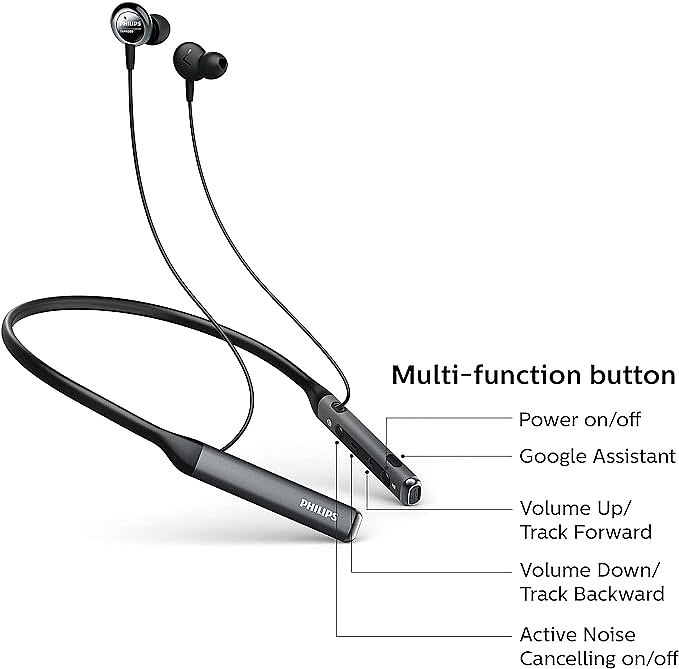
The neckband introduces a third state: “Ready.” When not in use, the earbuds hang magnetically or naturally around the neck, instantly accessible yet completely out of the way. This “Availability Mode” fundamentally changes how users interact with technology. It reduces the cognitive load of managing small objects. Features like the vibrating neckband found in the PN505 further enhance this. You don’t need the buds in your ears to know a call is coming in; the device taps you on the shoulder. This tactile feedback loop creates a seamless integration between the user and their digital life, a level of symbiosis that case-bound earbuds struggle to replicate.
Acoustic Authority: The Advantage of 12.2mm Drivers
In the world of audio engineering, size often dictates potential. While digital signal processing (DSP) can perform miracles, the laws of physics still govern sound wave propagation. Sound is essentially the movement of air, and moving air requires a surface area—the diaphragm of the driver.
The Displacement Factor
Most compact wireless earbuds are forced to use micro-drivers, typically ranging from 6mm to 9mm in diameter. While capable, these small drivers must work incredibly hard to reproduce low frequencies (bass), which require significant air displacement. This often leads to distortion at high volumes or a reliance on artificial bass boosting that muddies the mid-range frequencies where vocals reside.
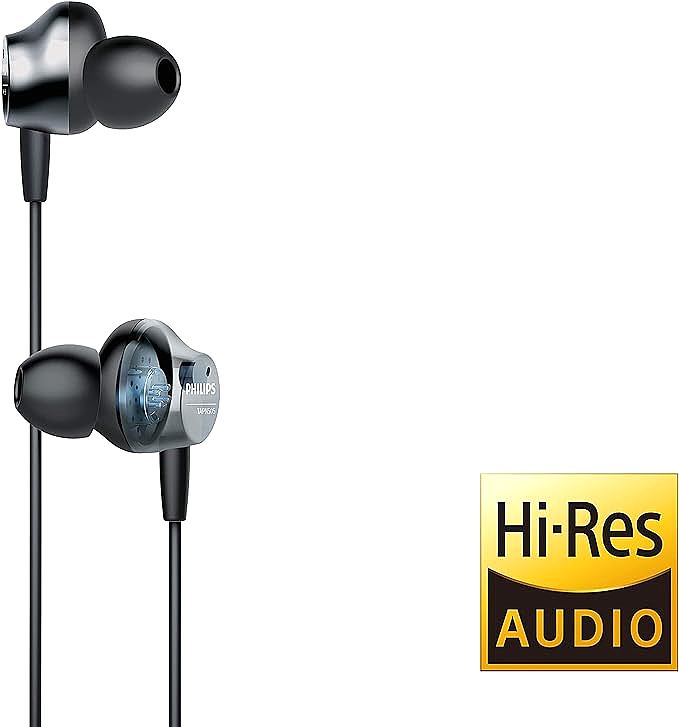
The neckband form factor removes the strict size constraints on the earbud housing. The Philips PN505 utilizes 12.2 mm neodymium acoustic drivers. This increase in diameter—nearly double that of many TWS competitors—allows for a naturally richer, more authoritative sound signature. A larger diaphragm can move more air with less excursion (movement distance), resulting in cleaner, tighter bass and a more effortless dynamic range. This “detailed sound and powerful bass” is not just a marketing slogan; it is the direct result of having the physical real estate to house a larger engine for the sound.
Neodymium and Transient Response
The material choice of the magnet—neodymium—is critical in driving these larger diaphragms. Neodymium is a rare-earth element that creates the strongest permanent magnetic fields per unit of volume. A strong magnetic flux ensures that the voice coil can control the diaphragm with extreme precision, starting and stopping its movement instantly. This property, known as transient response, is what gives music its “snap” and clarity. It allows the listener to distinguish the sharp crack of a snare drum or the subtle pluck of a guitar string. In a larger driver, this control is even more vital to prevent the sound from becoming “boomy” or loose.
The Hybrid Paradigm: Wireless Freedom vs. Hi-Res Fidelity
We live in a transitional era of audio. While wireless convenience is paramount, the audiophile community rightly points out that Bluetooth codecs, even advanced ones, involve compression that discards data. “Lossless” wireless is the holy grail, but physics currently imposes bandwidth limitations on standard Bluetooth connections.
Bridging the Gap
The Philips PN505 addresses this by adopting a hybrid philosophy. It operates as a sophisticated Bluetooth 5.0 device for the majority of daily tasks—commuting, calls, casual listening. However, it retains a feature that has all but vanished from modern portable audio: Hi-Res Audio readiness via a 3.5mm cable.
This capability is significant. By allowing a wired connection, the headphones bypass the Bluetooth compression bottleneck entirely. When connected to a high-quality DAC or a Hi-Res player, the headphones can reproduce frequencies up to 40 kHz, far beyond the 20 kHz limit of standard hearing and standard Bluetooth transmission. This “ultrasonic” extension, while inaudible as a distinct tone, contributes to the perception of “air,” transient speed, and the harmonic structure of instruments. This dual nature makes the device a versatile tool: a convenient wireless companion for the subway, and a high-fidelity monitor for the quiet of the study.
The Science of Silence: Active Noise Canceling (ANC) Implementation
Active Noise Canceling is no longer a luxury; it is a health and productivity necessity in our noise-polluted cities. However, the effectiveness of ANC depends heavily on the stability of the platform it is built upon.
Phase Cancellation and Consistency
The core principle of ANC is destructive interference: generating a sound wave that is the exact inverse phase of the background noise. For this to work effectively, the system needs a consistent seal and stable microphone placement. TWS earbuds, which can shift in the ear canal as the jaw moves or the user walks, often suffer from “leakage,” where the noise seal breaks, confusing the ANC algorithm and causing artifacts or sudden jumps in volume.
The neckband design of the PN505 provides a more stable anchor. The cable running from the neckband to the ear absorbs much of the mechanical shock of walking, keeping the earbud seal secure. Furthermore, the larger battery capacity of the neckband allows for more powerful processing of the ANC algorithms without draining the device in a few hours. The result is a more consistent “cone of silence” that shuts out the drone of a train or the hum of an HVAC system.
Crucially, the integration of Awareness Mode acknowledges the reality of urban environments. By inverting the microphone logic—amplifying external sound instead of cancelling it—users can maintain situational awareness without removing the device. This toggle between isolation and connection is the hallmark of modern intelligent audio.

Connectivity and the Professional Workflow
In a professional context, reliability trumps novelty. A dropped connection during a conference call is unacceptable. The neckband form factor excels here due to antenna physics. The larger chassis allows for a larger, more optimally placed Bluetooth antenna compared to the cramped confines of a TWS bud.
Signal Stability and Clarity
With Bluetooth 5.0, the theoretical range and data throughput are significantly improved over previous generations. The PN505 leverages this for “Smart pairing,” automatically reconnecting to the last device. But the real professional advantage lies in the microphone array.
In a TWS earbud, the microphone is located at the ear, far from the mouth. To pick up voice, it must use aggressive beamforming algorithms that often result in a robotic, processed voice quality. On a neckband like the PN505, the microphone controls are often located on the cable or the collar, physically closer to the sound source (the mouth) and isolated from the ear. Combined with echo cancellation technology, this physical advantage results in clearer, more natural voice transmission. For the remote worker or the road warrior, this clarity is a non-negotiable asset.
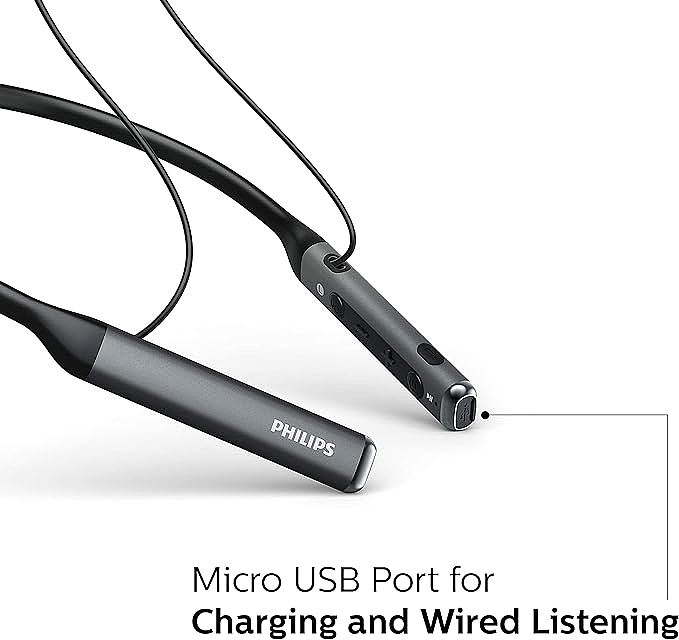
Furthermore, the inclusion of rapid charging—where 5 minutes of charge yields 2 hours of playback—addresses the critical failure point of wireless tech: dead batteries. While the industry is moving towards USB-C, the presence of legacy Micro-USB ports on devices like this reflects the transitional period of technology, reminding us that the utility of a feature (fast charging) often outweighs the convenience of the connector type in the short term.
Conclusion: The Timeless Utility of the Neckband
Trends in consumer electronics are often cyclical. As the novelty of “truly wireless” begins to fade, users are rediscovering the pragmatic benefits of the tethered design. The neckband form factor is not a stepping stone to TWS; it is a parallel evolution that prioritizes battery life, driver size, and connection stability over sheer minimalism.
The Philips PN505 exemplifies this enduring appeal. By combining the immersive isolation of Active Noise Canceling with the acoustic authority of 12.2mm drivers and the versatility of Hi-Res wired listening, it offers a comprehensive audio solution. It acknowledges that for many, headphones are not just accessories but essential tools for navigating the sonic landscape of modern life. Whether for the deep focus required in a busy office or the high-fidelity enjoyment of a symphony at home, the neckband stands as a testament to the idea that sometimes, a little more physical substance yields a lot more performance.