The Ear-Clip Niche: Comfort-First vs Sound-First Design


Audio Technica ATH-EQ300M SV Ear-Fit Headphones
In a market saturated with noise-canceling headbands and deep-insertion wireless earbuds, there exists a small, forgotten, and fiercely loyal niche: the wired, ear-clip headphone.
At first glance, a product like the Audio Technica ATH-EQ300M SV Ear-Fit Headphones seems like a fossil. It's wired, costs about $15, and features a design that's a relic of the early 2000s. Yet, it has over 3,200 reviews and holds a 4.2-star score. This enduring popularity among buyers searching for reliable ear clip headphones wired speaks volumes about the category's untapped value.
Why? Because it solves, with elegant simplicity, the two fundamental problems that modern headphones have created: pain and isolation.
For a growing number of users, in-ear earbuds hurt. "I'm not usually a fan of earbuds since they usually hurt my ears," one reviewer states. For others, "designed for sleep" headphones "are useless" and "crush my ears" (Aliza). This is precisely why ear clip headphones wired options have carved out a dedicated following--they sit outside the ear entirely, eliminating the pain point that drives millions away from traditional designs.
This is the ear-clip's blue ocean. Among the various clip-on headphones on the market, wired models stand apart for their reliability, zero-latency sound, and budget-friendly pricing. This isn't a "review" but a "decoder" for this specific category, and the critical choice that 3,200+ reviews have revealed: the battle between this model and its primary rival, the $20 clip that reviewers keep naming.
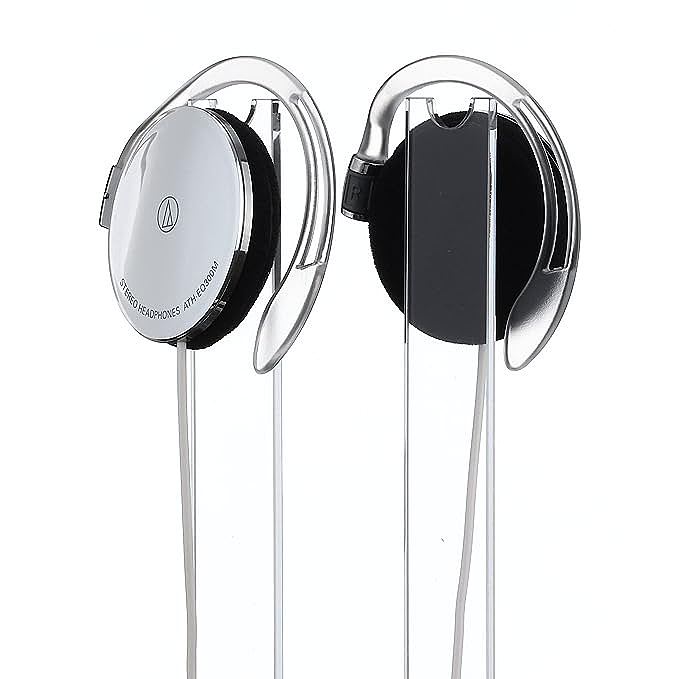
The First Principle: Why Open-Ear Physics Makes Bass Disappear
Let's be clear: if you are a sound-focused listener looking for deep, resonant bass and a wide soundstage, this is not your headphone. User reviews are blunt: "Los bajos estan casi ausentes" (Bass is almost absent), and "sound fidelity poor."
This is not a flaw in the driver; it's the intended outcome of the physics. * The Design: The ear clip is an open, on-ear design. It rests gently on the ear and does not create a seal. * The Physics: Bass frequencies are pressure waves. Without a sealed chamber (like an in-ear bud or a closed-back headphone), that low-frequency pressure simply dissipates into the air. * The Proof: One Japanese reviewer (a Japanese reviewer known as Reiho) discovered this first principle by accident: "If you press the earphone firmly against your ear, you can hear the bass clearly and are surprised by the unexpectedly good sound quality."
This lack of seal is the entire point. It is the engineering trade-off for its two greatest features:
- Situational Awareness: A sealed-off earbud is dangerous for an athlete. The ear clip is a favorite for this exact reason. One user ("YakuzaGuy") praised it as "super nice while biking because I can hear the music, hear my surroundings, [and] don't have to worry about it falling off."
- Comfort: A sealed ear canal can become painful, hot, and irritated. This open design allows the ear to "breathe," which is why it receives a 4.3/5 for comfort.

Comfort-First vs Sound-First: Picking Between the Two Ear-Clip Rivals
The 3,200+ reviews for the ear clip repeatedly mention one other product, and one user ("LC A") put it plainly about the rival. As one user ("LC A") put it, the rival "cuestan 5 dolares mas, pero su sonido es un millon de veces superior" (costs 5 dollars more, but its sound is a million times superior).
By 2026, the clip-on earbud shelf is dominated by wireless models; the Sony LinkBuds Clip, Baseus Bowie MC2, and QCY Crossky C50 are the names review roundups repeat most, and most of their makers now pitch comfort and decent sound as a hybrid. The $15 wired ear clip is a deliberate counterpoint: no battery, no latency, no firmware updates, and a price far below those wireless sets.
This reveals a fascinating split in design philosophy. Both are cheap, wired, clip-on headphones. But they are engineered for different priorities.
| Feature | The clip | Koss KSC-75 |
|---|---|---|
| Price | ~$15 | ~$20 |
| Weight | 33g (1.16 oz) | 28g (0.99 oz) |
| Driver | 8mm dynamic | 8mm dynamic |
| Frequency Response | 200Hz - 20kHz | 20Hz - 20kHz |
| Impedance | 42 ohms | 65 ohms |
| Cable Length | 1.2m (asymmetrical) | 1.5m (symmetrical) |
| Best For | Comfort, aesthetics, sleep | Sound fidelity, sound-focused listening |
These two models represent the extremes of the category's design spectrum.
Both models share the same fundamental wired ear clip design philosophy: no batteries, no Bluetooth latency, no in-ear pressure. The difference lies in execution priorities.
The rival clip is for the Audiophile.
For buyers shopping for budget sound-focused headphones under $25, the rival is the perennial reference point.
* Pro: It is legendary for providing a clear, detailed, high-fidelity, sound-focused sound that rivals headphones costing ten times as much.
* Con: It looks like a 1980s hearing aid. Its foam pads "deteriorate after a year or so," and its metal clips, while soft, are clunky.
This model is for the Pragmatist and the Stylist.
It concedes the sound battle to its rival. Its victory is in three other areas.
Choosing Between the Two Natures
If your listening happens mostly in a quiet room where you want deeper low end, the sound-first design earns its weight on bass and detail. If your days move through open streets and transit, the comfort-first open-ear side keeps the world around you audible. In mixed use, the 2026 hybrid open-ear models lean toward comfort while promising "very good sound"; pick whichever priority you will not outgrow.
The "Sleep" Use Case: Unmatched Low-Profile Comfort
At about 33 grams (roughly 1.16 ounces), the ear clip is astonishingly light. Its hard plastic clip and ultra-slim profile give it a unique advantage that the bulkier rival cannot claim. As user Aliza stated:
"Best sleeping headphones in existence!... These are the only headphones that don't crush my ears or make them hurt in the morning. I can roll around... and they stay on and don't break."
For anyone who needs to listen to podcasts to fall asleep, the ear clip is the undisputed champion of this niche. Among over-ear wired headphones, this category is one of the lightest and most ergonomic for sleeping.
The "Aesthetic" Use Case: It Looks Cool
Let's be honest: the rival is the uglier of the two; this pair is sleek. The ear clip is sleek, minimalist, and, thanks to its prominent feature in video games like Persona, has a "look." This was a deciding factor for one reviewer's daughter ("Kevin B."), who "saw these in a video game... she wanted this type to try." It is a stylish, "Japan Import" design that doesn't look like a piece of medical equipment.
The "Cable Management" Use Case: Asymmetrical Design
A common complaint with wired headphones is cable management. The ear clip solves this with a clever, intentional design that many users (like "YakuzaGuy") discover:
"the right earphone is going to have a much longer wire; this is intentional. You wanna wrap it around the back of your neck... when I do take them off, I can have them hanging by the collar of my shirt."
This asymmetrical, "around-the-neck" wire design keeps the cable off your chest, making it "super easy and doesn't tangle with my bags," a brilliant ergonomic touch for an active user.
How to Wear Ear Clip Headphones the Right Way
One thing nearly every new owner misses is that the ear-clip design has a correct side. The plastic clip is shaped for the right ear versus the left ear, and the longer wire is intentional. Getting this wrong is the number one reason new owners complain about fit.
Step-by-step fit protocol:
- Identify the ear marked R on the plastic clip (right side). The clip with the longer wire belongs on the right ear.
- Open the clip gently with thumb and forefinger, then slip it over the ear from the front.
- Wrap the longer right-side wire around the back of the neck.
- Route the connecting wire under your shirt collar to keep it off your chest.
- Tuck the cable under a helmet strap or collar to remove slack while biking.
For glasses wearers, one extra checkpoint solves most of the fit complaints in the reviews: rest the clip just above the temple arm of your frame instead of over it, so the plastic never pins against the frame. If your glasses are thick-rimmed, open the clip slightly wider and let the frame shoulder the clamping force; the clip then holds by friction rather than by pressure on bare cartilage, which is the same fix the silicone sleeve that the reviewer Reiho recommends approximates. A two-second checklist before you walk out the door: R marked on the long cable side, clip over the front of the ear, wire under the collar, no pinch at the temple, and volume under 70 percent. Run it once when you first open the box and the whole wearing ritual stops feeling like reverse engineering.
This is the same method that YakuzaGuy described in his five-star review, and it is the protocol that turns the ear clip from a confusing introduction to wearing them into an all-day companion. If the bass still sounds thin, gently press each clip closer to your ear for a moment; the bass comes back when the seal improves, then relaxes back to the open signature when you release.
For a deeper look at how open-ear designs trade bass for situational awareness, see our open-ear headphones physics breakdown. For cyclists specifically, the running-and-cycling safety case is detailed in our open-ear headphones for running and cycling guide.
Troubleshooting Common Ear Clip Headphone Problems
Ear clip headphones are simple, but they have a small set of recurring complaints. Most are fixable in under a minute once you know the cause.
Problem: sound is too quiet or the bass is missing.
Cause: open design -- bass needs a partial seal. Fix: gently press the clip closer to the ear, or add silicone ear-hook covers (the same accessory Japanese reviewer Reiho recommends) to improve the contact area.
Problem: sound leaks and people nearby hear your sound.
Cause: the driver is venting outward by design. Fix: lower the volume to about 60% of maximum, and avoid using them in silent offices or libraries.
The 60 percent rule has a behavioral reason, not just an acoustic one: with a vented driver, the sound that leaks to a neighbor is almost always louder than the sound you hear yourself, because your head blocks most of the outward pressure before it reaches anyone else while your own eardrum is the receiver. What feels like a modest volume to you registers as clearly audible to the person at the next desk, which is why open designs need a volume habit, not an intuition. The rival clip leaks the same way and is no better choice for a silent room; the 60 percent line is a category rule, not a model quirk.
Problem: the plastic clip hurts after an hour of wear.
Cause: hard plastic on bare ear cartilage. Fix: slide a soft silicone ear-hook sleeve over the plastic, or shorten continuous wear sessions to 60-90 minutes with breaks. Glasses wearers should rest the clip just above the temple arm.
Problem: one side pops off during jogging or biking.
Cause: clip opening too wide or wire pulling the driver. Fix: shorten the connecting-wire slack by tucking it under a collar or helmet strap. Reiho's silicone-cover hack also keeps the clip seated.
On a bike the failure mode adds one more variable: the helmet. A full-coverage shell pushes the clip outward at the temple every time the wind catches it, so the clip pops off at exactly the moment your speed rises. Two fixes work together: tuck the connecting wire under the helmet strap so the pull is absorbed by the strap instead of the clip, and add the silicone sleeve that keeps the clip seated even when the shell presses against it. Walk with the helmet on before your first ride and check the seated clip; a clip that is already loose on the ground will be loose at speed.
Problem: cable tangles in a bag.
Cause: the asymmetrical cable is not coiled correctly. Fix: wrap the right-side long cable around three fingers, then coil the short left side around the bundle. This takes about 10 seconds and prevents the figure-eight tangle most users complain about.
Coda: A Masterpiece of Comfort, Not Fidelity
This model is a "bad" headphone if your metric is sound fidelity. But roughly 3,247 reviews prove that, for many, that is the wrong metric.
This product is a masterpiece of ergonomic and lifestyle engineering. Choosing the right pair of ear clip headphones wired means prioritizing your specific use case over generic sound benchmarks. It is not designed to compete with sound-focused gear. It is designed to solve problems. It solves the pain of earbuds, the isolation of closed-back headphones, and the awkwardness of cable management.
The figures quoted for the rival in the comparison table (28 grams, about $20, a 20Hz to 20kHz range, 65 ohms of impedance, and a 1.5 meter symmetrical cable) come from standard manufacturer spec sheet values rather than from measurements taken on this site, so read them as reference figures.
There is also a fair question about who should skip this category entirely. If your main use is long-haul listening on a train or a plane, the open design will frustrate you: the bass that makes a long commute pleasant is exactly the low-end pressure that leaks out of an unsealed ear clip. If you want isolation from a noisy room as much as you want sound, a closed-back pair or a sealed in-ear bud does the job better. The wired ear clip earns its place when the alternative is pain, tangles, or a dead battery, and the trade is a thin low end. Choose it for what it solves, not for what a spec sheet would suggest it should sound like.
If you are a sound purist, buy the rival instead. If you are a cyclist, a podcast-sleeper, or anyone who values all-day, featherlight comfort over thumping bass, the ear clip is a $15 engineering marvel. Either way, choosing ear clip headphones wired means opting for simplicity, reliability, and a listening experience that works with your body rather than against it.

Common Clarifications Worth Knowing Up Front
Wired Ear Clips Hold Their Place Better Than Wireless Buds for Sleeping
A common assumption is that wireless beats wired for sleep, but for side sleepers the reverse holds: the wired ear clip sits outside the ear canal entirely, so there is no in-ear pressure when you roll onto your side. Wireless sleep earbuds solve the same problem with a much smaller driver, but they add battery anxiety, Bluetooth latency for video, and a much higher price. The ear clip at about $15 is the simplest answer for podcast sleepers. For a deeper look at why touch-control wireless sleep earbuds have a built-in design paradox, see our sleep earbuds design paradox analysis.
Running and Biking Work Because the Design Was Built for Awareness, Not Silence
Whether sport is a realistic use case hinges on who actually needs to hear traffic. The open-ear design is the original situational-awareness headphone, predating every modern "transparency mode." Cyclists in particular get the biggest benefit because the ear clip does not block traffic noise, and the 33-gram weight barely registers after ten minutes. Just route the longer right cable around the back of your neck and tuck it under a helmet strap.
Weak Bass Is a Trade, Not a Fault
The most repeated complaint in the reviews is thin bass, and the answer is physics rather than a flaw. Bass is a pressure wave; an open ear-clip has no sealed chamber to contain that pressure, so low frequencies dissipate into the air. Press the clip firmly against your ear and the bass returns; release it and it fades. The trade-off is what gives you comfort and situational awareness.
The Rival Wins on Fidelity; This Model Wins on Comfort and Cable Management
Sound quality is the one race the competing pair wins, and the gap is real: the competing pair is the clear winner on raw fidelity -- drivers with a 20Hz to 20kHz range, tighter mids, and a more high-fidelity, sound-focused response. This model concedes that race. Where the ear clip wins is comfort, aesthetics, and cable management. Choose the rival if sound is your only metric; choose this model if comfort and lifestyle matter. See our wired sport earbuds over-ear hook engineering case for the related over-ear-hook design category.
Open Ear Clips Spread Sound, So They Are Among the Safest Designs at Moderate Volume
Hearing safety is the last concern most owners raise: They are among the safest designs at low to moderate volumes because they do not seal the ear canal. Sealed in-ear buds can deliver 100+ dB directly at the eardrum at high volumes; open ear clips spread the same energy into open air. Keep your volume below roughly 70% of maximum and you will be well within safe listening ranges.
Audio Technica ATH-EQ300M SV Ear-Fit Headphones
Related Essays

Koss KSC21 and the Forgotten Science of Comfortable Headphones: Why Less Is More

