The Acoustic Toolkit: How Hybrid Drivers and Tunable Filters Are Personalizing Your Sound
Update on Nov. 14, 2025, 5:02 p.m.
For many, listening to music is a passive act—we press play and accept the sound that is delivered. But for a growing community of audio enthusiasts, it’s an active pursuit of a more personal, more perfect sound. This quest has driven a fascinating evolution in headphone engineering, moving beyond the single-speaker-fits-all approach to a more modular and customizable philosophy. The modern in-ear monitor (IEM) is no longer just a product; it’s becoming an acoustic toolkit.
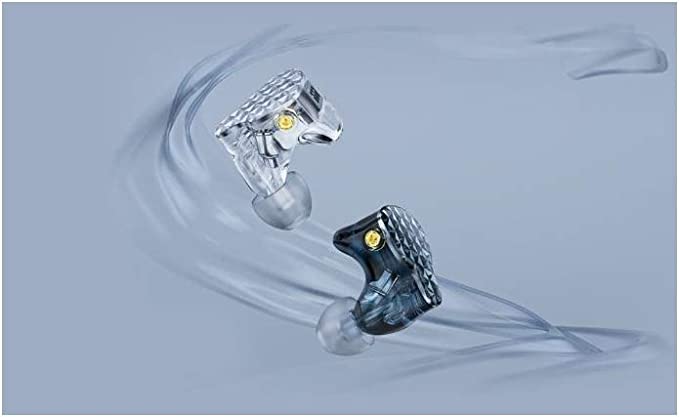
To understand this shift, we need to look at the sophisticated science that allows a listener to become their own sound engineer. By deconstructing the architecture of a professional hybrid IEM, using a design like the SIVGA SM003 as our model, we can explore how these miniature sound systems are built for both high fidelity and personal expression.
The Hybrid Engine: A Duet of Sonic Specialists
The foundational challenge in audio reproduction is that a single speaker struggles to master the entire audible frequency spectrum. The physics required to produce a deep, resonant bass are fundamentally different from those needed for a crisp, detailed treble. The solution, pioneered in high-end speakers and miniaturized for IEMs, is the hybrid driver system.
This system employs a team of specialized drivers, each chosen for its mastery over a specific frequency range. A common and effective configuration, like that specified for the SIVGA SM003, is a duet between a dynamic driver and a balanced armature driver.
-
The Dynamic Driver (DD): The Heart of the Bass. This is the traditional workhorse, operating like a miniature woofer. Its larger diaphragm is designed to move a significant volume of air, making it exceptionally skilled at producing the powerful, visceral low-frequency energy that gives music its warmth, rhythm, and impact. It lays down the soulful foundation of the sound.
-
The Balanced Armature (BA) Driver: The Master of Detail. Originally developed for the precision demands of hearing aids, the BA driver is a marvel of speed and accuracy. Its incredibly small and low-mass moving parts allow it to respond to the fastest and most subtle details in an audio signal. It excels at reproducing the complex textures of the midrange and the delicate shimmer of high frequencies, bringing clarity to vocals and sparkle to cymbals.
To make this duet work in harmony, an invisible crossover circuit acts as a conductor, intelligently splitting the audio signal and sending the bass notes to the DD and the treble notes to the BA. This ensures each driver operates in its optimal range, resulting in a sound that is both powerful and intricately detailed.
The Acoustic Lenses: Tuning Sound with Physics
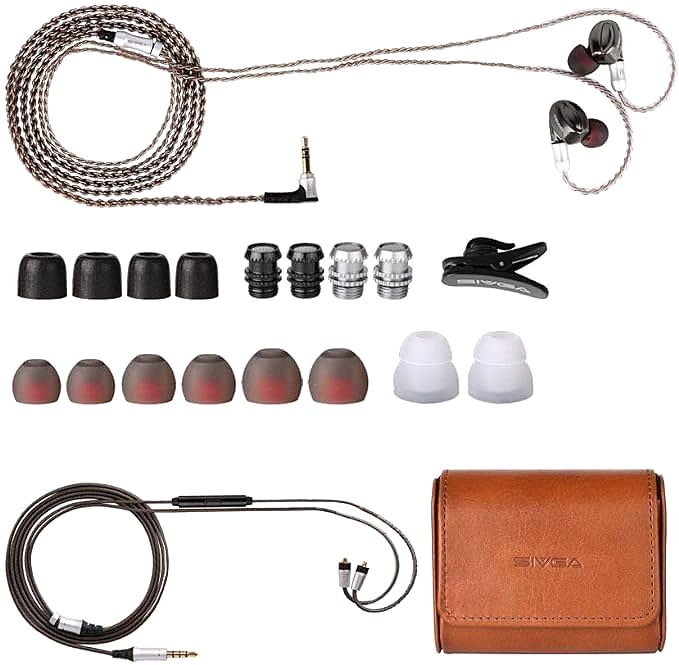
Perhaps the most empowering feature of an acoustic toolkit is the ability to physically shape the sound. The SIVGA SM003’s design includes three pairs of replaceable nozzles. These are not just cosmetic pieces; they are precision-engineered acoustic filters that function like lenses for sound.
The science is rooted in the principles of acoustic resonance and impedance. The physical dimensions of the nozzle—its length, bore diameter, and internal damping materials—alter the pathway the sound wave travels from the drivers to your ear. This physical change subtly emphasizes or attenuates certain frequencies, allowing you to tailor the sound signature to your preference or musical genre.
- Bass Nozzle (Silver): Likely features a wider bore, reducing air resistance and allowing low-frequency waves from the dynamic driver to propagate with more energy, creating a punchier, more impactful bass—ideal for rock and hip-hop.
- Balanced Nozzle (Gunmetal): Engineered for acoustic transparency, providing the most neutral path for the sound, representing the intended tuning of the drivers and crossover.
- Treble/Midrange Nozzle (Black): This might use a narrower bore or different damping to subtly focus or enhance the higher frequencies produced by the balanced armature, bringing extra clarity and crispness to vocals and jazz instruments.
This feature transforms the listener from a passive consumer to an active participant, providing a tangible way to experiment with the physics of sound.
The Foundation of Fidelity: Modularity and the Perfect Seal
A high-performance audio engine requires a solid foundation. In IEMs, this is built upon two pillars: a reliable connection and a perfect ergonomic seal.
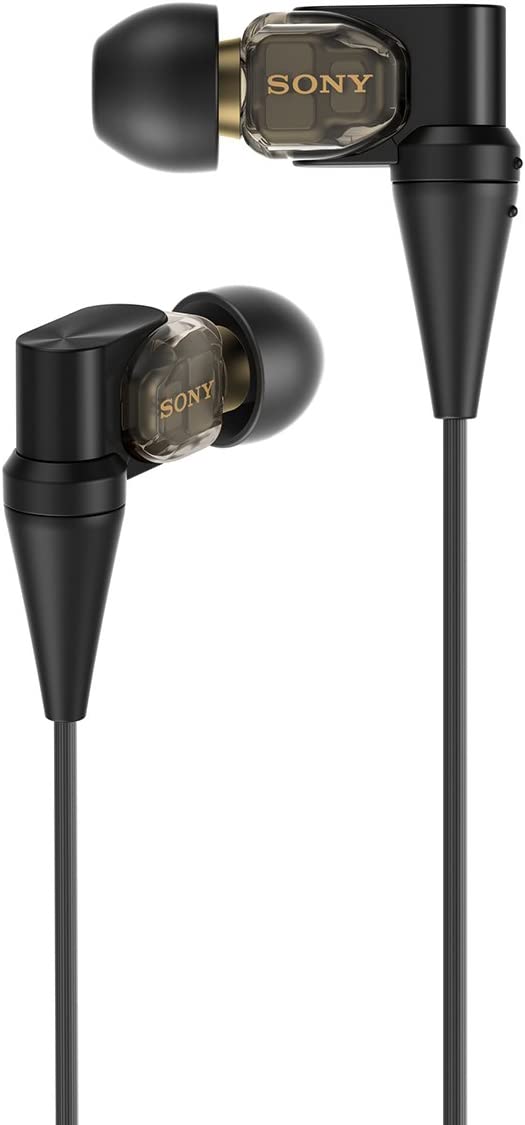
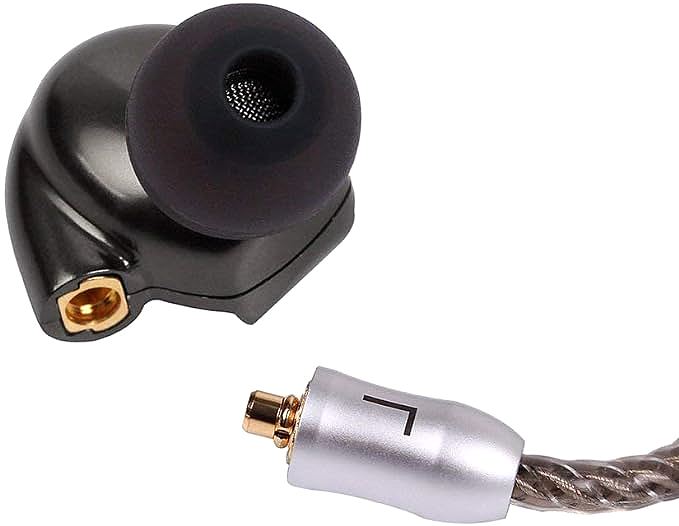
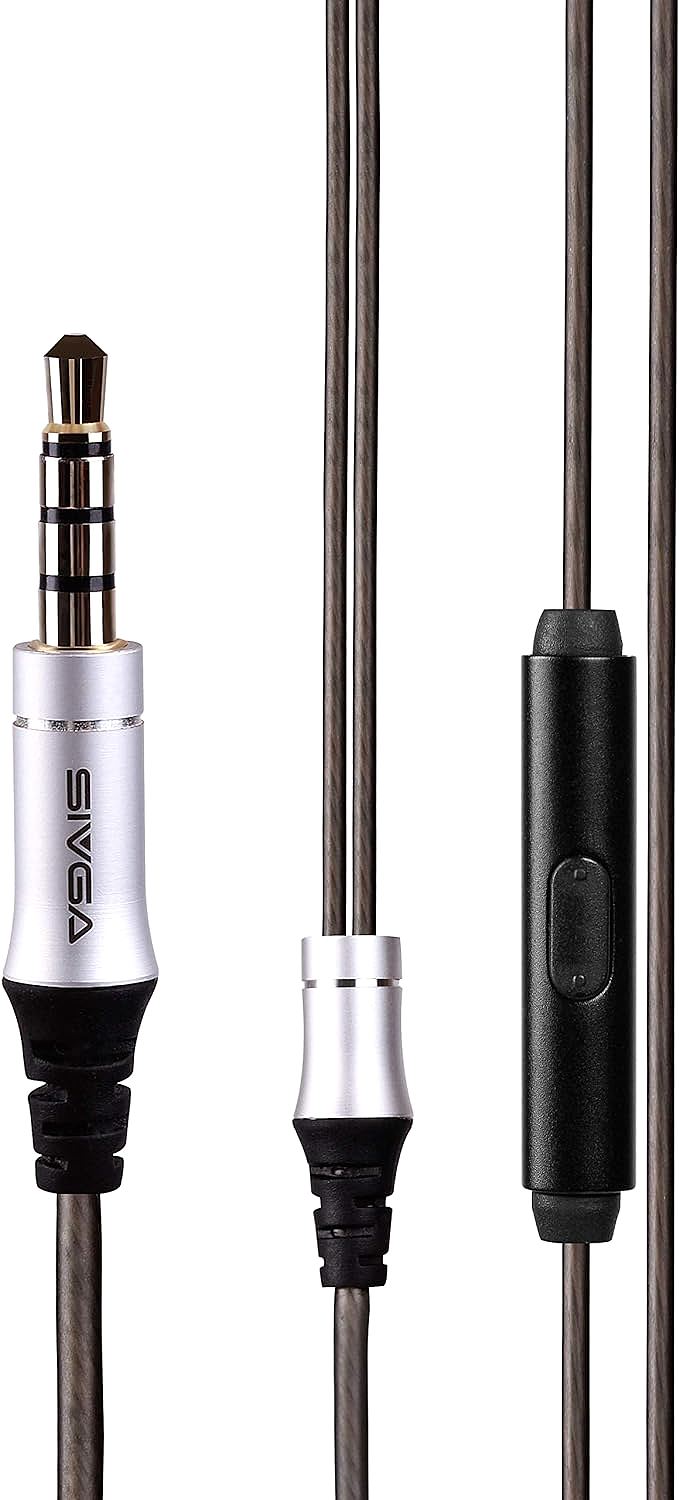
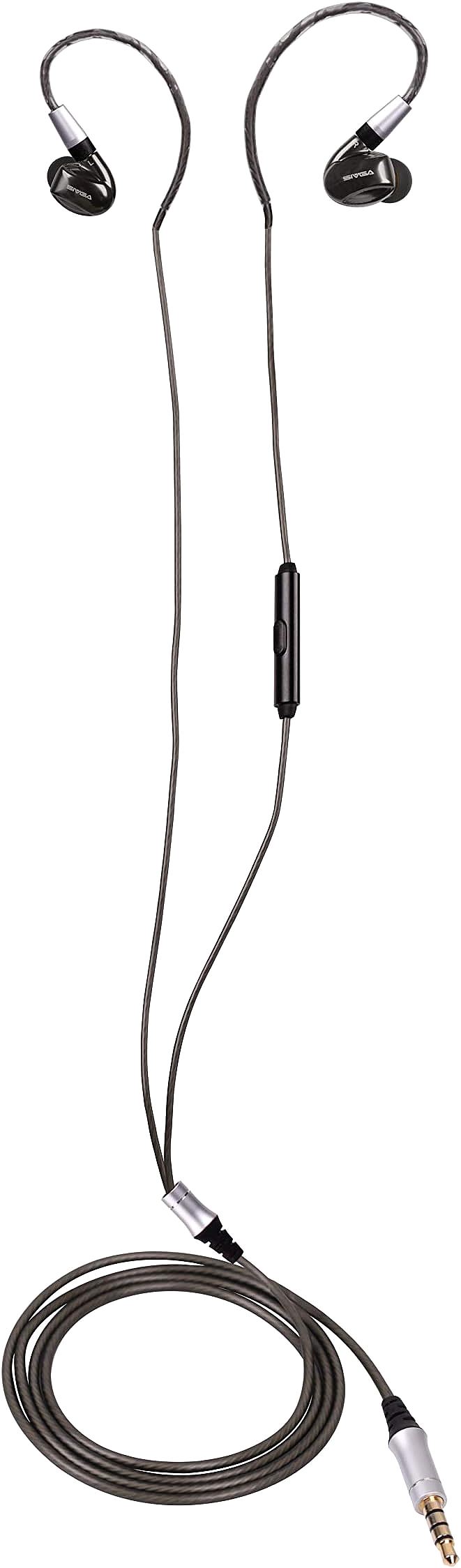
The MMCX Connection: The use of detachable MMCX cables is a hallmark of audiophile-grade design. This modularity is crucial for longevity, allowing a user to simply replace a worn-out cable instead of the entire earphone. It also opens up a world of customization, enabling enthusiasts to experiment with different cable materials or even add Bluetooth adapters.
The Ergonomic Seal: The final, and arguably most critical, component is the eartip. The SM003’s toolkit includes a wide variety of sizes and materials (silicone, double-flange, and memory foam). Achieving a perfect seal is non-negotiable for two reasons:
1. Passive Noise Isolation: The tip physically blocks external noise, creating a quiet canvas upon which the music is painted.
2. Bass Response: The seal creates a closed acoustic chamber in your ear canal, which is essential for the dynamic driver to produce its full, impactful bass.
The choice between soft silicone and expanding memory foam is in itself another layer of tuning, with foam often providing the tightest seal and enhancing perceived bass warmth.
Conclusion: Your Signature Sound Awaits
The architecture of a modern, customizable IEM like the SIVGA SM003 is a testament to a new philosophy in personal audio. It moves beyond the idea of a single “correct” sound signature and instead provides the user with an acoustic toolkit to discover their own.
By understanding the distinct roles of the hybrid drivers, the shaping power of acoustic filters, and the critical importance of a perfect seal, you are no longer just a listener. You become an explorer, a sound engineer, and the final artist in the collaborative process of musical reproduction. This approach doesn’t just deliver high-fidelity sound; it delivers a deeper connection to the music itself, shaped by the science of acoustics and the art of your own preference.