Optimizing the Digital Classroom: Acoustics, Ergonomics, and Focus in Kids' Audio
Update on Jan. 30, 2026, 9:37 a.m.
The shift toward hybrid and online learning has transformed the headphone from a leisure accessory into a critical educational tool. In a virtual classroom, audio quality is directly linked to cognitive load. If a child has to strain to decipher a teacher’s voice through muddy audio or background static, their brain is expending energy on processing the signal rather than understanding the content. This phenomenon, known as “listening effort,” significantly degrades focus and retention over time.
Optimizing the digital learning environment requires hardware that addresses these acoustic challenges while respecting the physical limitations of a child’s anatomy. The TELNP Z8 provides a relevant framework for examining how specific engineering choices—such as boom microphones and inertia sponge padding—can lower the barrier to effective remote learning.
The Acoustic Advantage of the Boom Mic
Most consumer headphones rely on internal microphones embedded in the ear cup. While aesthetically pleasing, this placement puts the microphone far from the sound source (the mouth) and exposes it to ambient room noise. For a student reciting a language lesson or answering a question, this can result in distant, hollow audio.
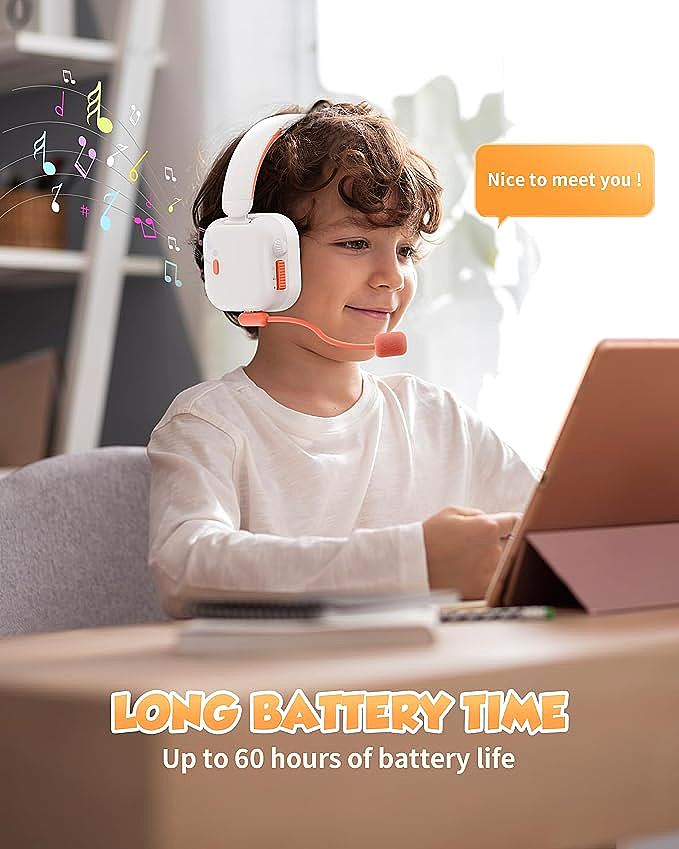
The TELNP Z8 addresses this with a detachable boom microphone. The physics of this advantage are based on the Inverse Square Law: sound intensity decreases rapidly as distance from the source increases. By positioning the microphone capsule inches from the mouth, the signal strength of the voice is dramatically higher compared to background noise (siblings playing, TV in the next room). * Signal-to-Noise Ratio (SNR): The proximity increases the SNR, ensuring the teacher hears the child clearly without the need for digital noise suppression algorithms that can make voices sound robotic. * Recitation Mode: This clarity is essential for language acquisition, where the nuance of pronunciation must be captured accurately. The detachable nature allows the tool to transform from a “learning headset” back to “music headphones” instantly, removing the boom arm when it’s not needed to prevent damage.
Ergonomics: The Science of Long-Term Wear
A child’s head is not just a smaller version of an adult’s; the proportions and cartilage density differ. Standard headphones often create “hot spots” on the crown of the head or pinch the pinna (outer ear) too tightly.
The Z8 employs “Inertia Sponge” (Memory Foam) in its ear cushions. This viscoelastic material responds to body heat, softening and molding to the unique topography of the user’s ear. * Pressure Distribution: By increasing the contact surface area, the foam reduces the pressure (force per unit area) exerted by the clamping force of the headband. This is critical for preventing the physical fatigue that leads to distraction during long study sessions. * Passive Isolation: The conforming seal created by the foam also acts as a passive noise barrier, physically blocking high-frequency environmental distractions. This isolation helps maintain focus without the need for active noise cancellation, which can sometimes cause a sensation of pressure in sensitive users.
Operational Endurance: The 60-Hour Workflow
In a school setting, equipment failure disrupts the lesson. A battery that dies halfway through the day is a logistical failure. The Z8’s high-density lithium-ion battery system, optimized for the low power consumption of Bluetooth 5.3, delivers up to 60 hours of playtime.
This metric is not just about duration; it’s about workflow integration. A 60-hour reserve means the device can theoretically last an entire school week (assuming ~8 hours of use per day) on a single charge. This reduces the cognitive load on parents and children to constantly manage charging cables. Furthermore, the inclusion of a 3.5mm backup cable ensures that even in a worst-case scenario (dead battery or incompatible device), the audio connection remains functional via the analog fallback.
Tools for the Modern Student
The distinction between a toy and a tool lies in the design intent. While aesthetics matter to children, the functional engineering of devices like the TELNP Z8—prioritizing vocal clarity, physical comfort, and operational reliability—directly supports the educational process. By reducing the friction of technology, these tools allow the child’s mind to remain focused on the lesson, not the hardware.