The Alchemy of the Elephant: The Science and Ethics of Black Ivory Coffee
Update on Jan. 12, 2026, 2:43 p.m.
In the pantheon of luxury gastronomy, there are items that command prices divorced from their nutritional utility. Truffles, caviar, saffron—these are valued for their rarity, their labor-intensive harvest, and their unique sensory profiles. But among these, Black Ivory Coffee stands apart. It is a product that challenges our definitions of luxury, blurring the line between culinary delicacy and biological curiosity.
At over $2,000 per kilogram, it is frequently cited as the world’s most expensive coffee. But the price tag is merely the headline. The real story lies in the process: a biological refinement that takes place entirely within the digestive tract of a Thai elephant.
To the uninitiated, this is “elephant poop coffee,” a novelty item destined for bucket lists and dinner party trivia. To the food scientist and the ethical consumer, however, it is something far more profound. It is a case study in enzymatic protein modification, a radical experiment in interspecies collaboration, and a provocative model for conservation funding.
This article moves beyond the shock value. We will dissect the biochemistry that transforms a common Arabica bean into a tea-like elixir. We will audit the economics of a supply chain where 33 kilograms of input yield only 1 kilogram of output. And we will confront the ethical specter of animal-processed foods, exploring how Black Ivory Coffee attempts to rewrite the dark narrative left by the Kopi Luwak industry.
The Biochemistry of the Gut: Nature’s Most Expensive Bioreactor
Why elephants? Is it simply for the gimmick? The answer lies in the specific physiology of the elephant’s digestive system. From a chemical engineering perspective, an elephant is a massive, slow-moving, heated bioreactor optimized for breaking down cellulose.
The Proteolysis Hypothesis: Solving the Bitterness Problem
The defining characteristic of Black Ivory Coffee, universally noted by critics and fans alike, is its lack of bitterness. Bitterness in coffee primarily comes from compounds formed during roasting, specifically the breakdown of proteins and chlorogenic acids.
Proteins are the precursors to bitterness. If you can reduce the protein content of the green coffee bean before it is roasted, you fundamentally alter its flavor potential. * The Enzyme Factor: The elephant’s stomach and intestines are rich in proteases (protein-digesting enzymes) such as pepsin and trypsin. As the coffee cherries journey through this system, these enzymes permeate the porous parchment of the bean. * The Mechanism: The enzymes act like molecular scissors, snipping long protein chains into shorter peptides and amino acids. By fragmenting these proteins, the elephant effectively removes the fuel for bitterness. When the beans are later roasted, the Maillard reaction (browning) still occurs, creating flavor, but the specific pathways that lead to harsh, astringent bitterness are starved of their reactants.
This in-vivo proteolysis is the scientific secret sauce. It is a process that is incredibly difficult to replicate in a mechanical tank without over-fermenting or spoiling the beans.
The Fermentation Environment
Beyond enzymes, the elephant’s gut is a thriving microbiome. It is a warm, moist, anaerobic environment teeming with bacteria and yeasts designed to ferment fibrous plant matter. * Duration: The digestion process takes between 12 to 72 hours. This is significantly longer than the digestion of a civet (Kopi Luwak), which is a carnivore/omnivore with a fast digestive tract. * The “Marinade”: The coffee cherries are not digested in isolation. They are mixed with the elephant’s regular diet of bananas, sugar cane, tamarind, and leafy greens. As these items ferment alongside the coffee, they create a complex soup of aromatics. While the bean doesn’t “absorb” the flavor of a banana directly, the fermentation byproducts (esters and alcohols) generated by the fruit mash likely influence the permeability and chemical structure of the bean.
The result is a coffee bean that has been chemically scrubbed of its harsh edges and infused with a unique, tea-like delicacy. It is not stronger; it is softer. It is a paradox of intensity through subtraction.
The Economics of Inefficiency: Why It Costs $100 an Ounce
In the world of manufacturing, efficiency is king. Black Ivory Coffee is a masterclass in inefficiency. The astronomical price is not an arbitrary markup; it is a reflection of a brutal production equation.
The 33 to 1 Ratio
To produce 1 kilogram of finished Black Ivory Coffee, the elephants must consume approximately 33 kilograms of fresh coffee cherries. Where do the other 32 kilograms go?
1. Mastication: Elephants chew their food thoroughly. Many beans are crushed or broken by the elephant’s molars before they even reach the stomach. Broken beans are unusable.
2. Loss in the Field: Elephants are free-roaming during the day. If they deposit dung in tall grass or a river, those beans are lost.
3. Digestion: Some beans are simply digested too thoroughly or damaged by the gut environment.
This 3% yield is economically terrifying. Imagine a gold mine where 97% of the gold nuggets you find dissolve before you can get them to the bank.
The Human Cost: Artisanal Recovery
The recovery process is manually intensive. It falls to the mahouts (elephant caretakers) and their families to collect the dung and separate the beans. * No Machines: You cannot automate the collection of dung from a free-roaming animal in a jungle sanctuary. * Hygiene Protocol: Once collected, the beans undergo a rigorous washing process, followed by sun-drying to a specific moisture content. This ensures that while the beans come from dung, they are pathogen-free and food-safe.
The high price of the coffee directly funds this labor. The brand pays the mahouts a wage for the cherry collection that is significantly higher than the local average for agricultural work. This creates a financial incentive for the community to participate in the project and, crucially, to keep their elephants well-fed and cared for.

The Ethical Evolution: Escaping the Shadow of Kopi Luwak
You cannot talk about animal-processed coffee without addressing the civet in the room. Kopi Luwak began as a natural curiosity but devolved into an industrial nightmare. Civets were captured, caged in battery farms, and force-fed coffee cherries until they died of malnutrition or stress. It became a symbol of human greed and cruelty.
Black Ivory Coffee was founded explicitly to oppose this model. Its founder, Blake Dinkin, spent ten years developing a model that prioritized animal welfare.
The “Cruelty-Free” Architecture
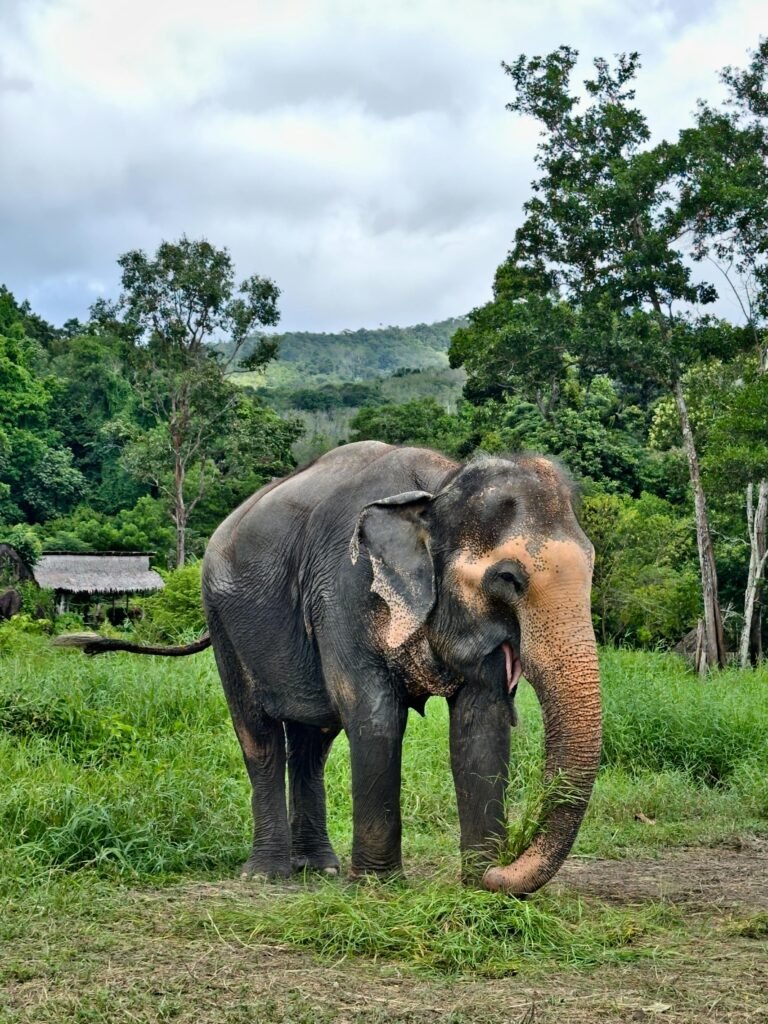
- No Cages: The elephants live in the Golden Triangle Asian Elephant Foundation (GTAEF) sanctuary. They are not caged for coffee production. They roam, bathe, and socialize naturally.
- No Force-Feeding: This is the most critical distinction. The coffee cherries are mixed into a mash of rice, fruit, and molasses. It is a treat. If an elephant doesn’t want to eat it, they don’t eat it. The coffee accounts for less than 1% of the elephant’s daily food intake, ensuring no caffeine absorption (the green bean shell protects the caffeine) and no nutritional imbalance.
- Symbiotic Funding: The revenue from the coffee doesn’t just line corporate pockets. It funds the GTAEF, paying for veterinary care for the elephants and providing income for the mahout families who own them. In Thailand, keeping a domesticated elephant is expensive. Without income, mahouts are often forced to take their elephants street-begging in Bangkok or into illegal logging. Black Ivory Coffee provides a dignified, sustainable economic alternative.
This is Ethical Luxury. It is a product where the high price serves as a mechanism for conservation. When you buy a cup, you are effectively paying a voluntary tax to support the preservation of the Asian elephant.
Sensory Analysis: Mapping the Flavor of Gentleness
So, what does ethical, enzyme-refined, elephant-processed coffee actually taste like?
If you expect a punch in the face of strong coffee flavor, you will be disappointed. Black Ivory Coffee is defined by delicacy. * Aroma: Subtle and floral, often compared to jasmine or cocoa. * Body: Tea-like. It lacks the heavy, oily mouthfeel of a French Press roast. It glides over the palate. * Flavor Notes: The dominant notes are Chocolate and Malt, followed by hints of Spice (tamarind, cardamom) and fresh Grass. * The Finish: This is the star of the show. The finish is remarkably clean. The “throat-grab” bitterness found in dark roasts is completely absent.
It is a coffee for the contemplative drinker. It demands that you slow down and search for the nuances. It is less like a morning caffeine fix and more like a fine Pinot Noir.
Conclusion: The Philosophy of the Rare
Black Ivory Coffee exists at the extreme edge of the culinary universe. It requires a suspension of disbelief and a willingness to embrace the unconventional. It challenges our industrial mindset that demands uniformity and low cost.
Is it “worth” $100 an ounce? From a purely caffeine-delivery perspective, absolutely not. But luxury is never about utility. It is about story, rarity, and impact.
Black Ivory Coffee transforms a waste product into a lifeline for an endangered species. It turns a biological quirk into a gastronomic event. It proves that even in a world of mass production, there is still room for the slow, the strange, and the incredibly specific.
When you drink Black Ivory Coffee, you are participating in a cycle that connects the Thai jungle, the biochemistry of a giant herbivore, and the global market for excellence. It is a brew that tastes of chocolate and malt, but resonates with the deeper flavor of coexistence.