The Harmonious Living Room: Passthrough Technology, Connection Architecture, and Open-Ear Ergonomics
Update on Jan. 11, 2026, 9:09 a.m.
The living room is a shared space. It must accommodate the grandmother with hearing loss, the teenager doing homework, and the partner reading a book. Audio technology often disrupts this harmony—a loud TV disturbs the reader; headphones isolate the grandmother.
The Avantree Medley Air introduces a solution architecture designed for Coexistence. Through features like Soundbar Passthrough and Open-Ear Ergonomics, it allows different auditory realities to exist simultaneously in the same physical space.
This article explores the signal routing logic of Passthrough technology, the ergonomics of long-duration wear, and how hardware design can solve social friction.
The Architecture of Passthrough: Solving the “Mute” Problem
Historically, plugging headphones into a TV meant muting the TV speakers. The headphone jack was a physical switch that cut the circuit to the main speakers. This created an exclusionary experience: either the headphone user listened, or the room listened. Not both.
The Medley Air’s Transmitter Base employs a Digital Optical Passthrough (Bypass) circuit. * The Signal Path: The optical audio signal travels from the TV into the Transmitter. * The Split: Inside the transmitter, the digital stream is cloned. One stream is decoded and sent via Bluetooth to the headphones. The original stream is passed through untouched to the Optical Output port. * The Result: The Soundbar (connected to the Optical Output) receives the audio as if the transmitter wasn’t there.
This allows for Independent Volume Control. The family can set the Soundbar to a comfortable volume (or even mute it), while the headphone user sets their volume directly on the headset. It decouples the personal listening experience from the room’s acoustic environment. This is the technical foundation of a harmonious living room.
Open-Ear Ergonomics: The Biology of Connection
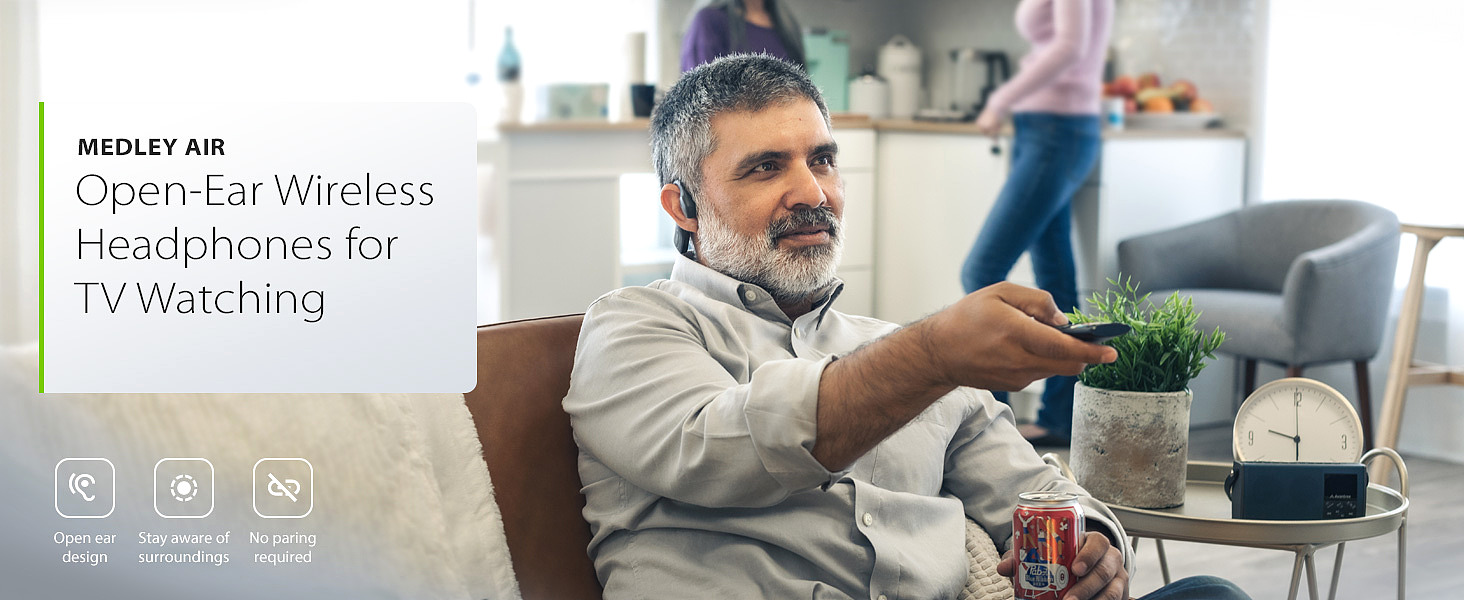
While Passthrough solves the electronic isolation, the headphone design solves the biological isolation. Traditional over-ear headphones act as earplugs. If a family member asks a question, the user can’t hear them.
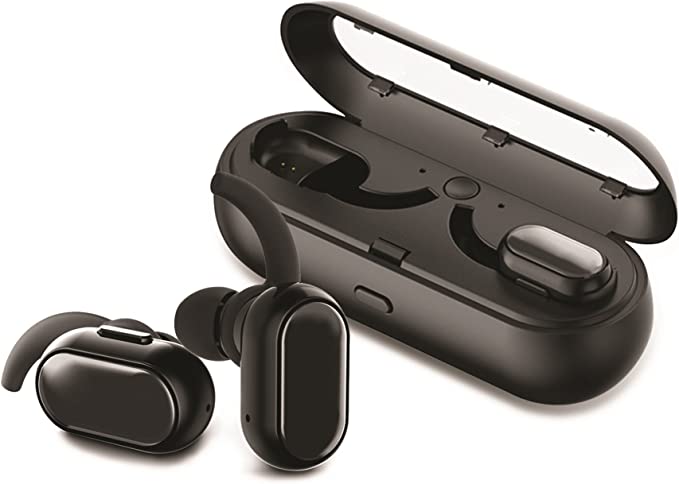
The Medley Air uses an Open-Ear Form Factor. The speakers rest on the ear, leaving the canal open.
1. Situational Awareness: The user hears the TV audio mixed with the ambient room sound. They can hear the doorbell, the microwave timer, or a spouse’s comment. This maintains social presence.
2. Thermal Regulation: Sealed earcups trap heat and moisture. For a 2-hour movie or a 4-hour binge-watch, this becomes uncomfortable. The open design allows air to circulate, keeping the ears cool and preventing the “hot ear” fatigue associated with leather pads.
The Trade-off: Bass vs. Comfort
The physics of open-ear audio (as discussed in previous analyses) means bass pressure escapes. The Medley Air is not designed for cinematic rumble; it is designed for Dialogue Clarity and Comfort. By sacrificing deep bass, it gains long-term wearability and social integration—a trade-off specifically optimized for the “TV Watching” use case.
The Transmitter as a Hub: Class 1 Range
Reliability is the final pillar of a stress-free experience. The Medley Air transmitter likely utilizes Class 1 Bluetooth. Standard phone Bluetooth (Class 2) reaches about 10 meters (33ft). Class 1 can reach up to 100 meters (300ft) in ideal conditions.
While indoor walls reduce this, the boosted signal strength ensures that a user can walk to the kitchen for a snack or the bathroom without the audio stuttering or dropping out. This Rock-Solid Link is essential for immersion. Nothing breaks the spell of a movie like a glitching audio stream.
Conclusion: Technology for Togetherness
The Avantree Medley Air is not just a headphone; it is a mediator. It uses intelligent signal routing (Passthrough) and empathetic industrial design (Open-Ear) to resolve the conflict between individual needs and shared spaces.
It proves that the best technology doesn’t just isolate us in a digital bubble; it helps us live better together in the analog world.