Beyond the Eardrum: The Physiology of Bone Conduction and the Open-Ear Revolution
Update on Jan. 11, 2026, 4:16 p.m.
For the vast majority of human history, the act of “listening” has been synonymous with air conduction. Sound waves travel through the air, enter the ear canal, vibrate the tympanic membrane (eardrum), and move through the ossicles to the cochlea. This is how we hear a bird sing, a friend speak, or a traditional pair of headphones play music. But this is not the only path to the brain.
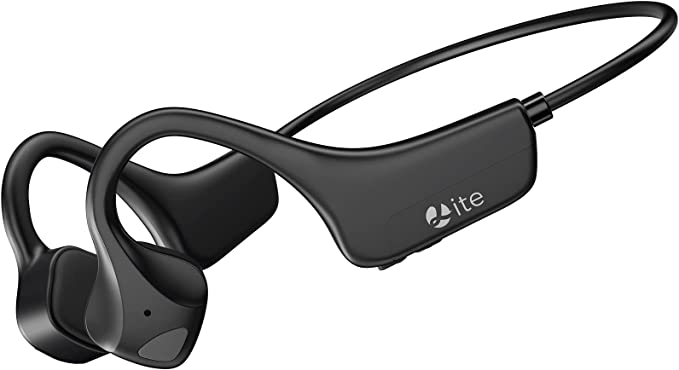
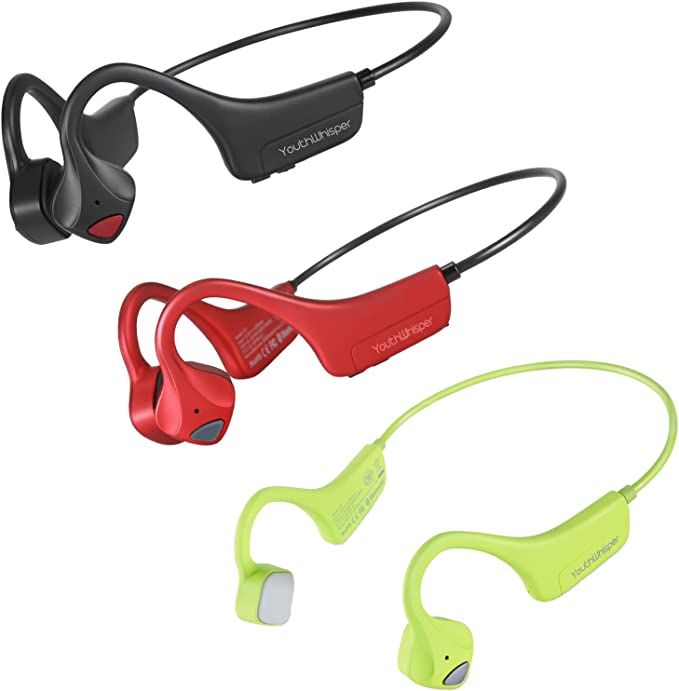
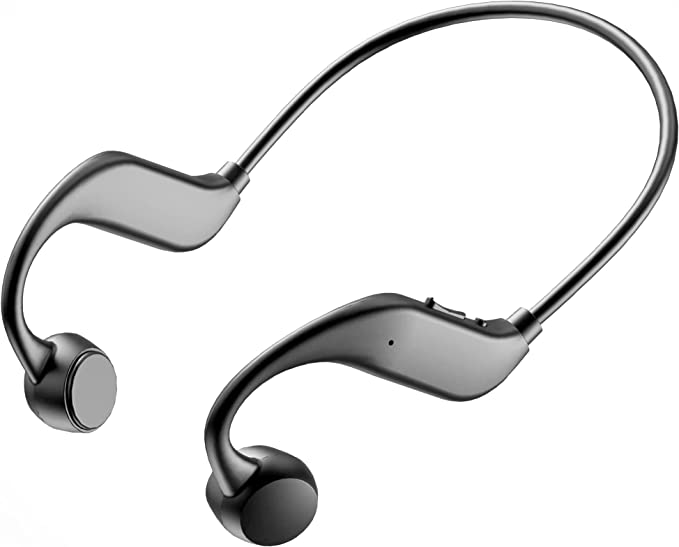
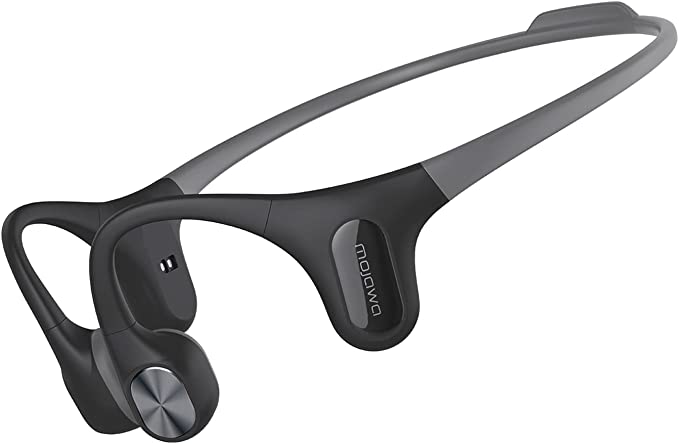
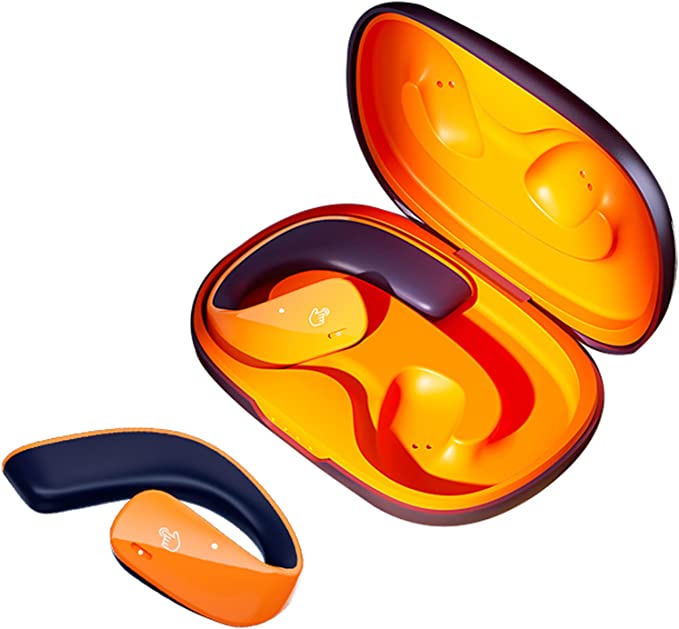
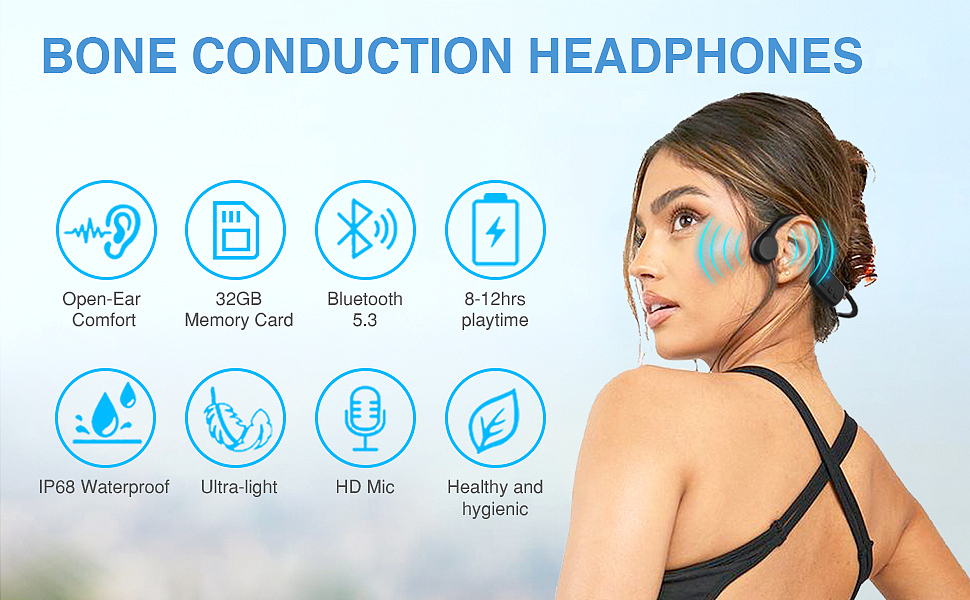
There exists a second, more primal pathway: Bone Conduction. It is the reason your voice sounds deeper to you than it does on a recording. It is how Ludwig van Beethoven continued to compose after losing his hearing, by clenching a rod attached to his piano. Today, this biological backdoor has been refined into a sophisticated consumer technology. Devices like the Rumatas X7 PLUS Bone Conduction Headphones are not just audio gadgets; they are bio-hacks that leverage the skull’s acoustic properties to deliver sound while leaving the ear canal completely open. This article explores the physiology of this alternative hearing pathway, the psychoacoustics of open-ear listening, and the safety implications for the modern athlete.
The Physiology of the Skull: A Solid-State Conductor
To understand how the Rumatas X7 PLUS works, we must look at the anatomy of the human head. The skull is not a solid block of stone; it is a complex structure of bones with varying densities and resonance frequencies. * The Transducer: Instead of a speaker cone that pushes air, bone conduction headphones use an electromechanical transducer. This device converts electrical audio signals into mechanical vibrations. * The Coupling: These transducers rest on the zygomatic bones (cheekbones), just in front of the ear. * The Pathway: When the transducer vibrates, the energy is transmitted directly into the bone. Bone is a denser medium than air. According to the physics of sound, sound travels faster and with less loss in denser media (Solids > Liquids > Gases). * The Destination: These vibrations bypass the outer ear and the middle ear (the eardrum and ossicles) entirely. They travel through the skull directly to the Cochlea—the fluid-filled spiral organ in the inner ear. The cochlea converts these physical vibrations into neural impulses, which the brain interprets as sound.
The “Dual-Channel” Experience
Because bone conduction bypasses the eardrum, it leaves the air conduction pathway open. This creates a unique Dual-Channel Hearing experience.
1. Channel A (Internal): Your music or podcast, delivered via bone conduction directly to the cochlea.
2. Channel B (External): The ambient world (traffic, nature, conversation), delivered via air conduction through the open ear canal.
The brain is remarkably adept at mixing these two streams. Unlike “Transparency Mode” in ANC headphones, which is a digital simulation of the outside world, this is acoustic reality. There is no microphone processing lag, no digitization, and no battery drain required to hear the world. It is the most natural form of “augmented reality” audio.
Safety Engineering: The Open-Ear Imperative
The primary driver for the adoption of bone conduction technology is Safety. In outdoor sports, isolation is dangerous. * The Cyclist’s Dilemma: A cyclist wearing noise-cancelling earbuds creates a sensory blind spot. They cannot hear the hybrid car approaching from behind or the shout of a pedestrian. This auditory deprivation increases reaction time and accident risk. * Situational Awareness: The Open-Ear Design of the Rumatas X7 PLUS ensures that the user’s “Auditory Horizon” remains undiminished. They can hear the tire noise of a vehicle, the rustle of a potential threat in the woods, or emergency sirens immediately.
Spatial Localization
Human hearing relies on Binaural Cues (Interaural Time Difference and Interaural Level Difference) to locate sounds in space. Blocking the ear canal disrupts these cues, making it harder to tell where a sound is coming from. By keeping the pinna (outer ear) and canal open, bone conduction preserves the natural Head-Related Transfer Function (HRTF), allowing the athlete to accurately localize external sounds while enjoying their soundtrack.
Materials Science: Titanium and Silicone
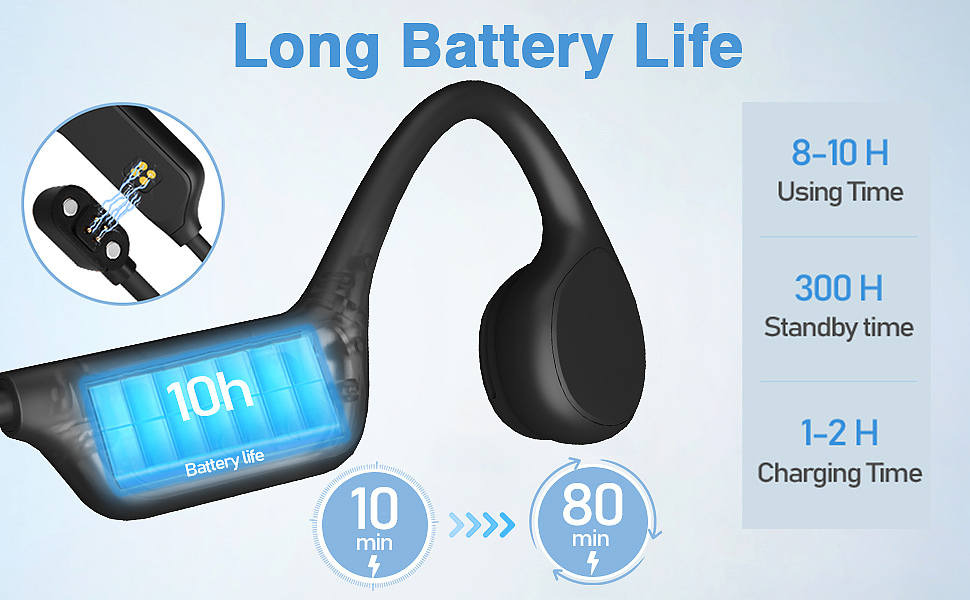
A device that clamps onto the head requires rigorous ergonomic engineering. The Rumatas X7 PLUS utilizes a Titanium Alloy frame. * Memory Metal: Titanium alloy has “shape memory.” It can be twisted, bent, and stretched, yet it always returns to its original curvature. This provides a consistent clamping force—tight enough to couple the transducers to the cheekbones for good sound transfer, but light enough to avoid headaches. * Biocompatibility: The entire unit is wrapped in Silicone. Silicone is hypoallergenic and has a high coefficient of friction against skin, ensuring the headphones stay in place even when the user is sweating profusely. This combination of a rigid-yet-flexible core and a soft-touch skin is crucial for “all-day wearability.”
Hearing Health: Bypassing the Damage
Another significant advantage of bone conduction is its potential for hearing health. * Eardrum Protection: High sound pressure levels (SPL) in the confined space of the ear canal can damage the eardrum and the delicate hair cells of the cochlea over time. By bypassing the eardrum, bone conduction eliminates the pneumatic pressure fatigue associated with in-ear monitors. * Hygiene: Placing a foreign object (an earbud) into the ear canal creates a warm, moist environment conducive to bacterial growth (ear infections). Open-ear designs maintain natural airflow, keeping the ear canal dry and healthy—a critical factor for runners and swimmers alike.
Conclusion: A New Way to Listen
The Rumatas X7 PLUS is more than just headphones; it is a physiological tool. It recognizes that in a dynamic, sometimes dangerous world, we cannot afford to close off one of our primary senses.
By leveraging the physics of Bone Conduction, it offers a listening experience that is additive rather than subtractive. It adds music to your world without subtracting the world from your awareness. Whether for the marathon runner needing focus without isolation, or the office worker wanting to listen to music while remaining approachable, this technology represents a harmonious integration of digital content and analog reality.