The Physics of Punch: Deconstructing the 32mm Drivers of the JBL T460BT


JBL T460BT Extra Bass Wireless On-Ear Headphones
In a portable audio landscape dominated by microscopic earbuds, the JBL T460BT occupies a defiant middle ground. It is neither a pocket-sized True Wireless Stereo (TWS) device nor a studio-grade over-ear behemoth. It is a Supra-Aural (On-Ear) headphone.
While marketing materials focus on "Pure Bass," the true story of this device lies in the physics of its form factor. By utilizing 32mm drivers and a specific mechanical design, it solves an acoustic equation that earbuds simply cannot: creating physical air displacement that you can feel, not just hear.
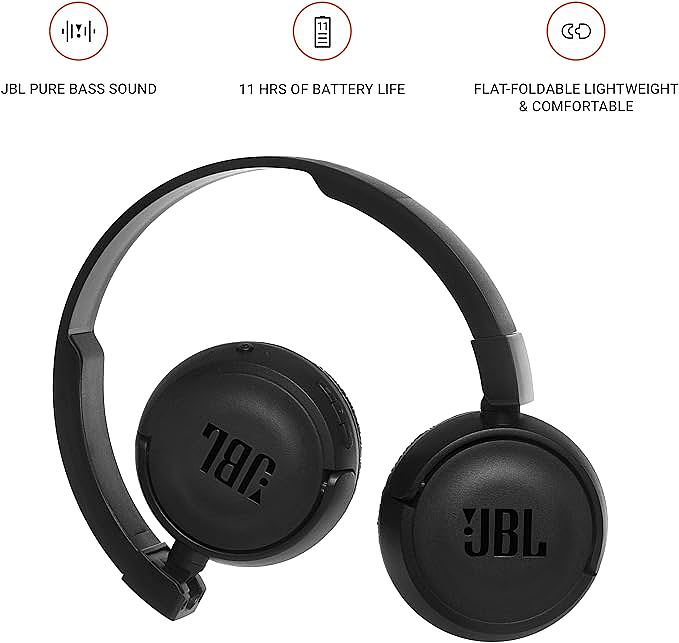
The Driver Diameter Advantage: 32mm vs. 6mm
The fundamental limitation of in-ear headphones is the size of the driver. Most earbuds use drivers between 6mm and 10mm. To produce deep bass, these tiny diaphragms must undergo extreme excursion (movement back and forth), which often leads to distortion or requires heavy digital signal processing (DSP).
The JBL T460BT employs 32mm Dynamic Drivers. * Surface Area: The surface area of a 32mm driver is exponentially larger than that of a 10mm driver. This allows it to move a significantly larger volume of air with minimal excursion. * The "Punch" Factor: Bass frequencies are essentially pressurized air waves. The sheer physical size of the T460BT's driver allows it to generate the "slam" or "punch" characteristic of kick drums and basslines naturally. This is why the "Extra Bass" claims hold weight—it is derived from mechanical capability, not just software equalization.
Supra-Aural Acoustics: The Importance of Clamping Force
Unlike Over-Ear (Circumaural) headphones that seal around the ear, or In-Ear monitors that seal inside the canal, On-Ear (Supra-Aural) headphones sit on the pinna (outer ear). This creates a unique acoustic challenge: Leakage.
If the seal between the ear pad and the ear cartilage is broken, low-frequency energy escapes instantly, killing the bass response. To counteract this, the T460BT is engineered with a calibrated Clamping Force. * The Mechanical Seal: The headband acts as a spring, applying just enough pressure to compress the ear pads against the ear. This creates a semi-closed acoustic chamber. * Bass Trap: This seal traps the air pressure generated by the large drivers, ensuring the bass frequencies are coupled directly to the ear canal rather than dissipating into the environment. This explains the "snug fit" noted by many users—it is a necessary compromise for acoustic performance.
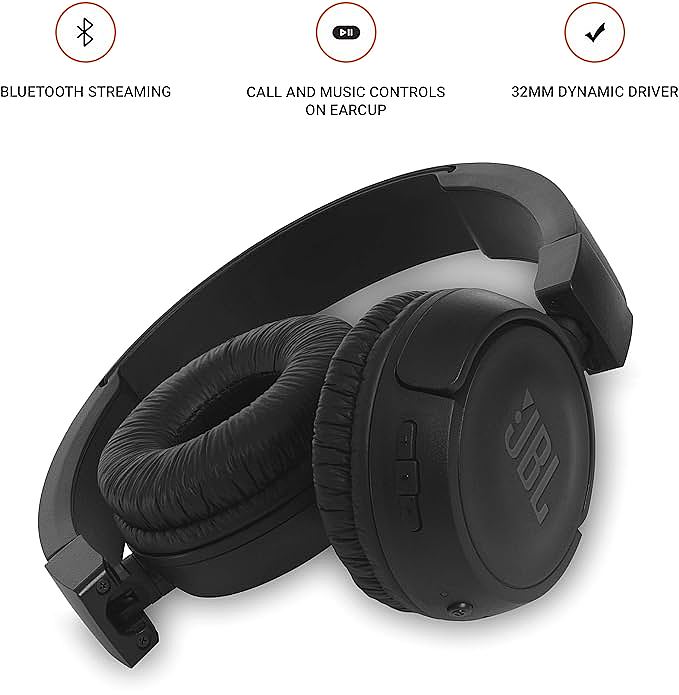
The Lightweight Chassis: Polycarbonate Engineering
Generating bass usually requires heavy magnets and rigid enclosures to prevent resonance. However, the T460BT aims for portability. * Material Choice: The chassis is constructed primarily of high-impact polycarbonate. While often dismissed as "plastic," this material offers a high strength-to-weight ratio. * Inertia Management: By keeping the ear cups light (total unit weight approx. 150g-300g range depending on specs), the headband doesn't need to be excessively tight to keep them in place during a commute. This balance of weight and clamp is critical for long-term wearability in an on-ear design.
Connectivity and Codec: The Bluetooth Pipeline
The T460BT operates on the 2.4GHz spectrum using standard Bluetooth protocols (likely Bluetooth 4.0 based on its release era). * FHSS (Frequency-Hopping Spread Spectrum): In dense urban environments filled with Wi-Fi signals, the headset rapidly hops between frequencies to maintain a stable stream. * SBC Codec: While it lacks high-res codecs like LDAC, the standard SBC codec is more than sufficient for the "Urban Bass" sound signature. The bottleneck for bass-heavy modern pop or hip-hop is rarely the bitrate; it is the transducer's ability to move air—a task the T460BT's 32mm drivers handle with ease.
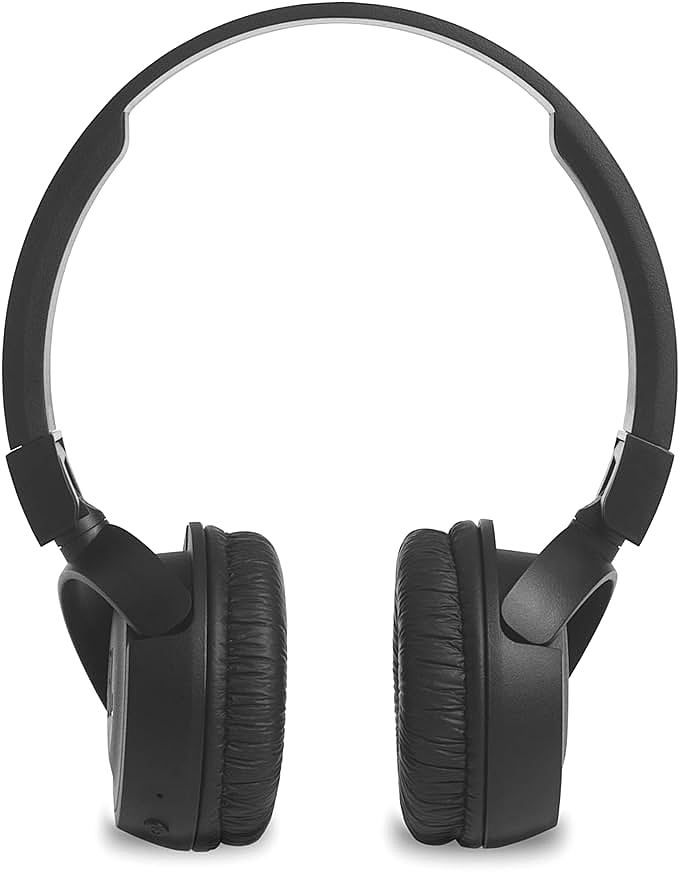
Energy Density and the 11-Hour Threshold
The promised 11-hour battery life is achieved through the synergy of relatively low-impedance drivers and efficient power management. * Driver Sensitivity: Larger drivers can actually be quite efficient. Because the 32mm diaphragm doesn't need to work as frantically as a tiny earbud driver to produce the same volume of bass, it draws power steadily. * Lithium-Polymer Cell: Nestled within the ear cup is a Li-Po battery. By placing the battery in the cup rather than the ear canal (as in TWS buds), manufacturers can use a physically larger, less energy-dense (and thus cheaper and safer) cell while still maintaining a light profile.
Conclusion: The Physicist's Bargain
The JBL T460BT is not a product of complex digital trickery; it is a triumph of basic acoustic physics. It leverages the Supra-Aural form factor to house a 32mm driver that physically outclasses earbuds in air displacement. For the commuter who finds earbuds intrusive and over-ears too bulky, this device offers a "Goldilocks" solution: big sound physics in a compact, foldable package. It is a tool designed for those who prioritize the visceral sensation of bass over the subtlety of critical listening.
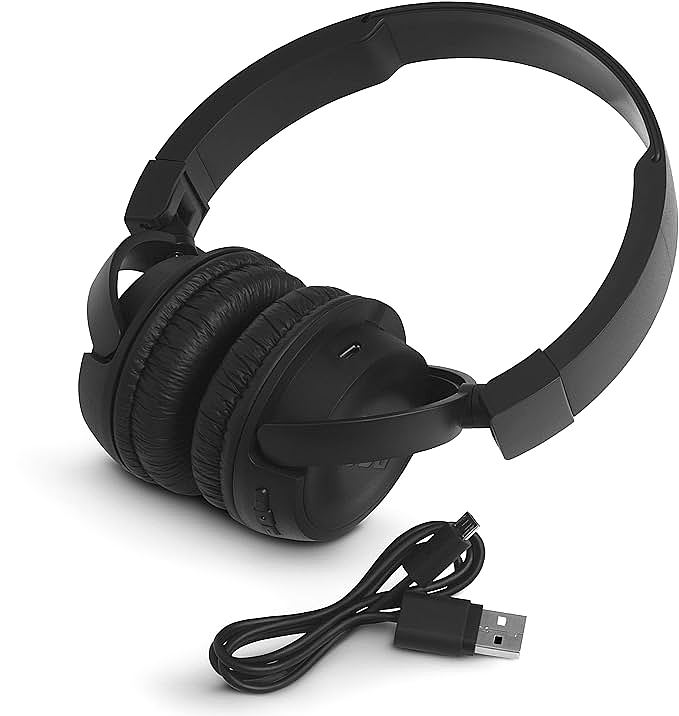
JBL T460BT Extra Bass Wireless On-Ear Headphones
Related Essays

Open Back Headphones: Why They Sound Different

Balanced Armature vs Dynamic Driver: 2026 IEM Engineering Truths

Coaxial Audio and the Point Source Paradox: Why Perfect...

The Studio Vocal Chain: What Every Singer Needs to Know

Koss KSC75 Open-Back On-Ear and Its Two Close Rivals

The Science Behind Wireless Audio: From Bluetooth Origins...

Computational Audio Soundbar: How Five Drivers Replace a Room Full of Speakers

The RF Congestion Crisis: Why Your Wireless Guitar Signal...

What Does IPX7 Protect Against? The Engineering Truth

