The Millisecond Gap: The Physics of Latency and the "Game Mode" Solution


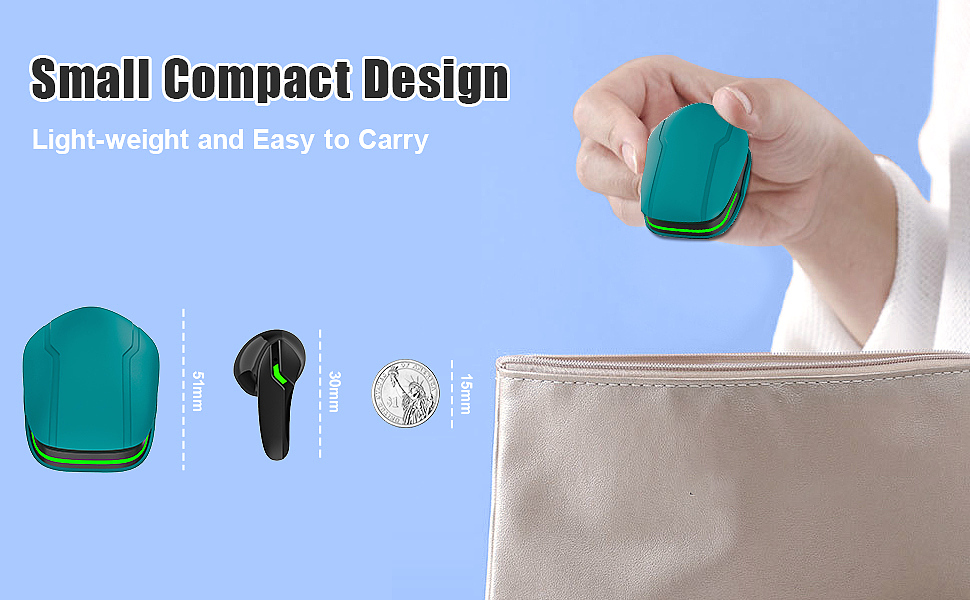
EKF Y68 Wireless Earbuds
In the high-stakes world of competitive mobile gaming, time is not measured in seconds, but in frames. At 60 frames per second, a single frame lasts 16.6 milliseconds. If you hear the footstep of an enemy three frames later than it happens, you are effectively playing in the past. This disconnect is the bane of wireless audio: Latency.
The EKF Y68 Wireless Earbuds market a specific feature: 48ms Low-Latency Game Mode. To the casual listener, this is just a spec. To the gamer, it is the difference between life and death (virtually speaking). But how do engineers shrink the delay of Bluetooth, a protocol notorious for lag?
This article explores the Neuroscience of Synchronization, the Engineering of Buffers, and the trade-offs inherent in the quest for real-time wireless audio.
The Neuroscience of "Sync"
Our brains are remarkable synchronization engines. Light travels faster than sound, so in the real world, we often see an event before we hear it (think of a distant hammer strike). Our brain compensates for this, fusing the visual and auditory inputs into a single "event."
However, this compensation window is limited. * ITU Recommendation: The International Telecommunication Union states that audio should not lag video by more than 125ms or lead by more than 45ms to be perceived as "in sync." * Gaming Threshold: In interactive media, where tactile feedback (pressing a button) is involved, the tolerance is much lower. Gamers can perceive lag as low as 50-70ms.
Standard Bluetooth audio (SBC codec) often has a latency of 200ms to 300ms. This is well outside the brain's integration window, creating a jarring disconnect that ruins immersion and reaction time.
Decoding "Game Mode": Shrinking the Buffer
How does the EKF Y68 achieve 48ms? It attacks the Audio Buffer.
Bluetooth transmission is not a continuous stream like a wire; it is a series of data packets. To ensure smooth playback without stuttering (dropouts), the receiving device (earbud) stores a few packets in a "buffer" before playing them. This buffer acts as a safety net against interference. * Large Buffer (Music Mode): High stability, high latency. Perfect for Spotify where a 300ms delay doesn't matter. * Small Buffer (Game Mode): The Y68's "Game Mode" aggressively shrinks this buffer. It plays the packets almost as soon as they arrive.
The Trade-Off: Stability vs. Speed
This is a calculated risk. By reducing the safety net, the connection becomes more susceptible to RF Interference. If a packet is lost due to a busy Wi-Fi signal nearby, there is no time to request a re-transmission. The audio might glitch or pop.
This is why "Game Mode" is a switchable feature, not the default. It optimizes for speed in the controlled environment of a gaming session, while "Music Mode" optimizes for stability and fidelity during a commute.
Bluetooth 5.1: The Highway
Underpinning this speed is the Bluetooth 5.1 protocol. While 5.1 is often touted for its direction-finding capabilities, in audio, its improved Physical Layer (PHY) efficiency helps. It allows for faster handshake and data negotiation, ensuring that the shrunk buffer doesn't result in constant disconnection.
13mm Drivers: The Sound of Impact
Low latency delivers the time of the sound, but the Driver delivers the weight of the sound. The Y68 features 13mm Dynamic Drivers.
In gaming audio, cues are often low-frequency: explosions, engine rumbles, heavy footsteps. A larger driver (13mm vs standard 6mm) moves more air, creating a visceral impact that smaller drivers cannot match. This "pressurization" of the ear canal adds to the immersion, making the virtual world feel physically present.
Conclusion: The Edge of Perception
The EKF Y68 represents a democratization of pro-gaming tech. By bringing sub-50ms latency to a budget price point, it allows mobile gamers to compete on a level playing field with wired headphone users.
It acknowledges that in the digital arena, speed is a weapon, and the ability to process sound in real-time is a superpower.
EKF Y68 Wireless Earbuds
Related Essays
JOYWISE T6 Wireless Earbuds: Your Gateway to Tranquil Audio

