The Engineering of Legacy: Decoding the High-Fidelity Power Budget of the Koss TWS250i
Update on Nov. 22, 2025, 6:28 p.m.
In 1958, John C. Koss invented the SP/3, the world’s first stereophone, effectively birthing the personal audio industry. Fast forward to the wireless era, and the engineering challenge has shifted from “creating stereo” to “preserving stereo” within a wireless, battery-constrained environment.
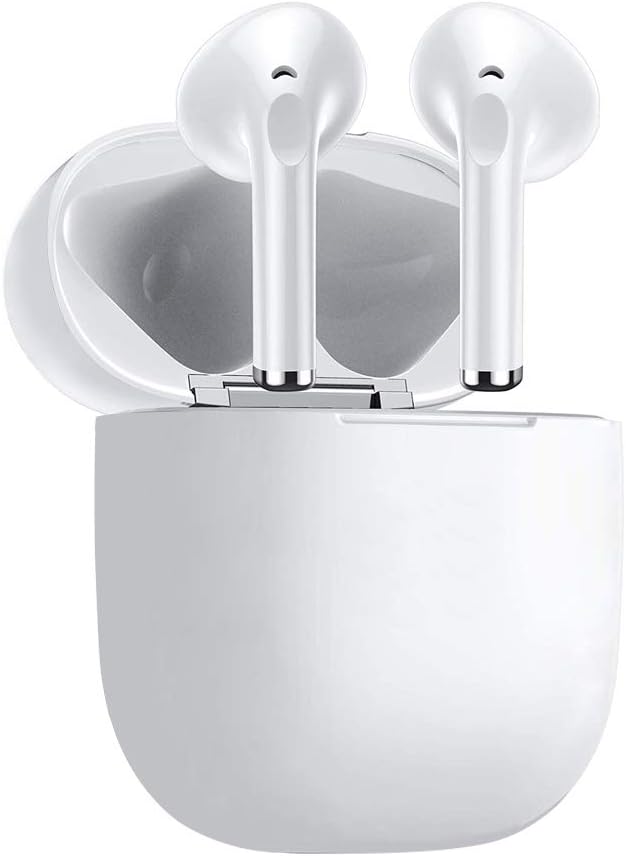
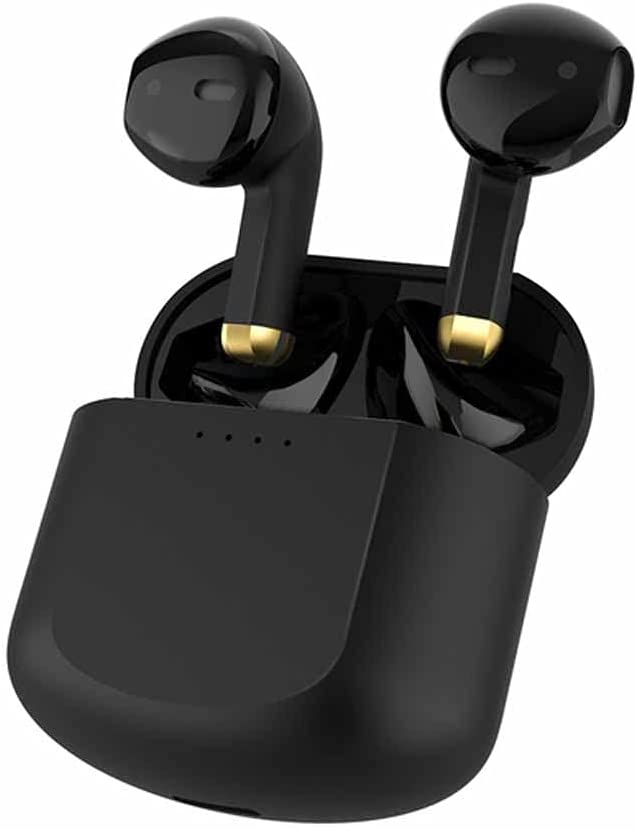
The Koss TWS250i represents this transition. It is not a gadget packed with superfluous features; it is a focused attempt to translate the legendary “Sound of Koss” into a True Wireless Stereo (TWS) form factor. To understand this device, we must look beyond the spec sheet and analyze the Power Budgeting decisions that prioritize acoustic dynamics over marathon battery life.

The Power Trade-off: Why 4.5 Hours?
In a market flooded with earbuds boasting 8 or 10 hours of playback, the TWS250i’s 4.5+ hours might seem modest. However, from an electro-acoustic perspective, this is a deliberate engineering choice known as the Power/Performance Trade-off.
- Voltage Swing: High-fidelity drivers often require a higher voltage swing to move the diaphragm with sufficient force and speed (Transient Response). This creates a richer, more dynamic sound but consumes more current from the small internal battery.
- Amplification Class: To maintain the signature “Sound of Koss”—characterized by deep bass and crisp highs—the internal amplifier likely operates in a class (like Class AB) that favors linearity and low distortion over the extreme efficiency of the Class D amplifiers found in budget-focused buds. The result is a shorter runtime but a significantly cleaner audio signal.

Acoustic Physics: The “Koss Sound” in Miniature
The core of the TWS250i is its driver unit. While the exact diameter isn’t the primary marketing point, the performance suggests a High-Excursion Dynamic Driver.
- Excursion vs. Diameter: In small enclosures, moving air to create bass requires the diaphragm to travel further (excursion) if it cannot be wider. This linear motion requires precise magnetic control to prevent distortion.
- Psychoacoustic Tuning: The “Sound of Koss” is not flat; it is a carefully sculpted frequency response curve. It typically emphasizes the fundamental frequencies of drums and bass guitars (60Hz-200Hz) while maintaining a presence peak in the upper midrange (2kHz-4kHz) for vocal clarity. This tuning relies on the driver’s physical properties rather than heavy Digital Signal Processing (DSP), ensuring a more natural, analog-like presentation.

The Invisible Wire: Bluetooth 5.0 Architecture
The umbilical cord of modern audio is the 2.4 GHz radio band. The TWS250i utilizes Bluetooth 5.0, which introduced critical improvements for TWS topology.
- Frequency-Hopping Spread Spectrum (FHSS): To maintain a stable connection in crowded RF environments, the earbuds hop between 79 channels up to 1,600 times per second. This ensures the data stream remains intact even when surrounded by Wi-Fi signals.
- Data Throughput: Bluetooth 5.0 offers sufficient bandwidth (2 Mbps) to support higher bitrate codecs. While the device creates the sound, this robust digital pipeline ensures that the source material reaches the DAC (Digital-to-Analog Converter) without the heavy compression artifacts that plagued earlier generations.
Ergonomics: The Transfer Function of the Seal
Sound quality in in-ear monitors is governed by the Transfer Function of the ear canal. This function is heavily dependent on the acoustic seal.
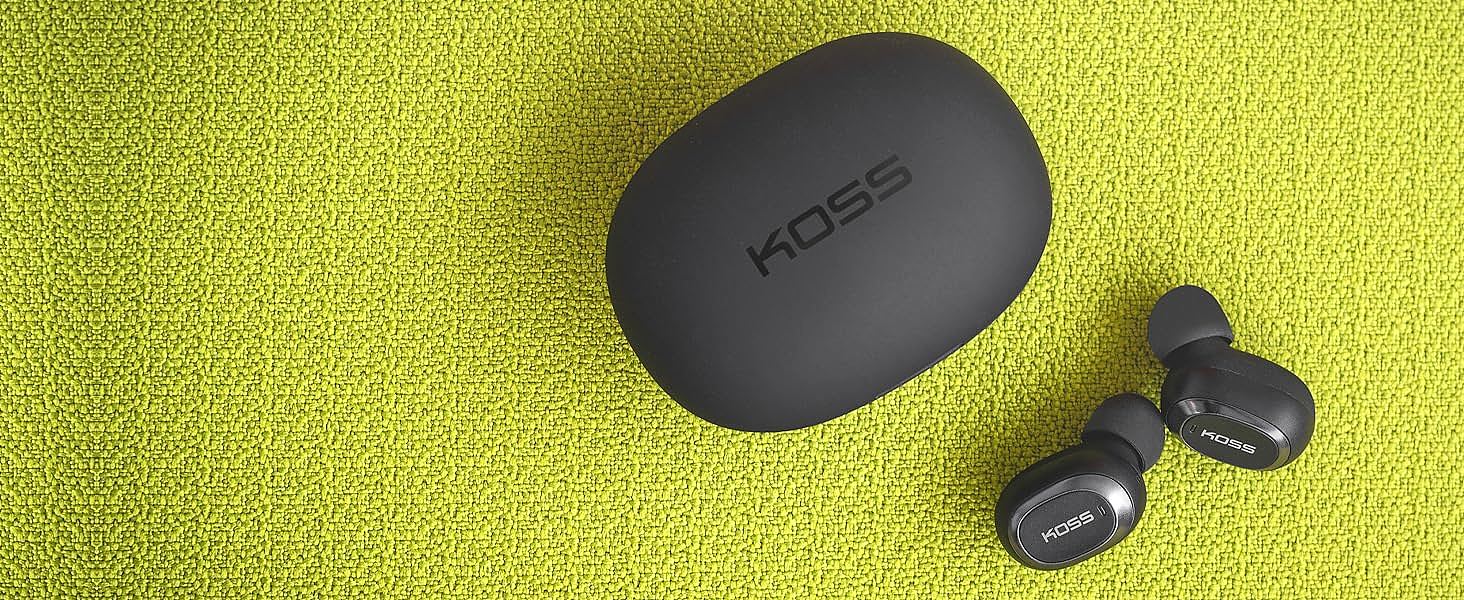
The TWS250i includes multiple silicone cushion sizes. This is not just for comfort; it is for Impedance Matching. A loose seal leaks low-frequency energy, destroying bass response. A proper seal creates a pressurized chamber, allowing the small driver to pressurize the ear drum effectively. The “flush” fit design minimizes the acoustic path length, reducing resonance peaks that can make treble sound harsh.

Conclusion: Fidelity Over Features
The Koss TWS250i is an exercise in prioritization. It eschews active noise cancellation and marathon battery life to focus on the one metric that built the company’s reputation: Audio Fidelity. By allocating its power budget to high-performance drivers and amplification, it offers a listening experience that punches above its weight class. It serves as a reminder that in audio engineering, sometimes the most advanced feature is simply good sound.