The Energy Reservoir: The Physics of 90-Hour Endurance in Portable Audio
Update on Dec. 31, 2025, 6:37 p.m.
In the pantheon of modern anxieties, “Low Battery” holds a prominent place. As our lives become increasingly tethered to digital devices, the limitation of energy storage remains the single greatest bottleneck in consumer electronics. Processors get faster, screens get brighter, but batteries largely rely on chemical principles established decades ago. This creates a constant tension between performance and endurance.
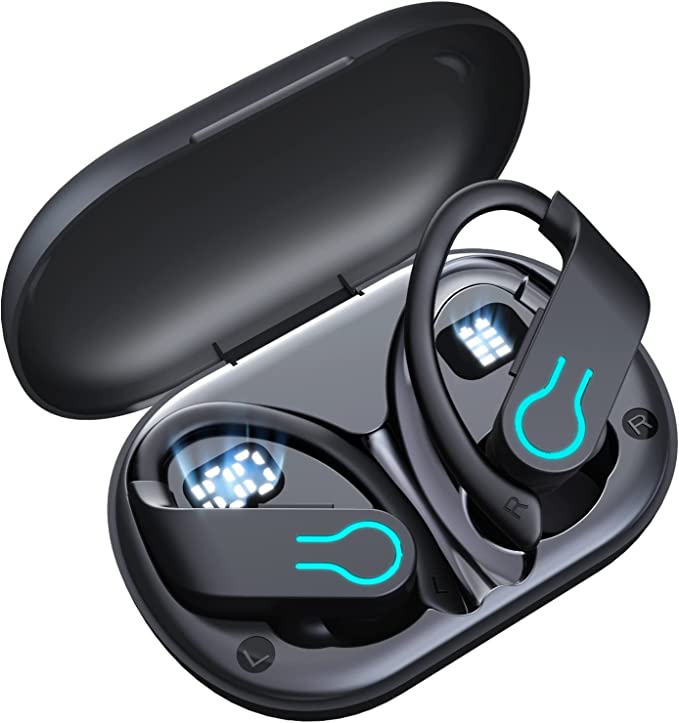
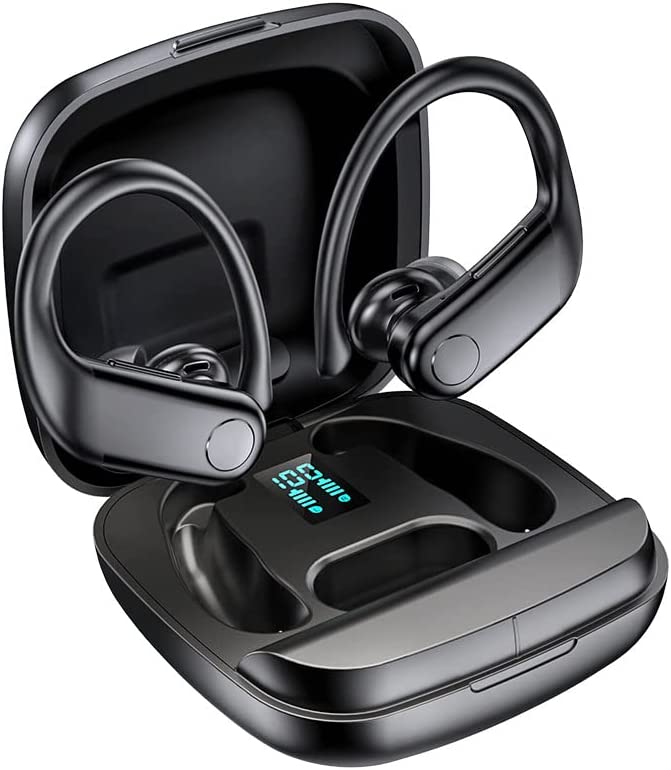
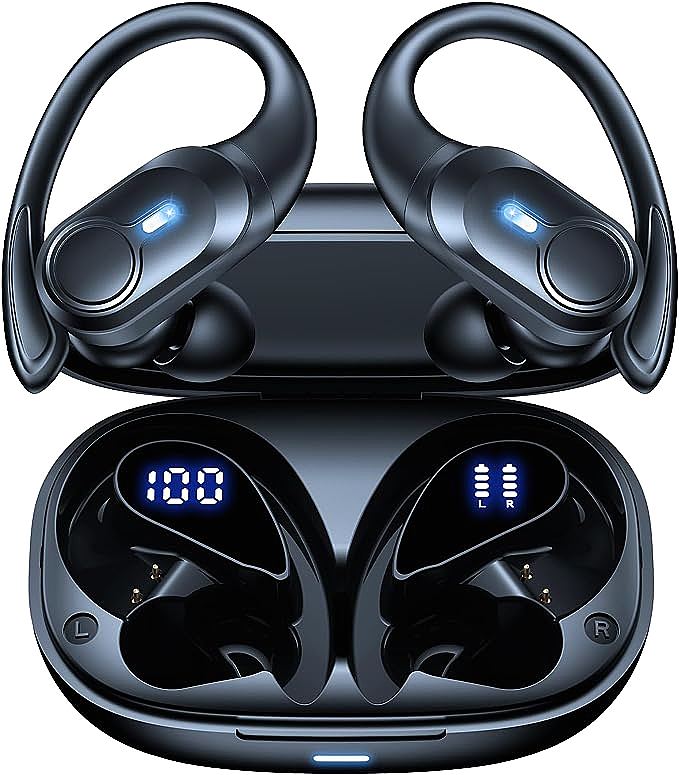
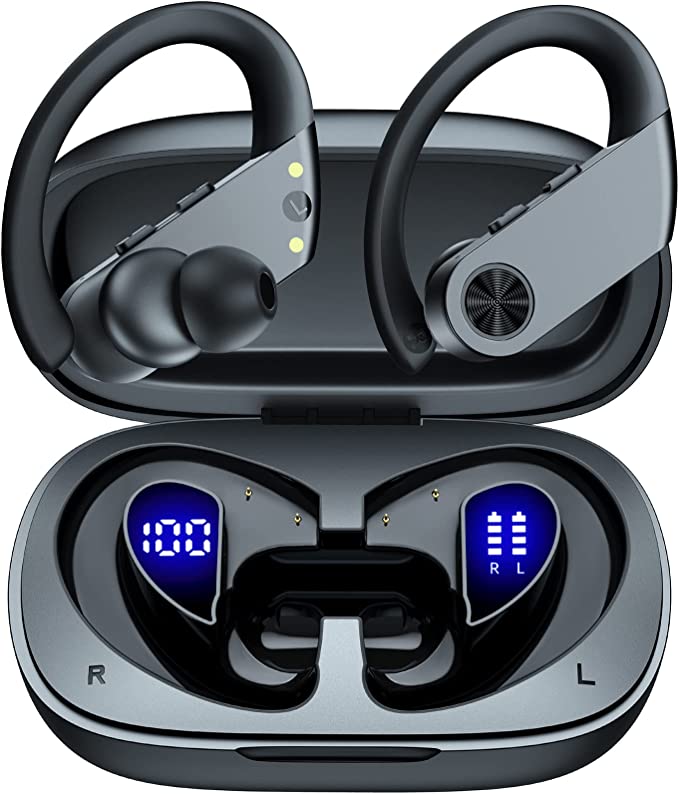
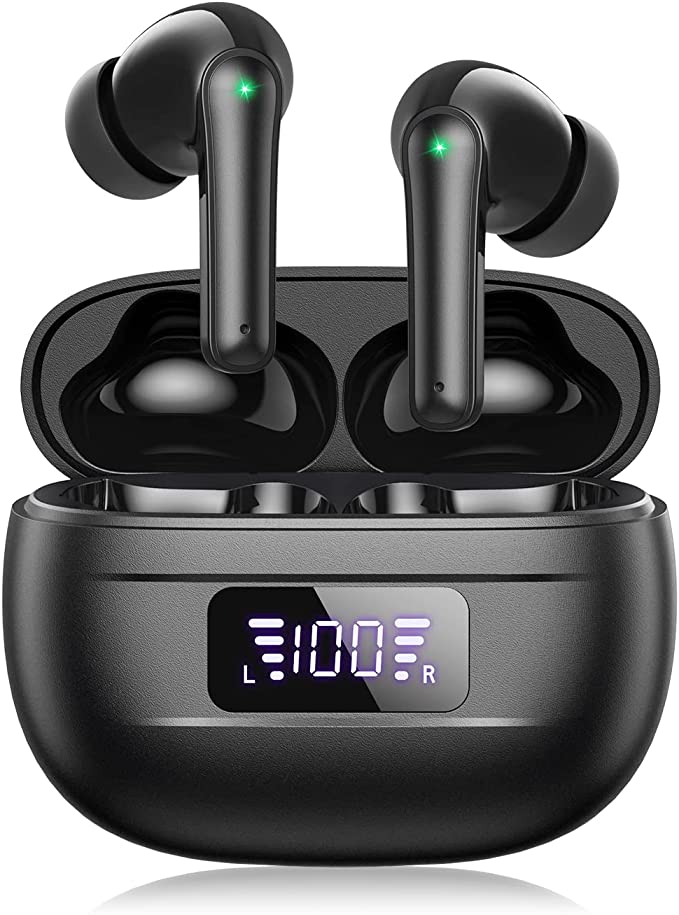
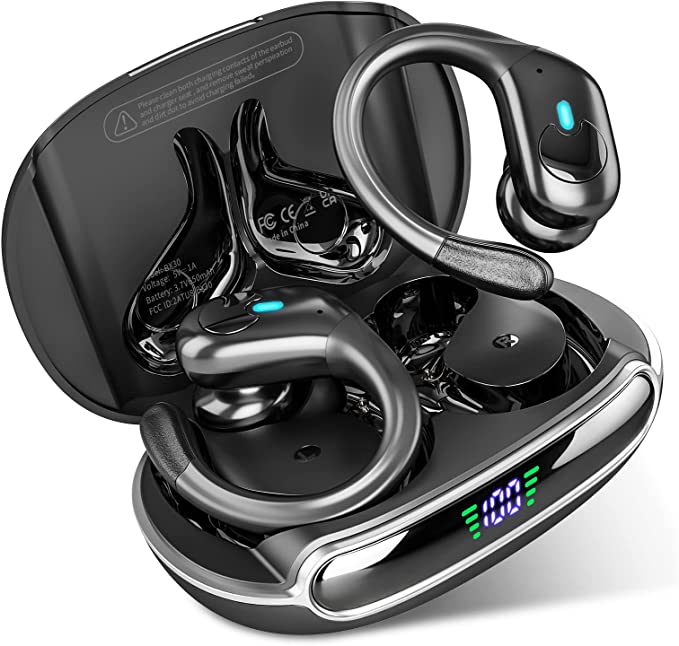
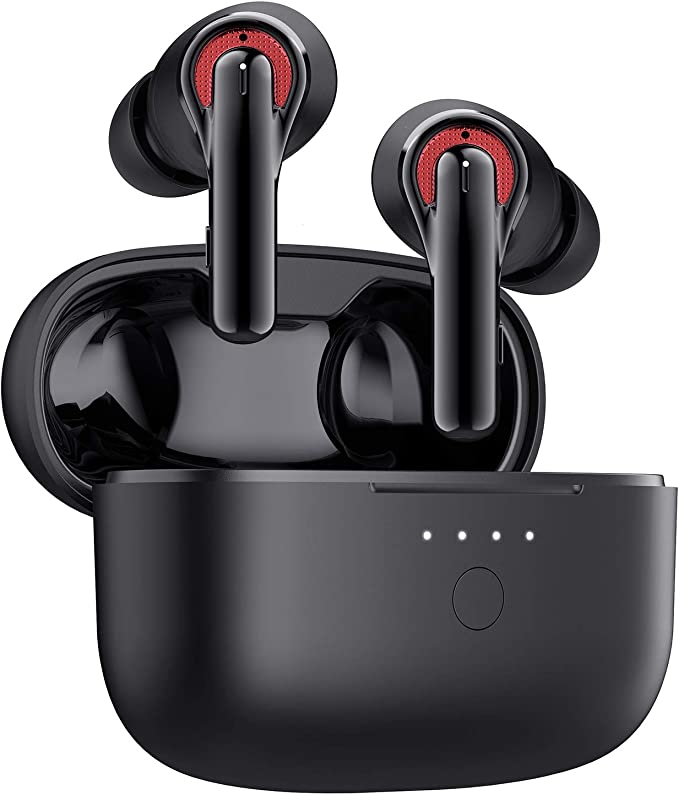
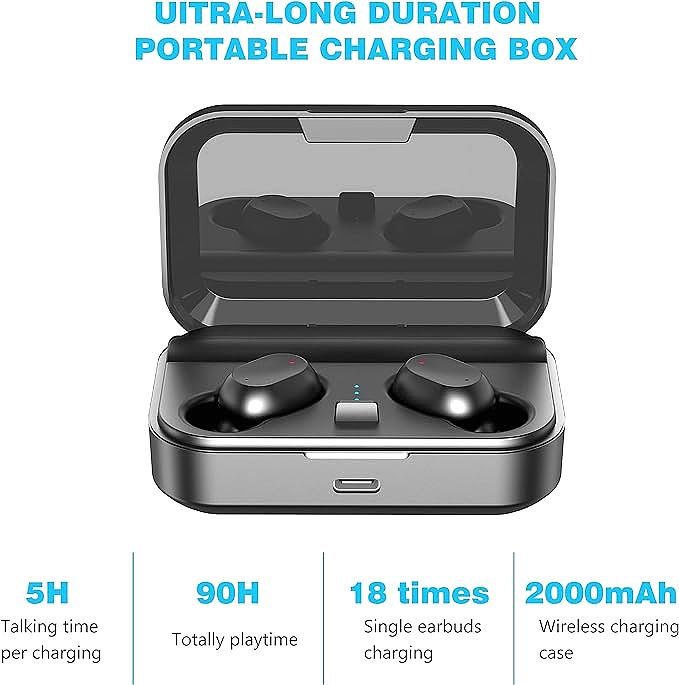
In the specific niche of True Wireless Stereo (TWS) earbuds, this tension is acute. These devices must be vanishingly small, yet operate wirelessly for hours. Most solve this by tethering the user to a wall outlet every few days. However, a sub-class of devices, exemplified by the Erligpowht D2 Wireless Earbuds, takes a different engineering approach: brute-force capacity. With a massive 2000mAh charging case enabling a claimed 90 hours of total playtime, the D2 fundamentally shifts the usage paradigm from “daily management” to “weekly reliability.”
This article does not just review a pair of earbuds; it explores the physics of energy storage that makes such endurance possible. We will delve into the electrochemistry of lithium-ion cells, the mathematics of power management, and the engineering logic behind using a high-capacity reservoir to power microscopic satellites.
The Electrochemistry of Endurance: Inside the Lithium-Ion Cell
To understand how the D2 achieves its marathon battery life, we must look at the atomic level. The heart of this system is the Lithium-Ion (Li-ion) battery. Whether it’s the 50mAh cell in the earbud or the 2000mAh cell in the case, the underlying chemistry is the same—a “rocking chair” mechanism of ion transfer.
The Intercalation Mechanism
A Li-ion battery consists of a positive electrode (cathode), a negative electrode (anode), and an electrolyte.
1. Charging: When you plug the D2 case into a USB charger, electrical energy forces lithium ions ($Li^+$) to migrate from the cathode (typically Lithium Cobalt Oxide) through the electrolyte and “intercalate” (insert themselves) into the lattice structure of the graphite anode. This stores energy in a high-potential chemical state.
2. Discharging: When the case charges the earbuds, the process reverses. Lithium ions de-intercalate from the graphite anode and migrate back to the cathode, releasing electrons that flow through the external circuit to power the earbuds’ charging logic.
Energy Density: The 2000mAh Advantage
The defining metric here is Energy Density—the amount of energy stored per unit volume. The D2’s case packs 2000mAh (milliampere-hours).
* Context: A typical TWS case holds 300-500mAh. A modern smartphone holds 3000-5000mAh.
* The Math: 2000mAh at the standard 3.7V nominal voltage of a Li-ion cell equals 7.4 Watt-hours (Wh) of energy.
$$Energy (Wh) = Capacity (Ah) \times Voltage (V)$$
$$2.0 Ah \times 3.7 V = 7.4 Wh$$
While 7.4 Wh sounds small compared to a laptop, for earbuds that consume milliwatts of power, it is an ocean of energy. This high capacity is achieved by prioritizing volume for the battery cell within the case design, essentially building a case around a battery rather than fitting a battery into a stylish case.
The Architecture of the Micro-Grid: Host and Satellite
The Erligpowht D2 system functions like a miniature electrical grid. The charging case acts as the power plant (Host), and the two earbuds are the consumers (Satellites).
Efficiency of Energy Transfer
Transferring energy is never 100% efficient. When the 2000mAh case charges the 50mAh earbuds, several losses occur:
1. Boost Conversion: The 3.7V of the case battery must be boosted to 5V to travel across the charging contacts.
2. Buck Conversion: Inside the earbud, that 5V must be regulated down to safely charge the small 3.7V cell.
3. Heat Loss: Every step generates heat due to internal resistance.
Despite these losses (typically 10-20%), the sheer volume of the reservoir (2000mAh) overwhelms the inefficiency. * The Ratio: Total Earbud Capacity = $50mAh \times 2 = 100mAh$. * Theoretical Cycles: $2000mAh / 100mAh = 20 cycles$. * Real-World Cycles: Accounting for efficiency losses, the claim of 18 recharge cycles is mathematically sound and realistically achievable. This engineering honesty is crucial. It means the system is designed with sufficient overhead to deliver on its promise despite the laws of thermodynamics.
The Significance of 90 Hours
Why does 90 hours matter? It’s not just a big number; it’s a lifestyle shift.
* Commuter: 2 hours/day = 45 days without wall charging.
* Traveler: A Trans-Pacific flight (14 hours) uses only ~15% of the total system capacity.
This endurance effectively removes “charging anxiety.” The user treats the headphones less like a smartwatch (daily chore) and more like a Kindle (weekly/monthly maintenance).
Mature Technologies: The Logic of Bluetooth 5.0 and Micro-USB
In the fast-paced world of tech, “older” often implies “obsolete.” However, the D2 utilizes Bluetooth 5.0 and Micro-USB, technologies that are mature rather than cutting-edge. From an engineering and economic perspective, this is a calculated optimization.
Bluetooth 5.0: The Stability Plateau
Bluetooth 5.0 represented a massive leap over 4.2, doubling the speed and quadrupling the range. While 5.1, 5.2, and 5.3 have since added features like direction finding and LE Audio, the core stability and bandwidth for standard audio streaming plateaued at 5.0.
By sticking with a mature Bluetooth 5.0 chipset, the engineers can use components that have been manufactured in the billions, ensuring high reliability and low cost. The “fast, stable and efficient transmission” is not compromised for the average user streaming Spotify or making calls. The bandwidth of BT 5.0 (2 Mbps) is more than sufficient for standard codecs like SBC and AAC.
Micro-USB: The Ubiquity Factor
The use of Micro-USB in an era of USB-C is often criticized. However, it represents a “tail-end” supply chain advantage. The connectors are inexpensive and robust. For a device with such a massive battery that requires charging so infrequently (perhaps once a month), the inconvenience of carrying a legacy cable is mitigated by the rarity of the event. It is a trade-off: saving cost on the connector to spend it on the battery cells.
Power Consumption and Audio Output
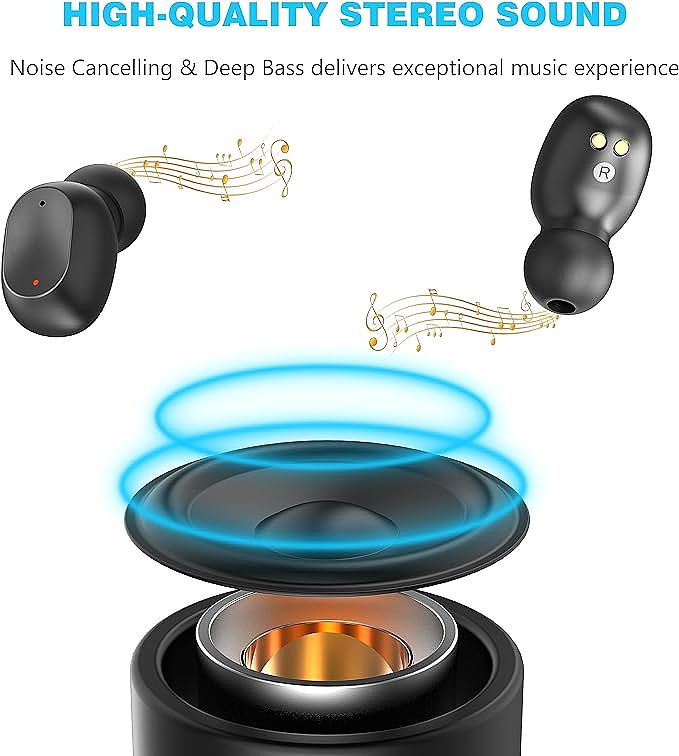
The endurance of the D2 is not just about having a big tank; it’s also about fuel efficiency (MPG). The earbuds consume power primarily to drive the speakers and maintain the wireless link.
The 50mAh Earbud Cell
Each earbud contains a 50mAh battery. This is a standard size for TWS buds. To get 4-5 hours of playback, the power consumption must be averaged around 10-12mA.
This requires efficient amplifier circuitry. The dynamic drivers used in the D2 are likely optimized for high sensitivity (SPL), meaning they require less electrical power to produce a given volume. This is often achieved using lighter diaphragm materials and efficient voice coils. The trade-off is often a slight reduction in maximum dynamic range compared to power-hungry audiophile gear, but for a sports/commuter bud, efficiency is the priority.
Standby Power and Self-Discharge
One hidden killer of wireless earbuds is self-discharge. Even when off, the circuit monitors for the “power on” signal (taking them out of the case). The D2 claims a Standby Time of about 90 hours. However, in the case, the standby time is effectively months because the case actively tops them up. The high-capacity case buffers the natural self-discharge of the small earbud cells, ensuring they are always at 100% when removed.
Durability Considerations: The Battery’s Enemy
Lithium-ion batteries have enemies: heat, moisture, and deep discharge. * Moisture: The IPX7 / Sweat-Resistant nature of the D2 is critical not just for the electronics, but for the battery safety. Water ingress can cause short circuits leading to thermal runaway. The sealing required for IPX7 protects the volatile chemistry within. * Heat: The 2000mAh battery in the case can generate heat during recharging. The metal/plastic construction of the case likely acts as a heat sink to dissipate this thermal energy, preserving cell health.
Conclusion: The Engineering of Sufficiency
The Erligpowht D2 is a case study in “appropriate engineering.” It doesn’t chase the bleeding edge of specs for the sake of marketing. Instead, it identifies the primary pain point of wireless audio—battery life—and solves it with a brute-force physics solution: a massive 2000mAh battery.
It balances this with mature, reliable connectivity (Bluetooth 5.0) and robust protection (IPX7). It reminds us that in the world of physics, energy density is king. By carrying a little extra weight in the case, the user gains a disproportionate amount of freedom. It is a triumph of function over form, a tool designed for the long haul in a world of short-lived gadgets.