The Dual Nature of Sound: Hybrid ANC and the Physics of High-Resolution Audio
Update on Jan. 11, 2026, 11:36 a.m.
In the taxonomy of personal audio, headphones usually fall into binary categories: the wireless commuter tool designed for convenience and silence, or the wired audiophile monitor designed for purity and fidelity. The former prioritizes the erasure of the world; the latter prioritizes the revelation of the music. Rarely do these two philosophies converge without compromise.
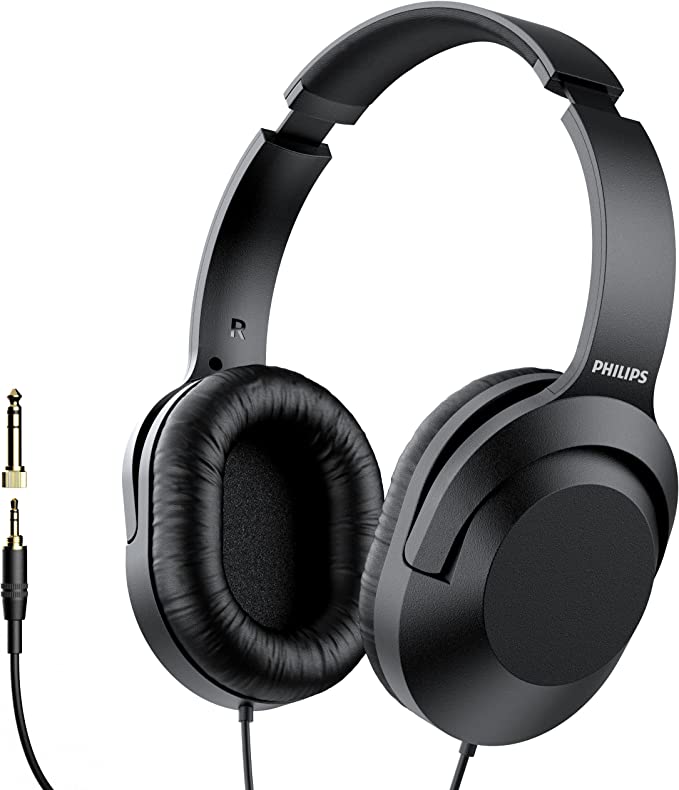
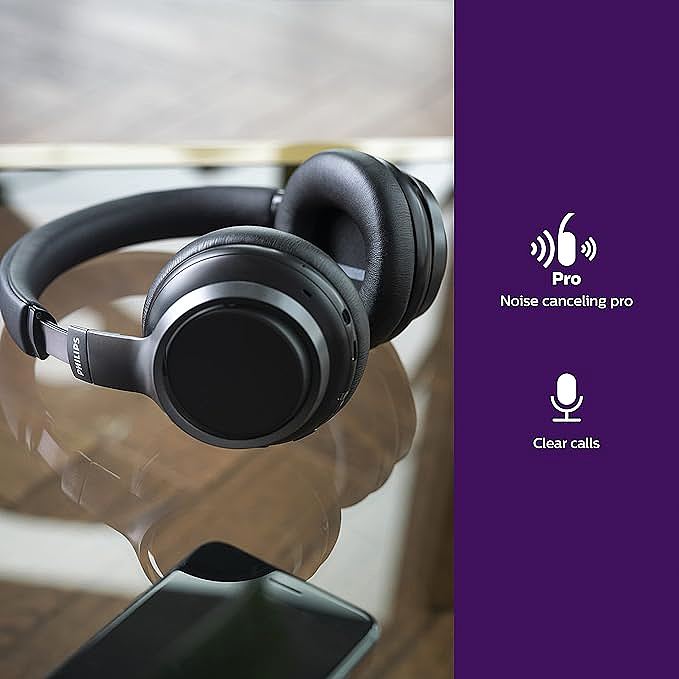
The PHILIPS H9505 ANC Wireless Headphones represent a fascinating engineering attempt to bridge this divide. By integrating a sophisticated Hybrid Active Noise Cancellation system for the chaotic world, and retaining a Hi-Res Audio certified wired path for the quiet moments, they offer a study in acoustic duality. This article peels back the plastic and leather to examine the control theory behind hybrid silence and the signal processing physics that defines high-resolution sound.
The Cybernetics of Silence: Anatomy of Hybrid ANC
Active Noise Cancellation (ANC) is often misunderstood as a simple “sound barrier.” In reality, it is a dynamic, real-time control system—a cybernetic loop that constantly measures, calculates, and reacts. To understand why the H9505 uses “Hybrid” ANC, we must first understand the limitations of simpler systems.
Feedforward: The Preemptive Strike
The most basic form of ANC is Feedforward. It places a microphone on the outside of the ear cup. * Mechanism: This mic hears the noise (e.g., a train engine) moments before it penetrates the ear cup to reach your ear. The Digital Signal Processor (DSP) inverts this signal (creates an “anti-noise” wave) and sends it to the speaker. * The Physics: Because the mic is external, it captures the noise early, giving the DSP a “time advantage” to process the signal. This makes Feedforward ANC excellent at canceling mid-frequency noise (like chatter or traffic). * The Flaw: It has no way of knowing if it worked. If the anti-noise wave is slightly off-phase or wrong in amplitude, the system creates more noise, but the external mic never hears this error. It is an “open-loop” system.
Feedback: The Error Corrector
Feedback ANC places the microphone inside the ear cup, right next to the driver. * Mechanism: It listens to what your ear is actually hearing—music plus any residual noise. It compares this to the desired signal (just the music) and generates an anti-noise wave to cancel the difference. * The Physics: This is a “closed-loop” system. It is self-correcting and highly accurate, especially for low frequencies (like airplane rumbles). * The Flaw: Because it reacts after the noise has entered the ear cup, it is slower. If it tries to cancel high frequencies, the processing lag can cause the anti-noise to arrive too late, creating a feedback squeal (oscillation).
Hybrid ANC: The Best of Both Worlds
The PHILIPS H9505 employs Hybrid ANC, combining both feedforward (external) and feedback (internal) microphones.
This architecture allows for a “divide and conquer” strategy. The external mic handles the broad-spectrum environmental noise preemptively. The internal mic cleans up the low-frequency residue and corrects for leakage caused by glasses or hair breaking the ear pad seal.
From a control theory perspective, this creates a robust system with a wider bandwidth of cancellation. It can suppress noise across a broader frequency range than either single system could achieve alone, creating that profound “vacuum of silence” sensation that defines premium ANC.

The High-Resolution Promise: Breaking the Bluetooth Ceiling
While ANC handles the noise, the 40mm Neodymium drivers handle the music. Here, the H9505 introduces a critical distinction: Hi-Res Audio Certification. This badge is not just marketing; it is a technical standard defined by the Japan Audio Society, requiring a device to reproduce frequencies up to 40kHz (well beyond human hearing of 20kHz).
The Bottleneck of Bluetooth
In wireless mode, even with advanced codecs, Bluetooth is a bottleneck. The bandwidth is limited. Audio data must be compressed (lossy compression), discarding some information to fit through the “pipe.” * Psychoacoustic Masking: Codecs like AAC or SBC throw away sounds that are theoretically “masked” by louder sounds. While efficient, this removes the subtle air, reverb tails, and transient details that give a recording its spatial realism.
The Wired Advantage: Analog Purity
When you plug the included detachable cable into the H9505, you bypass the Bluetooth radio entirely. The headphones transform from a digital device into a passive analog transducer. * Bandwidth: A copper wire has effectively infinite bandwidth for audio signals. It can carry the full, uncompressed waveform from a Hi-Res source (like a 24-bit/96kHz FLAC file). * The 40kHz Headroom: Why reproduce up to 40kHz if we can only hear to 20kHz? The answer lies in Transient Response and Phase Accuracy. To accurately reproduce the sharp leading edge of a snare drum hit or the pluck of a guitar string (a transient) in the audible range, the system must be capable of responding fast enough to handle much higher frequencies. A system limited strictly to 20kHz often introduces “ringing” or smearing in the time domain. * Neodymium Drivers: The 40mm drivers in the H9505 use Neodymium magnets—a rare-earth material with a very high magnetic flux density. This provides a strong motor force to move the diaphragm quickly and precisely, essential for tracking the complex, high-resolution waveforms delivered via the wired connection.
This “Dual Nature” allows the user to choose: convenience and silence for the commute (Wireless + ANC), or absolute fidelity for the living room (Wired + Hi-Res).

The Physics of Awareness: Transparency Mode
The Hybrid ANC system offers another capability: Awareness Mode (or Transparency Mode). By inverting the logic of the microphones, the system can pass external sound through to the speakers.
Instead of cancelling the outside world, the DSP amplifies it. This requires sophisticated Equalization (EQ).
* Naturalness: A raw microphone signal sounds artificial and tinny. To make the world sound “natural” through headphones, the DSP must compensate for the acoustic transfer function of the ear cup. It boosts certain frequencies and cuts others to mimic the “Open Ear” frequency response.
* Touch Activation: The H9505 allows users to trigger this mode by covering the right ear cup. This utilizes a capacitive touch sensor. The physical act of covering the cup is an intuitive gesture—mimicking cupping an ear to hear better—that bridges the gap between digital isolation and analog reality.
Conclusion: A Tool for Every Sonic Landscape
The PHILIPS H9505 is not just a pair of headphones; it is a sophisticated acoustic management system. It recognizes that our sonic needs change.
In the chaos of a subway, its Hybrid ANC uses control theory to carve out a space of quiet. In the sanctuary of a quiet room, its Hi-Res wired mode uses physics to deliver uncompromised audio fidelity.
It is a device that refuses to force the user into a single box. It embraces the complexity of modern listening—where we demand both the digital magic of silence and the analog purity of sound.