The Physics of the Boom Mic: Why Geometry Beats Algorithms in Voice Clarity
Update on Jan. 10, 2026, 6:54 p.m.
In the age of tiny, invisible earbuds, the “Boom Mic”—that protruding arm extending towards the mouth—can seem like a relic of the call center era. Tech giants spend billions developing algorithms to make microphones hidden in our ears sound like they are in front of our lips. Yet, for professional drivers, dispatchers, and remote executives, the boom mic remains the gold standard.
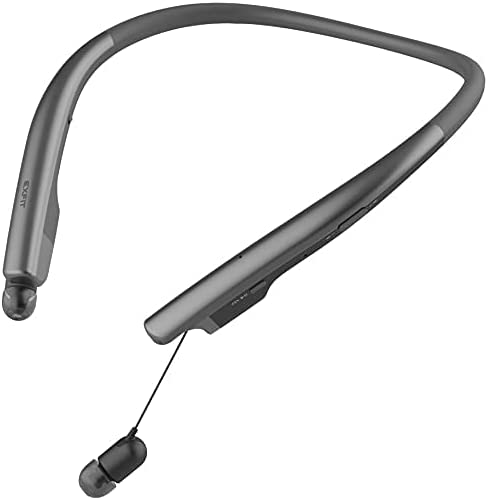
The Eumspo G3 Wireless Headset embraces this classic form factor not out of nostalgia, but out of physics. Specifically, it leverages the Inverse Square Law of sound propagation. While algorithms are powerful, physical proximity is unbeatable.
This article explores the acoustic science behind the boom mic, the engineering of Dual-Microphone Environmental Noise Cancellation (ENC), and why geometry is still the most effective noise filter.

The Inverse Square Law: The Proximity Advantage
Sound waves dissipate energy as they travel. According to the Inverse Square Law, sound intensity decreases by approximately 6dB for every doubling of distance from the source.
- Earbud Mic: Located near the ear, approx. 15cm from the mouth.
- Boom Mic: Located near the mouth, approx. 2-3cm away.
By physically placing the microphone capsule 5 times closer to the sound source (the mouth), the Eumspo G3 captures a voice signal that is significantly louder and richer in frequency content than any earbud can achieve. This high Signal-to-Noise Ratio (SNR) at the hardware level means the digital processor has a much cleaner signal to start with, requiring less aggressive (and potentially robotic-sounding) noise suppression.
Dual-Microphone ENC: The Digital Gatekeeper
While the boom mic captures the voice, the world is still noisy. The hum of a semi-truck engine or the chatter of an open office can still bleed in. To combat this, the G3 employs Dual-Microphone ENC.
The Primary and Secondary Mics
- Primary Mic (Voice): Located at the tip of the boom, focused on the user’s mouth.
- Secondary Mic (Environment): Located on the earpiece body, facing outwards.
The secondary mic captures a “noise print” of the environment. The internal Digital Signal Processor (DSP) then compares the two signals. Because the ambient noise hits both microphones at roughly the same volume, but the voice hits the boom mic much louder, the DSP can mathematically subtract the environmental sounds from the primary signal.
This is Adaptive Beamforming. It creates a virtual cone of silence around the mouth, rejecting sounds that originate from outside this cone. The result is that a truck driver can be heard clearly over the roar of the highway, not because the noise is gone, but because the headset knows exactly what isn’t voice.
The Acoustics of “Presence”
Telephone audio is often band-limited (narrowband), cutting off high and low frequencies. This makes voices sound thin. However, modern VoLTE (Voice over LTE) and Zoom calls support Wideband Audio (HD Voice).
To take advantage of this, a headset needs a microphone capable of capturing the full vocal range (roughly 100Hz to 8kHz). The boom arm allows for a larger microphone capsule than can fit inside a tiny earbud. This larger diaphragm captures more low-end resonance (the “body” of the voice) and high-end articulation (the “crispness”).
For a business professional, this translates to Vocal Authority. You sound like you are in the room, not calling from a tunnel. In negotiation or customer service, this acoustic presence builds trust.

The Mute Button: A Hardware Firewall
In professional communication, silence is a tool. The ability to cough, consult a colleague, or sip coffee without broadcasting it is essential. Soft-mute (clicking a button on the screen) is slow and unreliable.
The Eumspo G3 features a Physical Mute Button. This is a hardware firewall for your audio stream. When pressed, it physically cuts the microphone input signal before it reaches the Bluetooth transmitter. It provides absolute certainty that you are not being heard, a psychological safety net that software buttons cannot replicate.
Conclusion: Form Follows Function
The Eumspo G3 is an unapologetic tool. It does not try to be a fashion accessory. Its form—the extended boom, the earhook—is dictated entirely by the function of capturing clear audio in difficult environments.
By respecting the laws of physics and placing the microphone where it belongs, it outperforms far more expensive consumer earbuds in the one metric that matters for business: Clarity.