The Economics of Hygiene: Why Disposable Culture is Killing Your Wallet
Update on Feb. 1, 2026, 2:41 p.m.
In the modern economy, many products are sold as “platforms.” You buy the main device cheaply (the printer, the razor handle, the toothbrush body), but you are forced into a lifelong contract of buying expensive consumables (the ink, the blades, the brush heads). This is known as the “Razor and Blades” business model.
For the consumer, this creates a hidden cost. A $50 toothbrush might end up costing $300 over three years once you factor in the replacement heads, which dentists recommend changing every three months. Breaking this cycle requires finding a system that rejects the subscription-style dependency and offers a complete, long-term supply chain upfront.
The Razor Blade Business Model
The dental industry is notorious for high markups on molded plastic. A standard replacement head for a premium sonic toothbrush can cost between $5 and $10. If you follow the American Dental Association (ADA) guidelines to replace the head every 3 months, you are spending $20-$40 a year just on plastic bristles.
This pricing structure discourages hygiene. Users stretch the life of their brush heads to 6 months or longer to save money. However, worn bristles become abrasive to enamel and harbor bacterial colonies, defeating the purpose of the device. The economic friction directly impacts health outcomes.
Hygiene Logistics: The Supply Chain of Clean
True value in oral care isn’t just the motor; it’s the logistics of maintenance. A sustainable system should provide enough consumables to outlast the typical lifecycle of the battery or the user’s habit curve.
Imagine buying a car that came with enough gas for two years. That is the logistical equivalent we should demand from hygiene products. Removing the “friction of reordering” ensures that users actually swap their brush heads when they are supposed to, maintaining optimal cleaning efficiency without the mental load of shopping.
Case Study: The 2-Year Ecosystem
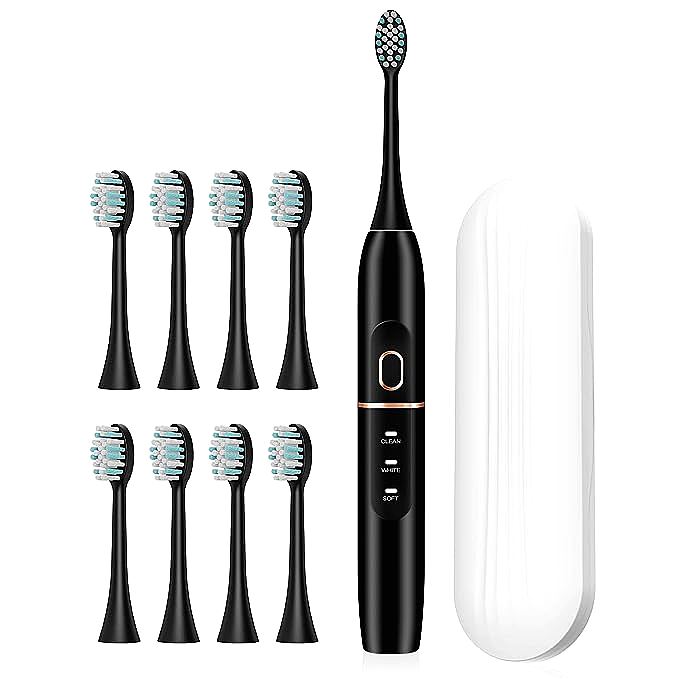
The kingheroes C2-1 disrupts the standard economic model by bundling the supply chain with the hardware. The kit includes 8 brush heads in the box.
Mathematically, this transforms the value proposition: * 8 heads x 3 months per head = 24 months (2 years) of usage.
By including a two-year supply of consumables in the initial purchase price (often under $20), the “cost per month” of ownership drops to pennies. It eliminates the “Consumable Trap.” The user is not buying a subscription to a brand; they are buying an independent hygiene ecosystem that requires no further investment for 700+ days.
Travel Physics: Lithium Stability and Portability
For the traveler, the “electric” part of the electric toothbrush is often a liability. Chargers are bulky, cables get lost, and finding a bathroom outlet in a foreign hotel can be a hassle.
The C2-1 addresses travel logistics through Energy Density. Its 60-day battery life means that for almost any standard vacation or business trip, you do not need to pack the charger at all. The brush holds enough potential energy to run twice a day for weeks. Coupled with a hard-shell Travel Case, it becomes a self-contained unit. The case protects the drive shaft and bristles from physical damage and luggage compression, ensuring the precision instrument arrives calibrated and clean.
Waterproofing Standards: IPX7
Electronics and water are natural enemies, yet a toothbrush lives in the wettest environment in the house. Longevity depends on sealing.
The standard here is IPX7 (Ingress Protection). The “7” indicates the device can be submerged in water up to 1 meter deep for 30 minutes. This rating is critical not for underwater brushing, but for cleaning the device itself. It allows the user to rinse the handle and shaft thoroughly under the tap to remove toothpaste residue (which can harden and damage seals) without fear of shorting the lithium battery or corroding the motor contacts.
Conclusion: Owning vs. Renting Your Smile
The shift from expensive proprietary refills to an all-inclusive box set is a shift from “renting” your hygiene to owning it. By securing the supply chain and ensuring energy independence, systems like the kingheroes C2-1 allow users to focus on the act of cleaning, rather than the cost of the tool.