Latency, Reliability, and the Analog Advantage: Why Wired Audio Persists in a Wireless World
Update on Jan. 30, 2026, 9:35 a.m.
In the landscape of modern personal technology, “cutting the cord” has become synonymous with progress. Yet, for a significant demographic of users—ranging from competitive gamers to marathon runners and remote professionals—the tether remains indispensable. The resurgence of wired audio interfaces is not merely nostalgic; it is driven by hard technical requirements that wireless protocols have yet to fully satisfy. Issues of latency, battery dependence, and signal compression create a “reliability gap” that only a physical connection can bridge.
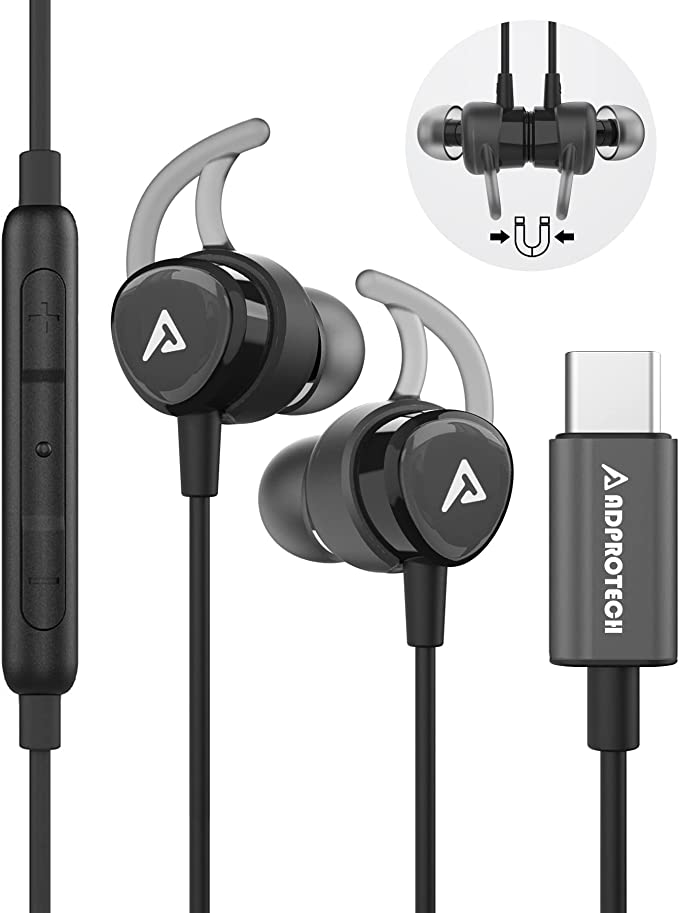
The practical application of wired headphones, such as the Holiper 025, highlights the convergence of utility and performance. When the variables of battery degradation and wireless interference are removed from the equation, the device transforms from a consumable accessory into a reliable tool. Understanding the mechanics of stability, durability, and control illuminates why the 3.5mm jack remains a standard fixture in professional and active contexts.
The Zero-Latency Imperative
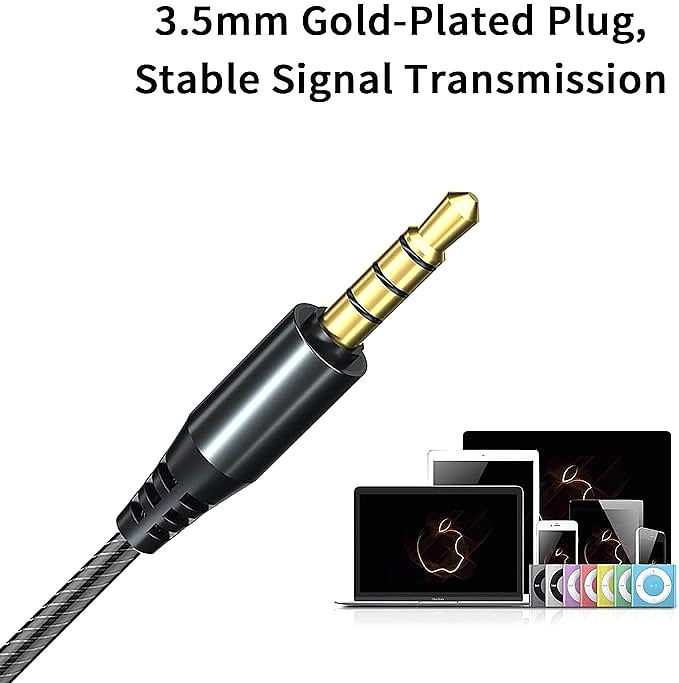
For specific use cases, the speed of light (electricity through wire) is the only acceptable standard. Bluetooth technology, even with low-latency codecs like aptX LL, introduces a delay typically ranging from 40ms to over 200ms. This latency is the time it takes for the audio data to be encoded, transmitted, received, decoded, and converted to analog sound.
In video gaming, particularly competitive First-Person Shooters (FPS), a 100ms delay can be the difference between reacting to a footstep and being eliminated. Similarly, for video editors and musicians, audio that is out of sync with the visual timeline or instrument input destroys the workflow. The Holiper 025 utilizes a direct copper transmission path. The latency is effectively zero (nanoseconds), strictly limited by the length of the cable. This ensures that the auditory feedback is instantaneous, providing the temporal precision required for high-performance tasks.
Mechanical Ergonomics and Stabilization
One of the significant challenges with in-ear audio is retention. Wireless earbuds rely heavily on the friction of the ear tip or the clamping force of the tragus to stay in place. However, the addition of batteries and circuit boards increases the weight and bulk of the earpiece, creating a pendulum effect that can dislodge the bud during vigorous movement.
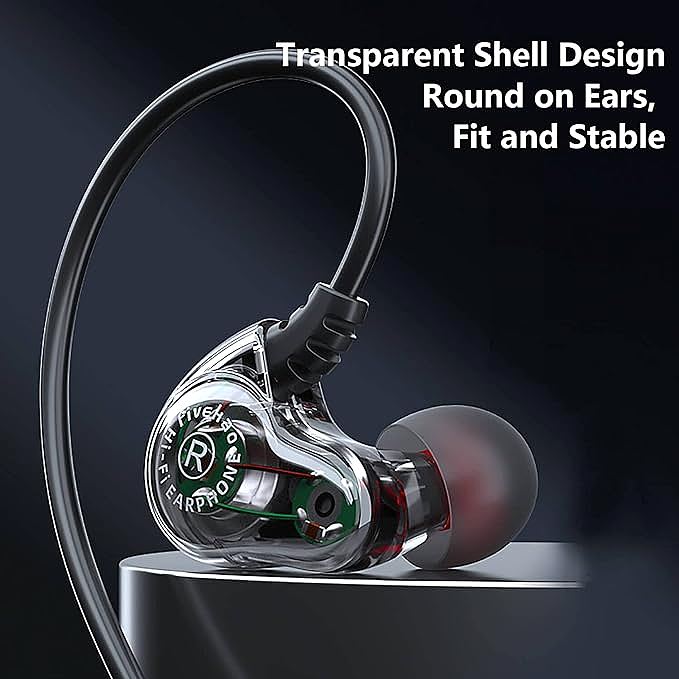
Wired designs often have the advantage of a lighter chassis. The Holiper 025 employs a specific “over-ear” cable routing design, often referred to as “memory wire” or ear hooks. This ergonomic strategy redistributes the weight of the cable and the earpiece across the entire auricle (outer ear) rather than relying solely on the ear canal for support.
From a biomechanical perspective, this creates a suspension system. During high-impact activities like running or interval training, the ear hook acts as a shock absorber, decoupling the cable’s movement from the earpiece. This prevents “microphonics”—the thumping sound caused by cable vibrations transferring to the driver—and ensures a consistent acoustic seal, which is often broken in standard earbuds when the jaw moves or the head turns.
Durability Protocols and Environmental Hardening
A tool’s value is often defined by its ability to withstand its environment. Electronic devices are notoriously susceptible to moisture ingress. In the context of sports and outdoor use, sweat is a particularly aggressive corrosive agent due to its salinity.
The IP (Ingress Protection) rating system provides a standardized measure of a device’s resilience. The Holiper 025 carries an IPX5 rating. Breaking this down: * IP: Ingress Protection. * X: Dust resistance was not tested (common for audio gear where the primary concern is liquid). * 5: Protection against low-pressure water jets from any direction.
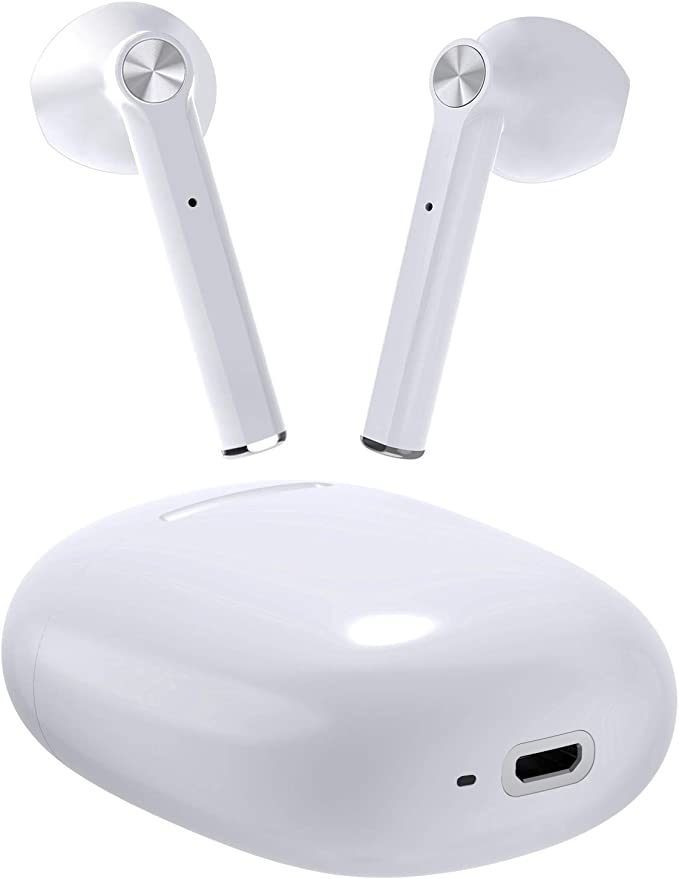
In practical terms, an IPX5 rating means the device is engineered to withstand heavy perspiration and rain. This is achieved through internal gasketing and the application of hydrophobic coatings on the driver mesh and circuit points. Unlike wireless charging cases, which often have open ports and complex hinges that are vulnerable to water, a wired headphone’s primary point of failure is the connection point, which is robustly reinforced in this design.
Analog Control Utility
The interface for controlling audio also differs significantly between wired and wireless paradigms. Wireless buds often use capacitive touch sensors, which can be finicky—registering hair brushes as touches or failing to register sweaty fingers.
The Holiper 025 incorporates a physical inline control module. This typically uses a resistive slider for volume control and a mechanical switch for media/call functions. The volume slider is particularly noteworthy as it often operates independently of the source device’s digital volume, acting as an analog attenuator. This allows for finer granularity in volume adjustment. The integrated microphone, positioned on the cable near the mouth, often provides superior voice pickup compared to TWS earbuds, where the mic is located at the ear, far from the sound source. This physical positioning, combined with the reliability of the wired connection, makes such devices a preferred choice for long conference calls where battery fatigue and connection drops are unacceptable risks.

Industry Implications: The Hybrid Workflow
The persistence of wired audio suggests a bifurcated future for the industry. While wireless dominates casual listening, the wired interface is cementing itself as the “Pro” standard. We are seeing a trend where high-end mobile devices and laptops are being judged by the quality of their internal DACs and headphone jacks (or the lack thereof).
For professionals and enthusiasts, the ecosystem is evolving to support both. The wired headphone acts as the reliable baseline—the device that works instantly, without charging, and with guaranteed fidelity. Devices like the Holiper 025 demonstrate that this reliability does not require a high barrier to entry, ensuring that the benefits of zero-latency, dual-driver high fidelity are accessible across the entire spectrum of users.