The Swimmer's Dilemma: Why Your Waterproof Bluetooth Headphones Fail Underwater
Update on Jan. 27, 2026, 9:14 a.m.
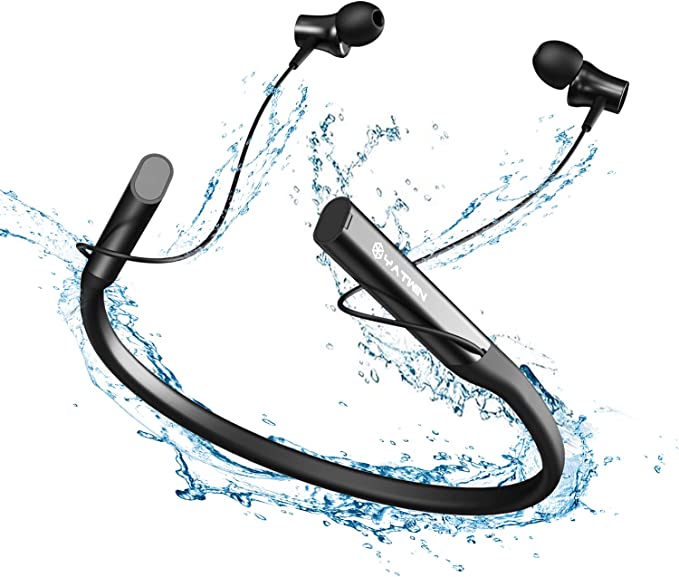
Let’s paint a picture. You’re excited. You just bought a new pair of “IPX8 Waterproof” headphones, the highest rating you can get. You’ve loaded your power playlist, you hit the pool, dive in, push off the wall, and… pfft… crrrk… silence.
The music stutters, disconnects, and dies before you even reach the other end.
Your first thought: “It’s broken.” Your second thought: “I got scammed.”
Here’s the good news: your headphones probably aren’t broken, and you weren’t exactly scammed. You just ran headfirst into a battle between marketing terms and the fundamental laws of physics. And in that battle, physics always wins.
As an engineer and a frustrated swimmer myself, let me save you the headache. Here’s what’s really going on.
Myth 1: “IPX8 Waterproof” Means it Works Underwater
This is the single biggest misunderstanding. When you see an IP (Ingress Protection) rating, you are looking at a standard for durability, not functionality.
- IP stands for Ingress Protection.
- The X means it wasn’t tested for dust.
- The 8 means it is protected from continuous submersion in water, usually deeper than 1 meter.
Think of it this way: IPX8 means the device is built like a tiny submarine. Its seals are designed to withstand water pressure (up to a certain depth, like the 12 feet specified for some devices) and prevent water from getting inside and destroying the sensitive electronics.
That’s it. It’s a promise of survival, not performance. It makes zero promises that the device’s features, like Bluetooth, will actually work while it’s surviving.
Myth 2: The Real Culprit – Why Water is Bluetooth’s Kryptonite
So, if the headphones are sealed, why does the music stop? The problem isn’t the waterproofing; it’s the water.
Your headphones connect to your phone using Bluetooth. Bluetooth is a radio wave, just like Wi-Fi or your car radio. Specifically, it operates at a frequency of 2.4 GHz.
These 2.4 GHz waves travel beautifully through the air. But the moment they hit water, they stop dead.
Water molecules are polar, and they are incredibly effective at absorbing the energy from radio waves in this specific frequency band. A robust Bluetooth signal that gives you 30 feet of freedom in your living room can barely penetrate two or three inches of water.

When you swim, your phone is on the pool deck (or even in a waterproof armband). Your head is underwater. The water between your phone and your headphones is an impenetrable wall for that Bluetooth signal. It’s the physical equivalent of trying to shout to a friend through six feet of solid concrete.
It’s not a defect. It’s physics.
The Engineer’s Solution: The Only Answer That Works
So, if you can’t stream music to the headphones, how do you listen to music while swimming?
You stop trying to stream it. You bring the music with you.
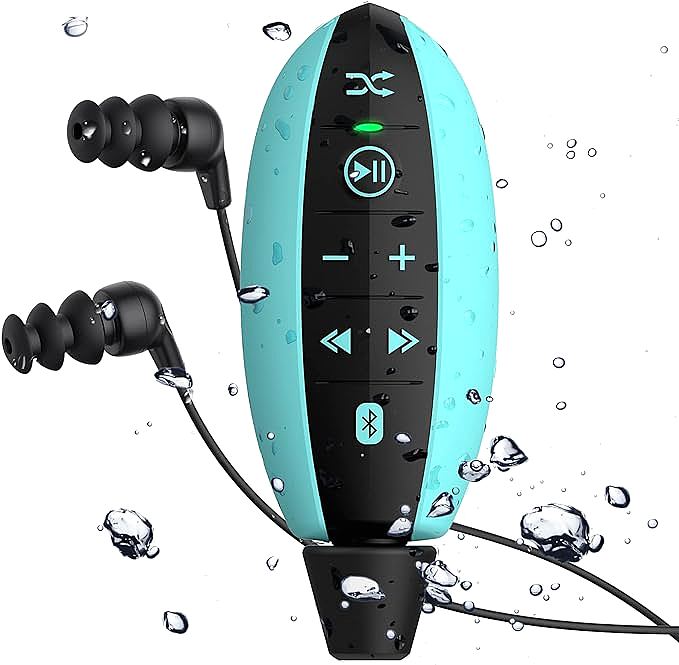
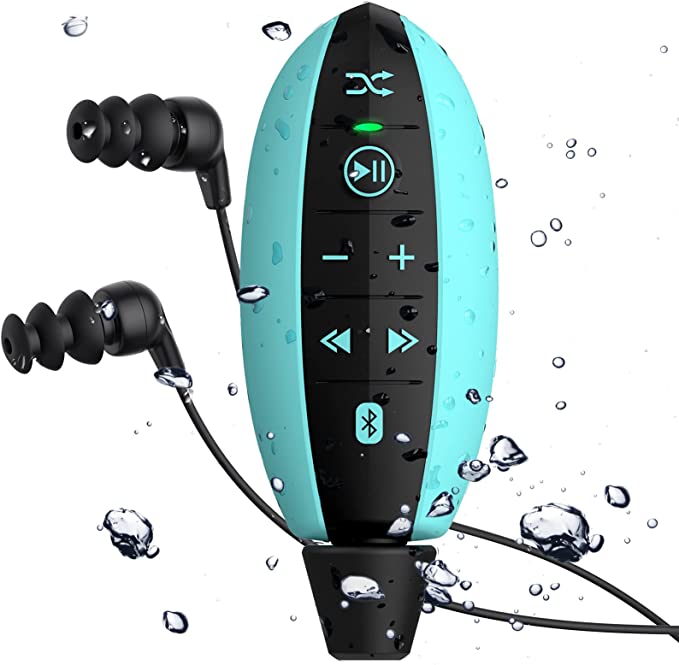
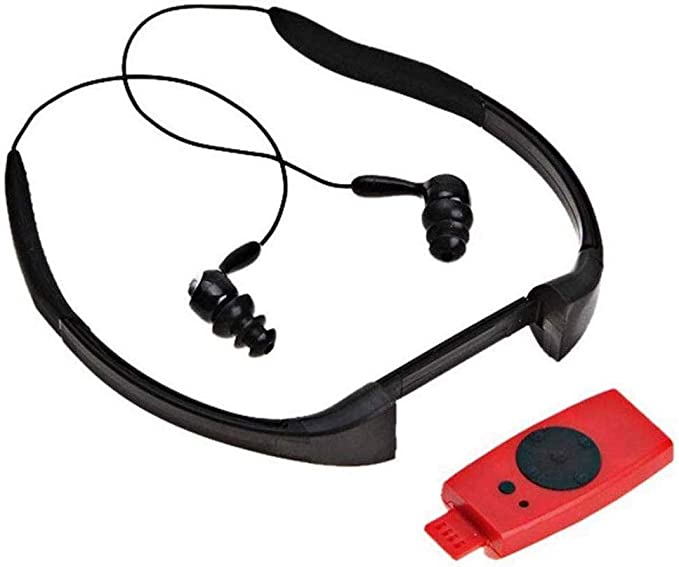
The only reliable, frustration-free solution is a pair of headphones that has a built-in MP3 player.
This is the clever engineering workaround. These devices are essentially two products in one:
1. Bluetooth Mode: For when you’re on land (running, cycling, at the gym). It connects to your phone just like any normal headset.
2. MP3 Mode (Local Player): For when you’re in the water. You double-click a button, it switches to its internal storage, and it plays music files directly from its own memory.
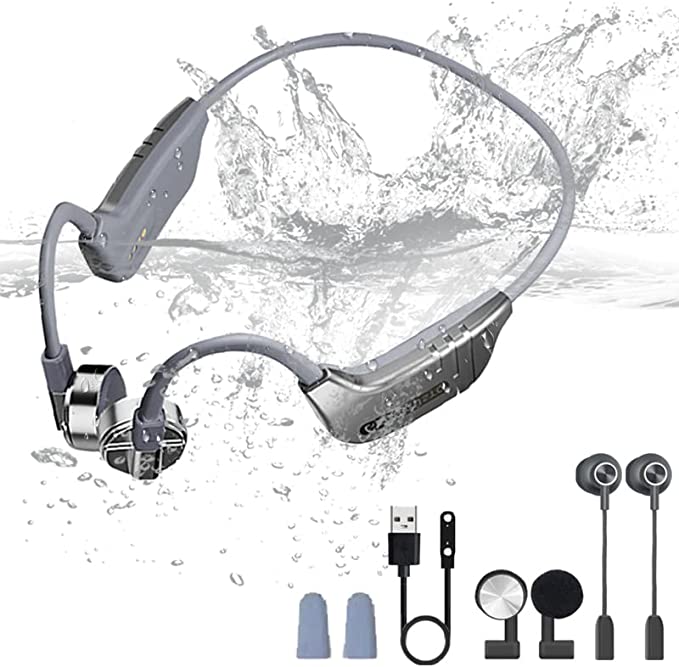
This is exactly how devices like the GenXenon X7 are designed. They acknowledge the laws of physics. They include a built-in 32GB memory so you can drag-and-drop your music files from a computer.
In this mode, there is no signal to interrupt. There is no streaming. There is just the device, your music, and the water. It’s the only way to get a consistent, clear soundtrack for your swim, lap after lap.
So, the next time you shop, stop looking only at the IPX8 rating. That’s just the ticket to entry. The real question you need to ask is: “Does it have a built-in MP3 player?” If the answer is no, it’s not for swimming.